

Our Jingxing travel guide heads west from Shijiazhuang into the Taihang foothills, where a Hebei county guards the old road between the North China Plain and the loess highlands of Shanxi. If you are looking for a Jingxing travel guide, here is the promise: this is where the Great Wall narrative meets everyday village life, a place of stone-built hamlets, a cliff-hung temple, and a chariot-rutted imperial post road that most foreign travelers never reach. We have sent travelers here who wanted Hebei beyond the capital’s walls, and Jingxing gave them passes, peaks, and porters’ paths in a single day.
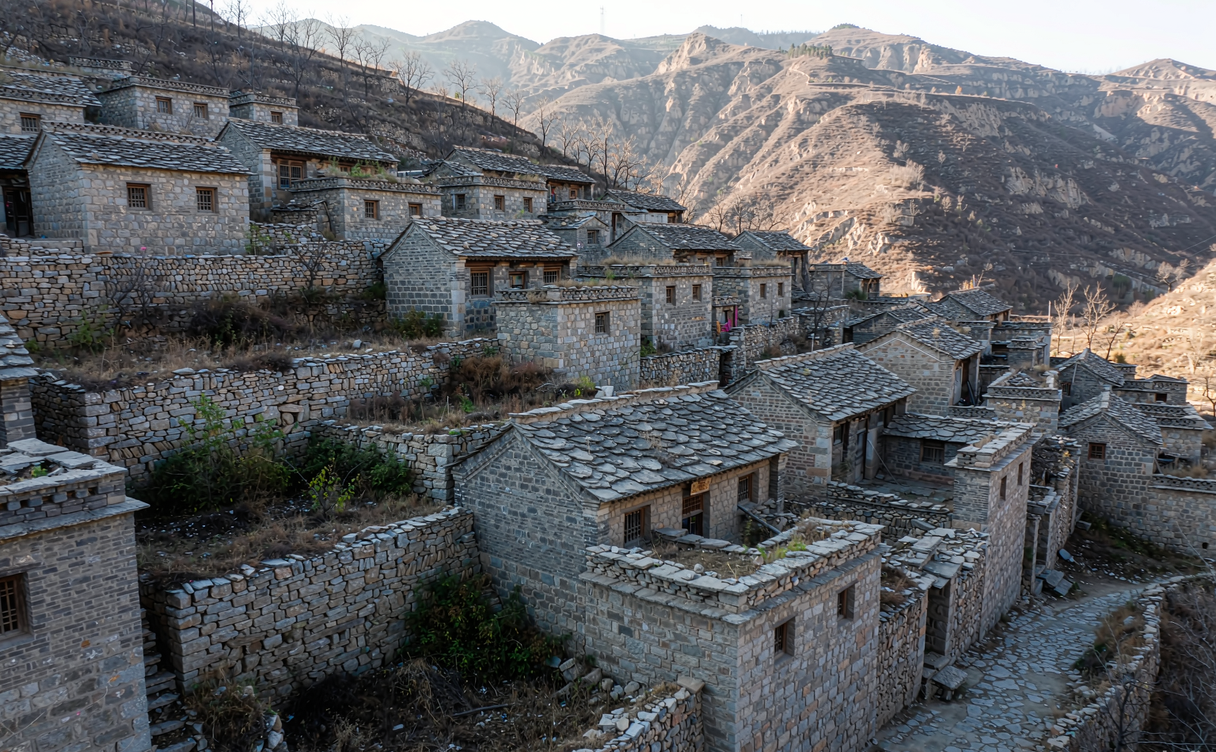
Jingxing sits where the mountains tighten into gorges, and for two thousand years every army, merchant, and emperor moving between Hebei and Shanxi passed through. The county town is plain, but the surrounding valleys hold the treasures: entire villages constructed from the local gray stone, a mountain monastery suspended on a bridge between cliffs, and a stretch of the Qin-era post road still showing wheel ruts. On our last visit a cold spring wind was blowing off the ridge, the stone lanes rang underfoot, and a villager invited us in for warmed millet wine without a thought of payment.
Why Jingxing is worth the detour from Shijiazhuang
The headline sight is Cangyan Mountain, a scenic area built around a temple hall set on a stone arch bridge flung between two cliffs. The hall seems to float, and the walk up passes carved niches, a thousand-year-old cypress, and a view that drops straight into the gorge. Entry is about 70 RMB, and the climb takes two to three hours at a relaxed pace. We send photographers at opening, around 8:00, when the mist still sits in the valley and the bridge hall is nearly yours alone.
The stone villages are the quieter prize. Yujia Stone Village was built entirely from local rock by descendants of a Ming dynasty statesman, and every wall, lane, and water channel is stone fitted without mortar. Daliangjiang village nearby is often called an open-air museum of Ming and Qing folk houses, with carved gatepieces and watchtowers intact. Both are free or ask a small 20 to 30 RMB upkeep fee, and both are empty on weekdays. We have walked Yujia at noon and met no one but a few goats.
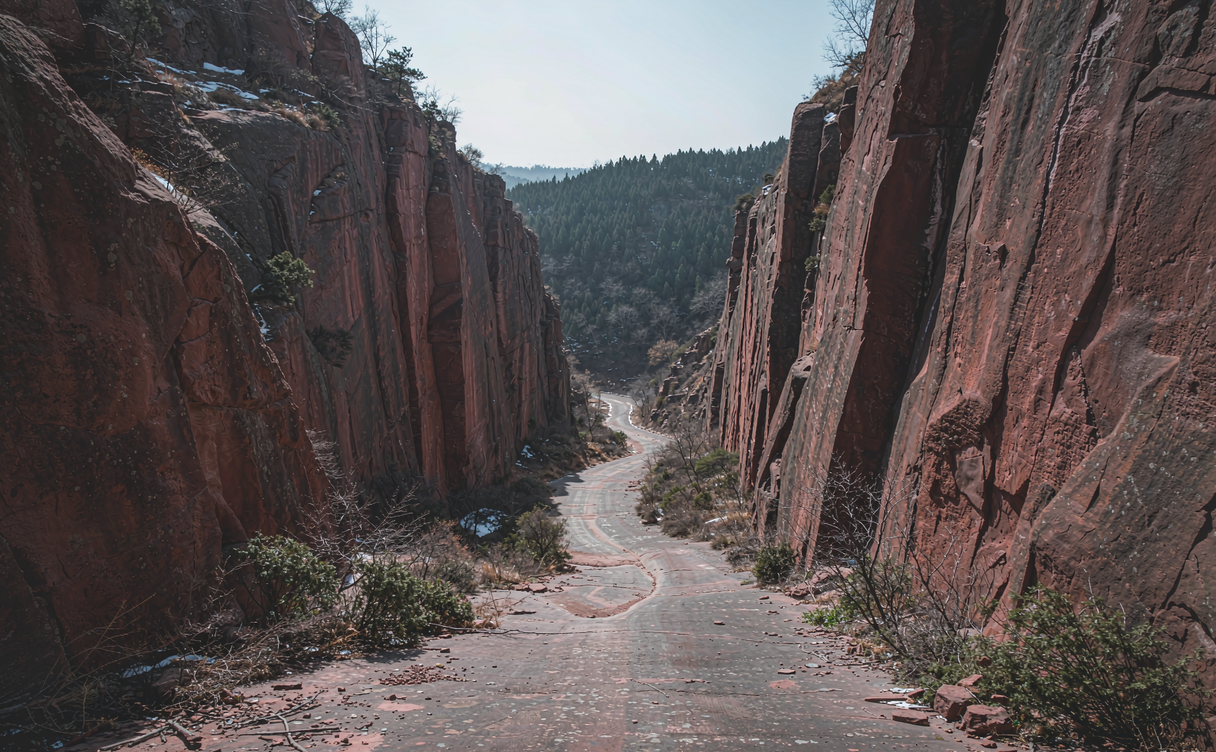
Jingxing also keeps the Qin Emperor’s ancient post road at Dongtianmen, where the original paved surface still shows parallel ruts worn by chariot wheels more than two thousand years ago. It is free to walk and humbling in a way the rebuilt sites are not. The local Lahua folk dance, all swaying sleeves and slow turns, still performs at festivals if your timing is lucky.
Best time to visit Jingxing
The best time to visit Jingxing is April to May, when the mountain azaleas bloom and the passes are green, and again in September to October for cool, clear hiking. Summer is hot on the plain and merely warm in the hills, with July showers. Winter is cold and some village guesthouses close, so we steer most travelers to the shoulder seasons.
This county pairs well with a wider Hebei plan. Our best time to visit China page helps you avoid the holiday crush, and our Great Wall of China guide sets Jingxing’s passes in the longer story of how the mountains were defended. Jingxing is the human-scale complement to the big wall sections.
How to get to Jingxing
How to get to Jingxing is straightforward because the county has a stop on the Shijiazhuang-Taiyuan high-speed line. Trains from Shijiazhuang to Jingxing North take about half an hour and cost 20 to 35 RMB in second class, with departures through the day. From the station, taxis reach the county town in twenty minutes for 30 to 50 RMB, and shared vans run to the stone villages for 15 to 25 RMB per seat.
If you prefer road, long-distance buses leave Shijiazhuang coach station for Jingxing roughly every forty minutes and cost 18 to 28 RMB, a ride of about an hour. For the full picture on booking the rail legs, our China high-speed train guide for foreigners explains passport ticketing and which apps actually work for a foreign card. Self-drivers can take the expressway west from Shijiazhuang and reach the Cangyan parking in under ninety minutes.
Where to stay and what it costs
Jingxing is cheap and unpretentious. A county-town hotel runs 120 to 220 RMB a night, a village guesthouse in Daliangjiang or Yujia costs 150 to 300 RMB with simple meals, and there is no luxury tier to speak of, which is part of the charm. Food is hearty northern fare: a plate of hand-pulled noodles is 10 to 15 RMB, and a shared dinner of braised pork, cabbage, and flatbread for two is 70 to 110 RMB. With low entrance fees, a couple can cover Cangyan and a stone village for under 350 RMB a day.
We usually book the village guesthouse over the town hotel, because waking in a stone lane at first light is the Jingxing experience. Reserve ahead only for the May and October holidays, when Shijiazhuang day-trippers fill the rooms.
Things to do in Jingxing beyond the headlines
Things to do in Jingxing extend past the famous sights. Tianchang ancient town, a walled Ming-Qing settlement on the old road, is free to wander and keeps a quiet rhythm of courtyards and tea stalls. The ridge trails above the stone villages offer half-day walks with views back across the plain, and the river pools below Cangyan are good for a summer dip if a local points you to the safe spots.
A day we like starts with the 8:00 opening at Cangyan, a late lunch in the county town, then an afternoon at Yujia Stone Village as the light goes long. Travelers who try to see everything before noon usually miss the stillness that makes Jingxing special.
If your route covers the region, our Shijiazhuang travel guide explains the gateway city, our Zhengding travel guide adds a remarkably preserved old town just north of it, and our Baoding travel guide extends the story into central Hebei. Jingxing is the mountain counterpoint to all three, and we often place it as a day trip or an overnight out of Shijiazhuang.
Our honest take
We rate Jingxing as a one-night or full-day trip for travelers who like history you can touch. The Taihang range, which frames the whole county, is worth reading about before you go; the encyclopedic Taihang Mountains entry gives the geology and the strategic weight of these passes. On our last visit the high point was standing on the Qin post road with the ruts under our feet, imagining the traffic of two millennia on the same stones.
Ready to plan your trip? Tell us your Shijiazhuang dates and we will add Jingxing as a stone-village day trip.
Practical notes before you go
Carry cash for village guesthouses and the smaller gates, as rural payment terminals are unreliable. Mobile pay works in the county town. The tourist desk at the Cangyan lot sells a basic map, and the station taxi rank is signed clearly. If you hike the ridge trails, start early and tell your guesthouse your route, because cell coverage fades in the gorges.
Want a custom Hebei itinerary? Share your interests and we will link Jingxing’s passes with Shijiazhuang and the wall.
A final word on rhythm
The mistake is treating Jingxing as a box to tick. It rewards slow walking, a willingness to accept a villager’s invitation, and an eye for the ordinary stone that holds two thousand years of traffic. Give it a night and the mountains will still be there at dawn, quieter than you expected.
Book your Jingxing stay with us and we will pre-arrange the Cangyan entry and a village guesthouse in the stone lanes.