

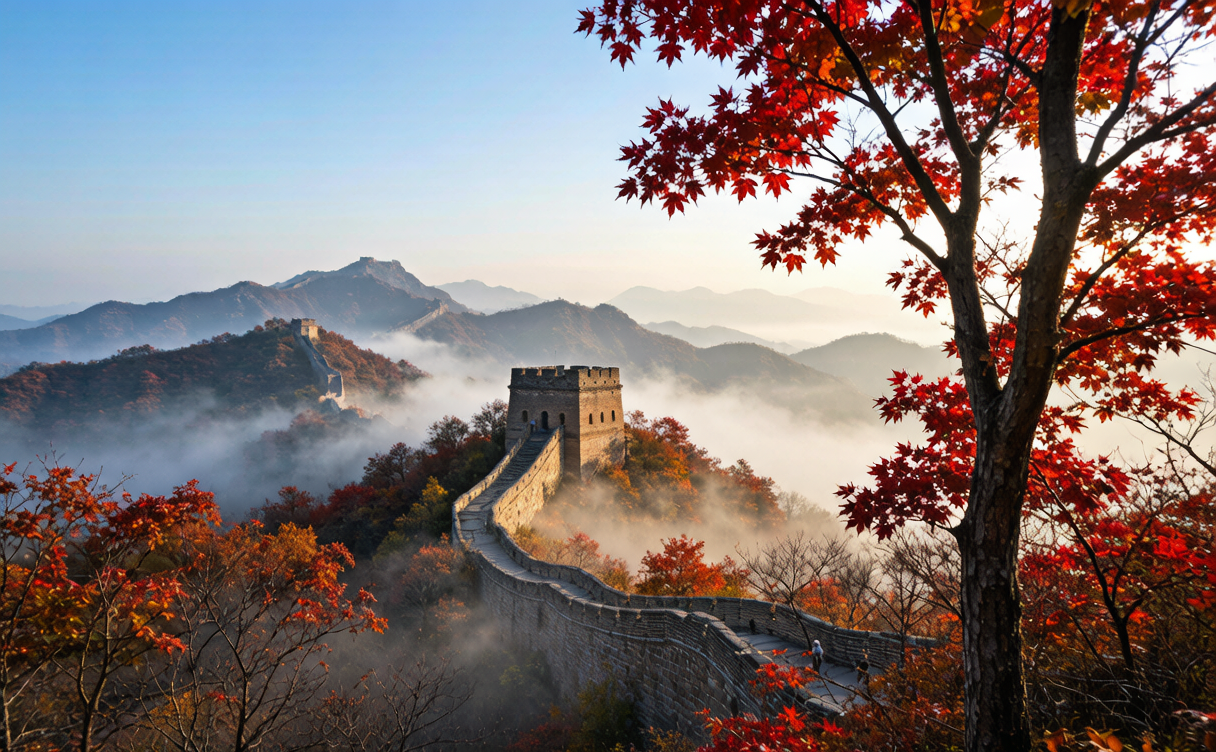
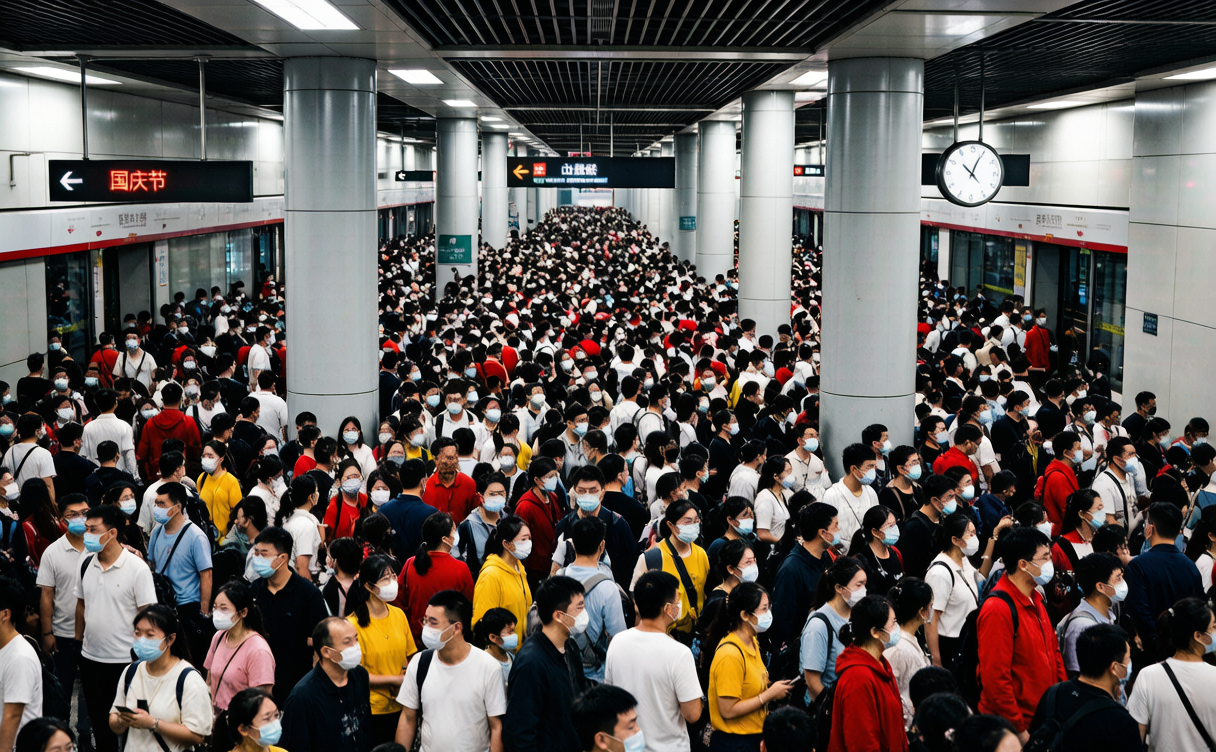
The best time to visit China isn’t a single season—it’s a moving target that shifts with your destination and your calendar. Stand in Beijing’s Forbidden City on October 2nd and you’ll jostle through a sea of domestic tourists; arrive three weeks later and the same courtyards open up. I learned this the hard way in October 2019, when my first trip to China landed squarely inside National Day Golden Week. The Great Wall at Badaling looked less like a monument and more like a packed subway car. If I’d known then, I’d have shifted that trip by a fortnight.
Most guides will tell you the best time to visit China is spring or autumn. They’re right—with one giant caveat: the weeks you choose matter as much as the months. This guide cuts through the noise with a month-by-month calendar, a region table, and the one mistake that ruins more trips than bad weather: traveling during a Golden Week. Below, I’ll show you when to go, where to go, and how to skip the crowds.
Key Takeaways
– Spring (April–May) and autumn (September–October) are the safest, most comfortable windows for most of China, with mild temperatures and clear skies.
– The two 2026 Golden Weeks—Spring Festival (Feb 15–23) and National Day (Oct 1–7)—are the worst times to travel, with sold-out trains and packed attractions.
– Northern hubs like Beijing and Shanghai share similar spring/autumn sweet spots, but Xinjiang and Sichuan’s mountains follow their own clocks.
– Xinjiang peaks in September–October for golden autumn scenery; Zhangjiajie is lush and misty from April through October.
– Book transport and hotels 2–3 months ahead, and lean on high-speed trains to escape the holiday crush.
China’s Climate at a Glance
China spans 5,000 km north to south, so there’s no single “China climate” to plan around. Three broad zones matter most for travelers, and the best time to visit China really depends on which one sits on your itinerary.
The north (Beijing, Xi’an, Harbin) is continental: bitterly cold, dry winters with occasional snow, and hot, sometimes dusty summers. Spring and autumn are short but glorious, with blue skies and comfortable days.
The south and east (Shanghai, Guilin, Hong Kong) is humid subtropical. Summers are hot and sticky with monsoon rain; winters are cool and damp. The best time to visit China’s east coast tends to track a few weeks behind the north, with spring and autumn lasting a little longer.
The far west and highlands (Xinjiang, Tibet, Sichuan’s mountains) are extreme continental. Xinjiang swings from scorching summers to freezing winters, while Sichuan’s Jiuzhaigou and the Tibetan plateau can see snow even in May. For weather alone, the best time to visit China’s interior west is a narrow autumn window you’ll read about below.
That’s why “best time” is really “best time for where you’re going.” A month that’s perfect for Shanghai may be too cold for Xinjiang or too wet for Zhangjiajie.
A Month-by-Month Breakdown
Here’s the quick calendar I wish someone had handed me before that 2019 trip. It balances weather against crowd levels and the official holiday schedule. For dependable weather, the best time to visit China is the April–May and September–October shoulder seasons.
The table below ranks every month by weather, crowd levels, and whether it’s worth the trip — April–May and September–October come out on top, while the two Golden Week windows are the dates to circle in red.
| Month | Weather | Crowds | Verdict |
|---|---|---|---|
| January–February | Cold north, lunar winter | Huge (Spring Festival) | Avoid unless for festivals |
| March | Warming, variable | Low–moderate | Good shoulder month |
| April–May | Mild, blooming | Moderate | Excellent |
| June | Hot, humid south; rainy | Low–moderate | Mixed |
| July–August | Hot; peak domestic summer | Very high (school holidays) | Crowded, pricey |
| September | Cooling, clear | Moderate | Excellent |
| October | Cool, dry | Huge (National Day, Oct 1–7) | Great weather, terrible crowds |
| November | Cooling fast | Low | Good shoulder month |
| December | Cold, dry | Low | Quiet, cheap |
Two slots in that table deserve a warning siren: late January to late February, and the first week of October. Those are China’s Golden Weeks, and they reshape the entire travel landscape.
The Two Golden Weeks to Avoid in 2026
China’s State Council publishes the official holiday schedule each year on the government portal. You can read the official 2026 holiday notice on gov.cn directly. For 2026, the two week-long breaks are:
- Spring Festival (Chinese New Year): February 15–23, 2026 — a 9-day break. This is also the world’s largest annual human migration, as hundreds of millions travel home.
- National Day Golden Week: October 1–7, 2026 — a 7-day break, with October 1 itself drawing the biggest crowds at every famous site.
During these windows, high-speed train tickets sell out within minutes of release, hotel rates in tourist cities double or triple, and marquee attractions cap entry numbers. If your dates are flexible, the single best thing you can do is avoid these two weeks entirely. For first-timers mapping a route, our complete China travel guide for first-timers folds these dates into a sample itinerary you can adapt.
Best Time by Region
Zoom into specific destinations and the best time to visit China looks different for each. Here’s the regional cheat sheet.
This regional cheat sheet shows the best months for each major destination and the one trap to avoid — Beijing and Shanghai share spring and autumn sweet spots, while Xinjiang and the Sichuan highlands follow their own weather clock.
| Region | Best Months | Watch Out For |
|---|---|---|
| Beijing | Apr–May, Sep–Oct | Oct 1–7 National Day crush |
| Shanghai | Mar–May, Sep–Nov | Hot, humid Jul–Aug |
| Xinjiang | May–Oct (peak Sep–Oct) | Harsh winters; some passes close |
| Zhangjiajie | Apr–Oct (lush, misty) | Foggy, cold Dec–Feb |
| Sichuan (Chengdu/Jiuzhaigou) | Mar–May, Sep–Nov | Jiuzhaigou snow Nov–Mar |
Beijing rewards spring and autumn visitors with blue skies and comfortable 15–25°C days. Summer brings humidity and thunderstorms; winter is crisp but bone-dry cold. The shoulder weeks of April and late September are my personal favorites.
Shanghai follows a similar rhythm but stays pleasant into early November. Most visitors find the best time to visit China’s east is spring, before the humidity climbs; skip July and August, when the “plum rain” season makes midday walking miserable.
Xinjiang runs on its own calendar. I flew into Ürümqi in late September 2023 and drove north to Kanas Lake. The birch forests had turned electric gold, the sky was flawless, the National Day crowds hadn’t arrived yet. That two-week window before October 1 is, in my book, the single best time to visit China’s northwest. By late October, mountain passes start icing over.
Zhangjiajie in Hunan is a year-round destination, but its famous pillar peaks are at their most photogenic when wrapped in spring and autumn mist. April through October keeps the vegetation lush and the gorges full of water. Winter is atmospheric but fog can hide the views entirely.
Sichuan splits between the food capital Chengdu (good almost any time) and the alpine scenery of Jiuzhaigou and Mount Emei. For those highlands, September to early November delivers the famous turquoise lakes against red-and-gold forests—arguably the best time to visit China for landscape lovers.
How to Dodge the Golden Week Crowds
If you must travel during a holiday week, treat it like a tactical operation—here are a few lessons from my missteps:
In May 2022, I underestimated Labour Day week and tried to book a Shanghai-to-Chengdu train three days out. Every train was full. I ended up taking an overnight sleeper and arriving exhausted. Now I book the moment ticket windows open—and I build buffer days around the holidays rather than through them. If you’re entering on the 144-hour visa-free transit policy, timed entry helps you dodge the worst arrival queues too.
The ideal week is rarely the most convenient one—plan around crowds, not flight sales. Practical tactics that actually work:
- Shift by 10–14 days. The weather in mid-October is nearly identical to early October, but the crowds vanish after October 7.
- Go where others don’t. While everyone flocks to Beijing and Shanghai, smaller cities and the far west stay relatively calm.
- Book trains early. China’s high-speed network is excellent—our guide to riding China’s high-speed trains explains how to buy tickets as a foreigner before they sell out.
- Pre-load payments. Holidays mean long queues everywhere, so set up paying with Alipay and WeChat Pay as a foreigner before you fly. You’ll skip the cash-only lines and pay at any stall.

Final Verdict: When Should You Go?
For most foreign travelers, the best time to visit China is April–May or September–October, with a strong tilt toward September–October for reliable weather across both north and south. Build your trip around those windows, steer clear of February 15–23 and October 1–7 in 2026, and you’ll see the country at its best.
If your schedule is fixed, pick your region to match the month rather than fighting the calendar. Winter in the south, spring in the north, autumn in Xinjiang—there’s almost always a good answer. In the end, the best time to visit China is any window you build around the crowds instead of through them.
Ready to lock in dates? Start with the regional table above, then book transport early. The crowds you avoid will thank you.
Written by Karl, a travel writer who has spent more than six weeks across China across four separate trips, including one very crowded National Day week he does not recommend.