

Shijiazhuang is rarely the first name that comes to mind when foreigners plan a China trip — and that is exactly why it rewards the curious traveler. A pragmatic provincial capital built around the railway, it is the gateway to Zhengding, an ancient town of towering pagodas just across the river, and to some of North China’s most significant Buddhist architecture. This Shijiazhuang travel guide shows you how to use the city as a base for a rich cultural loop less than an hour from Beijing.
Why Shijiazhuang?
Founded as a rail junction in the early 20th century, Shijiazhuang itself is a modern, workaday city. Its value to visitors lies not in the urban core but in what surrounds it: the temple town of Zhengding, the world’s oldest surviving stone arch bridge at Zhaozhou, and the cliffside pavilions of Cangyan Mountain. Together they make an easy, crowd-free alternative to the headline sites further north.
Many travelers pair Shijiazhuang with a Beijing stopover. If you are still planning that leg, our Beijing first-time travel guide covers the capital’s essentials before you ride south.
How to Get to Shijiazhuang from Beijing
Knowing how to get to Shijiazhuang from Beijing is the key to the whole trip. High-speed trains run frequently from Beijing West to Shijiazhuang in about one hour, sometimes a little more. The China high-speed train guide for foreigners explains booking with your passport and navigating the capital’s big stations. Because the journey is so short, Shijiazhuang works perfectly as a relaxed day-trip base or an overnight hub on a longer rail journey west.
Things to Do in Shijiazhuang
1. Zhengding Ancient City Day Trip
The single best reason to come is the Zhengding ancient city day trip. Fifteen minutes north of the center by bus or taxi, Zhengding preserves four iconic pagodas and the monumental Longxing Temple, home to a towering gilded Guanyin statue and some of the finest Song-dynasty architecture in the country. The town walls, rebuilt and walkable at dusk, frame a skyline of brick and timber towers that is genuinely photogenic and almost never crowded with foreign tour groups.
2. Zhaozhou Bridge — the Oldest Stone Arch Bridge
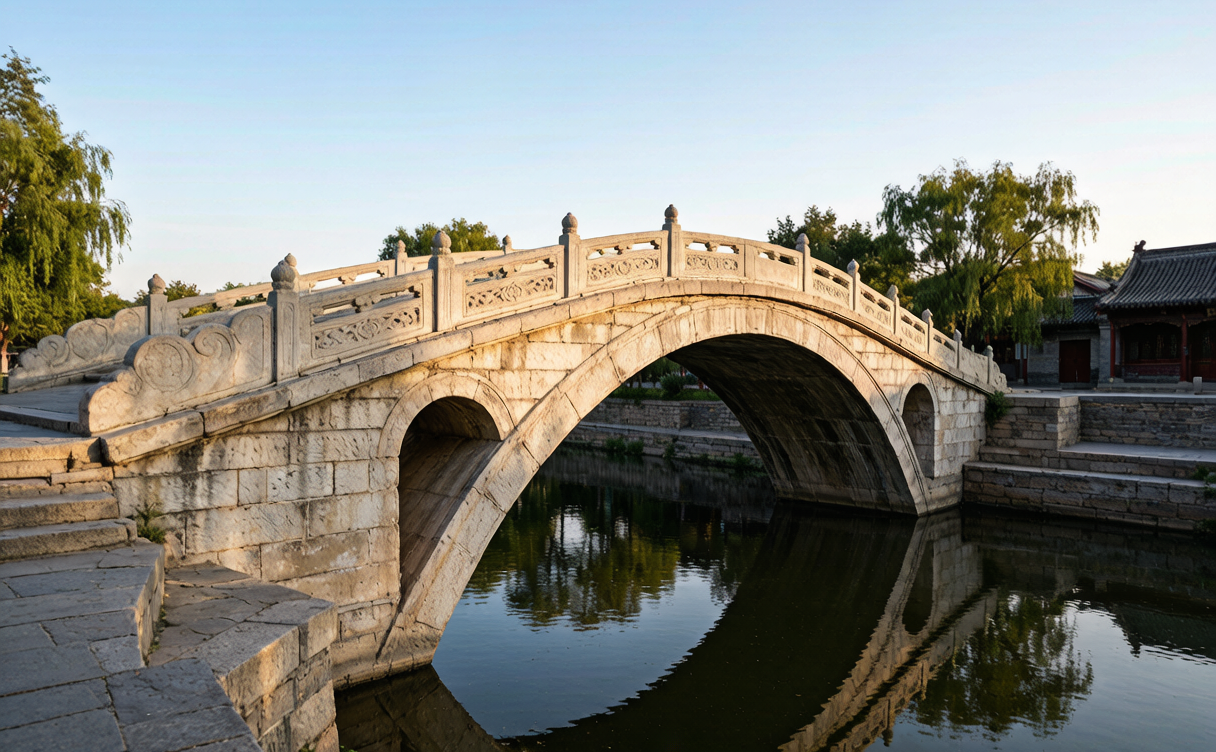
About an hour’s drive south stands the Zhaozhou Bridge, often called the oldest stone arch bridge still in existence anywhere in the world. Built in the Sui dynasty (around 605 AD) by the engineer Li Chun, its single graceful open-spandrel arch spanned the Xiao River for over 1,400 years. The original structure survives, and a riverside park lets you walk the approaches and study the carved balustrades. For engineering-history buffs, it is a quiet marvel.
3. Cangyan Mountain Hanging Temple
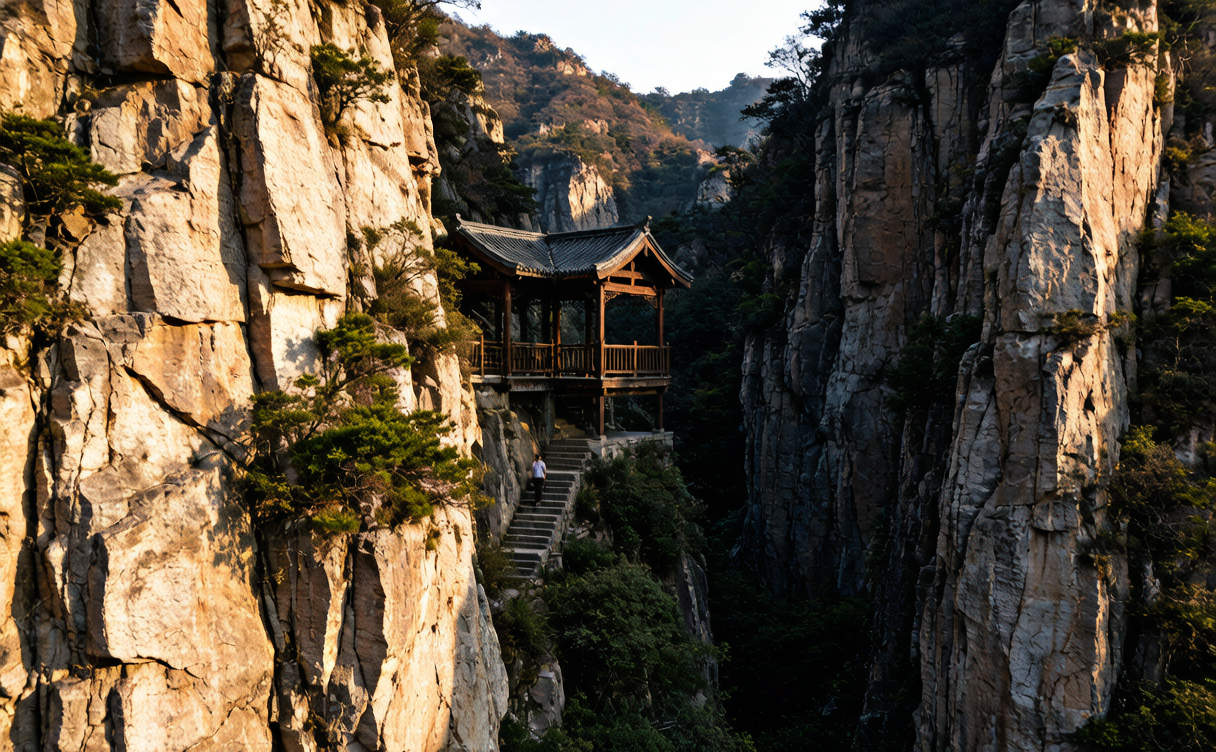
East of the city, Cangyan Mountain is famous for the Bridge Temple (Fuxian Temple), a cluster of pavilions built on a stone arch that spans a narrow gorge between sheer cliffs. The setting — a wooden walkway clinging to the rock, stairs climbing into shade — is dramatic enough to have appeared in period films. Allow half a day and wear sturdy shoes; the paths are steep but well maintained.
4. Hebei Provincial Museum
Back in the city, the Hebei Museum holds the famous onion-domed gilt bronze lamps of the Mancheng Han tombs and a strong collection of Buddhist stone carving. It is a good rainy-day option and a useful primer before you visit the temples at Zhengding. The Mancheng lamps, in particular, are a highlight: a pair of intricate bronze figures from the tomb of a Han prince, engineered with rotating panels to control the lamp’s smoke — a 2,000-year-old feat of design. Allow two hours if you enjoy archaeology; the museum is free but often requires a quick ID registration at the entrance.
A Practical Shijiazhuang Itinerary
- Day 1: Morning train from Beijing, afternoon at Zhengding’s temples and walls at dusk.
- Day 2: Zhaozhou Bridge in the morning, Hebei Museum or city parks in the afternoon.
- Day 3 (optional): Cangyan Mountain, returning south toward Shanxi or east toward the coast.
Travelers heading west from Shijiazhuang often continue to Taiyuan and the nearby Pingyao ancient town guide, where a complete Ming-era walled town awaits. The Mount Wutai Shanxi guide is another natural extension for those interested in Buddhist heritage, reachable by a longer road journey from the city.
Local Food and Where to Eat
Shijiazhuang’s tables reflect its position between the North China plain and the Taihang foothills. Look for “huimian” — thick hand-pulled noodles in mutton broth, a comfort food shared with neighboring Henan — and “lürou huoshao,” a crisp stuffed pancake with braised donkey meat that is a local favorite. The night market near the center and the food streets of Zhengding are the easiest places to sample these without a formal restaurant. Vegetarians should note that northern Hebei cooking leans heavily on meat and wheat; ask for vegetable stir-fries and tofu dishes clearly.
Why Shijiazhuang Beats the Crowds
The honest appeal of this region is its calm. While the headline sites of Beijing and Xi’an draw long queues, Zhengding’s courtyards and Zhaozhou’s bridge let you wander with only a handful of domestic visitors for company. For photographers and history readers, that quiet is the real prize. Plan your temple visits for weekday mornings and you may have a thousand-year-old hall almost to yourself — an experience increasingly rare in China’s better-known destinations. Budget a little extra time at each stop rather than rushing; the joy here is in the unhurried detail, from a carved bracket set to the worn stone of a Tang-dynasty step.
Best Time to Visit
Spring (April–May) and autumn (September–October) are ideal, with cool, clear days good for temple courtyards and mountain walks. Winters are dry and cold, often below freezing, but the low sun on Zhengding’s tiled roofs makes for beautiful photographs and the sites are nearly empty. Summers can be hot and stormy, though the shade of the temple halls offers relief. The temple sites are open year-round, but mountain paths such as Cangyan are best in stable, dry weather. If you happen to visit during the lunar new year, Zhengding hosts lantern displays along its walls that are worth timing a trip around.
Practical Tips for Foreign Travelers
- Base: Stay near Shijiazhuang station for fast train access and easy taxi rides to Zhengding.
- Language: Carry attraction names in Chinese characters; rural sites have little English signage.
- Transport: For Zhaozhou and Cangyan, hire a driver for the day — public options are slow and unsigned.
- Tickets: Most sites sell at the gate; the Hebei Museum is free but may require ID registration.
Getting Around the Region
Within the city, buses and DiDi taxis are cheap and reliable, but the sites that make Shijiazhuang worth visiting lie outside the center. Zhengding is an easy 20-minute ride north; Zhaozhou is roughly an hour south by hired car; Cangyan Mountain is 90 minutes by road into the hills. For independent travelers, booking a car with a driver for a full day costs more than public transport but saves hours of waiting and removes the language barrier at rural ticket desks. If you would rather not drive, consider basing in Zhengding itself — its small guesthouses put the pagodas within walking distance and give you the town at dusk, when the tour buses have left.
Shijiazhuang is the kind of place that surprises travelers who give it a chance. Within an hour of a major capital, you can stand beneath a thousand-year-old pagoda, walk a Sui-dynasty bridge, and cross a temple suspended over a mountain gorge — without the crowds that define China’s headline destinations.
Sources
Tourism and cultural-heritage information for the city is published by the Shijiazhuang Municipal People’s Government: https://www.sjz.gov.cn/