

Mount Wutai — Wutaishan — is a cluster of five flat-topped peaks in Shanxi, China, and one of the four sacred mountains of Chinese Buddhism, dedicated to the Bodhisattva Manjushri. It is also a UNESCO World Heritage Site (see UNESCO’s listing) packed with centuries-old monasteries. This Mount Wutai travel guide covers the best time to visit, how to get to Mount Wutai, the key Wutaishan temples, where to stay, hiking options, and a sample itinerary. If you want spiritual atmosphere and real mountain air without the crowds of better-known peaks, Wutaishan rewards a slow two days.
Content Preview
- [The Sacred Core](#mount-wutai-travel-guide-the-sacred-core)
- [Best Time to Visit Mount Wutai](#best-time-to-visit-mount-wutai)
- [How to Get to Mount Wutai](#how-to-get-to-mount-wutai)
- [Where to Stay: Mount Wutai Accommodation](#where-to-stay-mount-wutai-accommodation)
- [Wutai Mountain Hiking and the Temples](#wutai-mountain-hiking-and-the-temples)
- [Sample Itinerary](#mount-wutai-travel-guide-sample-itinerary)
- [FAQ](#faq)
Mount Wutai Travel Guide: The Sacred Core
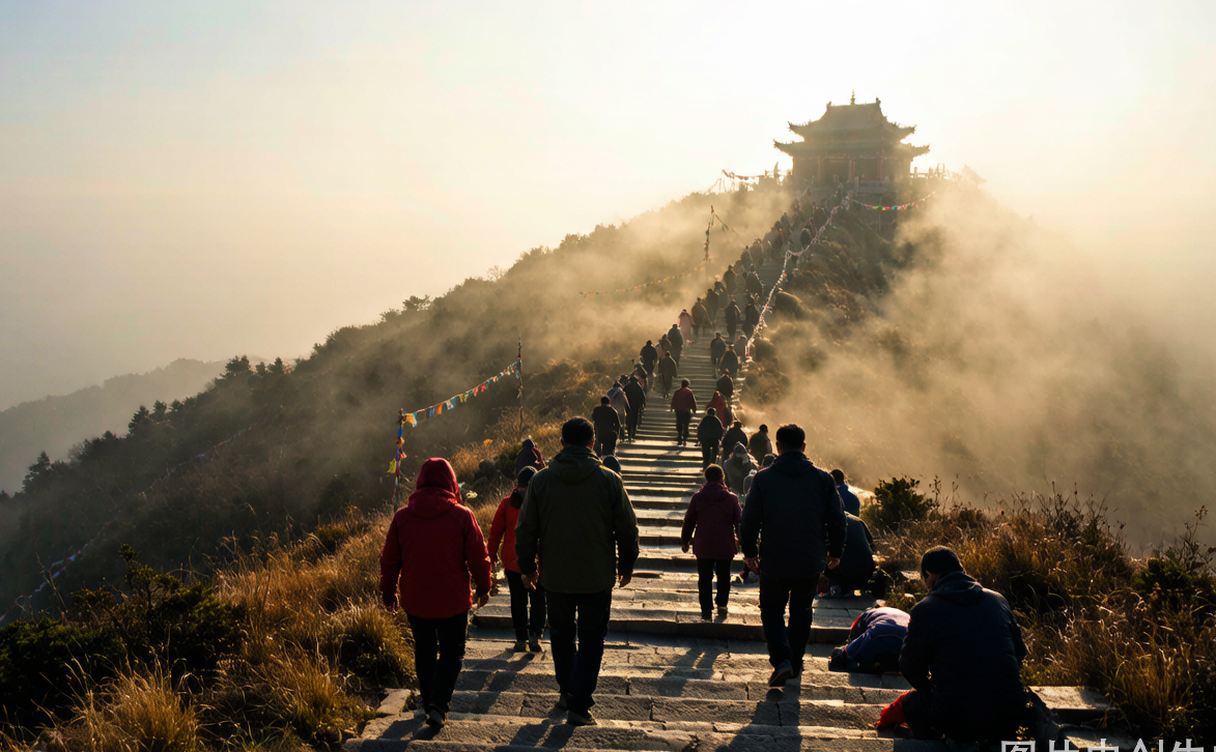
The heart of any Buddhist pilgrimage China circuit is the flat valley floor at 1,700 m, where most of the Wutaishan temples sit close together. Tayuan Temple holds the iconic Great White Stupas; Xiantong Temple is the oldest and largest monastery, with a 100,000-strong bronze hall; and Pusading (the “Temple of the Buddha’s Crown”) sits atop 108 stone steps that pilgrims climb to shed 108 worldly troubles. Out at the edge of the terraces, Foguang Temple preserves a genuine Tang-dynasty wooden hall — a must for architecture lovers.
Don’t miss the ten-meter-high Manjushri statue at the modern Nanshan Temple, or the quiet morning chanting at the residential monasteries, which you can sit in on if you arrive before 6 am. The valley gets busy midday with tour groups, so I always start at first light when the incense smoke and the mountain silence are yours alone.
Best Time to Visit Mount Wutai
The best time to visit Mount Wutai is summer (June–August), when the terraces are cool (18–22°C) and the skies are clear — a relief from the Shanxi plain’s heat. July and August also bring the most festivals and the fullest monastery schedule. Autumn (September–early October) is my favorite: golden larch forests, thin crowds, and crisp light, though nights drop near freezing. Winter is harsh and many lodges close, but the snow-covered stupas are spectacular for photographers.
Spring (April–May) is windy and can be dusty. Whenever you come, pack a fleece even in summer — the altitude means evenings are chilly, and July nights can still drop to around 12°C, so layers are essential. For a nationwide seasonal plan, our best time to visit China guide lays out regional weather.
How to Get to Mount Wutai
Wutaishan has its own airport and a new high-speed station, but most travelers come via Datong or Taiyuan.
| Mode | Route | Time | Cost (¥) |
|——|——-|——|———-|
| High-speed train | Datong South → Wutaishan | 1.5–2 hrs | ¥60–90 |
| High-speed train | Taiyuan → Wutaishan | 1.5–2 hrs | ¥70–110 |
| Flight | Major hubs → Wutaishan Airport (WUT) | 1.5–2 hrs + 1 hr transfer | ¥500–1,000 |
| Bus | Datong / Taiyuan bus stations → Taihuai (base town) | 2.5–3.5 hrs | ¥50–80 |
The Wutaishan high-speed station sits about 50 minutes by shuttle bus (¥25) from the Taihuai valley, where all the temples and hotels are. Inside the scenic area, electric shuttles (included with your ticket) link the main monasteries, so you don’t need a car. If you’re coming from Datong, our Datong Hanging Temple guide fits perfectly on the same route.
Where to Stay: Mount Wutai Accommodation
Mount Wutai accommodation centers on the Taihuai valley at the mountain’s base. Mid-range hotels and temple-run guesthouses run ¥250–500 per night in shoulder season and ¥500–900 in July–August. A few monasteries offer simple pilgrim lodgings (¥100–200 with shared bath) — basic but atmospheric, and you’ll hear the morning bells. Book ahead for summer and the lunar festival dates, when rooms vanish.
I recommend staying in Taihuai rather than down in the county town: you walk to the temples, avoid the shuttle queues, and catch the dawn rituals. For a wider Shanxi loop, our Pingyao ancient town guide adds a walled-merchant-town contrast two hours south.
Wutai Mountain Hiking and the Temples
Wutai Mountain hiking ranges from flat valley strolls to the high terrace ridges. The gentle option is the temple circuit on foot or shuttle — 10+ monasteries in a day at little elevation gain. For views, hike or take the cable car to Dailuoding (the “Small Five Terraces”): the cable car runs about 10 minutes up and costs ¥50 each way, or you can climb the 1,080-step path in 40–60 minutes. Reaching the real North, South, East, West, and Central terraces is a serious multi-day trek (each terrace is 2,700–3,000 m), best done with a guide in summer. If you’d rather see all five without the full hike, a ~70 km loop road links them by shuttle, and each terrace has a small summit temple and a panoramic marker — the East Terrace sunrise is a local favorite for its sea-of-clouds view.
The scenic-area ticket is ¥135 (April–October) and ¥120 (November–March); the Dailuoding cable car is extra. Combine the pilgrimage walks with our general China hiking and treks guide if you’re planning other trails.
Mount Wutai Travel Guide: Sample Itinerary
A Mount Wutai itinerary of two days covers the essentials:
- Day 1: Arrive Taihuai, visit Xiantong and Tayuan temples, climb to Pusading for sunset; overnight in the valley.
- Day 2: Early chanting at a resident monastery, Dailuoding by cable car or steps, then Foguang Temple (book a driver) before the evening train.
A three-day version adds a terrace hike and more time at the quieter western monasteries. Either way, protect the early-morning hours — that’s when Wutaishan feels sacred rather than crowded.
FAQ
Is Mount Wutai worth visiting for foreign tourists?
Yes, if you enjoy Buddhist culture and cool mountain scenery; the Tang-dynasty halls alone justify the trip.
When is the best time to visit Mount Wutai?
Summer for comfort and festivals; September–early October for autumn color and fewer crowds.
How do I get to Mount Wutai?
High-speed train from Datong (1.5–2 hrs) or Taiyuan, then a shuttle bus to the Taihuai valley.
Is there a cable car on Mount Wutai?
Yes, to Dailuoding — about 10 minutes, ¥50 each way, or climb the 1,080 steps on foot.
How much does entry cost?
¥135 (peak) / ¥120 (low season); monastery donations optional, cable car extra.