

When travelers think of Jiangsu, they usually picture gardens and canals. This Yancheng travel guide introduces a different side of the province: a vast coastal wilderness where the world’s rarest cranes winter, where a rescued species of deer roams free, and where the tide flats are protected as a UNESCO World Heritage Site. For nature-loving visitors, Yancheng is one of the most rewarding — and most surprising — stops in eastern China.
Why Yancheng?
Yancheng, whose name means “salt city,” was built on centuries of coastal salt production. Today it is best known among ecotourists for the Yellow Sea wetlands, a sweep of mudflats, reed beds, and salt marsh that stretches along the coast. These wetlands form part of the Migratory Bird Sanctuaries along the Coast of Yellow Sea–Bohai Gulf of China, inscribed on the UNESCO World Heritage List in 2019, and they are a critical refueling stop for millions of shorebirds on the East Asian–Australasian Flyway.
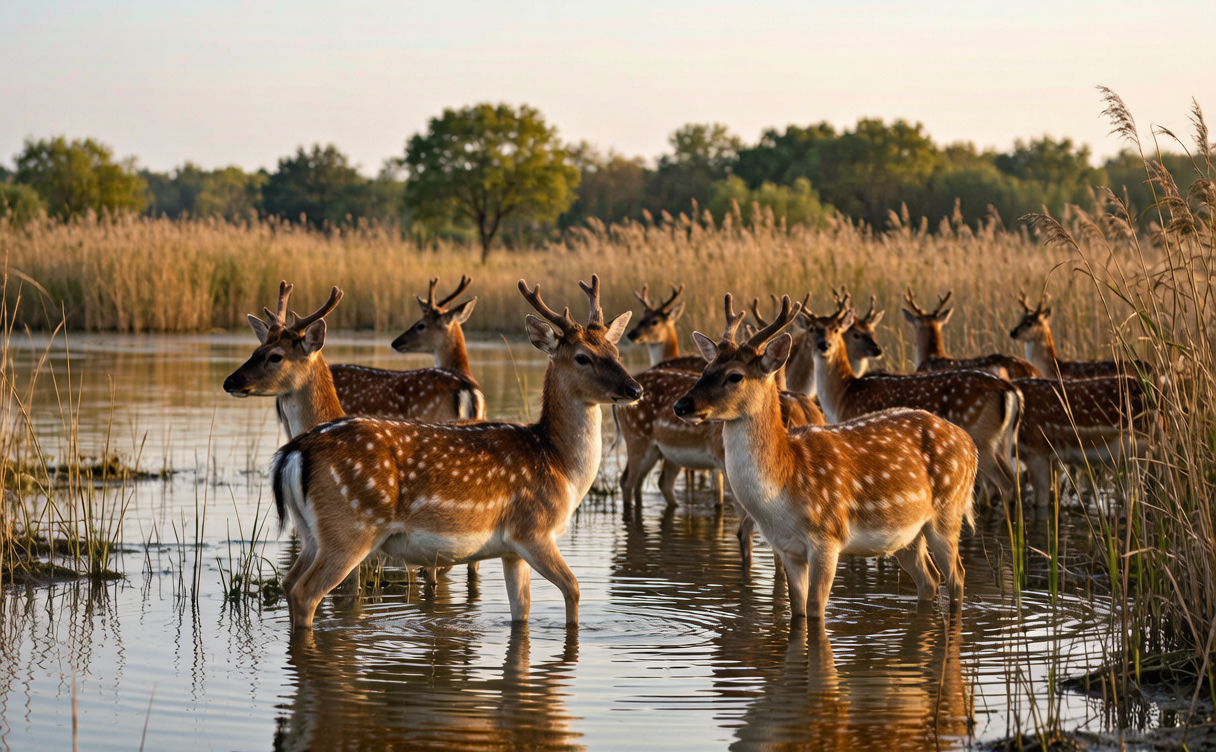
Two animals define the Yancheng experience. The first is the red-crowned crane, a symbol of longevity in Chinese culture and one of the most endangered cranes on earth. The second is the milu deer (Père David’s deer), a species driven to extinction in the wild and brought back through captive breeding — Yancheng’s Dafeng reserve holds the world’s largest free-ranging herd.
If your China plan leans toward protected landscapes, our China national parks guide explains how the country’s reserve system works and which sites deserve a place on your list.
How to Get to Yancheng
Learning how to get to Yancheng is straightforward thanks to high-speed rail. The city lies on a line connecting Nanjing and the coastal corridor, with direct trains from the provincial capital in around two and a half hours and from Shanghai in roughly three and a half. The China high-speed train guide for foreigners covers ticket booking with a passport, which you will need at every station security check.
There is also a small airport with domestic links, but most international visitors arrive via Nanjing or Shanghai and continue by train. Because the reserves sit outside the urban core, plan local transport in advance: hired cars or pre-booked drivers are the most reliable way to reach the crane and deer sites, as public buses are infrequent and seldom signed in English.
Things to Do in Yancheng
1. Red-Crowned Crane Reserve
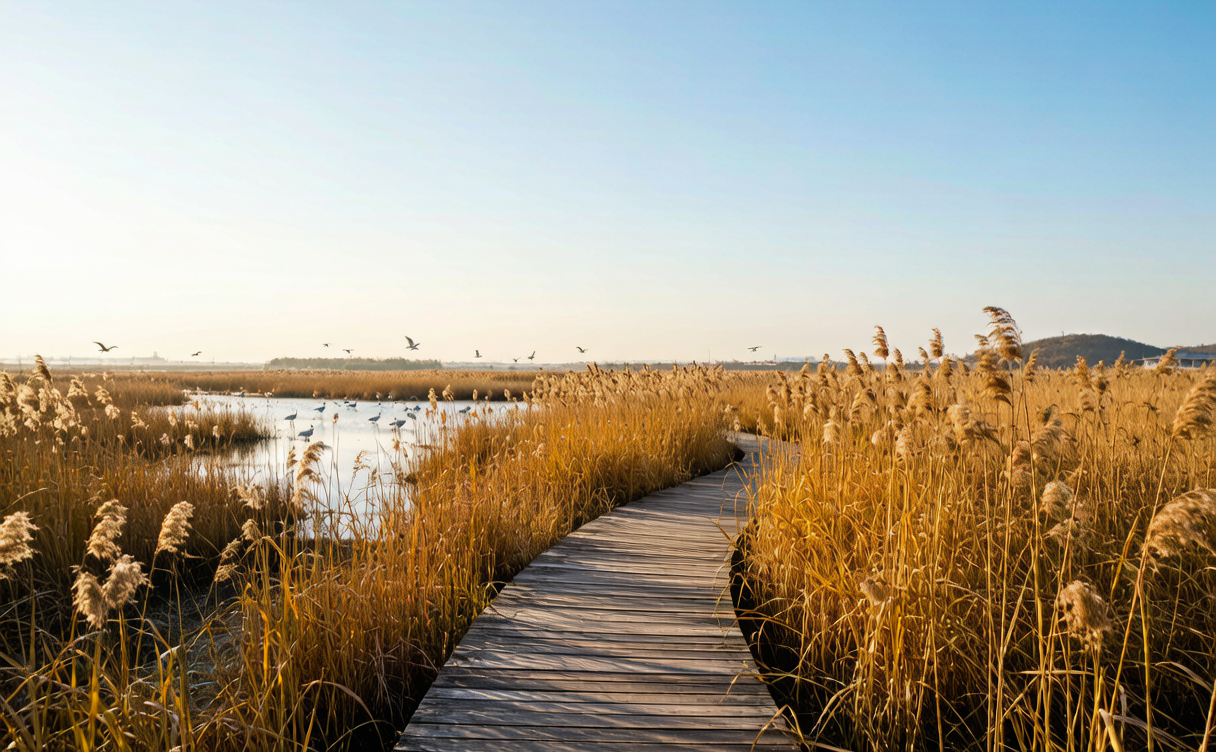
The Yancheng Red-Crowned Crane National Nature Reserve is the headline reason many visitors come. Winter (late November to February) is the best time to visit Yancheng wetlands for cranes, when hundreds of birds gather on the frozen reed margins. A raised boardwalk and observation towers let you watch the daily release and feeding without disturbing the flock. The sight of white-bodied, black-necked cranes lifting off against a pale winter sky is unforgettable.
2. Dafeng Milu Deer Reserve
South of the city, the Dafeng Milu Deer Reserve protects Père David’s deer, an animal with webbed hooves and antlers that look part-stag, part-horse. Visitors can join a wagon or walking tour through the reed-fringed wetlands where the herd grazes. Early morning light is best for photography. The reserve also tells the remarkable conservation story of how the species was saved from total extinction.
3. Tiaozini Wetland and Mudflat Birdwatching
Tiaozini, another section of the UNESCO property, is a sprawling intertidal flat where spoon-billed sandpipers and other rare shorebirds feed. It is more remote and less developed than the crane reserve, so it suits serious birders with a guide. Time your visit to the tidal cycle — the flats are only exposed for a few hours around low water.
4. Yancheng’s Salt History and Old Town
Back in the city, the China Salt Museum and the restored Shuiguan street offer a calmer cultural counterpoint. They explain how the saline coast shaped local life for a thousand years. Pair a museum visit with a seafood dinner; the same tidal waters that host the cranes also supply excellent shrimp, crab, and razor clam.
Best Time to Visit Yancheng Wetlands
The answer depends on your priority. For red-crowned cranes and the dramatic winter light, come between December and February. For migratory shorebirds and green reed beds, May and September are excellent. Summer is hot and mosquito-heavy but good for the deer reserve’s lush scenery. Avoid the week-long National Day holiday in early October if you dislike crowds.
The Conservation Story Behind the Wetlands
Part of what makes Yancheng special is the success of its protection work. The red-crowned crane is classified as endangered, and the wintering population here is one of the last strongholds anywhere. The milu deer had an even narrower escape: the species disappeared from the wild in the early 1900s and survived only in a handful of European zoos before being returned to China. Dafeng’s breeding program is now the global center of the species’ recovery. Understanding this background turns a simple wildlife visit into something more meaningful, and the reserve museums tell it well.
Because the land is protected, access is managed — boardwalks, fixed viewing platforms, and limited vehicle routes. This is good news for visitors: the birds are calmer, and the landscape stays pristine. It also means you should book guides and permits in advance during peak crane season.
Local Food: Salt, Sea, and River
Yancheng’s “salt city” heritage shows up on the plate. The coastal waters supply excellent shrimp, crab, and the plump “wenhao” clam unique to the region, while the inland rice paddies and rivers add eel and freshwater prawn. A local specialty is “yandu” duck, raised on the brackish margins and prized for its rich broth. Street snacks around the old town are cheap and filling; just point at what looks good if menus are in Chinese only.
A Suggested Yancheng Itinerary
- Day 1: Arrive by train, visit the salt museum and old town, overnight in the city.
- Day 2: Full day at the Red-Crowned Crane Reserve, with a sunset on the nearby coast.
- Day 3: Morning at the Dafeng Milu Deer Reserve, afternoon train onward.
Travelers linking Yancheng to the classic garden circuit often add a stop in Suzhou or Yangzhou — the contrast between wild wetlands and refined classical gardens makes a satisfying trip. For those approaching from the provincial capital, the Nanjing travel guide is the natural starting point before heading northeast to the coast.
Practical Tips for Foreign Travelers
- Guides: Reserve an English-speaking guide or driver a week ahead; on-site English is minimal.
- Weather: The coast is windy and colder than inland Jiangsu in winter — pack layers.
- Gear: Bring binoculars and a telephoto lens; the wildlife is often distant.
- Etiquette: Stay on boardwalks and keep quiet near the birds; the reserves are strictly protected.
Photography and Responsible Viewing
If you plan to shoot, a lens of at least 300mm helps reach the cranes without approaching. Mornings after a cold night give the best light and the most active birds, but tripods on the boardwalk can block other visitors, so shoot from the observation towers where space allows. Above all, resist the urge to leave the path for a closer frame — the reserves are strictly protected, and rangers enforce the rules. Responsible viewing is what keeps the flocks returning each winter, which is the whole point of coming.
Yancheng proves that Jiangsu is more than gardens and canals. For travelers who want to see China’s wild, migratory heart, the Yellow Sea wetlands are a world-class destination hiding in plain sight.
Sources
The wetland reserves form part of the UNESCO World Heritage property “Migratory Bird Sanctuaries along the Coast of Yellow Sea–Bohai Gulf of China (Phase I)”: https://whc.unesco.org/en/list/1606/