

If your mental image of China is all skyscrapers and bullet trains, this Suzhou travel guide is the correction you didn’t know you needed. An hour west of Shanghai by train, Suzhou has kept its old bones for over 2,500 years: a lattice of canals, whitewashed courtyard homes, and walled gardens so meticulously composed they’ve been called “mountains and rivers in a bowl.” Marco Polo called it the Venice of the East, and while that comparison is a little lazy, you’ll understand the impulse the moment you cross your first stone bridge at dawn. The city is small enough to feel manageable and deep enough to keep you for three days without a dull hour.
At a Glance
- Best for: Classical Chinese gardens, canal-side walks, day trips to water towns, silk shopping
- Nearest major hub: Shanghai (≈25 min by high-speed train)
- Ideal stay: 2–3 full days
- Top gardens: Humble Administrator’s Garden, Master of Nets Garden, Lingering Garden
- Top water towns nearby: Tongli, Zhouzhuang
- Don’t miss: A night opera at the Master of Nets Garden, a flat-white by the Pingjiang Road canal
- Local specialty: Su cuisine (sweet, delicate), Biluochun tea, embroidered silk
Why Suzhou Earns a Spot on Your Itinerary
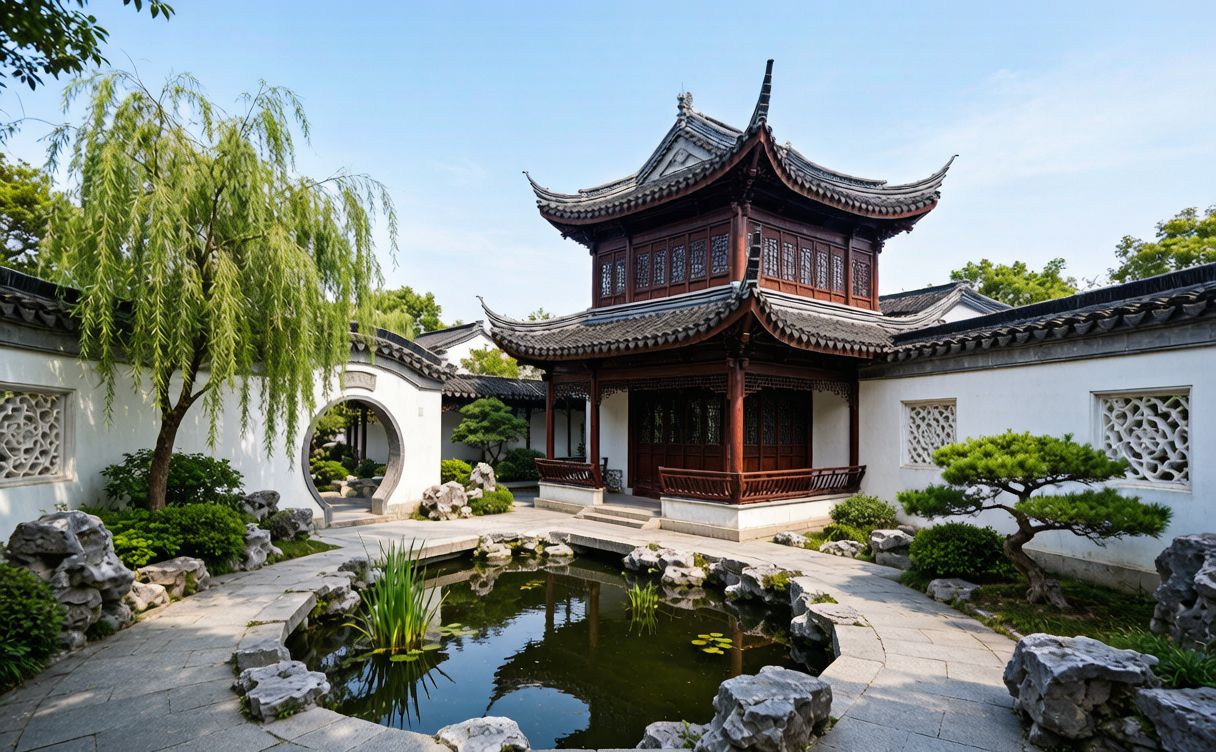
Suzhou isn’t a “one big sight” destination. Its magic is cumulative — you wander, you pause, you sit on a bench in a garden and realize someone designed that exact sightline four hundred years ago. The city was the wealthy silk-and-scholar capital of the Jiangnan region, and the gentry poured their fortunes into private gardens that borrowed scenery from outside the walls and hid it inside. Nine of those gardens sit on the UNESCO World Heritage list, the densest cluster of any Chinese city.
It also pairs perfectly with a bigger trip. Most travelers land in Shanghai, and Suzhou is the easiest “slow down” button you can press. If you’re building your route, our Shanghai 2-day itinerary slots a Suzhou day trip in cleanly, and the best time to visit Shanghai guide doubles as solid timing advice for Suzhou since the two cities share the same climate.
The Gardens: Where to Start
Humble Administrator’s Garden (Zhuozheng Yuan)
The headline act, and rightly so. At about 13 acres it’s the largest of the Suzhou gardens and the textbook example of a Ming-dynasty water garden — ponds take up roughly a fifth of the space, with pavilions, covered walkways, and a trio of “islands” you reach by stone bridge. Go right at opening (7:30 am in peak season) before the tour buses. The far northern section, with its bamboo and lotus ponds, is quieter and where you’ll get the postcard photos without fifty strangers in frame.
Master of Nets Garden (Wangshi Yuan)
My personal favorite, and the best argument that smaller is better. Tucked into a residential lane, it covers barely an acre but feels complete — every step reveals a new framed view. The real treat is the night garden opera: on select evenings the courtyards fill with light and performers stage Kunqu and guqin music in the very rooms the art was meant for. Book ahead; it sells out. You can read more about the broader region in our things to do in Shanghai guide, but nothing there matches sitting silently in a lit courtyard hearing a 600-year-old opera form.
Lingering Garden and the Rest
The Lingering Garden (Liu Yuan) is the other heavyweight, famous for its crazy-paved corridors and a hall full of scholar’s rocks. If your schedule is tight, do Humble Administrator’s in the morning and Master of Nets in the evening, and treat Lingering Garden as optional. Suzhou’s sister city an hour further south is covered in our West Lake Hangzhou guide — many visitors chain the two on one trip.
Garden Etiquette (So You Don’t Annoy the Locals)
Chinese gardens are lived-in public spaces, not museums behind glass. A little awareness goes a long way:
- Keep your voice down. Elderly residents practice tai chi and tea here at dawn; it’s a place for quiet.
- Don’t climb the rocks or lean on the lattice windows. The wood and the scholar’s stones are centuries old.
- Step aside for the red-coated tour guides with their amplified speakers — they move in packs.
- Photograph people only with a smile and a gesture. Canal-side grandmothers in embroidered jackets are happy to pose; silent telephoto shots read as rude.
- Buy the combo ticket if you’ll do three-plus gardens. It’s cheaper than separate entries and saves queue time.
Canals and the Old Town
Pingjiang Road is the spine of old Suzhou — a 1.6 km pedestrian strip along a canal, flanked by lanes where you’ll find teahouses, small museums, and the occasional hidden garden (look for the unmarked doors). Come early or after 7 pm; midday it’s a scooter-and-selfie crush.
For the full water-town experience, leave the city:
Tongli
About 30 km south, Tongli is the gentler option — fewer tour groups, more resident life. The Tuisi Garden here is a UNESCO site in its own right, and the walk along the Three Bridges is genuinely lovely at golden hour. You can reach it by bus or didi in under an hour.
Zhouzhuang
The famous one, and the most commercialized — but still worth it if you go early or stay for the evening when the day crowds thin and the lanterns come on. The doublebridge is the icon, and the riverside restaurants do a fine drunken shrimp and steamed bass. Both towns are easy half-day trips; pick one, don’t try both in a day.
Silk, Tea, and What to Bring Home
Suzhou has been China’s silk capital since the Song dynasty, and the Suzhou Silk Museum is free and genuinely good — you’ll see live looms and understand why the stuff costs what it does. For buying, skip the tourist stalls on Pingjiang and head to the government-run Silk Museum shop or the embroidery houses in Zhenlu. Su embroidery (双面绣, double-sided) is the prestige purchase; a small framed piece is a reasonable souvenir, a full panel is an heirloom.
Biluochun, the local green tea, is harvested in early spring and worth a tin if you’re here in March or April. Any teahouse on Pingjiang will let you sit and brew a pot for the price of a coffee.
Getting There and Around
The high-speed train from Shanghai Hongqiao to Suzhou Station takes 25–40 minutes and leaves every few minutes — no need to book days ahead, though our China high-speed train guide for foreigners walks you through the app if it’s your first time. Once in Suzhou, the metro covers the main gardens, but the old town is best on foot. Didi (ride-hailing) is cheap and the drivers mostly use maps, so dropping a pin works even if your Mandarin is zero.
If you’re staying overnight, the areas around Guanqian Street and the train station are the practical bases — both put you within walking distance of the old town and a short metro ride from the major gardens.
A Note on Timing and Crowds
Spring (March–May) and autumn (September–November) are the sweet spots — mild, and the gardens are at their greenest or most colorful. Avoid the first week of October (National Day) and the Chinese New Year period unless you enjoy shoulder-to-shoulder crowds. Rain is common in June and July but turns the gardens moody and photogenic, and you’ll have them nearly to yourself.
For the historical and preservation background on the gardens, the UNESCO listing is the authoritative reference: Classical Gardens of Suzhou — UNESCO.
Sample 2-Day Plan
Day 1: Humble Administrator’s Garden at opening → Suzhou Museum (free, next door, by I.M. Pei) → lunch near Pingjiang → Master of Nets Garden by late afternoon, night opera in the evening.
Day 2: Morning at Lingering Garden → Silk Museum → afternoon water-town trip to Tongli or Zhouzhuang → back to Suzhou or on to Hangzhou by train.
Written by Karl. Photos and canal-side coffee not included — but strongly recommended.