

The best time to visit Shanghai is spring (March to May) and autumn (September to November), when daytime temperatures sit comfortably in the high teens to mid-20s °C and the humidity finally eases off. I’ve walked the Bund in both the sticky haze of July and the crisp light of an October evening, and the season you choose genuinely changes how much you enjoy every hour you spend outside. This guide breaks down what each season actually feels like, when the crowds and prices spike, and exactly how to pack so Shanghai’s weather never ruins your trip.
Shanghai runs on a humid subtropical climate, which means four clear seasons rather than a simple wet-or-dry split. Winters are cold and damp, summers are hot and muggy, and the two shoulders in between are short windows of genuinely lovely weather. If your dates are flexible, timing your visit to those windows is the single easiest upgrade you can make. For logistics, our Shanghai first-time travel guide covers the basics, while the national picture lives in our best time to visit China guide.
Key Takeaways
– The best time to visit Shanghai is spring (Mar–May) and autumn (Sep–Nov), with comfortable highs of 18–25 °C and lower humidity.
– Summer (Jun–Aug) brings heat above 32 °C, humidity over 80%, and the “plum rain” (meiyu) monsoon from late May to mid-July.
– Winter (Dec–Feb) is cold, damp, and often under-heated indoors, but offers the lowest prices and smallest crowds.
– June is the wettest month (~180 mm of rain); October and November are the sunniest and clearest.
– China’s Golden Weeks (early October, and Chinese New Year in February) cause the year’s worst crowds and highest hotel rates — avoid them if you can.
– Pack an umbrella year-round and dress for “felt” temperature, not the forecast number, because humidity amplifies both heat and cold.
Shanghai’s Climate at a Glance
Shanghai sits at about 31° North on China’s east coast, where the Yangtze River meets the East China Sea, giving it a humid subtropical climate (Köppen Cfa) with four sharply different seasons. Annual rainfall averages roughly 1,150 mm, but it falls unevenly — a heavy rainy season runs from late May through mid-July, the East Asian monsoon locals call meiyu or “plum rain.”
Two numbers anchor the year. The warmest month is July, with an average high near 32 °C (90 °F). The coldest is January, with an average high near 8 °C (46 °F) and lows that can dip below 2 °C. Humidity stays moderate to high most of the year and climbs above 80% in summer, which makes the heat feel far worse than the thermometer suggests.
One thing visitors from drier climates underestimate is how damp changes the feel of the temperature. A 5 °C morning feels brisk at home; in Shanghai’s humid, often under-heated air, it feels genuinely cold. The same humidity sharpens winter chill and amplifies summer heat, so dress for the felt temperature, not the forecast number.
For official festival dates and events, the Shanghai Municipal Administration of Culture and Tourism publishes the most authoritative English listings.
Spring (March–May): The First Golden Window
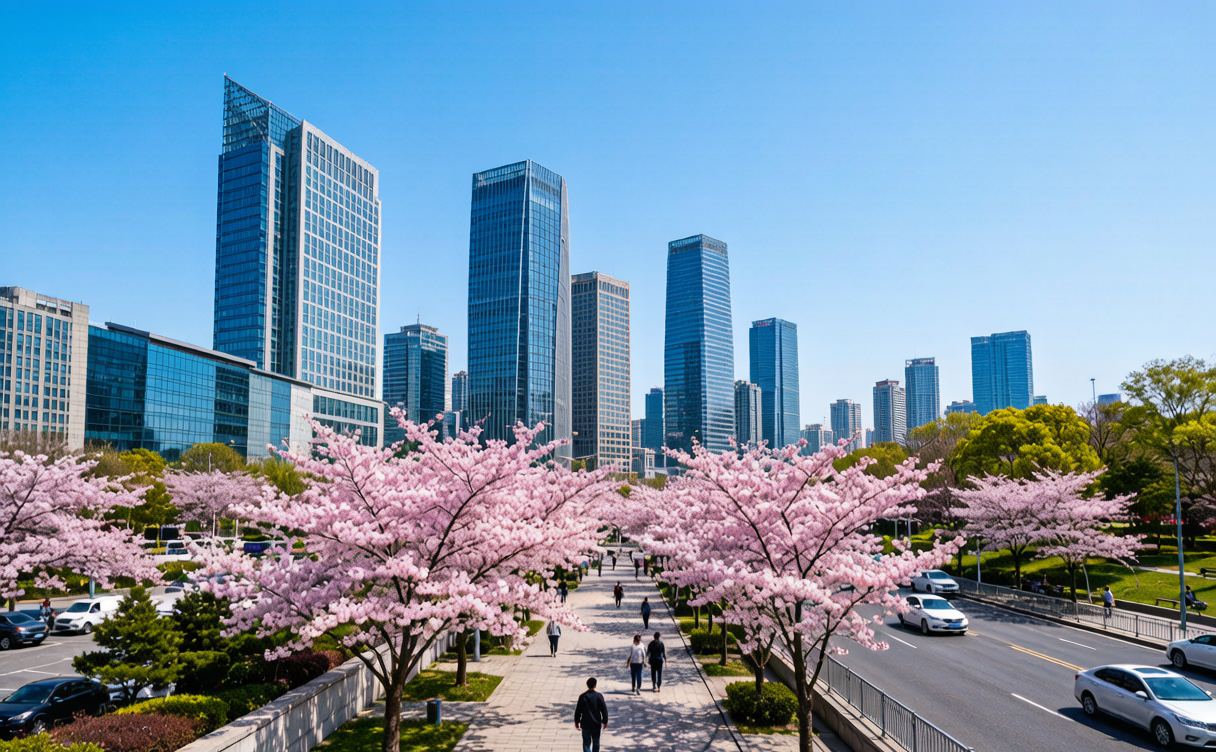
Spring is the season I recommend most often, and it’s usually the first answer to “when is the best time to visit Shanghai.” From late March, temperatures climb steadily from around 14 °C into the mid-20s by May. Humidity is moderate, rainfall is manageable, and the city’s parks and riverfronts come alive with color.
April and May are the sweet spot. You’ll get plenty of sunny days, comfortable walking weather for the Bund and the French Concession, and blooming gardens at places like Yu Garden. Crowds stay reasonable outside the Qingming Festival holiday in early April.
A word of caution: spring isn’t perfect. Late May slides into the front edge of the plum rain season, so you may catch the first humid, drizzly weeks. Pack a light rain shell and you’ll be fine.
Plan your route: Map out the highlights with our things to do in Shanghai guide before you book.
Karl’s spring story
I landed in Shanghai on a Tuesday in late April 2024, and the weather was the kind of thing travel brochures promise but rarely deliver. Around 22 °C, a light breeze off the Huangpu River, and clear skies. I spent the afternoon walking from People’s Square through the former French Concession, and every café terrace was full of locals enjoying the same weather. That single afternoon is why I tell people spring is the time to come — not for any statistic, but because the city itself seems to relax and open up.
Summer (June–August): Heat, Humidity & Plum Rain
Summer is the season to plan around, not avoid blindly. Yes, it’s hot — July averages a high near 32 °C (90 °F) and often feels like high-30s with the humidity. Yes, it’s wet. And yes, the plum rain season from late May to mid-July brings weeks of on-and-off drizzle, with June the wettest month at around 180 mm.
But summer has upsides. Hotel rates dip outside holidays, the city’s indoor attractions (museums, malls, aquariums) are air-conditioned refuges, and Bund nightlife and rooftop bars peak. Typhoon season (July–September) can bring a few days of heavy rain, though direct hits are uncommon.
If you visit in summer, shift your sightseeing to early mornings and evenings, carry a compact umbrella, and treat midday as indoor time.
Karl’s summer story
In July 2023 I ignored my own advice and tried to “power through” a midday walk along Nanjing Road. Mistake. The air felt like a warm wet towel, my phone said 34 °C but it felt closer to 40, and within twenty minutes I was hunting for the nearest air-conditioned mall. The lesson stuck: in a Shanghai summer, the city belongs to early risers and night owls. I now do outdoor stuff before 10 a.m. and after 6 p.m., and the trip is twice as enjoyable.
Autumn (September–November): The Second Golden Window
If spring is my first pick, autumn is a very close second — and for many travelers it’s genuinely the best time to visit Shanghai. September stays warm and humid at first, but by October the air dries out and temperatures settle into a glorious 18–24 °C range, with the city’s clearest, sunniest skies of the year.
October and November are fantastic for photography: the light over the Lujiazui skyline from the Bund is sharp and golden, and the humidity drops low enough that long walking days feel easy. This is also peak season for comfortable sightseeing, so book hotels a bit earlier.
The one trap is the National Day Golden Week (October 1–7), when the entire country travels and crowds and prices spike hard. If you can, visit in mid-to-late October or November to get the weather without the crush.
Winter (December–February): Cold, Quiet & Cheap
Winter is the unpopular choice, and that’s exactly why some travelers love it. December through February brings average highs of just 8–11 °C and chilly, damp air. Indoor heating is less common than in the West, so hotels and trains can feel cold compared to what you’d expect.
The payoff is real, though. Hotels are at their annual low, major sights are uncrowded, and the cold, clear days are great for museums and hotpot dinners. The Chinese New Year period (late January or February, dates move each year) is the exception — it’s the busiest travel week in the country, with many small businesses closed for the holiday.
Dress in layers, bring a warm coat, and lean into indoor experiences like museums and hotpot. If you want a compact plan, our Shanghai 2-day itinerary shows how to use a short visit well.
Crowds & Prices by Month
Crowds in Shanghai track Chinese public holidays more than weather. The two Golden Weeks — National Day (early October) and Chinese New Year (late January/February) — are the worst, with packed trains, full hotels, and surging prices. The Qingming Festival (early April) and May Day holiday (early May) also bring short spikes.
For hotels, deep winter (outside Chinese New Year) and high summer offer the best deals, while spring and autumn command a premium. Book 4–6 weeks ahead for shoulder-season trips.
| Month | Weather | Crowds | Notes |
|---|---|---|---|
| Jan–Feb | Cold, damp | Low (except CNY) | Cheapest hotels; some closures at CNY |
| Mar–Apr | Mild, blooming | Moderate | Spring shoulder; avoid Qingming week |
| May | Warm, humid | Moderate | Plum rain creeps in late month |
| Jun–Jul | Hot, wet (meiyu) | Low–moderate | Wettest period; indoor-friendly |
| Aug | Hot, humid | Moderate | School holidays; typhoon risk |
| Sep | Warm, drying | Moderate | Comfort returns late month |
| Oct | Ideal, sunny | High (Golden Week) | Best weather, worst crowds early |
| Nov | Cool, clear | Low–moderate | Excellent value, great light |
| Dec | Cold, dry | Low | Quiet, cheap, museum-friendly |
Packing & Seasonal Tips
Packing for Shanghai is mostly about handling humidity and sudden rain. A compact umbrella is non-negotiable year-round — even “dry” months average a few rainy days. In summer, choose breathable fabrics and sweat-resistant footwear; in winter, pack a proper coat, warm layers, and hand warmers for chilly hotel rooms.
For spring and autumn, layers work best: a t-shirt plus a light jacket covers the daytime-to-evening swing. Comfortable walking shoes are essential in every season.
Pack smart: Grab the full checklist in our China packing list for first-timers.
Month-by-Month Quick Reference
- January: Coldest, avg high ~8 °C. Quiet and cheap. Good for museums and hotpot.
- February: Still cold; Chinese New Year disrupts travel if it falls this month.
- March: Thaws out, 14 °C highs. Blossoms start; pack a light layer.
- April: Prime spring, low-to-mid 20s °C. Best overall balance of weather and crowds.
- May: Warm and lovely; plum rain creeps in late month.
- June: Wettest month (~180 mm). Hot and sticky; embrace indoor plans.
- July: Hottest (~32 °C), humidity above 80%. Go out early or late.
- August: Similar to July, plus school-holiday crowds and typhoon risk.
- September: Warm, gradually drying; comfort returns late month.
- October: The standout month — clear, sunny, 18–24 °C. Avoid Golden Week.
- November: Cool, crisp, and photogenic. Low crowds, good value.
- December: Cold and dry. Peaceful and cheap.
The Bottom Line
The best time to visit Shanghai comes down to a simple trade-off: spring and autumn give the best weather and most enjoyable days outside, while winter and summer trade comfort for lower prices and smaller crowds. If you can travel in April–May or mid-October–November, do it. Wherever you land, pack for humidity and rain, and let the season shape your daily rhythm.
First time in China? Start with our China travel guide for first-timers to sort visas, payments, and connectivity before you go.
Written by Karl · Updated July 2026