

The short version: a Shanghai travel guide for first-timers comes down to three things — ride the metro, walk the riverfront at night, and let the neighborhoods do the work. I lived in this city for three years, and the mistake I see new visitors make is treating Shanghai like one big photo stop. It isn’t. It’s a stack of different cities wearing the same name: colonial lanes in the west, a sci-fi financial district across the river, and a 1,700-year-old water town an hour out. Get those layers right and your first trip is unforgettable.
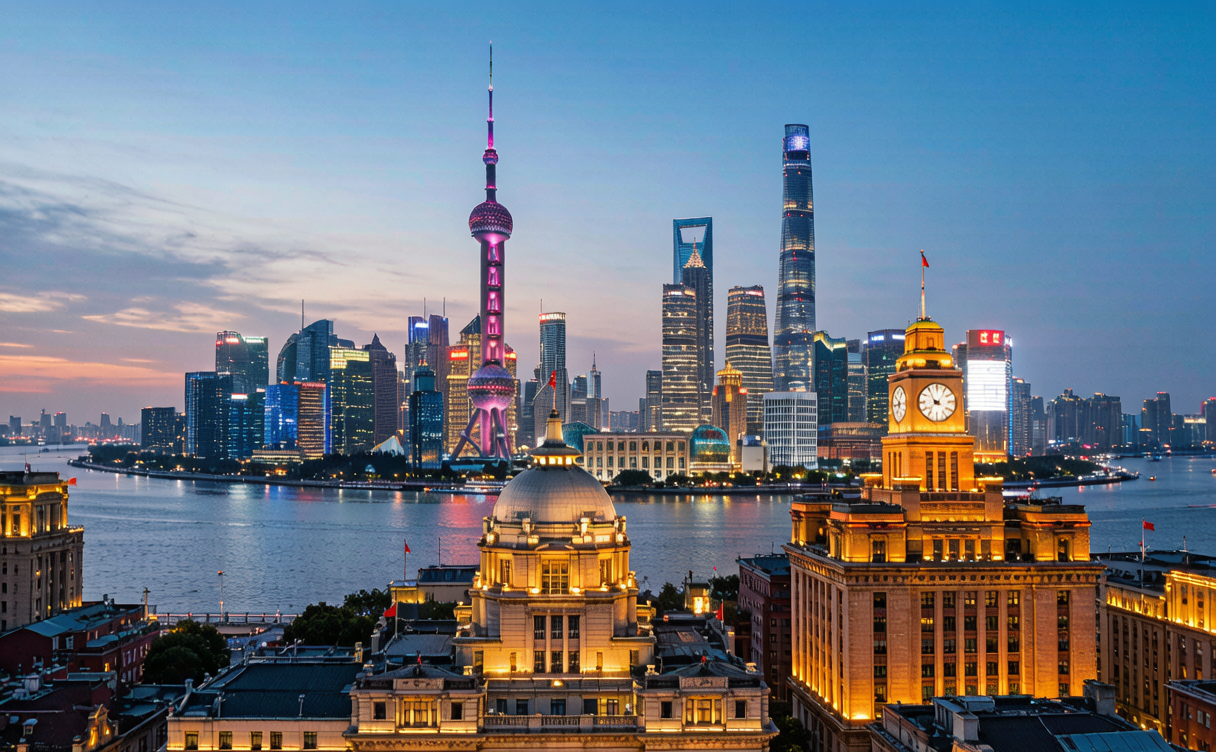
Here’s the scene that sells it. At 8:47 p.m. on a Tuesday, I stood at the railing on the Bund as the floodlights clicked on across the Huangpu River. The whole Lujiazui skyline — Bottle Opener, the twisting Shanghai Tower, the glowing pearl of the Oriental Pearl — lit up in one breath. A woman next to me gasped in Italian. A guy in a Pikachu onesie took a selfie. That’s Shanghai: completely absurd and completely real, all at once.
This guide walks you through the best time to go, how to get around, where to stay, the neighborhoods worth your time, what to eat, and a ready-to-use 2-day plan. If you want the bigger picture first, start with our complete China travel guide for first-timers — it covers visas, packing, and the stuff that applies to every city you’ll visit.
Key takeaways
– Visit in March–May or October–November for mild weather and clear skyline views; summer is hot and humid, winter is damp and gray.
– The metro (¥3–10 / $0.40–1.40 per ride) is the fastest, cheapest way to move — download Alipay before you land for tap-to-ride access.
– Stay in the French Concession or Jing’an for walkable charm; the Bund is gorgeous but overpriced for lodging.
– The Bund + Lujiazui pairing is free and unmissable; Zhujiajiao makes an easy half-day escape from the city.
– Set up mobile payment in advance — cash is fading fast, and our Alipay and WeChat Pay setup guide shows you how in 15 minutes.
Best Time to Visit Shanghai
Shanghai has four real seasons, and they matter more than you’d think for a place known for skyscrapers. The best time to visit China broadly favors spring and autumn, and Shanghai is no exception.
- March–May (best): 15–24°C (59–75°F), blooming parks, comfortable walking. Cherry blossoms hit Century Park in late March.
- October–November (best): 16–23°C (61–73°F), low humidity, crisp skies — ideal for that clear Bund photo.
- June–September (avoid if possible): The “plum rain” season in June is soggy; July–August hits 35°C+ (95°F) with brutal humidity.
- December–February: Cold and damp (3–9°C / 37–48°F), but cheap hotels and thin crowds.
A quick story. My friend Daniel landed in late July, confident that “cities are cities.” Three hours of humidity later he’d bought three T-shirts and was hunting for air-con like it was oxygen. He still loved it — but he’d have loved it more in April. Check the month before you book flights.
Getting Around: The Metro Is Your Best Friend
Forget taxis for daily movement. Shanghai’s metro is clean, fast, bilingual (every sign has English), and covers the entire city. A single ride runs ¥3–10 ($0.40–1.40) depending on distance. Buy a one-day pass (¥18 / $2.50) or — easier — link a foreign card to Alipay and use the “Metro” mini-app to scan in and out. No paper tickets, no queues.
The Maglev from Pudong Airport to Longyang Road is a thrill: it hits 300 km/h (186 mph) and costs ¥50 ($7) one-way. I rode it every time visitors came to town just to watch their faces. From Longyang Road you connect to the metro into the city center.
Buses exist but are harder for non-Chinese readers. DiDi (China’s Uber) works through Alipay or the standalone app, though surge pricing and language barriers make the metro the safer bet for first-timers.
Where to Stay
Pick your base by vibe, not by the airport. Three neighborhoods cover almost every first-timer:
French Concession (best for first-timers). Tree-lined streets, cafés, and low-rise lanes (longtang) that feel European. Walkable to the Bund and Jing’an. Boutique hotels run ¥600–900 ($85–125) a night; hostels from ¥120 ($17). This is where I lived, and the morning coffee walk down Wukang Road never got old.
Jing’an. Central, polished, full of malls and the stunning Jing’an Temple. Great metro links. Similar pricing to the Concession, slightly more “modern business” than “romantic lanes.”
The Bund / Lujiazui. Gorgeous views, but you pay a premium for location and the areas are sleepier at street level. Fine for a one-night splurge; skip it for a multi-day stay.
Top Neighborhoods & Things to Do
The Bund (外滩)
Free, always open, and the single best first-night activity in the city. The west bank is a row of 1920s stone buildings; the east bank (Lujiazui) is the future. Walk it after dark. Come back at 6 a.m. once if you want the surreal sight of the financial district in silence.
Lujiazui & the Skyline
Across the river, take the Shanghai Tower elevator — the world’s fastest, 18 m/s — to the observation deck (¥180 / $25). The Oriental Pearl Tower (¥160 / $22) is kitschier but iconic. The official Shanghai tourism site lists current ticket prices and opening hours if you want to confirm before going.
Former French Concession
Not one spot but a sprawl of streets — Wukang Road, Tianzifang, Fuxing Road. Cafés, hidden bars, and the small Museum of the First CPC National Congress if history’s your thing. A flat white here runs ¥38 ($5.50).
Jing’an Temple (静安寺)
A gold-domed Buddhist temple sitting in a traffic rotary. Entry is ¥50 ($7), and the contrast — monks chanting above a subway station — is pure Shanghai.
Yu Garden (豫园) & Old Town
A classical garden near the Bund (¥40 / $5.50). The surrounding bazaar is touristy but fun for snacks and knock-off everything. Go early; it clogs by noon.
Zhujiajiao Water Town (朱家角)
An hour west by metro (line 17, then a short walk), this 1,700-year-old canal town is free to enter, with paddle boats (¥80 / $11) and riverside dumpling stalls. Sarah, a reader who emailed me, spent a rainy Sunday here dodging drizzle under stone bridges and called it “the calmest four hours of my China trip.” That’s the thing about Shanghai — the ancient stuff is a metro ride away, not a flight.
Food & Money: What to Know Before You Eat
Shanghai food is sweeter than the rest of China — try xiaolongbao (soup dumplings, ¥25–40 / $3.50–5.50 a basket) at Din Tai Fung or a local nanxiang spot. Shengjianbao (pan-fried buns) are the street-level cousin, best eaten standing up at a corner stall for ¥12 ($1.70).
Payment is where first-timers stumble. China has gone near-cashless. You can still use cash in big hotels and some restaurants, but small vendors, metros, and DiDi expect a QR code. Set up Alipay or WeChat Pay before you arrive — our step-by-step Alipay and WeChat Pay guide for foreigners walks you through binding a foreign card in 15 minutes. Do it on Wi-Fi at home; doing it jet-lagged at the airport is no fun.
Ready to pay and ride like a local from hour one? Set up Alipay before you fly — it’s the one prep step that removes 80% of first-trip friction.
Getting to Shanghai (and Onward)
Most first-timers fly into Pudong (PVG) — use the Maglev + metro, or DiDi (~¥160 / $22 to center). Hongqiao (SHA) handles domestic and some regional flights and sits right on the metro.
Shanghai is the best hub for the rest of China by train. The China high-speed train guide for foreigners covers booking on 12306 and trip.com. To Beijing it’s 4.5–6 hours (¥553–933 / $77–130 depending on the train); to Hangzhou just 1 hour (¥73 / $10). Book a few days ahead for peak seasons.
Planning a multi-city trip? Our high-speed train guide shows you how to ride the world’s best rail network without a Chinese phone number.
A Simple 2-Day Itinerary
Day 1 — River & Lanes
– Morning: Yu Garden and the Old Town bazaar (arrive at opening, ~9 a.m.)
– Lunch: soup dumplings nearby
– Afternoon: wander the French Concession, Wukang Road
– Evening: the Bund at dusk, then cross to Lujiazui for the skyline
Day 2 — Temples, Towers & Canals
– Morning: Jing’an Temple, then metro to Lujiazui for Shanghai Tower
– Lunch: mall food court (cheap, clean, English menus)
– Afternoon: Zhujiajiao water town
– Evening: hotpot or shengjianbao back in the Concession
That’s a full, low-stress first trip. You’ll have seen the postcard, the lanes, the temples, and the ancient town — the four Shaghays — without a single wasted afternoon.
Practical Tips Before You Go
- Internet: Google, WhatsApp, and Instagram don’t work without a workaround. Sort roaming or an eSIM before landing.
- Apps to download: Alipay (payment + metro), DiDi (rides), Amap or Baidu Maps (navigation — Google Maps is unreliable here).
- Etiquette: Tap-to-pay, don’t tip (it’s not expected), and queue calmly at the metro — shoving is just how the morning rush looks.
- Safety: Shanghai is very safe for tourists, including solo women. Watch your phone in crowded metro cars, that’s the main risk.
If this is your first China stop, you’re in the right place to start — but Shanghai is one chapter. Our full China travel guide for first-timers ties together visas, money, trains, and the other cities worth your time.
About the author: Karl lived in Shanghai for three years and has walked every neighborhood in this guide — usually in search of the next soup dumpling. Prices and details were last checked in early 2026 and can shift, so confirm tickets on the official Shanghai tourism site before you travel.