

A Great Wall day trip from Beijing is the one excursion almost every first-time visitor plans — and the section you pick decides whether you come home with a quiet, tower-to-yourself photo or a shoulder-to-shoulder selfie. Pick Mutianyu if you want the best overall experience: a fully restored wall, a cable car to save your legs, and far smaller crowds than the famous Badaling.
I learned this the hard way on my first China trip in 2019. I aimed for the most “famous” section, Badaling, and arrived to a wall so packed it looked like a subway platform at rush hour. On a later trip I tried Mutianyu instead and had a watchtower nearly to myself by 9 a.m. This guide compares Mutianyu, Badaling, Jinshanling, and Simatai — how to get to each, what it costs, and when to go.
Key Takeaways
– Mutianyu is the best all-round pick: restored, scenic, cable car and toboggan, far fewer crowds than Badaling — ideal for first-timers.
– Badaling is the easiest to reach (high-speed train, ~30–40 min) but the busiest section; go on a weekday and arrive at opening.
– Jinshanling rewards hikers and photographers with wild ridges and thin crowds, about 2 hours from the city.
– Simatai is the only section open at night and pairs with Gubei Water Town — a longer, special trip, not a quick hop.
– A Great Wall day trip from Beijing works best in spring (April–May) or autumn (September–October); leave the city by 7:30 a.m.
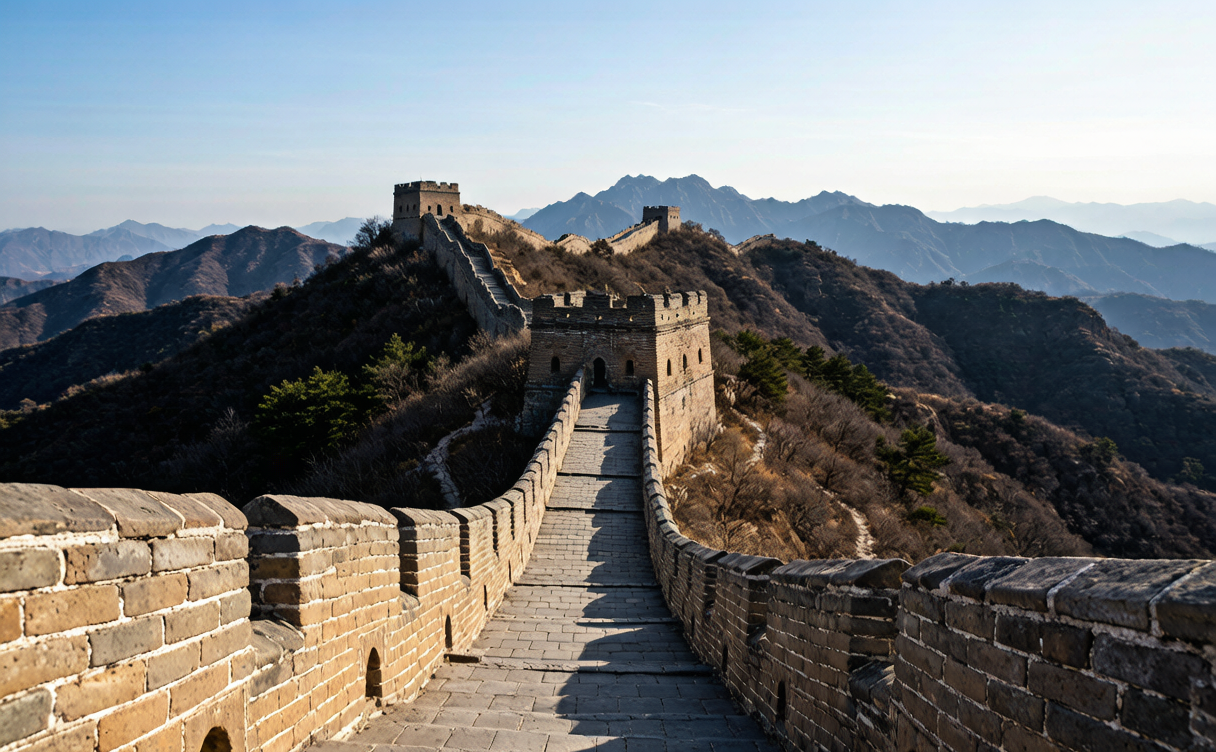
The Four Great Wall Sections You Can Reach from Beijing
Beijing sits boxed in by mountains to the north — exactly where the wall runs. Four distinct sections lie within a 1.5 to 2.5-hour drive.
| Section | Distance from Beijing | Restored? | Crowds | Best for |
|---|---|---|---|---|
| Mutianyu | ~73 km north | Yes | Moderate | First-timers, families, photos |
| Badaling | ~70 km northwest | Yes | Very high | Convenience, train access |
| Jinshanling | ~130 km northeast | Partly | Low | Hikers, photographers |
| Simatai | ~120 km northeast | Partly | Low–moderate | Night-wall tour, Gubei Water Town |
The Great Wall was inscribed as a UNESCO World Heritage Site in 1987 (whc.unesco.org/en/list/438). When planning a Great Wall day trip from Beijing, the section you choose matters more than your arrival neighborhood.
Mutianyu — The Best All-Round Choice
If you read one section, make it this one. Mutianyu is the section I send every first-timer to, and the answer to “which Great Wall section?” for most people.
It’s fully restored with safe watchtowers and lush woodland views. It has a cable car up and a famous toboggan (alpine slide) down — my friend Sarah, who hates heights, still calls the toboggan the highlight of her whole China trip.
Tickets (2025–2026): Entry is around ¥45 in peak season (April–October) and ¥35 off-peak, plus a ¥15 shuttle bus. The cable car runs about ¥100 one-way or ¥140 round-trip; the chairlift-up + toboggan-down combo is also ¥140. Prices shift seasonally, so confirm on the official Mutianyu ticketing site before you go. Allow 2–3 hours on the wall itself.
Badaling — Easiest by Train, Busiest by Far
Badaling is the poster child — the section foreign heads of state visit and the easiest to reach. A high-speed train from Beijing North or Qinghe Railway Station gets you to Badaling Changcheng station in about 30–40 minutes, for roughly ¥20–30 one-way.
That convenience is the problem: it’s the most crowded section near Beijing, shoulder-to-shoulder on weekends and holidays. Entry is about ¥40 peak / ¥35 off-peak, with the cable car at ¥100 one-way or ¥140 round-trip. Choose Badaling only if you have limited time; skip it on weekends, holidays, or any day in early October.
New to China’s trains? Our China high-speed train guide for foreigners walks through buying tickets, which app to use, and how to read your seat number before you board for Badaling.
Jinshanling — For Hikers and Photographers
Jinshanling sits about 130 km northeast, and it’s the section I recommend to anyone who wants to walk the wall rather than pose on it. Partially wild, it offers rolling climbs between watchtowers and almost no crowds.
This is where you go for famous sunrise and “sea of clouds” photos. In April 2024 my friend Marcus started hiking at 5:30 a.m., caught the sun clearing the ridge at Tower 6, and didn’t see another tourist for a full hour. Tickets: entry around ¥65 peak / ¥55 off-peak, cable car ¥40 one-way or ¥65 round-trip. It’s farther out, so a day trip needs an early start.
Simatai — The Night-Wall Section
Simatai is unique: the only section open to visitors after dark. By day it’s a dramatic, partly restored ridge; by night, lanterns light the wall and you walk a short guided stretch under the stars. It sits next to Gubei Water Town, a canal town most visitors combine it with.
Day entry runs about ¥40 plus a ¥20 shuttle, entered through the Gubei Water Town area. The night-wall tour (夜游司马台) is a separate, limited experience costing roughly ¥120–160 and must be booked ahead. A cable car is available one-way for about ¥90. Simatai is the most “project” of the four — budget a full day and bring your passport for the water-town entry.
Mutianyu vs Badaling vs Jinshanling vs Simatai
The four sections serve four different trips. Here’s the head-to-head:
| Factor | Mutianyu | Badaling | Jinshanling | Simatai |
|---|---|---|---|---|
| Crowds | Moderate | Very heavy | Low | Low–moderate |
| Scenery | Wooded hills | Open, grand | Wild ridges | Dramatic + night-lit |
| Access | Bus/tour/car (~1.5 hr) | Train 30–40 min | Car ~2 hr | Car ~2 hr + water town |
| Facilities | Cable car + toboggan | Cable car + train | Cable car | Cable car + night tour |
| Best for | Most visitors | Time-pressed | Hikers, photographers | Night-wall experience |
Verdict: Mutianyu wins for the experience; Badaling wins for convenience; Jinshanling is the hiker’s prize; Simatai is the special-occasion evening. Match the wall to your style, not to the postcard you’ve seen.
How to Get There: Bus, Train, or Tour
Three ways to reach the wall from Beijing:
- Organized tour or shuttle bus. Zero stress: a shuttle handles tickets and return. Best if you’d rather not decode Chinese bus apps.
- Public transport (subway + bus). Cheapest but fiddliest: subway to Huairou then a bus or taxi (2.5–3 hours each way). Badaling is easier via the direct high-speed train.
- Private car or DiDi. Fastest and most flexible (about 1.5 hours to Mutianyu). Costs more, but you beat the crowds.
Guided tour trade-off: you pay a premium and follow someone else’s clock, but you remove every logistical headache — often worth it on a first trip. Whichever you choose, leave the city by 7:30 a.m. Arriving at opening (7:30–8:00 a.m.) is the single biggest crowd-avoidance trick.
Cable Car or Hike?
At Mutianyu and Badaling, the cable car saves a steep 40-minute climb — ideal with kids or a tight schedule. The toboggan down at Mutianyu is the most fun you’ll have on a wall.
If you want the achievement, hike up: the steps are steep and worn but manageable, and you pass watchtowers most cable-car riders skip. My rule: cable car up if it’s your first wall and you want energy for the ridge; hike if you’ve done it before.
Tickets & What to Budget
Peak-season 2025–2026 pricing (confirm on official sites; they adjust seasonally):
- Mutianyu: ¥45 entry (¥35 off-peak) + ¥15 shuttle + ¥140 cable car RT or toboggan combo.
- Badaling: ¥40 entry (¥35 off-peak) + ¥140 cable car RT; train ¥20–30 each way.
- Jinshanling: ¥65 entry (¥55 off-peak) + ¥65 cable car RT.
- Simatai: ¥40 day entry + ¥20 shuttle; night tour ¥120–160; cable car ¥90 one-way.
Plan for roughly ¥300–¥600 per person (about $40–$80) including transport, entry, a cable car, and a meal. For the full first-China plan, see our China travel guide for first-timers.
Best Time of Day & Year
Time of day: Arrive at opening (7:30–8:00 a.m.). The first 90 minutes are golden — soft light, cool air, empty towers. By 11 a.m. the tour buses land and the mood changes.
Time of year: The wall is open year-round, but spring (April–May) and autumn (September–October) are best: clear skies and 15–25°C days. Skip National Day Golden Week (Oct 1–7) and Spring Festival — crowds flood every section. Summer is hot; winter is cold but stunningly empty. For the region-by-region breakdown, see our best time to visit China guide.
What to Bring
- Water and snacks — vendors exist, but prices climb on the wall.
- Comfortable closed shoes with grip; tower steps are steep and worn.
- Sun protection — hat, sunglasses, sunscreen; shade is rare.
- A light layer even in summer; ridge winds are cool.
- Phone and a power bank for maps, translation, and photos.
- Cash or a payment app; set this up before you fly.
Set up payments before you land. Our guide to Alipay and WeChat Pay for foreigners shows how to bind an international card so you can buy tickets, snacks, and the cable car without hunting for an ATM.
Pick Your Section and Go
For most travelers, Mutianyu is the right answer — restored, scenic, and calm enough to enjoy. Badaling suits convenience; Jinshanling is the hiker’s prize; Simatai is the night-wall experience. Match the section to your style and start early.
Ready to build the rest of your route? Start with our Beijing first-time travel guide and pair the wall with the Terracotta Warriors near Xi’an on a longer China loop.
Written by Karl, a travel writer who has taken the Great Wall day trip from Beijing more times than he can count — and still thinks Mutianyu at 9 a.m. is the best hour near the city.