

At 7:40 on a Tuesday in March, I was pressed against the glass at the Chengdu Research Base, watching a cub the size of a Thanksgiving turkey roll off a branch and flop onto its back. It blinked, chewed bamboo, and went back to sleep. That twenty-second spectacle is why this Chengdu travel guide exists — because Chengdu is the one Chinese city where a first-timer can meet a panda before 9 a.m., eat something that rearranges your face by noon, and nap in a teahouse by 3 p.m.
If you’ve read our China travel guide for first-timers, you know the country can feel like a lot on day one. Chengdu is the soft landing — slower pace, relaxed locals, unforgettable food, and those pandas are real and close. I spent three days there in early 2026; here’s everything I wish I’d known before boarding the train.
Key takeaways
– Book Giant Panda Base tickets online days ahead and arrive at opening (7:30 a.m.) — that’s when the pandas are actually moving.
– Budget about ¥120–200 for two at a hotpot restaurant; load the Alipay or WeChat Pay app to pay like a local.
– The best free slow-down spots are Jinli Street, Kuanzhai Alleys, and a ¥30 gaiwan tea at People’s Park’s Heming Teahouse.
– Leshan Giant Buddha (¥80 entry) and Dujiangyan (¥80 entry) are easy half-day train trips from Chengdu.
– Chengdu slots perfectly into a first China trip thanks to fast trains and walkable, visitor-friendly neighborhoods.
Why Chengdu works for a first China trip
Most first-timers land in Beijing or Shanghai and get hit with crowds, subway confusion, and a language wall. Chengdu is different in a way you feel within an hour. The metro has English signage that makes sense, the center is flat and walkable, and the pandas are a 40-minute metro-plus-bus ride from your hotel — not a three-hour expedition.
It’s also a major high-speed rail hub, so you can roll in from Xi’an or Chongqing, do your panda-and-hotpot circuit, and roll out again without a flight. For a country that intimidates newcomers, that simplicity is gold.
The Giant Panda Base: book ahead, go early
This is the one part you can’t wing. The Chengdu Research Base of Giant Panda Breeding no longer sells gate tickets — every visitor, including foreigners, must book online in advance via the official WeChat mini-program, the panda.org.cn ticket page, or platforms like Trip.com and Meituan. There is no offline ticket window, and holidays sell out days ahead.
A few things I learned the hard way:
- Price: ¥55 (about $8) for an adult ticket. Kids under a certain height go free; students get a discount with ID.
- Opening hours: March to October, morning entry runs 7:30 a.m.–12:00 p.m. (yes, it opens at 7:30). November to February it’s 8:00 a.m. The park clears by 5:30 p.m.
- Book when: Tickets are released roughly two weeks ahead. Grab them as early as you can for a weekday morning.
- What to bring: Your passport (they check it against the booking), comfortable shoes, and patience for the shuttle queue.
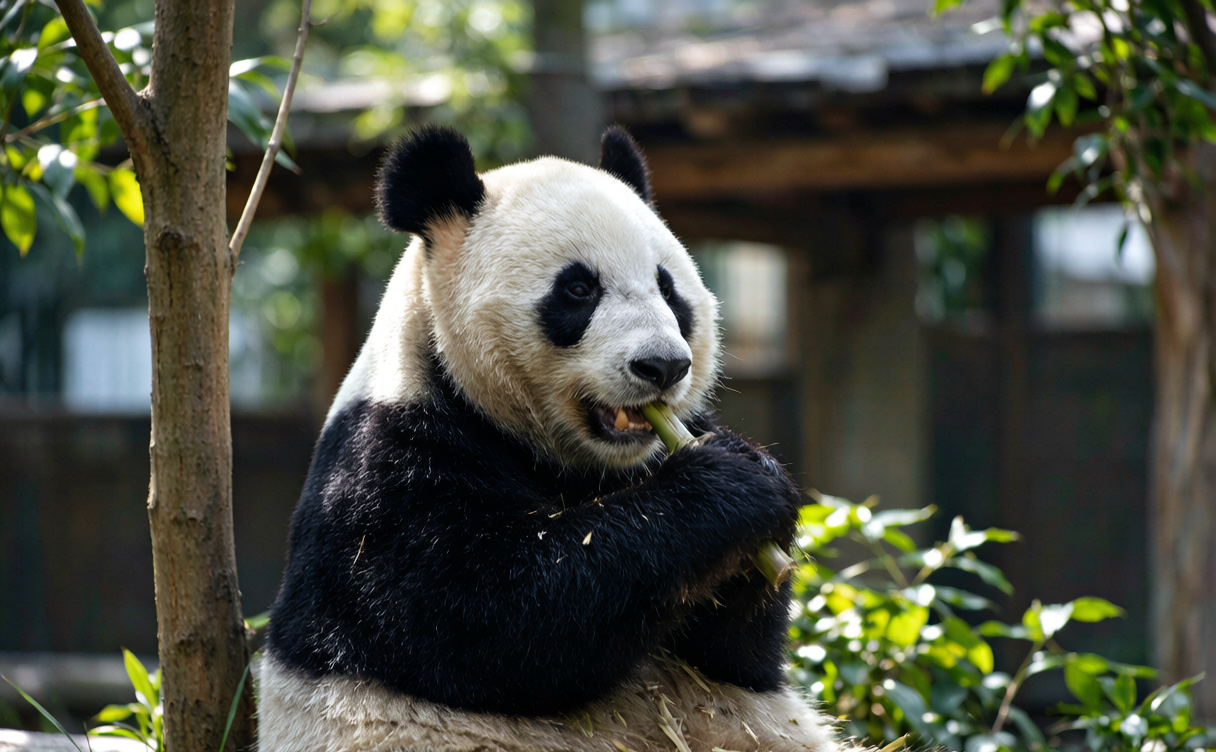
The best time to see pandas is the first 90 minutes after opening. Keepers put out breakfast around 8 a.m., and the bears — especially the juveniles — are awake, hungry, and clumsy in the best way. By late morning they’ve eaten and collapsed into the famous panda loaf pose; by afternoon most are asleep. Enter via the South Gate (closer to the cub nursery), walk up toward the Subadult Enclosure, and don’t skip the Red Panda area — those rust-colored acrobats climb the fences right above your head.
Mini story: Sarah, a nurse from Manchester, built her whole two-week China trip around this one morning. She caught metro Line 3 to Panda Avenue, then the shuttle, and was at the glass by 7:35. “I cried a bit,” she said, watching a cub belly-flop into hay. “I’ve wanted this since I was nine.” She’d booked nine days early via Trip.com after the official site confused her — smart, since that Wednesday sold out by the weekend.
Want help stitching Chengdu into a bigger route? Our China travel guide for first-timers lays out how to chain cities by train without losing your mind.
Eating Sichuan: hotpot, mapo tofu, dan dan noodles, and string tofu
Chengdu doesn’t have a food scene — it has a personality. Half the dishes will numb your lips with Sichuan peppercorn, and you’ll love it.
Sichuan hotpot is the ritual you can’t skip. A bubbling pot split into a ferocious red chili-oil broth (the “nine-grid” mala side) and a mild bone-broth side. You cook thin slices of beef, lotus root, and mushroom at your table; a sit-down hotpot for two runs about ¥120–200 all in. My first left my mouth tingling for an hour, so I ordered it again two nights later.
Mapo tofu is the comfort dish: silken tofu in a spicy, numbing sauce with ground pork. A bowl runs ¥18–28. Dan dan noodles — wheat noodles with chili oil and preserved vegetables — cost ¥12–18 and make a perfect lunch between sights.
Then there’s chuàn chuàn xiāng, often called “string tofu” — a universe of skewers (tofu, veggies, meats) boiled in shared spicy broth and charged by the stick at ¥0.5–1 each, so a filling meal lands around ¥60–80 per person. The most fun, least formal way to eat in the city.
Paying is easier than you think if you set up mobile payments before you leave home. Most small restaurants and skewer shops are cash-light and card-shy — they want you to scan a QR code. Our guide to Alipay and WeChat Pay for foreigners in China walks you through linking a foreign card in about ten minutes, and it saved me from a very awkward “I only have a ¥100 note and the skewer lady has no change” moment.
Mini story: My friend Tom, a vegetarian from Berlin, panicked at beef-heavy hotpot menus. The server pointed him to the “yuanyang” (split) pot with lotus, potato, enoki, and string tofu. He spent ¥68, ate until he slumped, and called the numbing “like a tiny friendly electric toothbrush on my tongue.” Vegetarians eat well here — say “wǒ chī sù” (I eat vegetarian) and point at the tofu.
Slow down: Jinli, Kuanzhai Alleys, and tea in People’s Park
Chengdu’s real attraction isn’t a building — it’s the art of doing nothing. After two days of panda-chasing and chili-induced sweating, I learned to copy the locals.
Jinli Street is a free Qing-dynasty-style lane by the Wuhou Shrine, strung with red lanterns and snack stalls selling brown sugar pancakes and the famous “three guns” rice balls. Go after 5 p.m. when the lanterns glow.
Kuanzhai Alleys (“Wide and Narrow Alleys”) is a free network of restored lanes — cafés, boutiques, bars. It’s touristy, but the courtyard teahouses are genuine, and jasmine tea on a bench at dusk is worth the crowds.
The crown jewel is People’s Park, specifically the Hemu Teahouse (open-air since the 1920s). Order a gaiwan — a lidded bowl of tea — for about ¥30 with unlimited refills and just sit. On Saturday afternoons the “matchmaking corner” behind the teahouse fills with parents holding up paper resumes of single children; it’s the most Chengdu thing you’ll see. For ¥30 more, a practitioner does a traditional ear-cleaning locals swear by.
Mini story: I met Li Wei, a retired railway engineer, at a corner table in Heming. He’d been coming to the same seat every Tuesday for twenty years. “Chengdu people don’t hurry,” he told me, pouring my third refill without being asked. “In Shanghai they run. Here we sit. The panda sleeps, we drink tea. Same philosophy.” He waved off my attempt to pay and said the tea was on him — “You came all the way from far away to watch a bear eat. That’s worth a cup.”
Two easy day trips: Leshan Giant Buddha & Dujiangyan
If you’ve got a fourth or fifth day, two side trips are so easy they’re almost mandatory.
Leshan Giant Buddha is the largest stone Buddha in the world — a 71-meter figure carved into a riverside cliff. Entry is ¥80. High-speed trains from Chengdu East or South to Leshan Station cover ~150 km in 40–50 minutes for ¥50–65; a bus or taxi then reaches the scenic area in 20 minutes. Walk the cliffside stairway past the Buddha’s ear, or take a river ferry for the full frontal view without the queue.
Dujiangyan is a 2,300-year-old irrigation system that still controls the Min River — a UNESCO site and a feat of ancient engineering. Entry is ¥80. Trains from Chengdu run every half hour and take 20–40 minutes for ¥10–32; the station is 6 km from the site (taxi 20 minutes). Add nearby Qingcheng Mountain for a Taoist temple hike.
Both trips show why China’s rail network is a first-timer’s best friend. Before you go, read our China high-speed train guide for foreigners — it covers buying tickets on the 12306 app and scanning your passport at the gate.
Getting around and when to go
Chengdu’s metro is clean and cheap (¥2–7 a ride), with English signs. DiDi (local Uber) runs through Alipay or WeChat for pocket change, and the flat center makes walking between Jinli, the alleys, and the park pleasant.
When to visit: Spring (March–May) and autumn (September–November) are best — mild and good for panda-watching. Summer is hot and sticky; winter is cold but crowd-free. If your dates are flexible, our best time to visit China guide breaks down weather and crowds month by month.
Note for 2026: public holidays (Golden Week in early October, Spring Festival in February) pack every attraction. If you must travel then, book panda tickets the moment they’re released and see the Buddha on a weekday.
The bottom line
Chengdu is the rare city that delivers a bucket-list moment (pandas), a world-class food education, and a real chance to slow down — without the friction that scares off first-timers. Spend three days: one for the pandas, one for eating and the alleys, one for a day trip. Set up your payment apps, book the panda ticket before you fly, and save room in your stomach.
Start planning your Chengdu trip → and pair this city with the rest of your China route using our first-timers guide and high-speed train tips. The pandas are waiting at 7:30 a.m. — don’t be late.