

The single most useful China packing list for first-timers isn’t about clothes — it’s about the three things that will actually break your trip if you forget them: the right plug adapter, a working internet connection, and a phone that can pay for your dinner. I learned this the hard way. On my first trip across China in 2024 I landed in Shanghai with a suitcase full of “just in case” outfits and precisely zero plans for how I’d stay online or tap to pay. Six cities and a year of return trips later (Chengdu, Xi’an, Beijing, and a long stretch through Xinjiang), I’ve boiled it down to what earns its space in your bag and what quietly doesn’t. Here’s the honest, no-fluff version.
Key Takeaways
– Bring a Type I/Type A plug adapter and a small multi-USB charger — China mostly uses Type A and Type I sockets, and hotels rarely loan you one that fits.
– Set up Alipay or WeChat Pay before you fly — cash is accepted but cards often aren’t, and these apps handle 90% of payments, maps, and even train tickets.
– Get an eSIM or tourist SIM at the airport so you’re online the moment you land, instead of hunting for Wi-Fi you can’t log into.
– Pack a small medical kit with anti-diarrheal, rehydration salts, and any prescription meds in their original boxes — pharmacies are everywhere but language barriers are real.
– Leave the heavy “maybe” layers at home — China’s cities are modern, malls are heated, and you can buy almost anything cheaply on the ground.
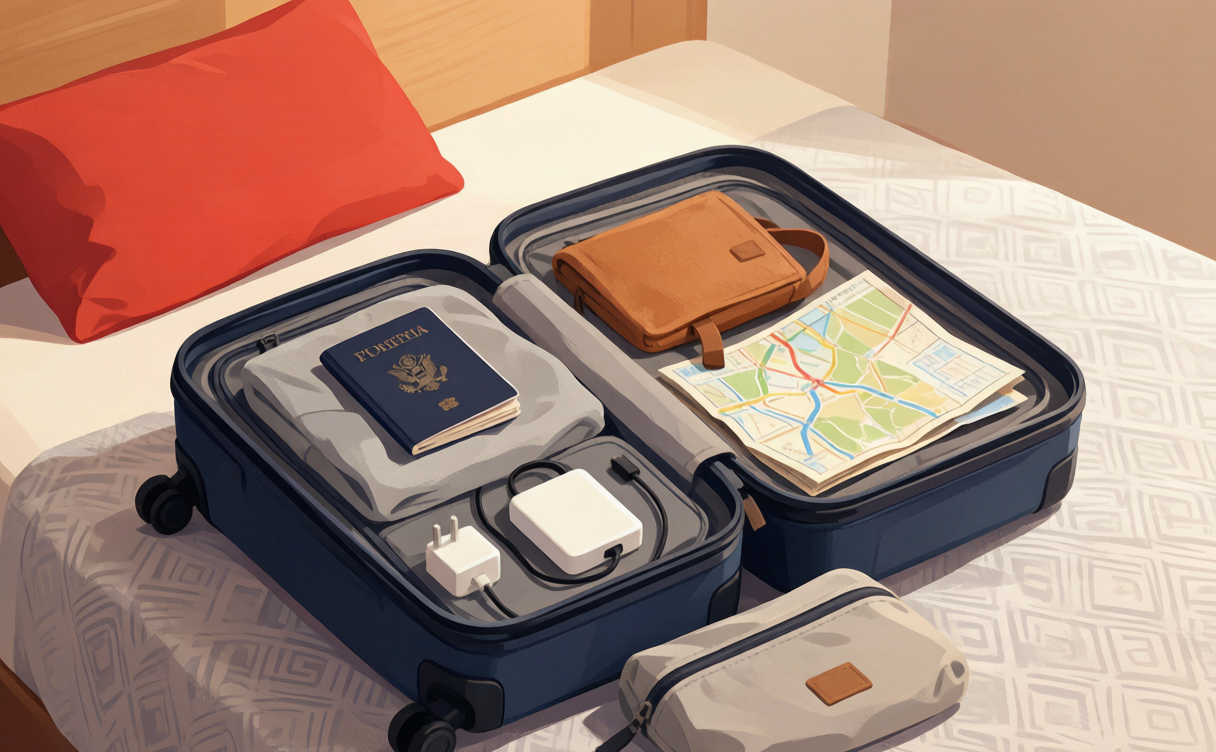
Documents and Money: The Boring Stuff That Ruins Trips
Let me start with the unglamorous corner, because this is where first-timers actually get stuck. Your passport is everything in China — you’ll show it at hotels, some attractions, and occasionally random security checks. Keep a paper photocopy and a phone photo of the ID page, plus your visa or transit approval.
If you’re entering under China’s 144-hour visa-free transit, print the confirmation before you leave home. I’ve watched travelers at Beijing Capital Airport fumble with screenshots that wouldn’t load. Our guide to China’s 144-hour visa-free transit walks through the exact paperwork, and it’s worth reading on a real screen, not your phone at the gate.
For money, bring a small amount of US dollars or your home currency as a fallback, and two bank cards (one Visa, one Mastercard) in case one gets declined. But the real lesson: cards barely work at small shops, and you’ll rarely need much cash at all once your phone pays.
Plugs, Power, and Staying Connected
This is the section I wish someone had shouted at me in an airport lounge. China runs on Type A (two flat pins, like the US) and Type I (three angled pins, like Australia) sockets, at 220V. If you arrive with only a UK three-pin plug, you will not charge your phone without an adapter.
Here’s my Xi’an story. On night two of that trip, my only adapter was buried in a checked bag that had been sent ahead, and my phone hit 4% while I was trying to navigate back to the hotel through a maze of hutong alleys. I ended up buying a sketchy adapter from a 24-hour convenience store for three times the fair price, and it smelled faintly of burning plastic. Lesson learned: pack your adapter in your carry-on, not your suitcase.
On the connectivity side, don’t rely on roaming. Free public Wi-Fi in China often blocks foreign logins or requires a local number. The fix is simple: sort your data before you land. Our breakdown of the best eSIM and SIM options for tourists covers which providers actually work and how to install an eSIM in five minutes at the airport. I now travel with an eSIM pre-loaded and a tiny multi-port USB charger that powers my phone, watch, and power bank from one wall socket.
Apps You’ll Actually Use
Forget the 20-app survival kit some blogs push. You need three, and you should install and test them at home:
- Alipay (or WeChat Pay) for payments, metro cards, and even hailing taxis.
- A maps app that works in China — both Alipay and WeChat have built-in maps, and they’re far better than Google Maps, which barely functions behind the Great Firewall.
- Translate — either a dedicated app or the camera-translate inside Alipay.
Setting up payments is the one task worth doing before you board. You’ll need to link a card and verify your passport. Our step-by-step guide on how to set up Alipay and WeChat Pay as a foreigner saves you the confusion of doing it in a noisy queue while a cashier waits. I cannot stress this enough: I watched a friend in Chengdu nearly miss a hotpot table because his payment app wasn’t verified and the restaurant didn’t take cards.
Health, Medicine, and Toiletries
China is clean, modern, and safe, but your stomach may still protest the change in oil, spice, and bacteria. Pack a small kit:
- Anti-diarrheal tablets (loperamide) and rehydration salts
- Painkillers and any personal prescription medication, in original packaging with the prescription note
- Hand sanitiser and tissues (many public toilets don’t supply either)
- Sunscreen and lip balm — the Xinjiang sun is no joke
A note on prescriptions: bring more than you think you’ll need, because refilling a foreign prescription is a hassle. Pharmacies (药店) are on every corner and staff are helpful, but ingredient names differ, so having your meds labeled in English and a photo of the box helps enormously.
Clothing: What to Pack and What to Skip
Here’s where most first-timers overthink — or, in my case, over-pack. Before my Xinjiang trip in late 2024, I stuffed a suitcase with three jackets, hiking boots, and enough layers for a polar expedition. The reality? I wore the same two outfits on rotation, bought a brilliant and cheap down jacket in Urumqi for less than £30, and dragged 9kg of dead weight across deserts and train platforms for two weeks.
The truth about clothing in China: cities are climate-controlled, malls are warm, and local markets sell quality gear at a fraction of Western prices. Pack for one climate at a time and shop on the ground if your plans change. A few reliable rules:
- Comfortable walking shoes you’ve already broken in
- One light rain shell (Beijing and the east coast get sudden downpours)
- Modest layers for temples and mosques (shoulders covered)
- A scarf — doubles as warmth, sun shade, and temple cover-up
If you’re unsure when to visit for the weather you want, our guide to the best time to visit China breaks it down by region and season. I hit Xinjiang in autumn and it was perfect; I’d have melted in July.
The Little Things That Earn Their Weight
A short, practical list of small items I now never fly without:
- A power bank (10,000mAh is plenty) — you’ll use maps and translation all day
- A universal adapter plus one spare USB cable
- A neck wallet or anti-theft pouch for passport and cards
- Tissues and a small roll of toilet paper
- A reusable water bottle (filtered, if you’re cautious about tap water)
- Earplugs — Chinese high-speed trains are quiet, but budget hotels can be lively
None of these are glamorous. All of them will save you at least once.
What You Can Leave at Home
Just as important: the stuff that wastes space.
- Heavy books or guides — everything lives on your phone
- Excess cash — Alipay covers nearly all daily spending
- A hairdryer — hotels provide one
- Too many shoes — one pair of broken-in walkers is enough
- “Just in case” outfits — you’ll buy what you need locally, often cheaper
When I trimmed my bag from that Xinjiang disaster down to a single carry-on for Beijing, my trip got visibly better. Less to lose, less to lug, more energy for the Great Wall.
Frequently Asked Questions
Do I really need a plug adapter for China?
Yes. China uses Type A and Type I sockets at 220V, and most foreign plugs won’t fit. Pack a compact adapter in your carry-on — don’t trust the hotel to lend you one, because many don’t. A multi-USB charger lets you power several devices from a single socket.
Can I use my normal phone and SIM card in China?
Your phone will work, but roaming data is expensive and unreliable, and many apps (Google, WhatsApp, Instagram) are blocked without a VPN. The practical move is an eSIM or a tourist SIM bought at the airport, which gives you local data that actually reaches the sites and maps you’ll use. See our eSIM and SIM guide for tourists for setup.
Should I bring cash or rely on cards?
Bring a little cash as a backup, but don’t expect cards to work at small shops, markets, or many restaurants. Set up Alipay or WeChat Pay before you fly — they handle the vast majority of payments, from street food to high-speed train tickets.
What medicine should I pack for China?
A small kit with anti-diarrheal tablets, rehydration salts, painkillers, and any prescription medication in its original box. Pharmacies are common, but language and ingredient differences make it easier to bring your own basics. Add hand sanitiser and tissues, since public toilets often lack both.
By Karl — a UK-based traveler who has spent weeks across China and writes practical, first-hand guides.