

Updated for China’s Dec 2024 expansion to 240 hours (10 days) for 55 countries via 65 ports.
Scope of this page: This article covers one narrow subject — the distinctive rules and limits of the 144-hour transit concept: its old activity boundaries, how the stay clock is calculated, and the misconceptions that still surround it. It does not list ports, documents, or step-by-step procedures; those belong to the main visa-free travel guide for 2026 and to the dedicated transit-process guide. All figures below reflect the National Immigration Administration interpretation current as of Nov 2026.
If you are flying through China and dreading visa paperwork, the answer up front is that the 144-hour visa-free transit China rule lets eligible passport holders enter without a visa for a short stopover — and since December 17, 2024, that window has been extended to 240 hours (10 days). As of July 2025, the rules cover 55 countries, 65 open ports, and 24 provincial regions. The sections below explain what made the old 144-hour rule distinctive and which of those limits still matter today.
Key Takeaways
– The 144-hour transit rule was upgraded to 240 hours (10 days) on December 17, 2024, and now applies to 55 countries through 65 designated ports (per the NIA’s July 2025 interpretation).
– You must hold a passport valid for at least 6 months and an onward ticket with a confirmed seat and departure date to a third country or region (Hong Kong, Macau, and Taiwan count).
– The stay is counted from 00:00 the day after entry — a Monday 3 p.m. arrival gives until 3 p.m. the following Thursday under today’s 240-hour rule.
– You may travel across all 24 eligible provinces and municipalities, but cannot work, study, or do journalism without a separate visa.
– Tell airline staff at check-in; they flag “transit without visa” and issue the temporary entry permit at the transit desk on arrival.

Is It 144 Hours or 240 Hours Now?
It is 240 hours in practice, but the older name persists. The 144-hour visa-free transit China program was built to let international travelers with a connecting flight explore a city during a layover; historically, eligible visitors at designated ports could stay up to six days without applying for a visa in advance. On December 17, 2024, China’s National Immigration Administration (NIA) merged the old 72-hour and 144-hour schemes into a single, more generous 240-hour (10-day) policy.
Most travelers still search for the phrase “144-hour visa-free transit China,” so the name is kept here — but the current benefit is noticeably better. The policy has one purpose: transit. You must be genuinely passing through China on the way to a third country or region. It is not a tourist-visa replacement, and its distinctiveness lies in the conditions attached to that passage, not in the length of the stay alone.
New to the country? Our comprehensive China travel guide for first-timers covers SIM cards and local etiquette alongside the entry rules.
Which Nationalities Used the 144-Hour Rule?
Citizens of 55 countries qualify under the NIA’s July 2025 policy interpretation. The list spans Europe (40 nations, including the UK, Germany, and France), North America (the United States and Canada), South America (Brazil, Argentina, Chile, and Peru), Oceania (Australia and New Zealand), and Asia (Japan, South Korea, Singapore, Brunei, and others).
A typical use of the old rule looked like this: a British consultant flying London → Beijing → Seoul cleared the transit desk in under 20 minutes, spent four days in Beijing, then rode the high-speed train to Xi’an for a long weekend — with a UK passport and a confirmed Seoul onward ticket as the only documents the officers asked to see. If your nationality is not on the list, you still need a standard visa; check the official NIA page (en.nia.gov.cn) for the full country list before you book.
Where Did the 144-Hour Rule Let You Go?
The defining limit of the old stopover permit was geography: a single city or a tightly drawn zone. That boundary has been replaced. You can now enter through 65 designated open ports across 24 provincial regions — up from 39 ports and 19 regions before the 2024 expansion — and move across all 24 provinces during your stay. Land in Shanghai and train up to Beijing, or fly into Guangzhou and explore Guilin: the old restriction to a single city is gone.
The comparison below shows which activity-area rules changed and which remain as conditions of the transit permit. All figures are as of Nov 2026.
| Activity-area rule (unit) | Old 144-hour position | Current position (as of Nov 2026) |
|---|---|---|
| Eligible ports (count) | 39 | 65 |
| Eligible provinces / regions (count) | 19 | 24 |
| Permitted movement (areas) | One city / local zone | Cross-province within the 24 designated regions |
| Permitted stay (hours) | 144 | 240 (10 days) |
| Prohibited activities | Work, study, journalism | Work, study, journalism — unchanged |
Major entry points include Beijing (Capital and Daxing), Shanghai (Pudong and Hongqiao), Guangzhou, Chengdu Tianfu, Xi’an, Hangzhou, and Kunming. The December 2024 update added places such as Taiyuan, Hefei, Wenzhou, Yiwu, Haikou, Sanya, and Zhangjiajie.
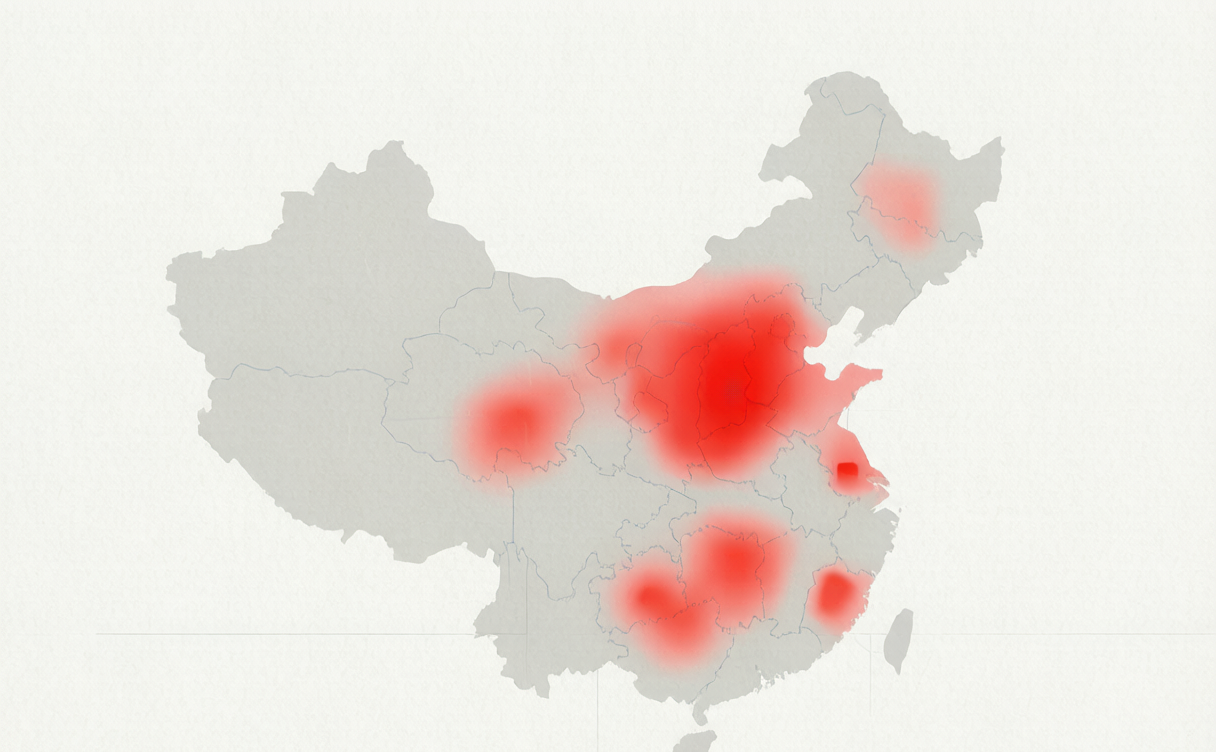
One limit is easy to miss: crossing provinces is allowed, but leaving the designated area is not. A side trip into a non-listed region breaks the rules even if your onward ticket is valid. Since you will pay for everything locally, set up Alipay or WeChat Pay before you land to avoid cash problems at the airport.
What Must You Show at the Transit Desk?
Three things: a valid passport with at least six months of remaining validity, an onward ticket to a third country or region with a confirmed seat and a departure date, and a genuine transit itinerary — your stop in China cannot be your final destination.
Does a ticket to Hong Kong, China count as a third region?
Yes. Hong Kong, Macau, and Taiwan count as “third regions,” so a flight from Tokyo to Hong Kong, China via Shanghai qualifies. A round trip that returns to your origin country does not. Confirmation matters as much as destination: a traveler who books an unconfirmed budget ticket to Bangkok three weeks later — no seat assignment, no fixed date — will be sent back to the check-in counter, while a confirmed connection clears the desk.
You also cannot work, study, or report as a journalist under this policy. Tourism, business meetings, visiting friends, and short courses are fine.
How Is the Clock Calculated?
Your 240-hour clock starts at 00:00 (midnight) on the day after you land. If you land at 3 p.m. on a Monday, the old 144-hour window would have closed at 3 p.m. the following Sunday; under the current 240-hour (10-day) rule, you actually have until 3 p.m. the next Thursday. Border officers stamp your permitted exit time on the temporary entry permit, so check it before leaving the desk.
When exactly does the window close?
At the departure time stamped on your temporary entry permit — not at a rounded date you calculated yourself. Count carefully: overstaying, even by an hour, can mean a fine and a flag on your immigration record. Set a phone reminder for 12 hours before your deadline. The paperwork is forgiving; the deadline is not.
Which Misconceptions Trip Up Transit Travelers?
A few traps recur because the old 144-hour rule is still discussed as if it were current:
- “I can just show up without telling the airline.” Your carrier must flag “TWOV” (transit without visa) at origin check-in. If they do not, you could be denied boarding.
- “My phone ticket will load at the border.” Print or screenshot the onward ticket; Wi-Fi at immigration can be spotty.
- “Any city in China is fine.” Stay inside the 24 eligible provinces. A side trip to a non-listed area breaks the rules.
- “The season does not matter on a layover.” The best time to visit China is spring (April–May) or autumn (September–October) — pleasant weather makes a 10-day stopover easier to enjoy.
If you will be moving between cities, our China high-speed train guide for foreigners explains how to book bullet-train tickets with a foreign passport — useful when you want to make the most of the visa-free days.
Final Thoughts
The 240-hour policy — what most travelers still call the 144-hour visa-free transit — has quietly grown into something better: a 10-day, 24-province chance to see the country on a layover. Remember the four pillars — eligible nationality, valid passport, confirmed third-country ticket, and a midnight-day-after start time. Plan your route, tell your airline, and you will clear immigration smoothly. The name is historical; the limits described above are what actually shape the trip. For the wider set of entry routes that travelers compare against this one, see the main guide to visa-free China in 2026.
Frequently Asked Questions
Is it 144 or 240 hours now? China extended its visa-free transit from 144 hours to 240 hours (10 days) on 17 December 2024. The name “144-hour” is still the common search term travelers use, but the current benefit is 240 hours. Both describe the same transit-without-visa permit, now valid for 55 countries and 65 ports.
Which countries and ports are eligible? As of the NIA’s July 2025 interpretation, 55 countries qualify — including the US, UK, Canada, Australia, and most of Europe and Asia. You can enter through 65 designated open ports across 24 provincial regions, from Beijing and Shanghai to Chengdu, Xi’an, and Zhangjiajie.
How is the 240-hour clock calculated? Your stay starts at 00:00 (midnight) on the day after you land. A Monday 3 p.m. arrival gives you until the following Thursday 3 p.m. under the 240-hour rule. Border officers stamp your exact exit time on the temporary entry permit — set a reminder before the deadline.
Can I travel between cities during my stopover? Yes. The 2024 expansion lets you move freely across all 24 eligible provinces and municipalities — land in Shanghai and train up to Beijing, or fly into Guangzhou and explore Guilin. The old restriction to a single city is gone, so plan a multi-city route.
Last updated: July 2025, based on the National Immigration Administration’s official policy interpretation (en.nia.gov.cn) and the State Council announcement of December 17, 2024 (english.www.gov.cn).
Written by Karl. Karl researches and writes about China’s visa-free transit rules for foreign visitors.
The 240-hour transit window is generous, but the first hour after landing is not. You still need to clear immigration, get a working payment method and reach a hotel licensed to register a foreign passport. Pre-booking the car removes the variable that most often goes wrong, especially on late arrivals when the taxi queue and the ride-hailing zones are at their worst. The airport transfer guide covers fixed-price pickups, flight tracking for delays and the terminal meeting points at the main gateway airports.