

Most visitors to Hebei fixate on Shijiazhuang as a transit point and never look 15 km north, which is exactly why Zhengding stays so calm. I took a client there on a whim between trains and we ended up staying the night — a small walled county whose streets hold one of the great Buddhist temples in northern China and a cluster of pagodas you can walk between in an afternoon. This Zhengding travel guide is the briefing I now give everyone passing through the provincial capital: how to get there, what to see, what to eat, and how to spend a quiet day among stone and bronze.
Zhengding’s weight is historical. For a thousand years it was a garrison and religious centre — historically called the “brilliant state of the north” (北方雄镇) — and it drew imperial patronage that left an extraordinary density of surviving architecture. The headline is Longxing Temple (隆兴寺), but the town also keeps four distinct ancient pagodas, a restored Ming city wall, and the film-set mansion built for the 1987 TV version of Dream of the Red Chamber. For the wider region, the Shijiazhuang travel guide is the base, since Zhengding is effectively a northern suburb of the capital and an easy half-hour hop from it.
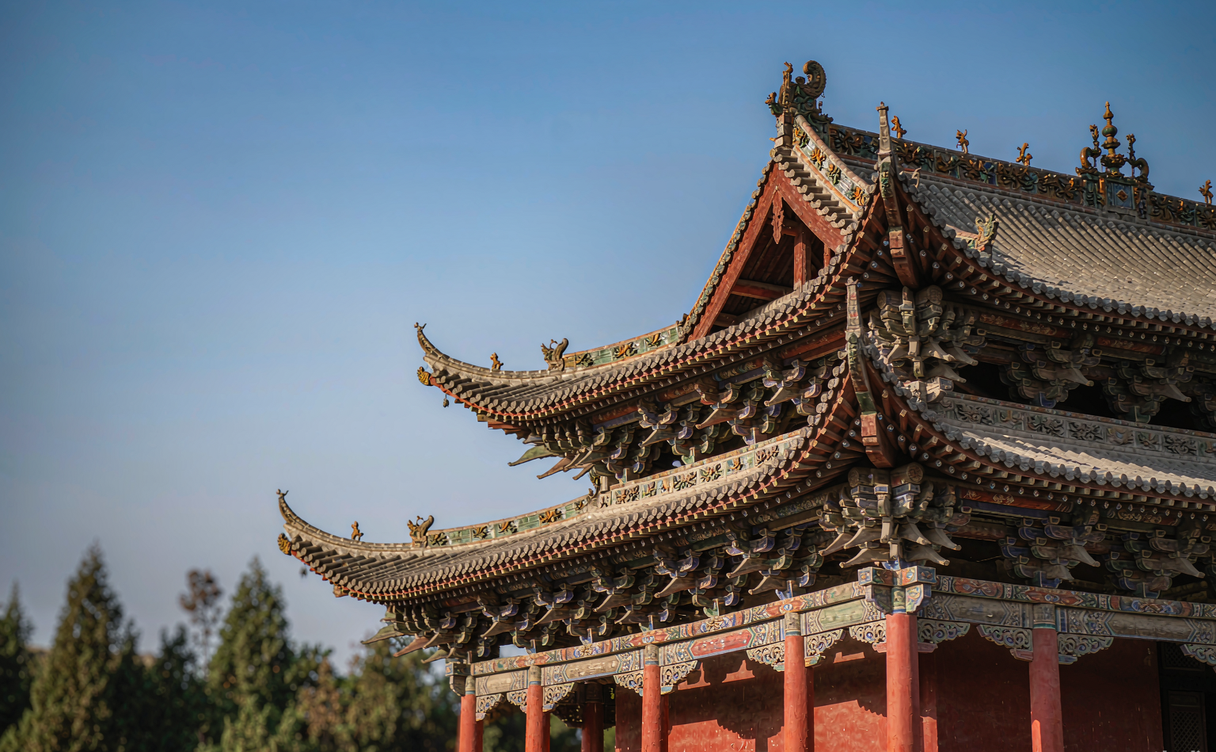
Longxing Temple Zhengding: The Bronze Guanyin
Longxing Temple Zhengding is the reason the town matters. Founded in the Sui and expanded through the Song, it is one of the most complete and important Buddhist complexes in China, and it holds treasures you won’t see elsewhere. The Manidhara Hall (摩尼殿) has a unique reversed-seated Guanyin on its north wall — the bodhisattva lounging with one knee up, a composition so unusual that Liang Sicheng, the father of modern Chinese architecture, sketched it repeatedly. The Great Compassion Pavilion (大悲阁) shelters a 21.3 m cast-bronze Thousand-Armed Guanyin, the tallest of its kind, poured in the Song dynasty and still startling up close. There’s also a revolving sutra cabinet (转轮藏) and a famous stele with calligraphy that scholars travel to study.
Admission runs about ¥50–70. Give it three hours, not one — the site is large and the details reward slow looking. I tell people to arrive at opening, when the light comes through the eaves and the tour buses from Shijiazhuang haven’t filled the pavilions. For temple context in the capital, the Beijing Lama Temple guide makes a good northern companion read, since both are working monasteries with imperial bones.
Zhengding Ancient City Pagodas: Four in One Walk
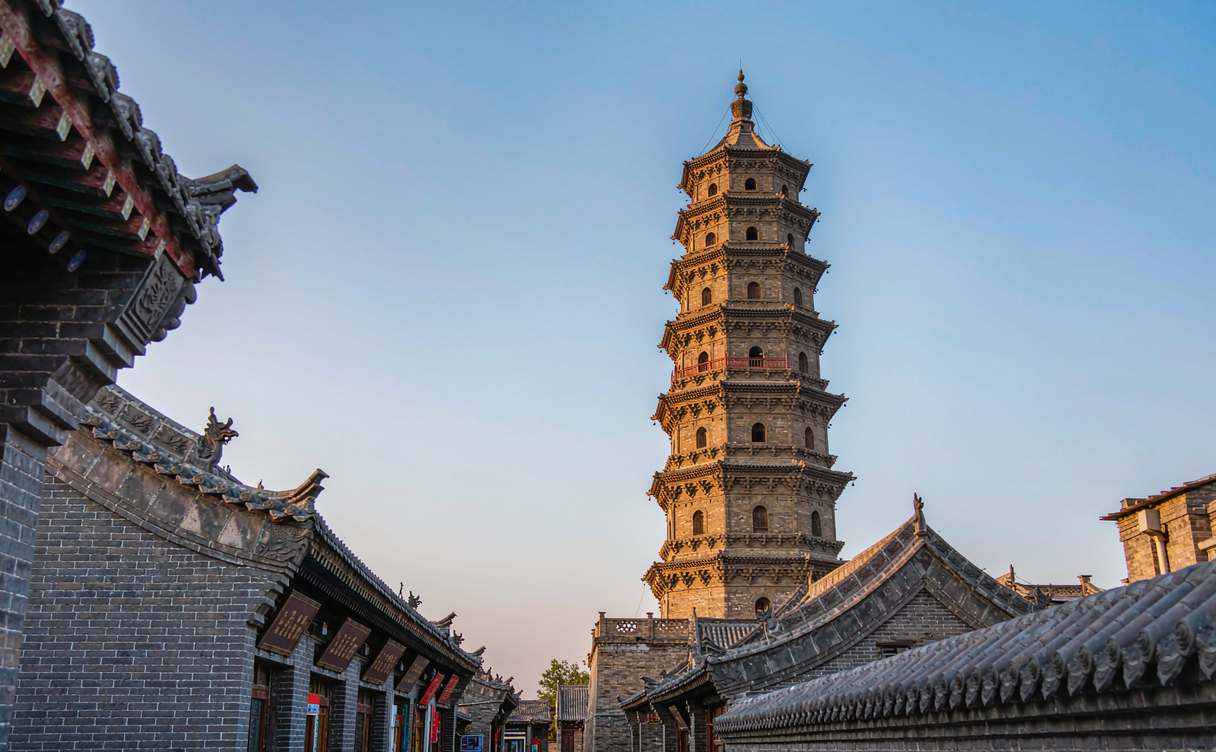
The Zhengding ancient city pagodas are the town’s second act, and the pleasure is walking between them. The Guanghui Temple Flower Pagoda (广惠寺华塔) is the showstopper — a white octagonal tower whose upper storey bursts into a ring of small sculpted pagodas and figures, hence “flower.” The Kaiyuan Temple Xumi Pagoda (开元寺须弥塔) is a sober square Tang-style tower beside a colossal stone tortoise (bixi) base that once held a stele. The Tianning Temple Lingxiao Pagoda (天宁寺凌霄塔) is a rare brick-and-wood hybrid that leans with character. And the Linji Temple Chengling Pagoda (临济寺澄灵塔) marks the birthplace of the Linji (Rinzai) school of Chan Buddhism, still active and visited by practitioners from Japan and Korea.
All four are within a 2 km loop of the old town and most are free or ¥10–20 to enter; the Flower Pagoda is the one to pay for. If sacred mountains are your wider interest, the Mount Wutai Shanxi guide describes the great Buddhist mountain a few hours northwest, and the China UNESCO World Heritage guide helps you weigh which sites to prioritise on a longer northern trip.
Zhengding Day Trip From Shijiazhuang
The practical answer to a Zhengding day trip from Shijiazhuang is almost too easy. Frequent buses and a short rail hop connect the capital’s north side to Zhengding in 30–45 minutes for ¥5–20; a ride-hail is about ¥40–70 and drops you at the south gate. Zhengding even has its own station (正定站) and shares the Shijiazhuang airport station (正定机场站) with the capital’s flights, so you can fold it into an arrival or departure day. I often meet clients at the airport, stash bags at the hotel, and walk the walls before dinner — it’s that close.
Within town, everything is walkable or a short electric-cart ride (¥5–10). The restored south gate (南城门) of the Ming city wall is free to climb for a bird’s-eye read of the pagoda skyline, and the Rongguo Mansion (荣国府) — the Red Chamber film set — is a ¥30–40 curiosity if you know the novel. The best ancient towns in China guide lists Zhengding among the genuinely old ones, and it earns the spot by keeping its monuments in daily use rather than behind velvet rope.
Things to Do in Zhengding Between the Monuments
Things to do in Zhengding beyond the temples are low-key and local. Walk the old streets south of Longxing for the morning market — knife-sharpeners, steamed-bun sellers, a tofu maker — and the small museums on the town’s garrison past. The restored wall walk is short but pleasant at dusk. If you’re at the airport with hours to spare, Zhengding beats the terminal lounge every time. For moving between cities by rail, the China high-speed train guide for foreigners covers the booking routine that gets you to Shijiazhuang in the first place.
Food is plain northern: Zhengding baked sesame cakes, hand-pulled noodles with braised pork, and a local “wheel cake” (a sweet stuffed griddle cake) from the street carts for ¥5–10. A hearty dinner for two at a local restaurant runs ¥100–180.
Best Time to Visit Zhengding
The best time to visit Zhengding is April to May and September to October, when the light is good and the walk between pagodas is comfortable — Hebei winters are dry and cold (0–8°C) and summers hot (30–35°C with dust). Spring can be windy; autumn is the sweet spot. Avoid the sandstorm-prone weeks of March and the worst of July–August humidity. Because Zhengding is a half-day from Shijiazhuang, you can slot it into almost any northern itinerary regardless of season.
Where to Stay and a One-Day Plan
Lodging runs from old-town guesthouses (¥200–400) to capital-standard hotels in Shijiazhuang (¥300–600). I usually sleep in Zhengding itself to catch the dawn on the wall. A workable plan: arrive from Shijiazhuang by 9:00, three hours at Longxing Temple, lunch on noodles, the four-pagoda walk in the afternoon, the south gate at dusk, and a train or bus back. Realistic spend for two: ¥80–160 transport, ¥300–600 lodging, ¥200–350 food and tickets. Two pitfalls are worth flagging. First, treating Zhengding as a 90-minute photo stop — Longxing Temple alone deserves three hours, so budget the full day or you’ll miss the bronze Guanyin. Second, visiting on a Monday, when some smaller halls and the Rongguo Mansion keep irregular closure; the big temple is reliable, but the pagodas and set are best seen Tuesday to Sunday. Zhengding is close enough to Shijiazhuang that either mistake is cheap to fix with a second visit.
For background on the town and its monuments, the Wikipedia entry on Zhengding is a useful primer, especially the notes on the four pagodas that give the skyline its unusual silhouette. Pair Zhengding with Shijiazhuang and a run out to Mount Wutai and you have a northern loop that trades the obvious for the genuinely ancient.