

This Resources travel guide comes from our own runs through the northern edge of Guangxi, where the county sits at the headwaters of the Zijiang River and the Danxia red peaks break the usual green-karst picture of the region. Resources is the kind of place that regular Guilin visitors never reach, yet it delivers some of the most dramatic ridge walks and river drifts in the whole province. If you want the postcard scenery without the coach crowds, this is the detour we keep recommending.
Why Resources is worth the detour
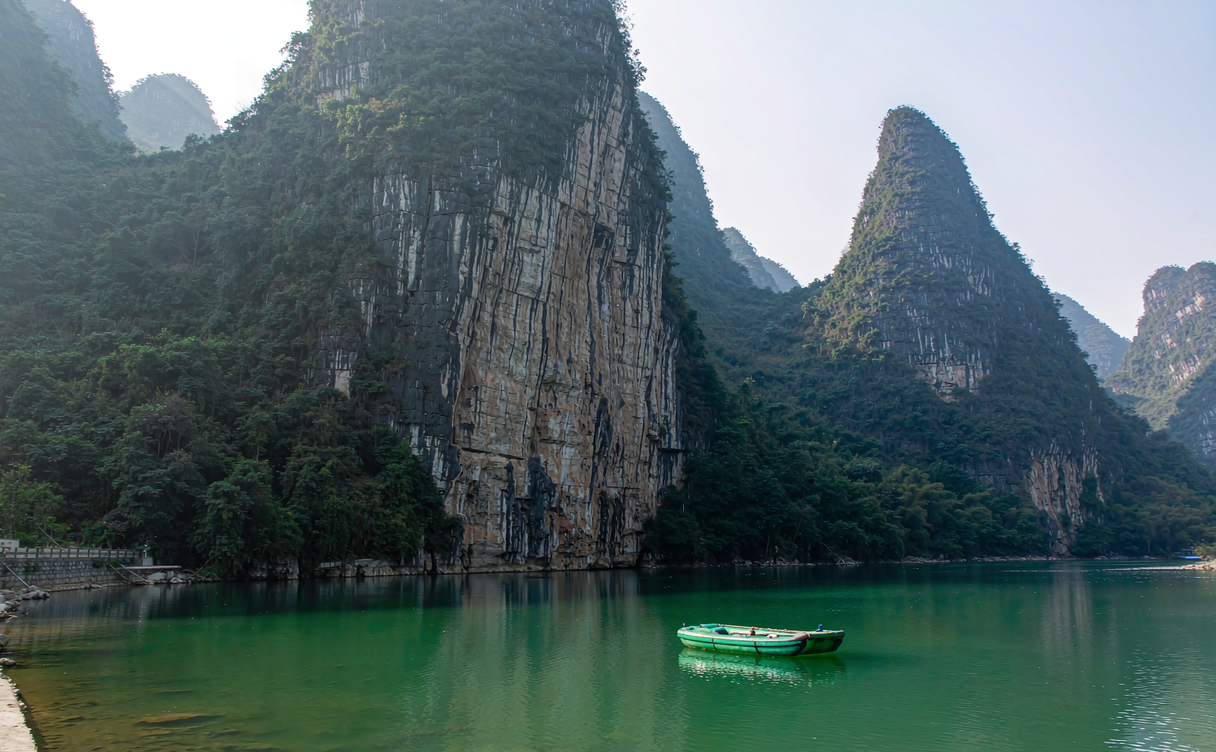
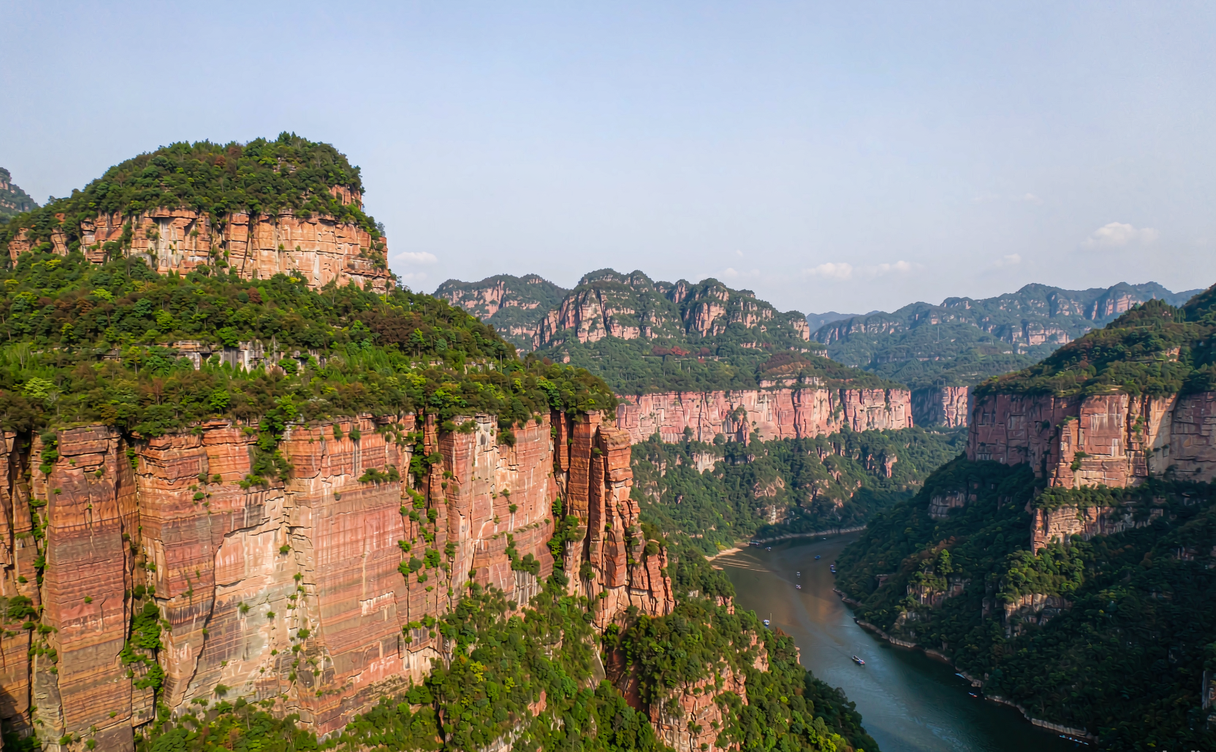
We first took a client to Resources as a quiet alternative to the busier Guilin circuits, and the reaction was immediate: the Bajiaozhai ridgeline, with its eight peaks fanning out like an octopus, is unlike anything in the limestone standard tour. The rock here is Danxia, a red sandstone and conglomerate landform, not the tower karst of Guilin. That contrast is the whole appeal. You get crimson cliffs, sea-of-clouds mornings, and a river that actually moves fast enough to raft.
Resources also sits at the source of two rivers, which is where the name comes from. For travelers building a broader广西 loop, our Guilin travel guide explains how to anchor a trip here and branch north to the headwaters country.
Best time to visit Resources
The best time to visit Resources is April through June and again in September through November. Spring brings misty peaks and full rivers for drifting; autumn gives the clearest skies and the most reliable cloud seas at Bajiaozhai summit. We tell travelers to avoid the heavy summer rain weeks of July and August, when the Zijiang can swell and some trails close for safety.
Winter is cold and often grey but very quiet, and hotel prices drop by a third. If you are syncing with a wider provincial plan, our best time to visit China tool maps the windows so you can stack Resources with Yangshuo or Longji without fighting the weather.
How to get to Resources
How to get to Resources starts in Guilin. Long-distance buses leave Guilin North bus station for Resources county town roughly every hour, taking 2.5 to 3 hours and costing RMB 50 to 70. A faster option is the train to Xing’an North (about 1 hour from Guilin, RMB 24 to 40), then a connecting bus up the valley for another hour at RMB 20 to 30.
If you are coming from Hunan, the border crossing via the high passes is scenic but slow; we normally route through Guilin. For anyone nervous about rural bus timing, our China high-speed train guide for foreigners covers booking and transfers in plain terms. We usually budget a private car from Guilin at RMB 400 to 550 for the door-to-door comfort of a small group.
Things to do in Resources
The things to do in Resources center on two set pieces: the mountain and the river. We build most trips around both.
Bajiaozhai (Eight-Diagram Village) is the headline. The scenic area entry is about RMB 90, with an optional cable car up for RMB 60 one way or RMB 100 round trip. We generally walk down and ride up to save knees. The summit ridge at 818 meters looks across a forest of red cones, and on clear days you can see into Hunan. The “one-line sky” fissure and the cliffside temple are the photo stops, but the quiet hour at the top before the day-trippers arrive is the real prize. On our last visit we reached the ridge at 6:40 a.m. and had it to ourselves for nearly an hour.
The Zijiang River drift is the water counterpart. A guided raft trip runs roughly RMB 130 to 160 per person for a 1.5 to 2 hour float through gorges and past rope bridges. It is gentle enough for older kids but exciting after rain. Book the morning slot; afternoon winds pick up.
Resources also has the Wuzhi Mountain (Five-Finger Mountain) forest trails and a handful of terraced fields around the county that glow gold in October. If you want to extend the theme, our Guilin Longji rice terraces guide shows the bigger terrace systems two hours south.
Food and where to stay
Resources eats like the rest of Guangxi but with a mountain edge: river fish cooked with pickled bamboo, oily rice noodles at breakfast for RMB 8 to 12, and smoky cured pork. The Guangxi cuisine guide lays out the noodle and beer-fish basics you will meet here, plus the river-snails and stuffed snails worth trying at a night market stall for RMB 20 to 35.
Lodging in the county town ranges from RMB 140 to 260 for a clean standard room. For the Bajiaozhai sunrise, a few guesthouses sit just outside the east gate at RMB 160 to 230; we book these when a client wants the pre-dawn climb without a 5 a.m. drive. On our last trip we stayed at a family inn a ten-minute walk from the trailhead and were on the ridge before the gate opened to day traffic.
Getting around Resources locally
Inside the county, transport is simple but slow. Share taxis run from the bus station to the Bajiaozhai gate for about RMB 15 to 25 per seat, and a private car for the day costs RMB 200 to 300. We tell travelers to agree the fare before getting in and to confirm the return pickup time, because evening rides back can be scarce once the last rafting slot ends. E-bikes can be rented in town for RMB 30 to 50 a day if you want to explore the riverside hamlets at your own pace.
A note on the landscape
The red cliffs of Bajiaozhai belong to the Danxia family of landforms, a type of erosional topography shaped by uplift and weathering of horizontal red beds. It is a different geology from the tower karst most visitors associate with Guangxi, which is why the color shift is so striking. The broad explanation is useful before you go: Danxia landform on Wikipedia.
Budget and booking reality
A practical daily budget in Resources runs RMB 350 to 500 per person with a mid-range room, two meals, local transport, and one paid activity. Bajiaozhai plus the cable car and a river drift is the main spend; village walks are free. Most hotels and the rafting desk can be booked on arrival except for the October holiday week, when we lock everything 2 to 3 weeks ahead.
Ready to plan your trip? Send us your Guilin dates and we will add Resources as a two-day north-country extension.
Sample 2-day Resources itinerary
Day one: arrive from Guilin, check in near the county town, and do a short Zijiang evening walk. Day two: early climb of Bajiaozhai for sunrise and clouds, late-morning descent, then the river drift in the afternoon. If you have a third day, add Wuzhi Mountain or push on to the Li River Guilin cruise guide route back toward the classic scenery.
Want the sunrise without the guesswork? Tell us your hotel preference and we will time the climb and book the rafting slot.
Responsible travel on the peaks and river
Resources is still lightly visited, which means your behavior sets the tone. Carry out what you carry in on the ridge, tip the raft pilots fairly (RMB 20 to 30 is normal), and keep to marked trails so the red scree does not erode. We remind every group we send that the quiet is the product here; loud convoys undo it fast.
Planning a Guangxi loop with Resources included? Reach out and we will check bus times, rafting conditions, and ridge-weather for your dates.
Resources will not show up on most China bucket lists, and that is exactly why it works. It gives you the drama of the south without the lines, the red rock without the coaches, and a river that still feels like a frontier. We have sent photographers, families, and slow-travel couples here, and every one of them came back surprised that such a place was hiding an hour off the famous route.