

Guangxi, in southern China, is best known abroad for the karst peaks around Guilin, but its food deserves just as much attention as its scenery. The region is home to the Zhuang, Yao, Miao, and Dong peoples alongside the Han, and that mix shows up on the plate: sour, herbal, smoky, and rice-centered, with flavors that feel distinct from the sweet-and-sour Cantonese cooking just across the border in Guangdong. This Guangxi cuisine guide walks you through what to eat, where to find it, and how to order as a foreign visitor without getting lost in translation.
The Foundations of Guangxi Food
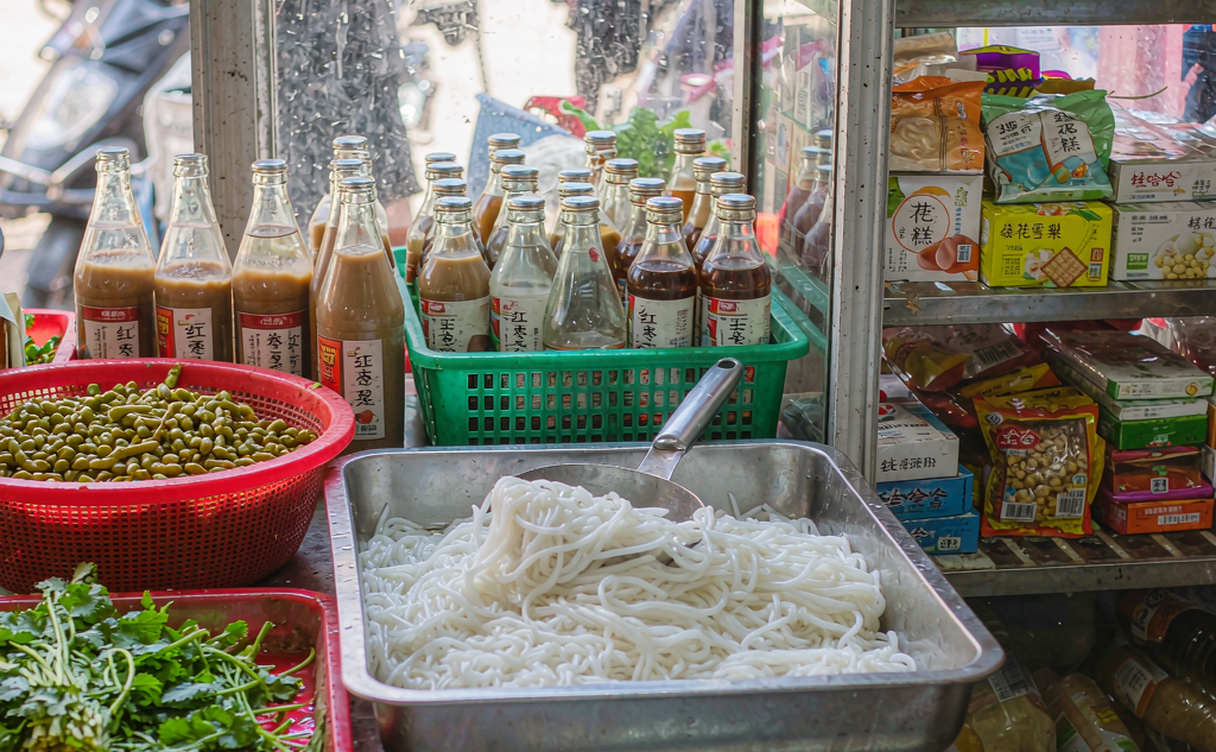
Rice is the backbone of almost every meal. The humid climate and the river valleys make Guangxi one of China’s rice heartlands, and the grain appears as plain steamed rice, as noodles, and as the sticky varieties used in festival dishes. Alongside rice sits a love of sourness: pickled vegetables, sour bamboo shoots, and sour fish are everyday staples, a preservation tradition that comes from the humid climate and the mountain villages where fresh food was hard to keep.
The region’s Guangxi entry on Wikipedia notes that it is China’s most populous autonomous region and a crossroads of Han and minority cultures, which explains why the food shifts so much from city to city. Northern Guangxi leans toward preserved and sour flavors; the south and the coast turn to seafood and herbs; the far west carries Yunnan and Southeast Asian echoes.
Guangxi Rice Noodles
No discussion of Guangxi food is complete without noodles, eaten at breakfast, lunch, and late-night snacks. The two icons are worth seeking out on any trip.
- Guilin rice noodles (Guilin mifen). Thin rice noodles served in a light broth with sliced marinated pork, crunchy fried soybeans, and a spoonful of pickled long beans. Locals eat them dry-tossed more often than in soup, and the condiment bar lets you build your own heat and sourness.
- Liuzhou river-snail noodles (Luosifen). The controversial star: rice noodles in a broth built from fermented river snails and topped with the infamous pickled bamboo shoots, which carry a pungent, funky aroma. The taste is addictive once you push past the smell, and it is now bottled and exported worldwide.
If you only try one, start with Guilin’s gentler bowl and work up to Luosifen when your palate is ready. Our Guilin rice noodle guide goes deeper on the dish and where to eat it in the city.
What to Eat in Guangxi: Signature Dishes
Beyond noodles, a handful of dishes define the regional table.
- Nanning “old friend” noodles (Laoyou fen). A tomato-and-pickle broth with pork and chili, named for the local legend of a shopkeeper welcoming an old friend. Sour, savory, and warming.
- Beihai seafood. On the coast near Vietnam, Beihai serves squid, crab, shrimp, and clams at prices that feel like a bargain compared with China’s biggest coastal cities. Grilled over charcoal with scallion and soy is the move.
- Five-colored sticky rice. A Zhuang festival dish where rice is dyed with plant juices into red, yellow, black, purple, and white, eaten at the Qingming and other celebrations. Mildly sweet and chewy.
- Bamboo rice (Zhutong fan). Sticky rice steamed inside a fresh bamboo tube with meat or mushrooms, then sliced out in a cylindrical log. You will find it at markets and scenic areas.
- Sour fish and sour meat. Preserved in rice water with chili, these are acquired tastes but central to Yao and Dong home cooking in the hills.
For a city-by-city plan, our Guilin Yangshuo travel guide, Liuzhou travel guide, Nanning travel guide, and Beihai travel guide each flag the local specialties worth hunting down.
Guangxi Street Food
The best Guangxi street food appears after dark, when night markets set up plastic stools and charcoal braziers. Look for grilled river fish brushed with fermented bean paste, stinky but loved fried tofu, sugarcane juice, and the rolled rice-flour sheets called juanfen, dressed with soy and peanuts. In larger cities the markets cluster near the old town or the riverfront, and the atmosphere is loud, friendly, and very local.
Ordering is easiest by pointing and holding up fingers for the count. A translation app with camera mode handles most signs, and vendors are used to curious outsiders. Portions are small and cheap, so grazing across several stalls beats committing to one restaurant.
Best Guangxi Dishes for First-Timers
If your time is short, prioritize four experiences: a bowl of Guilin mifen for the gentle introduction, a plate of Beihai grilled seafood for the coastal contrast, five-colored sticky rice for the cultural hit, and one brave bowl of Luosifen for the story you will tell afterward. That short list covers the rice, the sea, the minority heritage, and the famous funk in one manageable sweep.
For a broader sweep of Chinese regional cooking, our China food tour guide puts Guangxi in context beside Sichuan, Jiangsu, and the north, which helps if you are planning a multi-region eating trip.
Drinks and Desserts
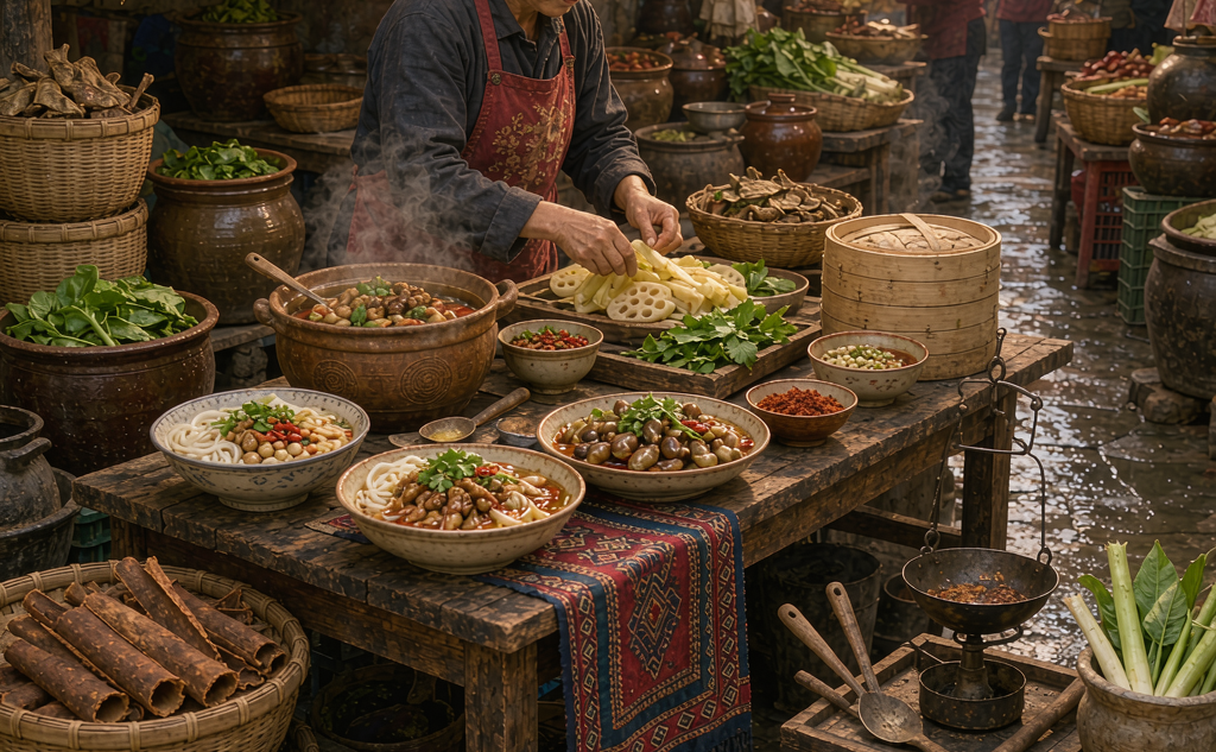
Guangxi cools its heat with sweet soups and herbal teas. Laozao, a lightly fermented rice drink, is mildly alcoholic and soothing warm. Osmanthus honey, made from the region’s fragrant flowers, flavors teas and jelly desserts. Coconut and sago puddings turn up in the south, and fresh sugarcane juice is the universal street refresher. None are strongly sweet by Western dessert standards, which makes them a good palate reset between spicy bites.
How Guangxi Food Varies by Region
The province splits neatly along geographic lines, and knowing the pockets helps you order with intent. The north, around Guilin and Liuzhou, leans on noodles, pickles, and the famous fermented snail broth, with cooler river fish and preserved vegetables carrying the sour note. The center around Nanning balances Han and Zhuang home cooking, heavier on clear soups and herbal tonics meant to cool the body in summer. The far west toward the border takes on gentle Southeast Asian accents — lemongrass, lime leaf, and coconut — while the Beihai coast keeps things simple with the day’s catch. Reading the map this way turns a single trip into several culinary regions, each worth a dedicated food stop.
Practical Tips for Eating in Guangxi
Spice levels are moderate compared with Sichuan, but chili oil still appears, so ask for “bu la” (not spicy) or “wei la” (a little spicy) if you are cautious. Peanut and gluten allergies are worth noting in writing, since broths and sauces frequently contain both. Cash helps at markets, though mobile pay is widespread in cities. Tap water is not for drinking; bottled or boiled water is standard, and tea is served free at most restaurants.
Pairing Food with Sights
The joy of Guangxi is how easily eating and sightseeing combine. Spend a morning on the Li River, then a noon bowl of mifen in Guilin; cycle Yangshuo’s valleys and reward yourself with beer fish; eat Luosifen in Liuzhou before the train north. Letting the food lead the itinerary turns a scenic trip into a cultural one, and the regions’ minority markets are themselves a kind of attraction.
Final Thoughts
Guangxi cooking is one of China’s most approachable regional cuisines for foreign visitors: rice-based, sour-bright, and built around small shared plates rather than intimidating banquets. Give the noodles a chance, be brave with the bamboo shoots, and let the night markets do the rest. The flavors here are a direct expression of the region’s rivers, hills, and peoples, and tasting them is the fastest way to understand a place that guidebooks too often reduce to postcard peaks.