

This Liannan travel guide is drawn from our own trips into the northern mountains of Guangdong, where the Liannan Yao Autonomous County holds some of the best-preserved terraced Yao villages in South China. Most travelers who fly into Guangzhou never look this far north, but Liannan rewards the effort with stone watchtowers, singing elders, and rice terraces carved into near-vertical slopes. If you want Guangdong beyond the dim sum and the skyline, this is the detour we keep recommending.
Why Liannan stands out
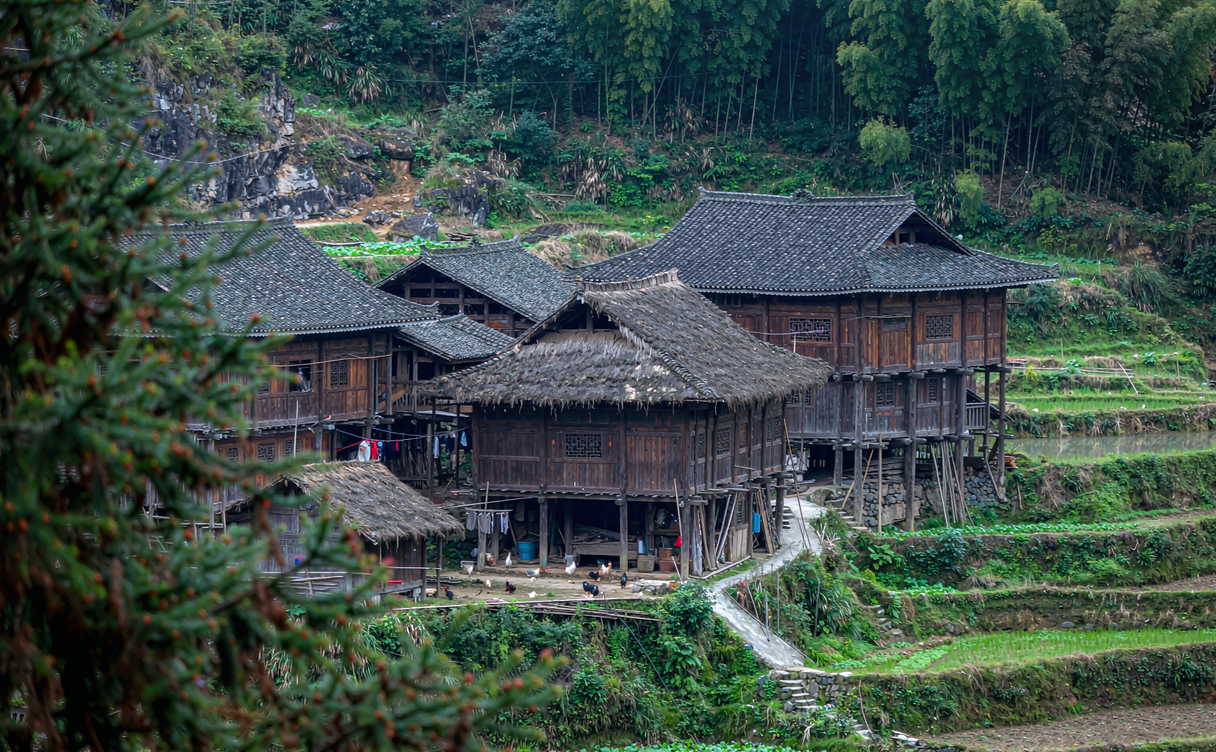
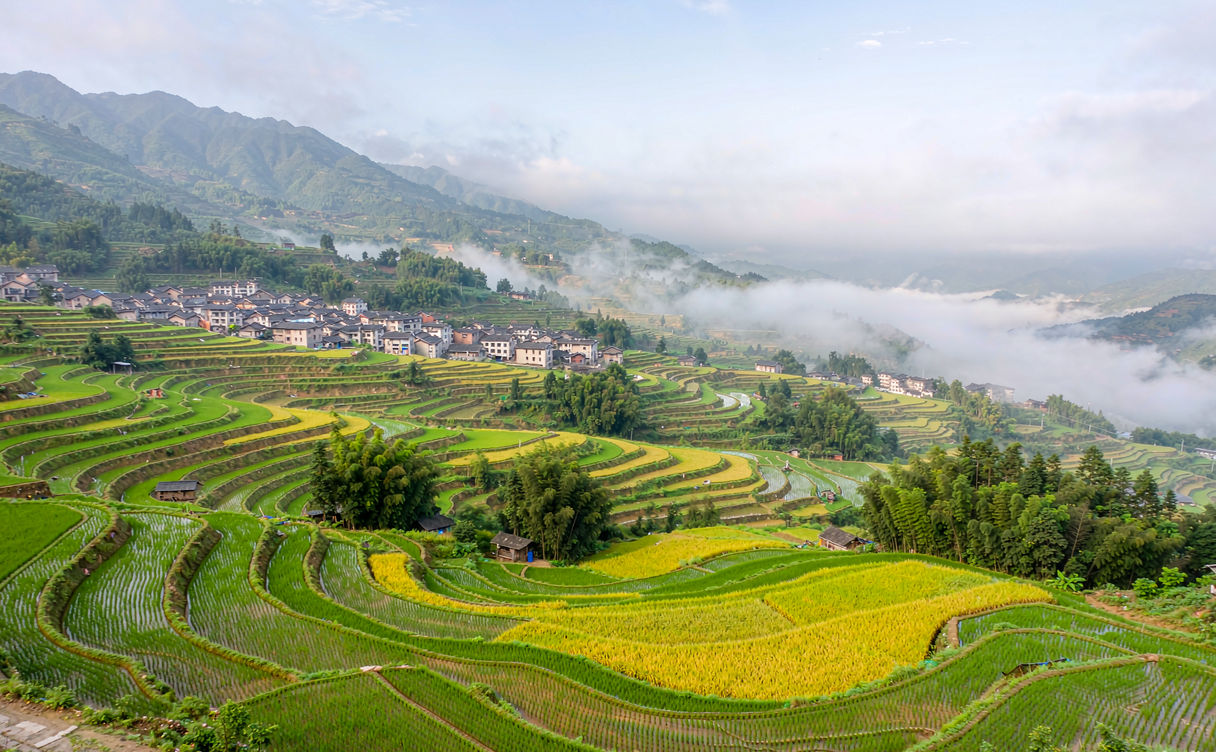
We first routed a client through Liannan as a culture break between Guangzhou and the Danxia parks, and it became the highlight of the week. The county is home to the “Guoshan” branch of the Yao, a mountain people whose villages sit at 600 to 900 meters and whose stone-and-timber houses stack up the ridges like staircases. Nangang, the best known, is often called the thousand-family Yao village because of its scale and the way the lanes climb in tight switchbacks.
What makes Liannan different from a restored tourist town is that people still live there. On our last visit, a group of women in indigo embroidery was singing a long-call song in the central square while a teenager practiced the lusheng reed pipe nearby. That continuity is the draw. For the wider context, our China ethnic minorities travel guide places the Yao alongside the region’s other mountain cultures.
Best time to visit Liannan
The best time to visit Liannan is April through June, when the terraces are flooded and mirror the sky, and September through November, when the rice ripens to gold and the harvest festivals begin. We avoid the wettest weeks of July and August, when mountain roads can slip and the clouds sit low on the ridges all day.
Winter is cold at altitude but strikingly clear; hotel prices fall by about a third. If you are building a longer Guangdong or provincial route, our best time to visit China planner lines up the regional windows so Liannan can sit beside the cities without a weather clash.
How to get to Liannan
How to get to Liannan starts in Guangzhou. The practical route is a high-speed train from Guangzhou South to Qingyuan (about 25 to 40 minutes, RMB 30 to 55), then a long-distance bus from Qingyuan to Liannan county town (about 2.5 hours, RMB 60 to 80). Total door-to-door time runs 4 to 5 hours. A private car straight from Guangzhou costs roughly RMB 900 to 1,200 and saves the transfer for groups of three or four.
For train newcomers, our China high-speed train guide for foreigners explains ticketing and station navigation so the Qingyuan hop is painless. We usually book the village-facing guesthouses a week out, since ridge rooms are limited and the sunrise view sells out first.
Things to do in Liannan
The things to do in Liannan are built around three or four villages and the walks between them. We list the stops our travelers actually enjoyed.
Nangang Yao Village is the anchor and a managed scenic area with an entry of about RMB 80 to 100. Inside, the old stone watchtowers, the ancestral halls, and the steep flagstone lanes are intact. Allow half a day, and time your walk for late afternoon when the light hits the terraces. A village homestay dinner of sticky rice, mountain yam, and cured pork runs RMB 45 to 65 per person.
Nearby, the smaller villages of Nan Gang and Sanpai ridge offer quieter versions of the same scene without the ticket gate. We often take clients on a 2-hour ridge walk from one to the next, passing working fields where elders still transplant rice by hand.
For a different texture, the Lianzhou underground river system sits about an hour south and makes an easy half-day cave-and-boat excursion. And if you want to extend the geology theme, our Danxia Mountain Shaoguan guide covers the red-peak park two hours east.
Food and where to stay
Liannan eats with a mountain Guangdong accent: river fish, bitter greens, and the Yao love of sour and smoked flavors. Before you go, our Guangdong yum cha guide explains the Cantonese breakfast tradition you will meet in Guangzhou before heading north, and the contrast with village food is part of the fun. Expect village meals at RMB 35 to 60 and a county-town noodle breakfast for RMB 10 to 15.
Lodging splits between the county seat (clean rooms RMB 150 to 260) and the ridge guesthouses at Nangang (RMB 180 to 320 with terrace views). On our last visit we stayed in a timber room at the top of the village for RMB 240 and stepped out at 6 a.m. to a sea of terraces in mist. Book the ridge rooms early in October, when the gold-rice photos drive demand.
Getting around Liannan locally
The county is spread along a mountain road, so local transport matters. Share taxis from the bus station to Nangang village run about RMB 20 to 35 per seat, and a private car for the day costs RMB 250 to 350. We tell travelers to fix the return time when they arrive, because ridge villages go quiet after dark and ride-hailing is unreliable up there. E-bikes are rare on the steep grades, so plan walks between nearby hamlets rather than relying on rentals. We usually carry a small daypack with water and a rain shell, because the ridge weather turns fast and the village shops are basic. Mornings are best for photos and for catching the elders at the terrace edges before the day warms up.
A note on the people
The Yao are one of China’s older mountain minorities, with a diaspora reaching into Vietnam, Laos, and Thailand. Their language family, textile patterns, and silverwork differ sharply from the lowland Han and even from neighboring Miao groups. Reading a little background helps you travel with more respect: Yao people on Wikipedia.
Budget and booking reality
A realistic daily budget in Liannan runs RMB 350 to 550 per person including a mid-range room, two meals, local transport, and one paid village entry. The scenic gate is the main cost; the ridge walks between villages are free. Most guesthouses can be booked on arrival except during the October holiday and the spring plowing festival, when we lock rooms 2 to 3 weeks ahead.
Ready to plan your trip? Send us your Guangzhou dates and we will add Liannan as a two-day mountain-and-terrace extension.
Sample 2-day Liannan itinerary
Day one: train to Qingyuan, bus up to Liannan, check in at the county town, and a sunset walk on the lower terraces. Day two: full morning at Nangang village, afternoon ridge walk to a quieter hamlet, and return south. If you have a third day, add the Lianzhou underground river or push east toward Danxia. This is the Liannan itinerary we hand most first-timers because it avoids backtracking.
Want the terraces at their best? Tell us your preferred season and we will time the visit for flooded fields or golden harvest.
Responsible travel in Yao country
Liannan is still a working community, not a museum. Ask before photographing elders, buy crafts directly from the makers rather than haggling hard, and keep voices low in the ancestral halls. We brief every group we send on these courtesies, and it changes the whole experience from spectator to guest.
Planning a Guangdong loop with Liannan included? Reach out and we will check train times, festival dates, and ridge-room availability for your window.
Liannan will not make the glossy China lists, and that is the point. It gives you terraces that climb like staircases, a culture still sung in the square, and a silence you cannot buy in the cities. We have sent photographers, families, and slow-travel couples here, and all of them left saying they finally saw the Guangdong they never knew existed.