

If there is one meal that teaches a visitor how southern China actually lives, it is yum cha. The phrase literally means “drink tea,” but in practice it is a long, loud, gloriously informal brunch built around small steamed and fried dishes passed across the table while pots of oolong or pu’er keep everyone topped up. This Guangdong yum cha guide is written for first-time visitors who find the trolleys, the dialects, and the etiquette a little intimidating — and who want to walk in with confidence.
What is yum cha, exactly? It is both a meal and a social institution. Families gather mid-morning, often with newspapers and toddlers in tow, and settle in for two or three unhurried hours. The food is dim sum: bite-sized portions of dumplings, buns, rice rolls, and sweets, each arriving in a bamboo basket or small plate. You eat a little of many things rather than a lot of one, and the bill is usually tallied by the empty steamer baskets stacked at your side.
Cantonese dim sum brunch: the anatomy of a table
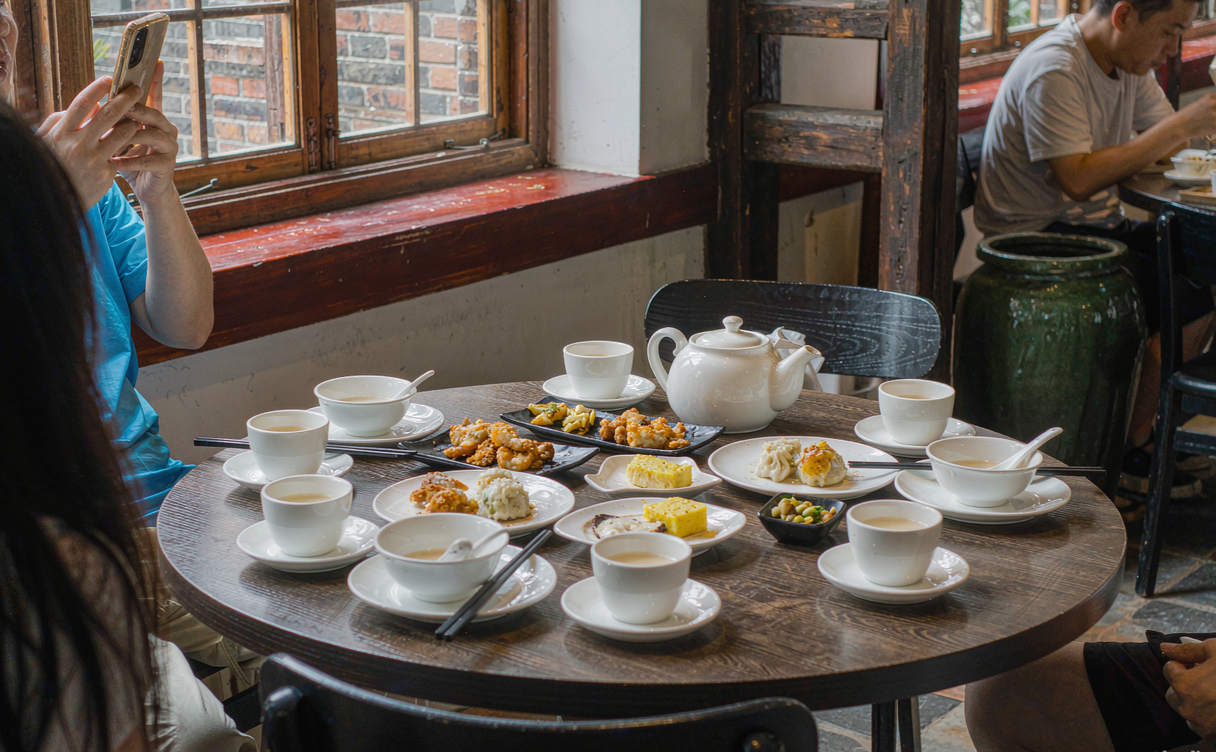
A proper Cantonese dim sum brunch is less about ordering from a list and more about grazing from what rolls past. In older teahouses, staff push carts laden with baskets and call out the names of dishes; you point, they stamp your card, and the food lands on your table. Newer venues use a QR menu where you tick what you want and it arrives fresh from the kitchen. Either way, the table fills gradually, and the pressure to perform is low.
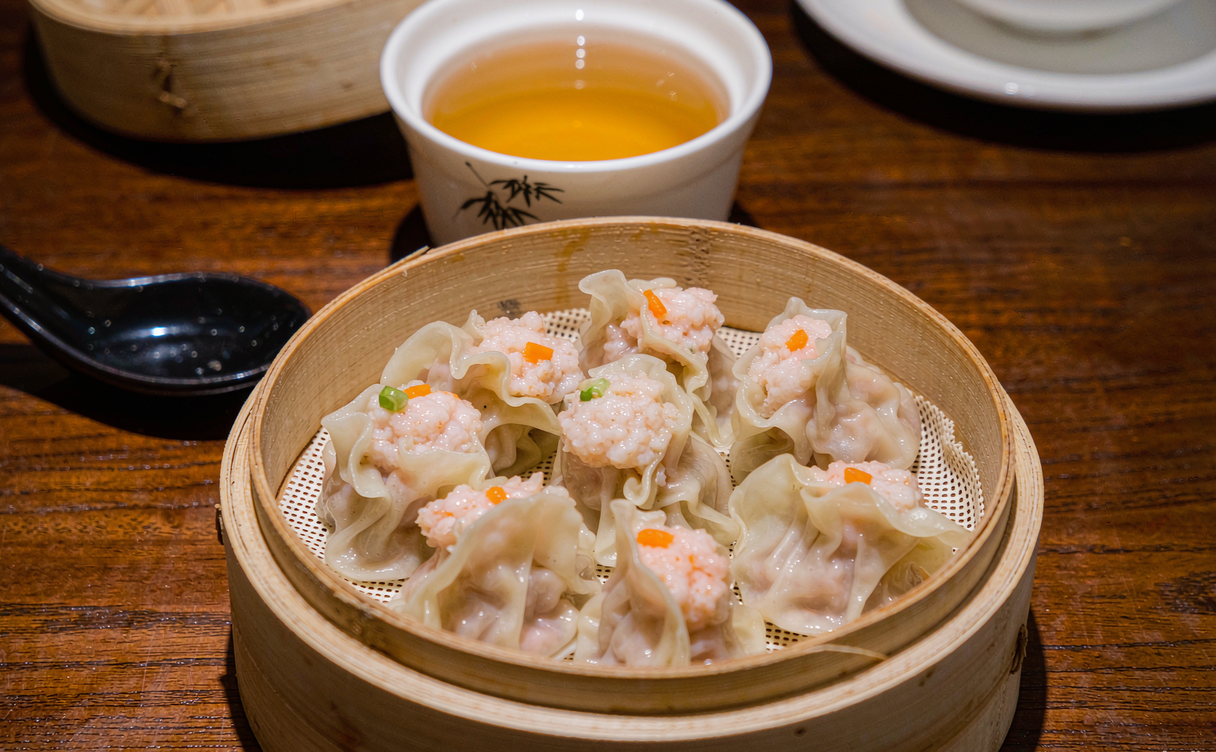
Start with the classics. Har gow — translucent shrimp dumplings with precisely pleated skins — are the benchmark of a good kitchen. Siu mai, open-topped pork and shrimp parcels, follow close behind. Then branch into char siu bao (barbecue pork buns, steamed or baked), cheung fun (silky rice noodle rolls with shrimp, beef, or scallop), and lo bak go (fried turnip cake). Save room for the sweets: egg tarts with flaky crusts and custard centers, and mango pudding in summer.
For travelers who want a deeper dive into the city’s signature snacks, our Guangzhou dim sum guide maps the classic houses and the dishes each does best. It pairs naturally with a broader Guangzhou travel guide if you are building a few days in the provincial capital.
Where to find the best yum cha in Guangdong
The best yum cha Guangdong has to offer is not confined to one neighborhood. Guangzhou, the birthplace of the tradition, still hosts grand teahouses where the ceilings are high and the carts are endless. But the habit spreads across the Pearl River Delta, and each city adds its own texture.
Guangzhou yum cha is the standard-bearer: think multi-floor restaurants where weekend queues snake down the block and the pace never slows. An hour away, Foshan travel guide points to a calmer, more local scene where prices stay gentle and the regulars know the cart ladies by name. Down in Shenzhen travel guide you will find sleeker, design-led venues that fuse the old ritual with New Cantonese plating — a good entry point if you prefer quieter rooms and English menus.
Dim sum for foreigners: etiquette that earns smiles
Dim sum for foreigners can feel like a code, but the rules are forgiving. Tap two fingers lightly on the table when someone refills your tea — a quiet thanks with roots in a Qing-era legend. Pour for others before yourself, and turn a teapot lid slightly open if you want more hot water. Don’t worry about finishing everything; the point is variety, and sharing is expected. If a dish arrives you don’t recognize, ask the server or a neighbor — most are delighted to explain.
Tea matters as much as the food. The default is strong and restorative, meant to cut through the fried and the rich. Our China tea house guide explains the main styles you will meet, from earthy pu’er to floral tieguanyin, and why the Cantonese take the leaf so seriously. UNESCO has recognized traditional Chinese tea processing as intangible cultural heritage, a fitting nod to a practice that yum cha keeps alive in daily life — you can read the entry at the UNESCO intangible heritage list.
Portions, prices, and the shared table
A common worry among visitors is cost and quantity. Dim sum is priced per basket, and because portions are small, a table of four can easily try fifteen different dishes without overspending. The trick is to order in waves: put out a first round of savories, see what lands, then add buns and sweets once the table has room. Servers expect this rhythm and will not pressure you to commit to everything at once. Tea is usually charged per person at a flat rate, and the endless refill is included, so the longer you stay the better the value feels. Vegetarian and allergic travelers do fine with a little care — steamed vegetable dumplings, taro cakes, and coconut buns are widely available, though cross-contamination in shared steamers is real, so tell the server clearly.
The tea and the room
The tea itself deserves attention. A pot left with the lid ajar signals you want it refreshed, and staff will top it without being asked. Strong pu’er cuts the richness of fried rolls, while lighter oolong suits delicate shrimp dumplings. Watching regulars cycle through pots is part of the show, and copying them is the easiest way to look like you belong. The rooms themselves vary from cavernous banquet halls to intimate corners, and the noise — clatter, calls, laughter — is not a flaw but the point. Arrive early and you get the calm; arrive late and you get the energy. Both are correct, depending on the morning you want.
First-timers often fear ordering the wrong thing, but the format forgives almost everything. Pointing at a neighbor’s basket, asking the cart lady to lift a lid, or simply accepting whatever arrives are all normal moves. The worst case is a dish you don’t finish, and even that is expected when the table holds a dozen small plates.
Building yum cha into a wider food trip
Yum cha rarely travels alone. It is the morning anchor of any serious eating tour, and the rest of the day can spiral into noodles, roasts, and late-night congee. Our China food tour guide connects the brunch ritual to the fuller arc of southern Chinese cooking, so you can plan a route that doesn’t repeat itself.
A practical note for newcomers: arrive before the local rush, ideally between nine and half-past ten, to avoid the longest waits and to catch the first, freshest carts. Weekdays are calmer than weekends. Most mid-range teahouses are comfortable with foreign guests and will happily show you how the stamp card or QR system works. Bring cash as a backup even though mobile payment dominates, and don’t be shy about pointing at a neighbor’s table to order the same thing.
The thing visitors remember is not any single dumpling but the atmosphere: the clatter of baskets, the murmur of several dialects, the slow ritual of refills. Yum cha teaches patience and generosity at the same time, and it is one of the cheapest, warmest windows into everyday Guangdong you will find. Treat it as a weekly habit while you travel rather than a one-off curiosity, and the region opens up through its steam.
Wherever your route through Guangdong begins, let the morning start with tea and a stack of baskets. From the grand halls of Guangzhou to the quiet tables of Foshan and the polished rooms of Shenzhen, yum cha is the meal that turns a foreign visitor into a regular — one har gow at a time.