

A China tea house guide has to cover two completely different worlds, because both are alive at once. There’s the slow, formal gongfu cha ceremony — tiny pots, repeated short infusions, a ritual measured in minutes — and there’s the neon-bright modern tea cafe where a 20-something orders a cheese-foam oolong on a phone app. Foreign visitors usually hear about one and miss the other. This guide walks both: where to sit for a proper gongfu session, what the hip chains actually taste like, how much you’ll pay in RMB and US dollars, and the etiquette that keeps you from embarrassing yourself at a centuries-old table. For the wider eating-and-drinking picture, see our China food tour guide.
The Two Worlds of Chinese Tea
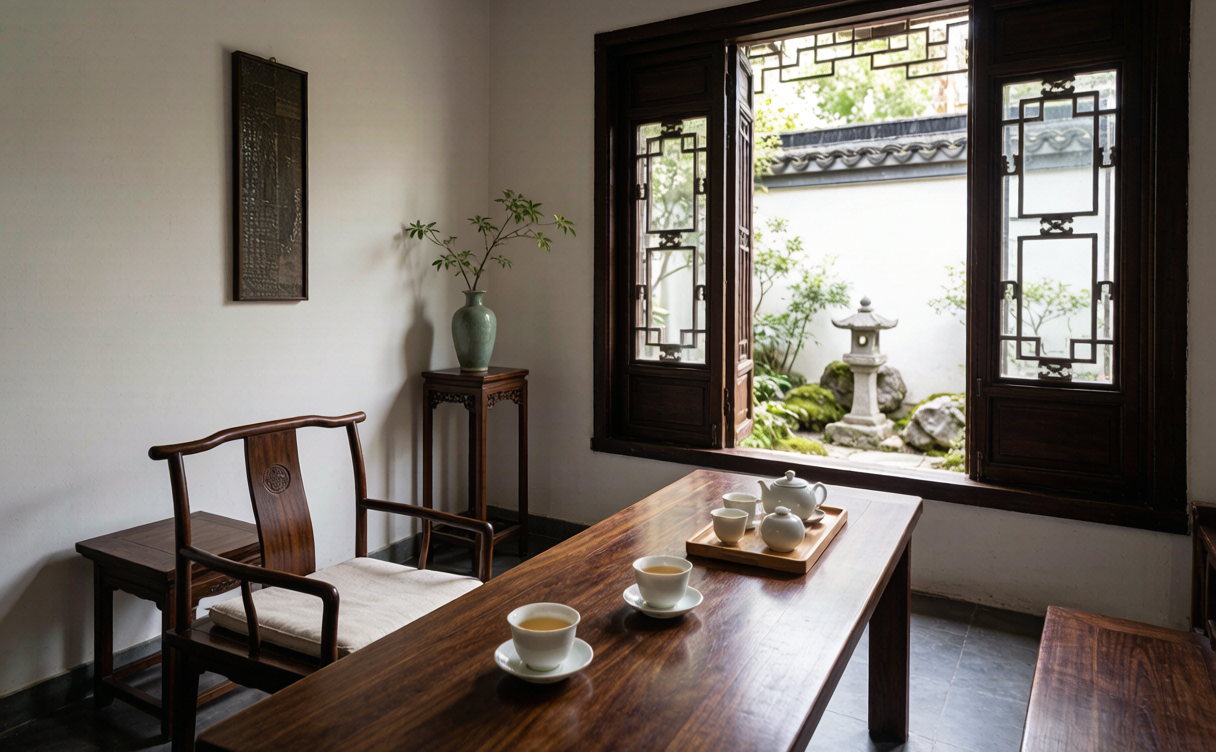
Traditional teahouses are about time and attention. A gongfu setup uses a small clay or porcelain pot, a gaiwan (lidded cup), and a fairness pitcher; the first infusion is poured off to “wake” the leaves, then you steep for 10–30 seconds and pour, repeating eight or more times. The same leaves evolve in flavor across the rounds — that’s the point.
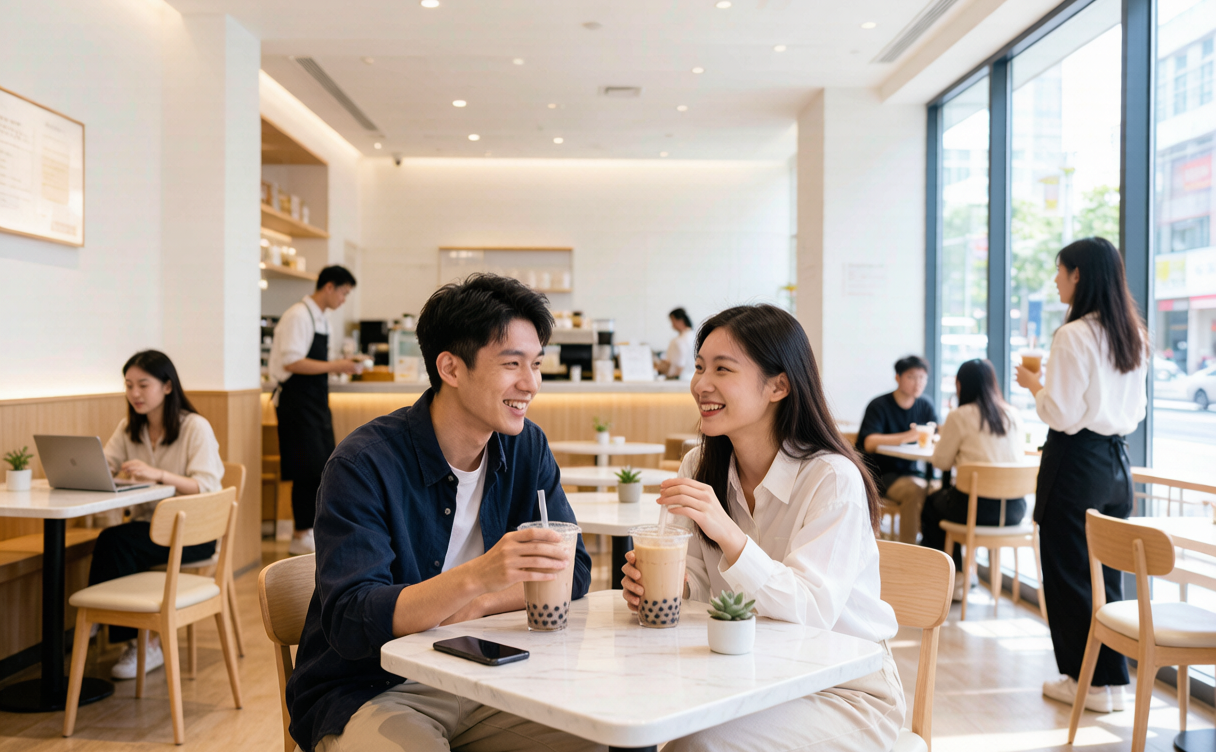
The modern cafes — Heytea (喜茶), Nayuki (奈雪的茶), and in central China Cha Yan Yue Se (茶颜悦色) — sell shaken milk teas, fruit teas, and cheese-topped brews. They’re clean, air-conditioned, English-app-orderable, and a relief when you need a break from sightseeing.
Teas you’ll actually meet
- Longjing (Dragon Well): flat green tea from Hangzhou; the standard-bearer of Chinese greens.
- Biluochun: curly green from Suzhou’s Dongting hills.
- Tieguanyin: floral oolong from Fujian.
- Pu’er: aged, earthy dark tea from Yunnan — sold in cakes.
- Jasmine: green tea scented with jasmine blossoms, common in Beijing houses.
Best Time to Visit Tea Houses
The best time to visit China for tea has a specific peak: spring. The first flush of Longjing and Biluochun is picked in late March–April, and teahouses in Hangzhou and Suzhou buzz with fresh-leaf tastings. Notes:
- March–May: freshest greens, most atmospheric; book Hangzhou teahouse tables ahead on weekends.
- Autumn (Sept–Nov): best for oolong and Pu’er tastings; cool, comfortable sitting weather.
- Winter: indoor gongfu sessions are cozy; some garden teahouses in Hangzhou close outdoor seating.
- Avoid the Oct 1–7 holiday for famous houses like Heming in Chengdu’s People’s Park — locals flood them.
Where to Go: The Real Shortlist
| Teahouse / Type | City | Experience | Typical cost |
|—|—|—|—|
| Heming Teahouse (People’s Park) | Chengdu | Bamboo chairs, ear-cleaning, locals | RMB 30–60/pot (US$4–8) |
| Meijiawu / Hefang St. houses | Hangzhou | Longjing, West Lake view | RMB 50–120/pot (US$7–17) |
| Lao She Teahouse | Beijing | Performances + jasmine tea | RMB 80–200 (US$11–28) |
| Fujian oolong houses | Xiamen / Anxi | Tieguanyin gongfu | RMB 40–100/pot (US$6–14) |
| Lijiang / Kunming houses | Yunnan | Pu’er, minority decor | RMB 30–80/pot (US$4–11) |
| Heytea / Nayuki | Nationwide | Milk & fruit tea | RMB 18–35/cup (US$2.50–5) |
Heming Teahouse in Chengdu’s People’s Park is the classic “sit and watch life go by” experience — bamboo chairs, a thermos of hot water top-ups, and roaming ear-cleaning vendors. Lao She Teahouse in Beijing pairs tea with shadow-puppet and opera snippets. For the purest gongfu instruction, a small Fujian or Yunnan house with a patient host beats any performance venue.
Etiquette: How Not to Offend the Teapot
- Don’t blow on or stir the leaves in a gongfu cup; sip from the gaiwan lid instead.
- Tap two fingers on the table when someone refills your cup — a thank-you dating to the Qing court.
- Pouring for others before yourself is the basic courtesy; the host pours, guests receive with both hands.
- Don’t overstay a tiny cafe during peak hours if there’s a queue; buy and step aside.
- Tipping isn’t expected at traditional houses; at modern chains, none.
A Sample Tea Afternoon (Hangzhou)
- 14:00 Take a taxi to Meijiawu village on West Lake’s west hills.
- 14:30 Sit at a family teahouse; order a pot of pre-Qingming Longjing (pricier, sweeter).
- 15:00 The host performs gongfu pouring; you taste three infusions, noticing the shift.
- 16:00 Walk the tea terraces behind the village; buy loose leaf by the 50g (negotiate gently).
- 17:00 Back to the lakefront; compare with a modern Nayuki cheese tea if curious.
This slow afternoon is one of the most relaxing things to do in China and a counterpoint to temple crowds.
Tea as a Souvenir
Buying leaf to take home is where many visitors overpay. At a proper house the host will show you the dry leaf, the brew color, and the spent leaves (which should stay intact and fragrant — a sign of quality). Pre-Qingming Longjing and high-mountain oolong command real premiums; if a “bargain” Longjing is RMB 100/500g it is almost certainly a later-season Zhejiang blend, not West Lake. Pack leaf in double-sealed bags and keep it in carry-on, not checked luggage that bakes in the hold. A modest 50–100g of something you actually tasted beats a kilo of airport tin you didn’t.
Reading a Tea Menu
Traditional houses list by the pot and by weight, not by cup. A “pot” serves one to three people and is refilled with hot water for free; a “premium” pot simply means better leaf, not more volume. Modern cafes list by cup size and topping (cheese foam, fruit, pearl). If a menu shows only a vague “special tea” at a steep price, ask what’s inside before ordering — the good houses name the village and the flush. Learning this one habit keeps you from overpaying and from missing the genuinely famous brews.
Practical Tips
- Pricing: a “pot” at a traditional house often includes unlimited hot-water top-ups and seats for an hour or more — great value.
- Buying leaf: real pre-Qingming Longjing runs RMB 800–2,000/500g (US$110–280); cheaper “Longjing” is often Zhejiang blends. Buy from the house you trust.
- Apps: Heytea/Nayuki have English-friendly mini-programs; scan, order, show code.
- Language: at traditional houses, point at the tea list or ask your hotel to write the name in Chinese.
- Caffeine: gongfu uses little leaf per cup but many infusions — pace yourself.
- Families: kids usually welcome at cafes; traditional houses can be quiet spaces, so plan age-appropriate stops within broader family travel plans.
Why Tea Culture Is Heritage
In 2022, UNESCO inscribed “the traditional tea processing techniques and associated social practices in China” on its intangible cultural heritage list — recognition that the gongfu ritual you’ll witness is a living, 1,000-year-old practice. Read the entry at ich.unesco.org before you go; it frames why a simple pot of Longjing carries so much weight.
FAQ
Gongfu cha vs just drinking tea — what’s the difference?
Gongfu is the ceremonial method: small vessels, short repeated steeps, attention to each round. “Just drinking” is a mug of tea. Both are valid; gongfu is the cultural experience.
Are modern chains like Heytea worth it?
Yes, as a refreshing, hygienic, app-based break — but they’re not traditional. Think of them as the Chinese answer to a coffee chain.
How much should a teahouse visit cost?
A traditional pot for RMB 30–120 (US$4–17) including seating; a modern cup RMB 18–35 (US$2.50–5). Avoid “performance + tea” packages that quietly add hundreds of RMB.
Is tea safe to drink from street vendors?
Stick to established houses and chains; tap-water tea can be iffy. Bottled and chain drinks are safe.
Can I bring tea home through customs?
Loose leaf is fine to export; just keep it in original sealed packaging for your home country’s agriculture checks.
Do I need to speak Chinese?
No. Chains are app-based; traditional houses welcome pointing and smiles, and many hotels will write your order.
Written by Karl Huang, updated August 2026.