

A China cooking class is the rare travel experience that keeps paying you back after the trip: you fly home with recipes and muscle memory, not just photos. Across the country, family-run kitchens and dedicated schools have opened their stoves to visitors, teaching everything from Beijing dumplings to Sichuan’s numbing mapo tofu. This guide sorts the genuinely good classes from the tourist-demonstration shows, gives real prices in RMB and US dollars, and maps which city teaches which cuisine — so you can build a class into your route instead of stumbling on one. Start with our China food tour guide if you want a guided eating itinerary that pairs naturally with hands-on cooking.
What You Actually Learn (and What You Don’t)
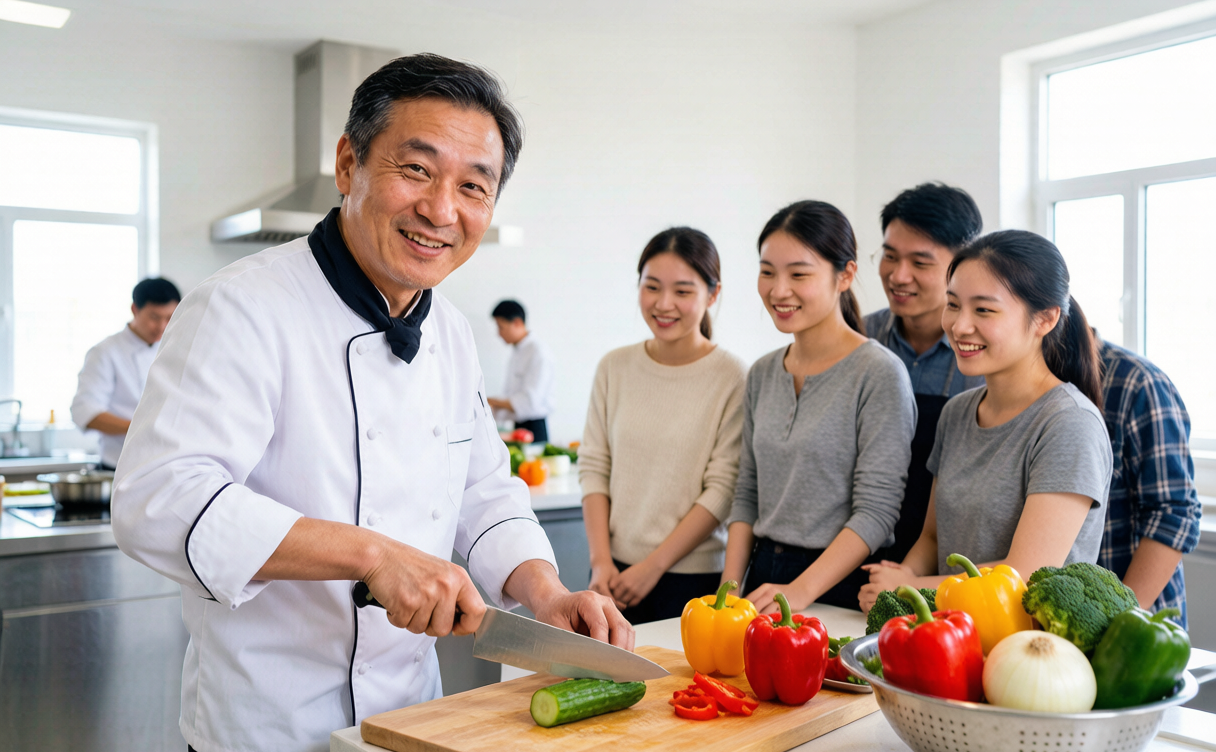
Most reputable classes follow a market-to-table arc: a guided trip through a wet market to identify ingredients (doubanjiang, Sichuan peppercorn, fresh tofu), then 2–4 hours of hands-on cooking under a chef. You’ll chop, season, and plate three to five dishes. What you won’t get is restaurant-grade perfection in one session — and that’s fine. The value is technique: the “hot wok, high heat” rhythm, the knife cuts, the sauce ratios you can recreate at home.
Cuisine by city
- Beijing: dumplings (jiaozi), zhajiangmian noodles, simple stir-fries. Home-kitchen style.
- Chengdu: Sichuan — mapo tofu, gongbao chicken, dan dan noodles, the signature numbing-spicy balance.
- Xi’an: hand-pulled biangbiang noodles and roujiamo (the “Chinese burger”).
- Yangshuo (Guilin): Guangxi home cooking, beer fish, stuffed vegetables.
- Lijiang (Yunnan): cross-bridge rice noodles, mushroom dishes.
- Shanghai: xiaolongbao and sweet braised dishes.
Best Time to Take a Cooking Class
The best time to visit China is also the best window for classes — spring (April–May) and autumn (September–October) bring comfortable weather for market walks and the fullest ingredient selection. Two timing notes specific to this activity:
- Avoid the Oct 1–7 National Day holiday: classes book out and markets are mobbed.
- Summer (June–August): fine, but morning classes beat the afternoon heat; Yangshuo and Yunnan stay cooler than the north China plain.
- Lunar New Year: many family kitchens close for a week or two — confirm before booking.
Where to Take a Class: The Real Shortlist
| School / Kitchen | City | Focus | Price per person |
|—|—|—|—|
| Black Sesame Kitchen | Beijing | Home-style, market + cook | RMB 380–480 (US$53–67) |
| Sichuan Cuisine Museum | Chengdu (Pixian) | Museum + hands-on Sichuan | RMB 300–600 (US$42–84) |
| Chili Cool Cooking School | Chengdu | Sichuan street food | RMB 250–400 (US$35–56) |
| Yangshuo Cooking School | Yangshuo, Guilin | Guangxi market-to-table | RMB 200–300 (US$28–42) |
| Lijiang cooking workshops | Lijiang, Yunnan | Naxi / Yunnan dishes | RMB 180–280 (US$25–39) |
Black Sesame Kitchen in Beijing runs small groups in a real hutong courtyard — you cook in someone’s home, which is the most authentic version of a China cooking class you’ll find. The Sichuan Cuisine Museum outside Chengdu is the opposite scale: a large complex with a hands-on kitchen, ideal if you want context (the history of the doubanjiang fermentation vats) alongside the cooking.
How to Book and What to Bring
- Book through the school’s own site or a platform like TripAdvisor/Viator; for small hutong kitchens, WeChat booking is common — ask your hotel to help.
- Group size: 4–12 is the sweet spot. Classes advertised as “private chef experience” with 1–2 people often cost double.
- Dietary needs: vegetarian swaps are usually easy; strict halal is harder outside Muslim-majority areas like Xi’an — state it when booking.
- Bring: a phone for photos, comfortable shoes for market walks, and an appetite. Aprons are provided.
- Language: many chefs speak little English; most schools provide a translator or printed recipe cards in English.
A Sample Half-Day Class (Chengdu)
- 8:30 Meet at the local wet market; tour stalls, taste Sichuan peppercorn, buy tofu and chili.
- 10:00 Arrive at the kitchen; demo of the “numbing-spicy” sauce base.
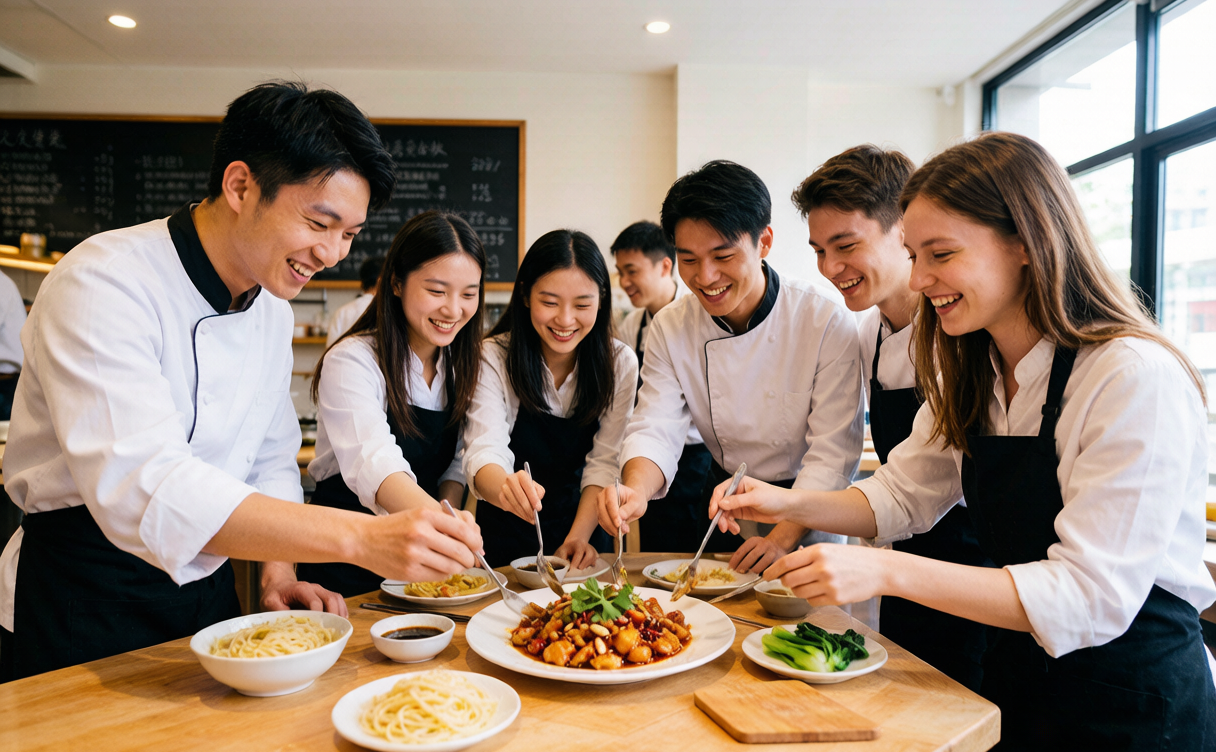
- 10:30 Hands-on: mapo tofu, gongbao chicken, dan dan noodles, a greens stir-fry.
- 12:30 Sit down and eat your own lunch with tea.
- 13:30 Receive recipe cards; photo with the chef.
That single morning is one of the most rewarding things to do in China for food-loving travelers, and a natural fit for a first China itinerary that wants a hands-on day between sightseeing.
Common Beginner Mistakes
First-timers at a China cooking class tend to repeat the same slip-ups. The biggest is overcrowding the wok: Chinese home cooking relies on a screaming-hot pan and small batches, so dumping everything in at once steams the food instead of searing it — your host will quietly reshuffle the order. The second is over-salting; sauces are balanced for rice, and tasting as you go beats dumping the whole measuring spoon in. A third is skipping the market walk to “save time” — that’s where you learn to tell fresh tofu from processed and actually meet the ingredients you’ll cook. Finally, don’t film the whole session and miss the doing; the muscle memory is the souvenir.
Turning the Class Into a Real Skill
The class shouldn’t end at the door. Buy a lightweight carbon-steel wok and a Chinese spatula before you fly home — the flat-bottom kind works on Western stoves — and practice the high-heat toss with plain vegetables until it clicks. Keep the recipe cards in your phone and cook the dishes within two weeks of returning, while the technique is fresh; the flavors will surprise you with how close they get. Many schools also run alumni WeChat groups where chefs post seasonal variations, which is a low-effort way to keep the skill alive long after the trip.
Practical Tips
- Confirm the menu in advance if you have dislikes; some schools fix the dishes.
- Spice level: ask for “foreigner mild” (wei la) in Sichuan — the default is fierce.
- Recipes travel: photograph each step; metric weights in China are easy to replicate at home.
- Wet markets are photogenic but slippery — watch your footing.
- Tipping isn’t expected; a thank-you note to the chef is appreciated.
- Kid-friendly: classes are great family activities; fold them into broader family travel plans that work for mixed-age groups.
Why These Skills Are Worth Protecting
Chinese culinary technique — from fermentation to wok hei — is the kind of living heritage UNESCO documents in its intangible cultural heritage program at ich.unesco.org. Taking a class isn’t just tourism; it’s a direct line into a tradition practiced continuously for thousands of years.
FAQ
Do I need cooking experience?
No. Classes assume zero skill; you’ll be guided through every cut. Enthusiasm matters more than ability.
Are classes in English?
Most reputable schools provide English recipes and a translator or English-speaking chef. Hutong home kitchens may use a mix of demonstration and gestures.
How far ahead should I book?
A week in peak season (spring/autumn), a day or two off-season. Small kitchens cap at 8–10 people.
Is it safe with food hygiene?
Yes — you cook your own food at temperature, and schools use tourist-standard kitchens. Avoid unrefrigerated market samples if your stomach is sensitive.
Can kids join?
Usually yes, from about age 6, with a participating adult. Dumpling folding is a hit with children.
What if I’m vegetarian or have allergies?
Vegetarian menus are common; nut and gluten allergies are harder because soy and wheat are everywhere — tell the school explicitly when booking.
Written by Karl Huang, updated August 2026.