

A proper Xiaolongbao Shanghai guide has to start with a small confession: the soup dumpling most tourists hunt in Shanghai is not really from Shanghai at all. It was perfected in the Jiangnan town of Nanxiang, now a suburb folded into the city, and only became a Shanghainese icon once it moved into the tea houses of old Shanghai. That origin story matters because it tells you where to eat the real thing — and where you’re paying for a brand. This guide goes deeper than “try the soup dumplings”: it maps the best Xiaolongbao Shanghai spots by neighborhood and budget, explains the eating ritual that keeps you from burning your palate (or spraying broth across the table), and pins down seasonal fillings you won’t find year-round. Pair it with our wider Chinese food guide to the eight great cuisines if you want to place xiaolongbao inside the broader map of regional cooking.
What a Xiaolongbao Actually Is
Xiaolongbao are pleated wheat dumplings steamed inside a small bamboo basket (the “xiao long,” or small basket, gives the name). Unlike a wonton or jiaozi, the magic is liquid: a gelatinized pork-aspic cube is tucked into the filling, melts under steam into hot broth, and is sealed inside the thin skin. A good one holds 18–22 pleats, a translucent dome you can almost see through, and weighs around 30–35 grams with a surprisingly heavy payload of soup. The classic filling is pork with a trace of ginger and, in autumn, a little crab roe. The skill is in the wrap: too thick and it’s doughy, too thin and it tears and leaks during steaming.
A short history of Nanxiang
The original shop, Nanxiang Mantou Dian, opened inside the Yu Garden area of old Shanghai in 1900, but its recipe came from Nanxiang town, where a tea-house owner began serving steamed buns to accompany tea in the 1870s. The city-center branch at Yu Garden is now a tourist circus, yet the family recipe survives in a handful of quieter outlets. Knowing this lets you skip the worst of the queue and still eat well — a theme this Xiaolongbao Shanghai guide returns to repeatedly.
Best Time to Eat Xiaolongbao in Shanghai
Timing your trip shapes what’s in the basket. The full best time to visit Shanghai breakdown covers weather and crowds, but for dumplings specifically:
- September–November (autumn): the headline season. Shanghai cools off, tourist numbers ease after the October National Day holiday, and — crucially — hairy crab (da zha xie) season opens. Many shops add a crab-roe xiaolongbao that’s richer and pricier than the pork original.
- March–May (spring): mild, pleasant for the long walks between dumpling houses, with normal menus and short queues.
- Summer (June–August): hot and humid; dumpling houses are air-conditioned refuges, but some smaller shops cut hours.
- January–February: around Lunar New Year many family-run stalls close for a week or two — check before you go.
Avoid the Oct 1–7 National Day holiday if you can: lines at the famous spots run 60–90 minutes.
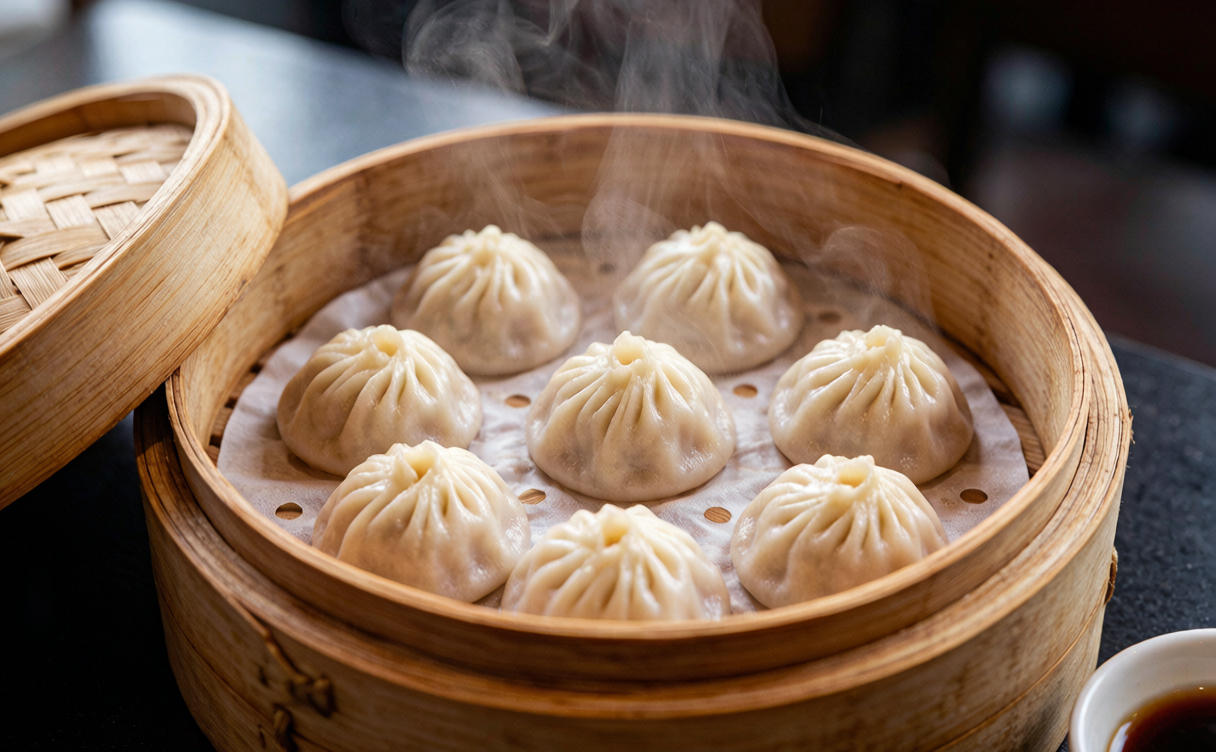
Where to Eat: The Real Shortlist
Forget the endless lists. These are the places that matter, with honest prices in RMB and US dollars:
| Spot | Neighborhood | Signature | Price (basket of 6) |
|—|—|—|—|
| Nanxiang Steamed Bun Restaurant (Yu Garden) | Yu Garden / Old City | Classic pork | RMB 50 (US$7) |
| Nanxiang original shop | Nanxiang town, Jiading | Pork & crab (seasonal) | RMB 35–60 (US$5–8) |
| Jia Jia Tang Bao | Huanghe Rd, People’s Sq. | Fresh pork, thin skin | RMB 25–40 (US$3.50–5.50) |
| Fu Chun Xiao Long | People’s Square | Old-school pork | RMB 20–30 (US$2.80–4.20) |
| Din Tai Fung | Multiple (West Nanjing Rd) | Refined pork, crab | RMB 60–90 (US$8.50–13) |
| Da Hu Chun | Multiple | Pan-seared shengjian | RMB 18–28 (US$2.50–4) |
Jia Jia Tang Bao is the local’s compromise: a cramped, no-frills room a few steps from Nanjing East Road where the skins are thinner than the tourist traps and the wait is usually under 20 minutes. Din Tai Fung is the safe, air-conditioned choice if you want consistency and an English menu; it’s an excellent, reassuring pick for first-timers. Both sit on the standard Xiaolongbao Shanghai guide circuit for good reason.
How to Eat a Xiaolongbao (Without Disaster)
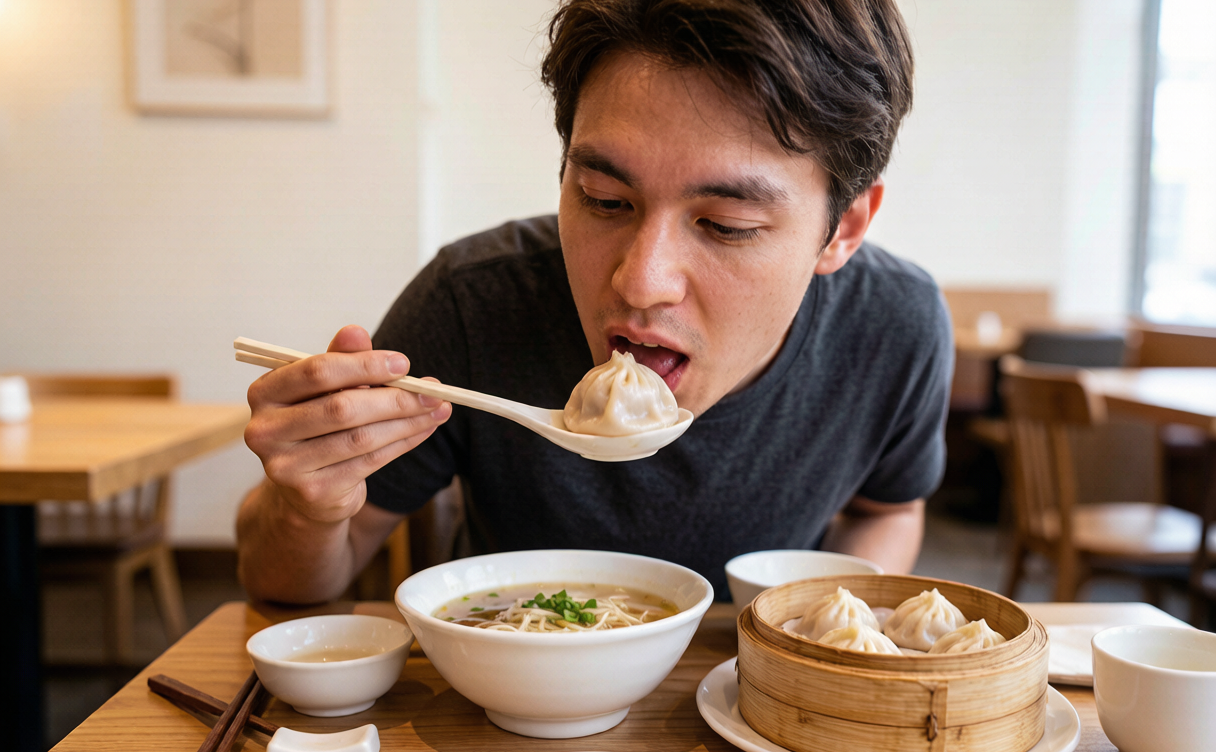
The ritual is half the experience. Follow the local “qǐng qīng tí, màn màn yí, xiān kāi chuāng, hòu hē tāng” — lift gently, move slowly, open a window, then drink the soup:
1. Lift the dumpling with your spoon and a chopstick, never with chopsticks alone — the skin tears.
2. Nibble a small opening at the top to let steam escape.
3. Sip the broth first; it’s 70–80°C and will scald if you bite straight in.
4. Dip in the black vinegar with a sliver of ginger provided.
5. Eat the whole thing, skin and filling together.
Don’t add soy sauce, and don’t pour the vinegar into the basket. That’s a tourist tell.
A One-Day Xiaolongbao Crawl
- 9:00 Start at Jia Jia Tang Bao near People’s Square for a pork basket before the crowd builds.
- 10:30 Walk to Yu Garden; tour the gardens, then queue (or skip) the Nanxiang main shop for the experience and a crab-roe basket if in season.
- 13:00 Lunch pause, then metro to Nanjing West Road for Din Tai Fung if you want a refined comparison.
- 15:30 Cross to a neighborhood spot like Da Hu Chun for shengjian (pan-fried cousins) as a contrast.
- Evening Walk the Bund; reflect on which basket won.
That loop is also one of the easiest things to do in Shanghai on foot and metro, and a gentle intro to the city’s food streets.
Practical Tips
- Cash vs app: small shops are increasingly Alipay/WeChat-only; a foreign card-linked Alipay helps. Carry some RMB cash as backup.
- Portion math: a basket of 6 is a snack, not a meal. Order 2 baskets per hungry adult.
- Seasons: crab-roe runs roughly mid-September to December and costs 30–50% more.
- Queues: weekday mornings beat weekends; the Yu Garden shop’s line moves faster than it looks because turnover is fast.
- Allergies: fillings are pork-forward; vegetarian xiaolongbao exist but are rarer and often at chains.
- Etiquette: slurping is fine, talking with a full dumpling is risky.
Where to Stay Near the Dumpling Trail
The cluster around People’s Square and Nanjing East Road puts you within a 10-minute walk of Jia Jia Tang Bao, Fu Chun, and the Yu Garden line. Budget travelers can find clean hostels from RMB 120–200 (US$17–28) a night; mid-range hotels run RMB 400–800 (US$56–113). Staying central means you can hit the 9am opening and beat both the heat and the tour buses — a point our first-timer’s China guide makes for every major city.
Why the Craft Matters
The folding technique behind a 20-pleat xiaolongbao is exactly the kind of hand skill China has formally protected as intangible cultural heritage; the wider universe of Chinese culinary craft is documented by UNESCO’s intangible heritage program at ich.unesco.org, worth a read if you want to understand why these small buns carry so much regional pride.
FAQ
Are xiaolongbao and dumplings the same thing?
No. Xiaolongbao are steamed soup-filled buns with a thin skin and broth inside; jiaozi are boiled or pan-fried solid dumplings without soup. Don’t confuse them on a menu.
What’s the difference between xiaolongbao and shengjian?
Shengjian are pan-fried, thicker-skinned, and also hold some soup, but they’re crispy-bottomed and eaten as a breakfast street food, not steamed in baskets.
Is Din Tai Fung “authentic” Shanghai?
It’s a refined chain, but its Shanghai branches make a textbook-correct, consistent xiaolongbao — ideal if you want to learn the eating technique without language pressure.
How much should I budget for a dumpling day?
RMB 60–120 (US$8.50–17) per person buys you three to four baskets across different shops, more than enough to compare.
Can I take xiaolongbao home or travel with them?
Fresh ones don’t travel; frozen vacuum-packed versions exist at supermarkets but the texture suffers. Eat them hot, on site.
Are there vegetarian or halal xiaolongbao?
Vegetarian versions appear at chains and some temples; strictly halal xiaolongbao are uncommon in Shanghai’s pork-centric scene — ask before ordering.
Written by Karl Huang, updated August 2026.