

The first bowl of noodles I ate in China rewired everything I thought I knew about food. It was a cold March evening in 2019, and I was shivering outside a tiny shop in Chengdu after a long flight. That is when I realized this Chinese food guide needs to start with a simple truth: the food in China bears almost no resemblance to the “Chinese food” you have had back home. Within ten minutes a bubbling hotpot arrived, the air turned red with chili, and my eyes watered in the best possible way. If you are planning a trip, understanding the regional cooking styles before you land will save you from ordering the same sweet-and-sour dish every night. This is the practical Chinese food guide I wish someone had handed me on day one.
Key Takeaways
– China has eight great regional cuisines, each with distinct flavors, staple ingredients, and signature dishes — not one national style.
– Sichuan and Hunan bring the heat; Cantonese and Jiangsu/Zhejiang stay light and refined; Shandong anchors the north with wheat and seafood.
– You can order confidently with apps like Dianping and Meituan, plus pointing at photos and using translation tools.
– Street food is safe when you pick busy stalls with high turnover; peel, boil, or skip raw items if unsure.
– Vegetarians and people with allergies should learn a few written Chinese phrases, since “no meat” is not assumed by default.
Meet the 8 Great Cuisines
Most visitors expect “Chinese food” to mean one thing. Locals know better. For centuries, Chinese cooks divided the country into regional schools, and eight of them rose above the rest. Collectively they are called the Eight Great Cuisines (八大菜系). Together they cover the map from the snowy northeast to the tropical coast. When you plan a route with our China travel guide for first-timers, it helps to match each city with its local style so you know what to order.
Sichuan (川菜) — Numbing and Fiery
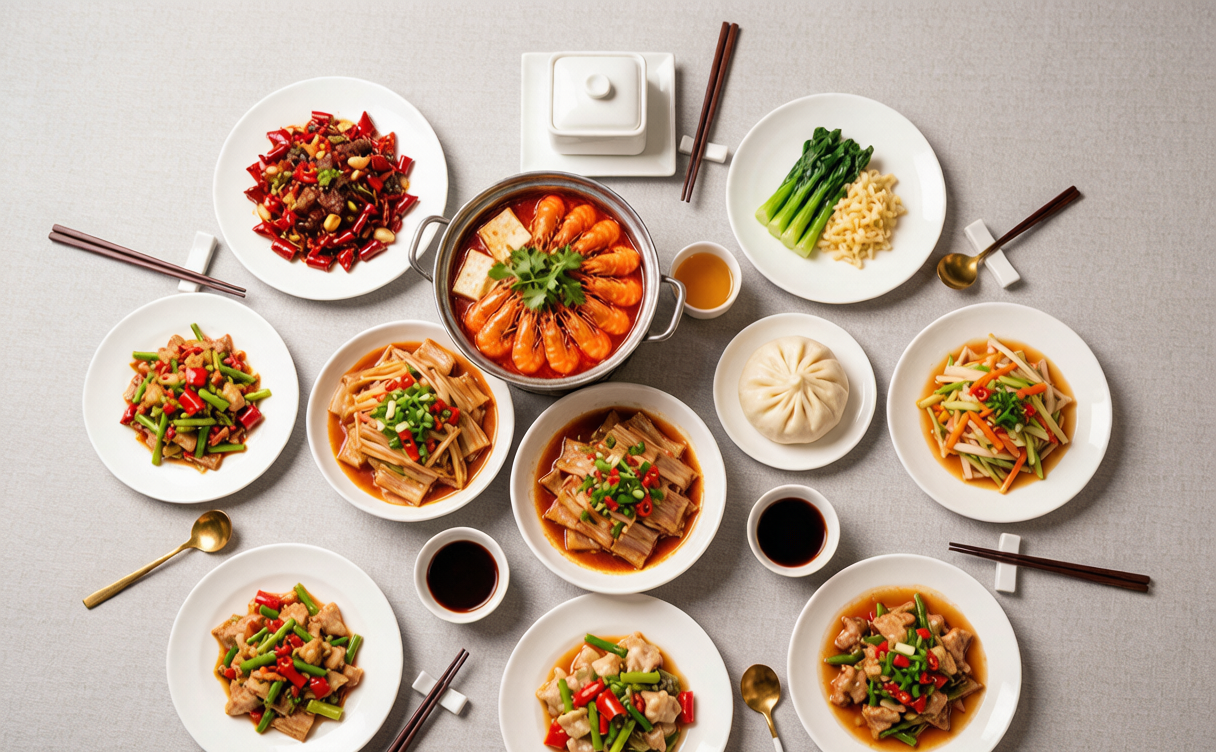
Sichuan cooking is built on two sensations: má (麻, the tingling numbness of Sichuan peppercorn) and là (辣, chili heat). The peppercorn is not spicy — it buzzes your lips like static. Signature dishes include mapo tofu, kung pao chicken, twice-cooked pork (回锅肉), and Sichuan hotpot. If you visit Chengdu, our Chengdu pandas and city guide will point you to the best hotpot streets. Start mild and ask for wēi lā (微辣, “little spicy”) if you are unsure.
Cantonese / Yue (粤菜) — Fresh and Subtle
Cantonese food lets the ingredient speak. Chefs steam, roast, and stir-fry with a light hand, favoring natural sweetness. This is the style behind dim sum, roast goose, char siu (barbecue pork), steamed fish, and silky congee. It is the safest entry point for timid eaters and the best place to find clean, mild flavors after a week of chili.
Shandong / Lu (鲁菜) — The Northern Foundation
Shandong is the oldest of the eight and the root of much northern cooking, including the technique behind Peking duck. Expect salty, crisp, savory dishes built on wheat, vinegar, and seafood: sweet-and-sour carp, scallion pancakes, and braised abalone. If your trip includes the capital, pair this section with our Beijing first-time travel guide for duck and noodle tips.
Jiangsu / Su (苏菜) — Refined and Slightly Sweet
Jiangsu cooking is precise, with knife skills that turn a fish into art. Flavors are rich but not greasy, often gently sweet. Must-tries: lion’s head meatballs (大狮子头), Yangzhou fried rice, and squirrel-shaped mandarin fish. It is comfort food dressed up for a banquet.
Zhejiang / Zhe (浙菜) — Mellow and Fresh
Neighboring Zhejiang is lighter still, leaning on fresh river fish, seafood, and bamboo shoots with a mellow sweet-sour balance. Famous plates include West Lake vinegar fish, Longjing shrimp (cooked with dragon-well tea), and Dongpo pork. Hangzhou is the place to eat it.
Fujian / Min (闽菜) — Umami and Broth
Fujian cuisine is soup-forward, sour-sweet, and deeply umami, thanks to long-simmered broths and ingredients like red yeast rice. The showstopper is Buddha Jumps Over the Wall (佛跳墙), a luxury soup of seafood, meat, and herbs. Lychee pork is the everyday favorite.
Hunan / Xiang (湘菜) — Pure, Dry Heat
People confuse Hunan with Sichuan. The difference: Hunan uses straight chili heat with no numbing. Dishes are smoky, cured, and intense. Order steamed fish head with chili, Chairman Mao’s braised pork, and smoked cured meats. Bring water.
Anhui / Hui (徽菜) — Rustic and Wild
The quietest of the eight, Anhui cooking comes from the mountains. It uses wild herbs, bamboo, mushrooms, and slow braising, with earthy, hearty results. Look for Li Hongzhang stew and braised pigeon. You will mostly meet it in Huangshan; elsewhere it is rare, so try it when you can.
How to Order Food in China
Menus are often in Chinese only, but you are never stuck. No Chinese food guide would be complete without a word on how locals actually order, so here is what works in practice.
Use Dianping (大众点评) and Meituan (美团). These apps are China’s Yelp-plus-Delivery. Search a dish or your location, sort by rating, and open the restaurant’s photo menu. Many listings show pictures you can point at. Both apps need a Chinese phone number and a local payment method — set up Alipay and WeChat Pay for foreigners before you arrive so checkout is painless.
Point and show photos. No app? Open Google Translate’s camera mode or simply show a photo from your phone. “This one, please” goes a long way.
Learn five words. Bú là (not spicy), wēi lā (a little spicy), bú fàng ròu (no meat), suān (sour), xièxiè (thank you). Write them down.
In April 2023 I landed in Hangzhou with a phone full of food photos and zero Mandarin. I walked into a packed noodle house, opened Dianping, and pointed at a top-rated bowl of pian er chuan noodles. The owner laughed, nodded, and five minutes later I was eating the best soup of my life for about two dollars. The app did the talking; the photo did the rest.
Street Food and Safety
Street eats are some of the best food in China — and mostly safe if you follow a few rules.
- Go where the line is long. High turnover means fresh ingredients and fast cooking. A empty stall at dinner time is a red flag.
- Hot, cooked, peeled. Steamed buns, grilled skewers, and boiled noodles are safe. Peelable fruit is fine. Skip raw salads washed in tap water and unpeeled raw toppings when you are unsure.
- Watch the oil. Busy stalls change oil often; a dark, sticky fryer is worth avoiding.
- Carry tissues. Public restrooms rarely stock paper, and street meals can be messy.
For deeper peace of mind, our China travel safety tips covers water, stomach issues, and what to do if food disagrees with you.
Table Etiquette: Sharing and Toasts
Chinese meals are shared, not plated individually. Dishes arrive in the center and everyone takes a little. A few habits will make you a gracious guest.
- Serve others before yourself. At a banquet, pour tea for neighbors and offer dishes with the serving spoon.
- The toast (干杯, gān bēi). When someone toasts you, make eye contact, clink, and sip. You do not have to finish the glass every time.
- Chopstick don’ts. Never stick them upright in a bowl of rice (it mimics funeral incense), and do not point with them.
- The rotating table. Spin it slowly, and never spin while someone is picking up food.
- Paying the bill. The host usually insists on paying. A polite back-and-forth is normal; do not snatch the bill on the first round.
Vegetarian and Food-Allergy Notes for Foreigners
China is harder for vegetarians than India or the West, because “vegetable dish” often still contains pork, chicken stock, or shrimp. Plan ahead.
- Learn the key characters. 肉 (meat), 鸡 (chicken), 猪 (pork), 牛 (beef), 海鲜 (seafood), 蛋 (egg), 花生 (peanut), 葱 (scallion). Show a note: “I cannot eat meat, fish, or shrimp. Thank you.”
- Buddhist temples and big cities are easiest. Guangzhou, Shanghai, and Beijing have excellent vegetarian restaurants.
- Sauces hide danger. Oyster sauce and chicken powder appear in “vegetable” stir-fries. Ask specifically for qīng chǎo (plain stir-fry, no sauce).
- Peanut and seafood allergies are serious. Communicate in writing and carry your medication. Do not rely on spoken reassurance alone.
In October 2022 a friend who is allergic to shellfish joined me for hotpot in Beijing. We typed a clear allergy note into a translation app and showed it to the server before ordering. The staff swapped the shared broth for a separate clear pot and double-checked every plate. It was a small step that turned a risky meal into a relaxed one — and it confirmed that written communication beats hopeful guessing every time.
What to Try First
New to China? Do not try to taste all eight cuisines in a week. Build a sensible starter list:
- Day 1 — Cantonese dim sum. Gentle, fun, and forgiving. Perfect first meal.
- Day 2 — Sichuan hotpot or mapo tofu. The flavor you will remember forever. Order wēi lā.
- Day 3 — A local street snack. Jianbing, lamb skewers, or soup dumplings (xiaolongbao).
- One banquet dish. Lion’s head meatballs or Dongpo pork to taste the refined south.
- One brave bite. Chicken feet, stinky tofu, or century egg — just once, for the story.
The best time to visit China often lines up with food festivals, so check the calendar before you book. Keep this Chinese food guide handy as you build your shortlist — and do not be afraid to point at whatever looks good.
FAQ
Is Chinese food in China really that different from takeout back home?
Yes. Most Western “Chinese restaurants” serve a small Cantonese-American menu — which is exactly why this Chinese food guide exists. In China you will find eight major regional styles, dozens of minority cuisines, and hyper-local dishes that never left their hometown. The variety is the point.
How do I avoid food that is too spicy?
Ask for bú là (no spice) or wēi lā (mild). Sichuan and Hunan menus often list spice levels. Cantonese, Jiangsu, and Zhejiang dishes are naturally mild, so start there.
Can I eat well as a vegetarian in China?
You can, but it takes effort. Big cities and Buddhist areas have dedicated vegetarian restaurants. Elsewhere, always confirm in writing that no meat, fish, or stock is used, since “vegetable” dishes are frequently cooked with them.
Is it safe to drink the tap water or eat street food?
Boil or bottle your drinking water; avoid tap water. Street food is generally safe at busy, high-turnover stalls — choose hot, cooked items and peeled fruit over raw preparations.
Chinese culinary traditions are recognized among the world’s living heritage; UNESCO’s Intangible Cultural Heritage list documents many of these regional practices — see UNESCO ICH for the broader record.
Written by Karl. Karl has spent the last three years helping foreign visitors plan practical, low-stress trips across China.