

There is no single hotpot in China. Ask a traveler who has chased broth from Chengdu to the tropical coast and they will tell you the bubbling communal pot is less a dish than a map of the country’s climates, harvests, and appetites. This China regional hotpot guide is built for visitors who want to understand those differences before they sit down, so that ordering in a noisy hall feels like a small act of cultural literacy rather than a gamble.
Chinese hotpot styles are shaped first by what grows nearby and what the weather demands. Inland, where winters are damp and cold, the pots turn fiery and numbing. Along the southern coast, where the air is warm and the sea is close, the broth stays clear, sweet, and built around the ingredient itself. The genius of the format is its portability: the apparatus is the same everywhere — a ring of diners around a simmering cauldron — but the liquid, the dips, and the rhythm change completely from province to province.
Sichuan vs Chongqing hotpot: a rivalry worth understanding
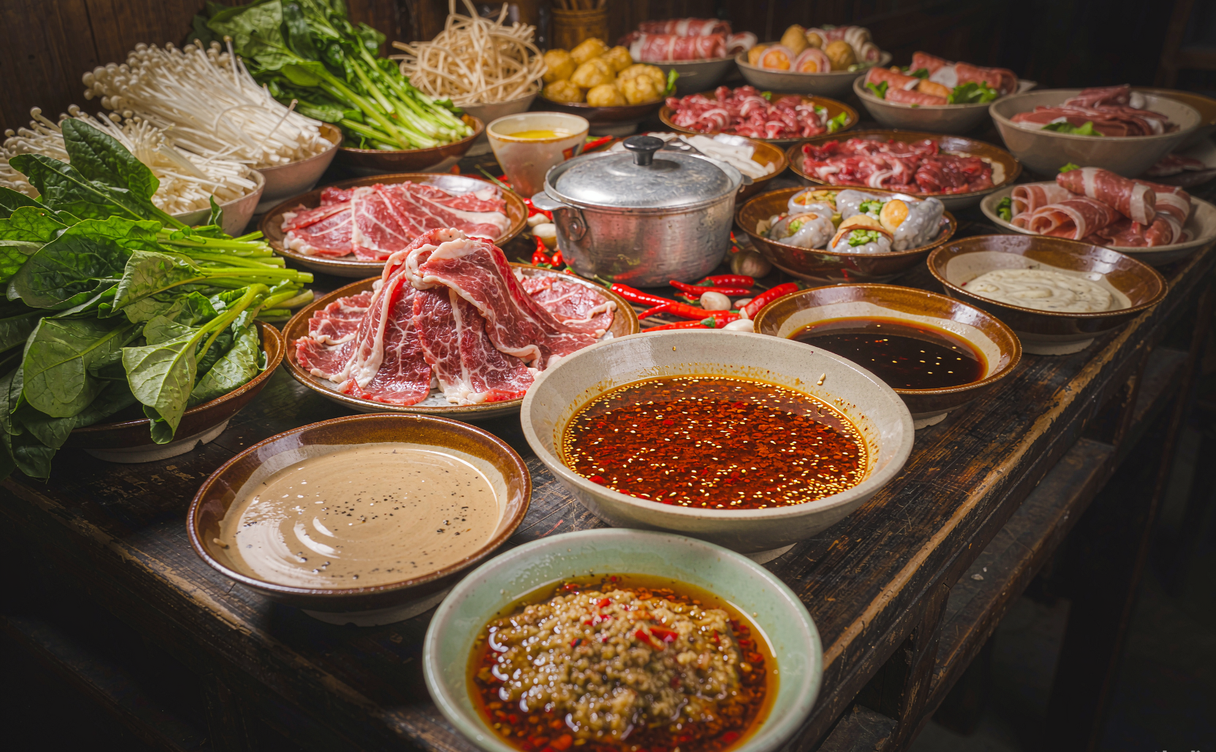
The most famous divide in Chinese hotpot is the one between Sichuan vs Chongqing hotpot. The two cities sit barely an hour apart by high-speed rail, yet locals will defend their version with the intensity of sports fans. Chongqing’s classic is the “nine-grid” pot: a thick, almost black broth built on beef tallow, doubanjiang (fermented chili bean paste), and a fistful of dried chilies and Sichuan peppercorns. It is aggressive, oily, and unapologetic. The peppercorns deliver mala, the signature numbing-and-hot tingle that defines the region and that first-timers either learn to love or quietly flee.
Sichuan-style hotpot, centered on Chengdu, is often a touch milder and more perfumed. Cooks lean on aromatics — citrus peel, glutinous rice wine, and a broader spice cabinet — and the broth is frequently split so timid diners can retreat to a clear side. If you want to study the Chengdu approach in detail, our Chengdu hotpot guide walks through the neighborhoods and broths worth seeking out. For the heavier Chongqing original, the Chongqing hotpot guide covers where locals actually eat and how to order without embarrassment.
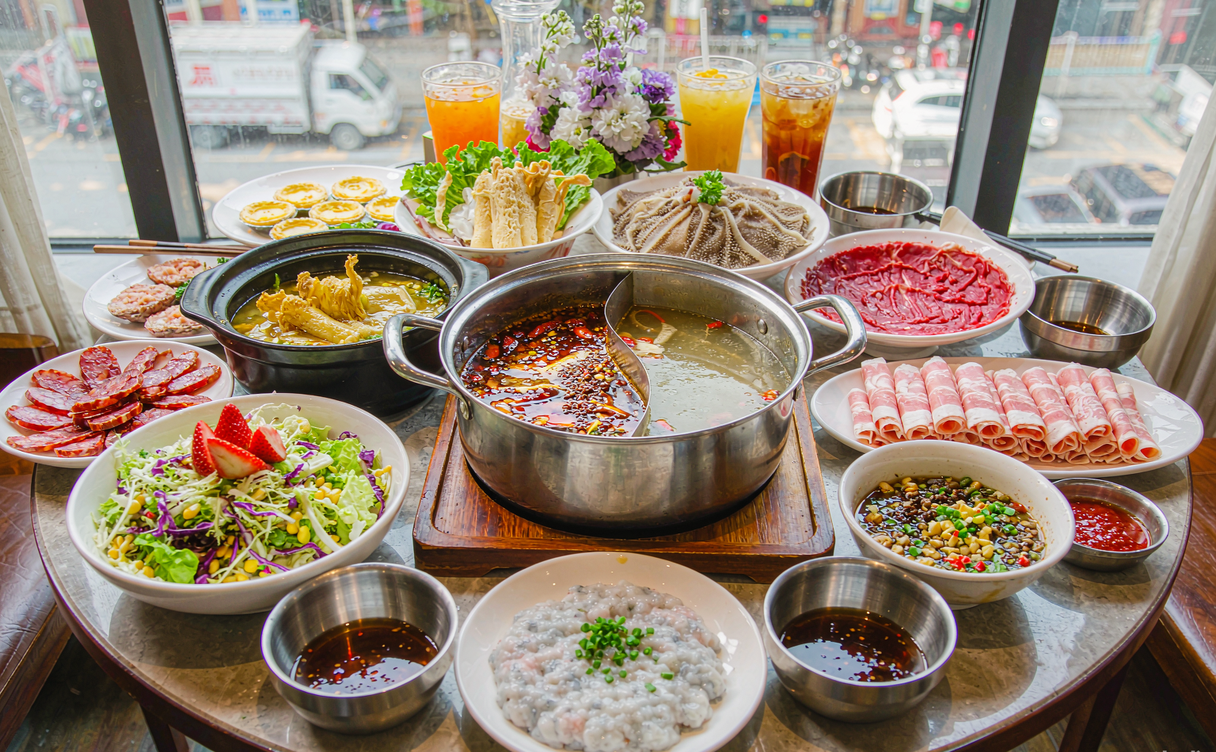
Beyond the pepper debate, the real joy is in the dipping sauce. In the southwest, a simple bowl of sesame oil, crushed garlic, and scallion cools each bite and protects the tongue. Elsewhere, the sauce station is a buffet of possibility: fermented tofu, peanut butter, cilantro, oyster sauce, and chili oil. Learning to build your own bowl is half the fun of the meal, and no two tables end up with the same combination.
The clear-broth south: Hainan and the island table
Travel south and the pot transforms. Hainan hotpot is the antidote to everything the interior stands for. On this tropical island, the broth is usually a light chicken or coconut base, gently simmered with sugarcane, corn, and ginger. The point is not heat but sweetness — the meat, seafood, and greens are meant to taste of themselves. A typical Hainan hotpot meal opens with stock made from a free-range chicken, then moves through slices of local beef, fresh shrimp, and leafy greens, finishing with noodles that soak up the clarified broth.
For visitors building a broader food plan, our China food tour guide links the island kitchen to the rest of the southern coastline. Hainan’s version is also one of the most approachable for travelers who don’t tolerate chili, which makes it a reliable choice on a first trip and a welcome break from the numbness of the west.
Guizhou sour hotpot and the southwestern fringe
Head west into the mountains and you meet one of China’s most distinctive broths: Guizhou sour hotpot. Guizhou sour soup, or suantang, is fermented from rice, tomatoes, or wild herbs, producing a tangy, low-chili broth that wakes the palate without burning it. The most celebrated version uses a red sour soup made from fermented tomatoes, giving the pot a deep umami brightness. It is the kind of flavor that surprises visitors who assumed all southwestern food was fire, and it pairs beautifully with sticky rice and pickled vegetables on the side.
The Guizhou sour soup guide explains how to order it properly and which surrounding dishes to pair. Sour hotpot is also a social meal: the longer it simmers, the rounder the flavor becomes, so locals linger for hours, topping up broth and chatting long after the food is gone.
Yunnan, mushrooms, and the wild edge
No regional survey is complete without Yunnan, where the highlands produce an extraordinary range of foraged mushrooms in late summer. The Yunnan wild mushroom hotpot guide details the short season when chanterelles, porcini, and the prized songrong go into the pot. The broth here is delicate, often chicken-based, designed to carry the aroma of the fungi rather than compete with it. For travelers, it is a once-a-year experience worth planning around, and the mountain towns of the province make a calm base for it.
Broth, heat, and the arc of the meal
One thing first-timers underestimate is how the pot evolves through the evening. The opening broths are clean and bright; by the end they have absorbed everything dropped into them and turned deep, salty, and layered. Seasoned diners use this arc on purpose, cooking milder items like tofu and greens early and saving robust meats for later when the flavor has built. The heat is adjustable at almost every table — whole chilies can be fished out, and extra stock is added on request to calm an over-eager pot. None of this is written down, which is exactly why watching a local table is the fastest education you can get, and why no two hotpot nights taste quite the same.
Finding the best hotpot in China
So where is the best hotpot in China? The honest answer depends on what you want. Crave adrenaline and depth? Chongqing. Want balance and fragrance? Chengdu. Prefer the ingredient to speak? Hainan. Looking for something strange and bright? Guizhou. Each city’s night markets are the natural habitat of the casual pot, and our China night markets guide points to the streets where you can hop between regional styles in a single evening without booking a table.
A few practical notes for first-timers help the experience go smoothly. Most hotpot restaurants in major cities have picture menus or QR-code ordering with English options in tourist districts, and staff are used to explaining the grid system to newcomers. Vegetarians should ask for a clear or tomato broth, since many bases contain animal fat, and should confirm that the dipping sauces are meat-free. Portions are usually ordered a la carte, so add a few plates at a time rather than everything at once, and pace yourself: the meal is meant to last an hour or two, not fifteen minutes, with the broth cycling through flavors as it reduces.
The deeper pleasure of hotpot is what it reveals about Chinese hospitality. Unlike a plated dinner, the pot forces everyone into the same rhythm — reaching, cooking, waiting, sharing — and you learn a city not from a museum but from the broth it chooses to simmer. For background on how regional cuisines fit into a wider journey, the China National Tourist Office offers an official overview of dining across the provinces that pairs well with any route you plan.
Wherever your route lands, treat hotpot as a daily possibility rather than a single meal. From the numbing grids of Chongqing to the sour brightness of Guizhou and the coconut calm of Hainan, the pot is one of the most reliable ways to read the country’s regions — one shared boil at a time, with a dipping bowl that is entirely your own.