

This Chengdu hotpot guide is for travelers ready to meet the numbing, spicy soul of Sichuan cooking. Chengdu, the laid-back capital of Sichuan, is where the mala (numbing-spicy) hotpot style was refined into the national obsession it is today. A bubbling cauldron of chili and Sichuan peppercorn, into which you dip everything from beef to lotus root, is less a meal than a loud, sweaty, joyful social event. A good Chengdu hotpot guide should prepare you for the tingle before the first bite.
Content Preview
- Chengdu Hotpot Guide: Best Time to Visit
- Chengdu Hotpot Guide: How to Get There
- Top Dishes to Eat at a Chengdu Hotpot
- Where to Eat & Stay in Chengdu
- Sample Chengdu Food Itinerary
- FAQ
Chengdu Hotpot Guide: Best Time to Visit
The best time to visit Chengdu for hotpot is autumn and winter, from October to March, when the weather turns cool and a fiery pot is pure comfort against the drizzle. Summer in Chengdu is humid and hot, yet locals eat hotpot year-round regardless, often with the air conditioning cranked and a cold beer in hand. Spring is mild and perfect for combining pots with a morning at the panda base. Chengdu also pairs its hotpot with a famous tea culture — many locals finish a pot, then drift to a teahouse to “clear the fire” with jasmine or gaiwan tea. Timing your trip for the Chengdu Food Festival in autumn adds pop-up pots and chili contests across the city. For timing the wider country, see our best time to visit China guide.
Chengdu lies in the heart of Sichuan; the region’s cooking, including hotpot, is detailed on Wikipedia’s Sichuan cuisine article.
Chengdu Hotpot Guide: How to Get There
Chengdu is one of China’s best-connected cities. Fly into Chengdu Tianfu International Airport (TFU) or the older Shuangliu (CTU); both link to the metro, and Tianfu is about 50 minutes from the center by express rail. High-speed trains connect Chengdu with Xi’an, Chongqing in roughly an hour, and Kunming. The city metro is excellent and Didi fills the gaps; most famous hotpot streets sit in the center and along the Jin River, all easy to reach after dark. Once here, the dining districts are clustered and walkable; the metro’s line 2 and 3 cross the hottest eating quarters, and a Didi across town rarely exceeds ¥25. Many central hotels put you within a 10-minute walk of a famous pot, so location matters more than luxury when you are chasing a midnight bowl.
Top Dishes to Eat at a Chengdu Hotpot
Chengdu hotpot is a do-it-yourself feast. Here is what typically lands in the pot.
| Item | Type | Tip |
|——|——|—–|
| Beef slices | Meat | The classic; rolled thin |
| Tripe (maodu) | Offal | Dip 10 seconds only |
| Duck intestine | Offal | Quick dip, stays crisp |
| Lotus root | Veg | Soaks up the broth |
| Potato / sweet potato | Veg | Slice thin |
| Tofu / frozen tofu | Soy | Absorbs flavor |
The broth comes in two camps: “hong tang” (red, chili-laden) and “qing tang” (clear, mild). Most tables order a “yuan yang” — a dual pot split down the middle — to keep both camps happy. The real magic is Sichuan peppercorn (huajiao), which numbs the lips and tongue; that tingle is the whole point of mala. You dip cooked items in the sauce you build at the condiment bar: sesame paste, crushed garlic, scallion, and a splash of broth.
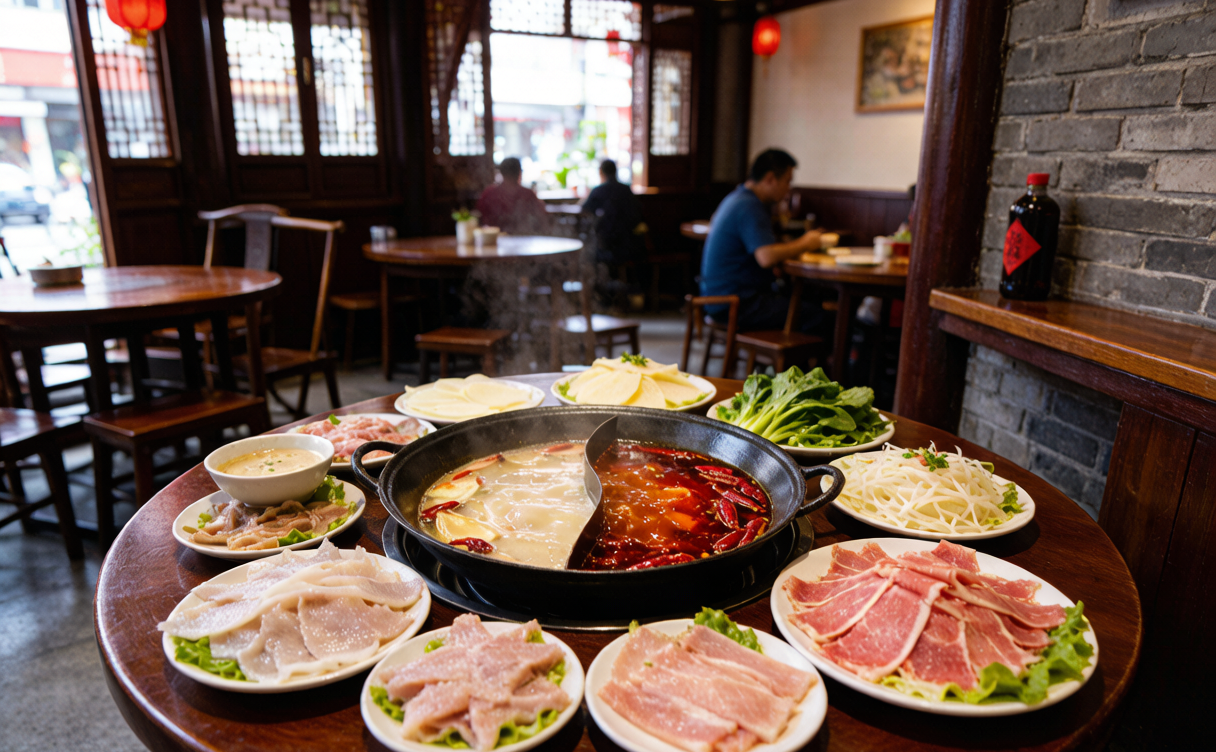
First-timers should start mild and build up. The condiment bar is where you take control — a little sesame, a lot of garlic, maybe a spoon of the restaurant’s special chili. Don’t skip cold drinks and a plate of sliced watermelon between rounds; they tame the heat better than beer alone. More Sichuan eats are in our best things to do in China roundup.
Where to Eat & Stay in Chengdu
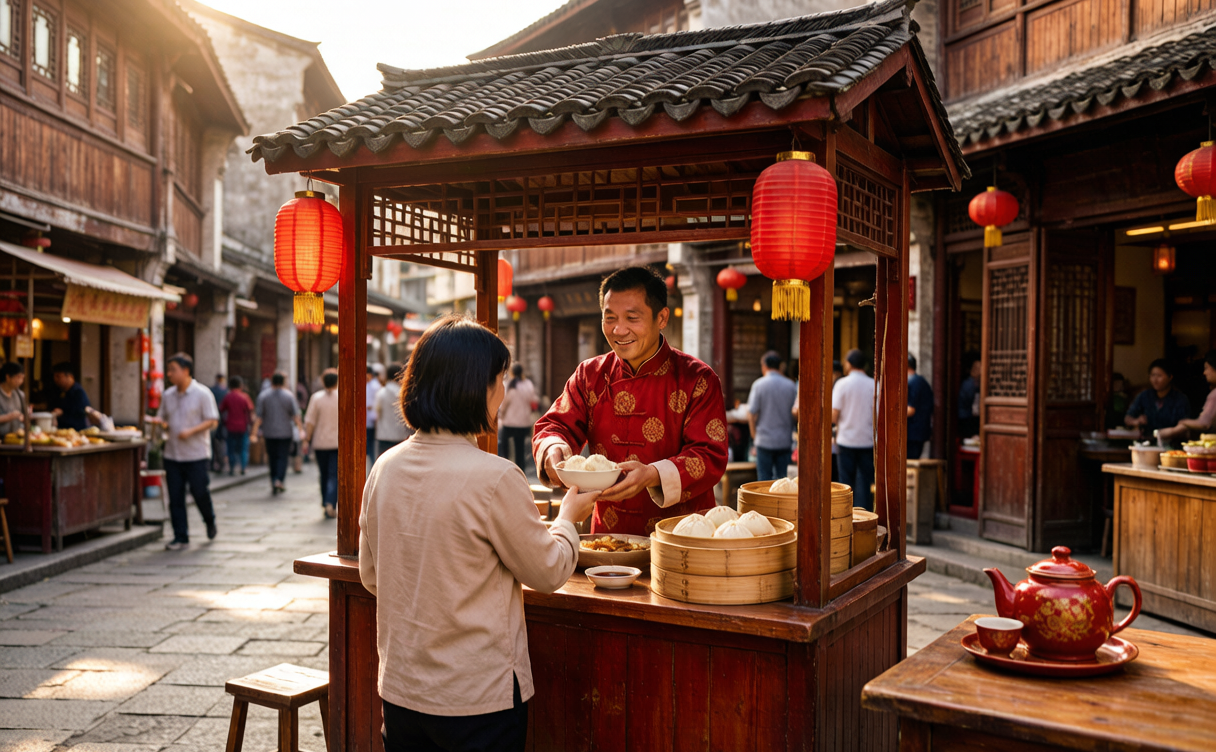
Classic hotpot streets include Yulin and the Jin River embankment, where riverside pots run late into the night. Famous chains such as Haidilao and Shu Jiu Xiang are reliable for first-timers and have English menus; hole-in-the-wall joints are bolder and cheaper. Central hotels run ¥250 to ¥500, and staying near the river puts you within a short ride of the best pots and a gentle evening walk home. A few table customs help the first time. The person who ordered often controls the broth strength and the pacing; do not be offended if a local joint never asks your spice level — just state it clearly. Raw items go only in the bubbling side, never the clear one, and used plates stack at the edge of the table. When in doubt, watch the table next to you and copy the rhythm.
Chengdu Hotpot Guide: Practical Tips
Order a dual pot if anyone at the table is spice-shy, and tell the server “wei la” for a milder red broth. Bring a change of clothes or a jacket you don’t love — the chili smell clings to fabric for a day. Popular spots need a booking or a queue; Haidilao famously hands out free snacks, drinks, and even a shoe shine while you wait. Settle the bill with Alipay, WeChat, or cash. Pace yourself: a hotpot is a long, social meal, not a race, so order in waves rather than all at once and let the conversation carry the evening. Spice builds slowly, so resist dumping everything at once; cook in small batches and give the peppercorn time to work its tingle. A spoonful of the restaurant’s fermented tofu sauce adds depth if you like funk, and a plate of sliced fruit between rounds resets the palate for the next dip. If you overdo the heat, plain rice or a cold sweet soybean milk is the fastest cure; milk also helps, despite the stubborn myth that it worsens the burn. The goal is a tingle you remember fondly, not a mouth so numb you cannot taste the next day’s meal. First-timers should aim for “enjoyably spicy” rather than “bravely spicy,” and there is no shame in a mostly clear pot.
Sample Chengdu Food Itinerary
Day 1: Arrive in Chengdu, check in, then dinner at a riverside hotpot with a dual pot; overnight in Chengdu.
Day 2: Late breakfast, a morning at the panda base, an afternoon trial of a milder hotpot, and an evening stroll; overnight in Chengdu.
Day 3: Day trip to Mount Qingcheng, a farewell hotpot dinner back in town; overnight in Chengdu.
FAQ
What does “mala” mean? Numbing (ma, from Sichuan peppercorn) plus spicy (la, from chili).
Is Chengdu hotpot too spicy for beginners? Order a dual pot and a mild side; you control the heat entirely.
What causes the numbing feeling? Sichuan peppercorn — harmless, intentional, and the signature of the style.
How much per person? About ¥80–150 including drinks and sides.
Do I need to book? Popular places, yes; evening queues are common, especially on weekends.
By Karl — Last updated July 27, 2026