

This China night market guide is for travelers who discover, usually around 8pm on their second evening, that the country’s real food culture does not live in restaurants. It lives on plastic stools under strip lighting, in alleys that smell of cumin and charcoal, where a bowl of noodles costs less than a coffee back home. Night markets are also the easiest place in the country to eat well without reading a menu — you point, you pay, you eat. From Xi’an’s Muslim Quarter to Xiamen’s seaside lanes, this guide covers where to go, what to order, how payment actually works in 2026, and how to avoid the two or three mistakes that give visitors a bad night.
Why Night Markets Beat Restaurants for First-Timers
Chinese restaurant menus assume a group, so solo diners overpay. Night markets solve this: everything is snack-sized, so four people can taste fifteen things for the price of one sit-down meal. There’s no language barrier either — you point, prices are displayed, and the transaction takes ten seconds.
They are also the most regional part of Chinese eating. A market in Kunming looks nothing like one in Qingdao. Our breakdown of China’s eight great cuisines explains the regional logic that night markets serve in miniature.
The Best Night Markets in China
| Market | City | Best for | Typical spend (RMB / US$) | Hours |
|—|—|—|—|—|
| Muslim Quarter (Beiyuanmen) | Xi’an | Lamb skewers, roujiamo, persimmon cakes | 60–120 / US$8–17 | 10:00–23:30 |
| Guijie “Ghost Street” | Beijing | Crayfish, late-night hotpot, sit-down snacks | 100–200 / US$14–28 | 17:00–late |
| Wangfujing area lanes | Beijing | Convenient sampling, tourist-friendly stalls | 50–100 / US$7–14 | 11:00–22:00 |
| Jinli & Kuanzhai Alley | Chengdu | Sichuan snacks, skewers, sweet noodles | 60–120 / US$8–17 | 10:00–22:30 |
| Jiefangbei & Bayi Road | Chongqing | Xiaomian, spicy skewers, grilled fish | 60–130 / US$8–18 | 17:00–02:00 |
| Shangxiajiu / Xiguan lanes | Guangzhou | Cantonese snacks, congee, rice rolls | 60–120 / US$8–17 | 11:00–23:00 |
| Zengcuoan | Xiamen | Seafood, oyster omelets, sea views | 60–140 / US$8–20 | 16:00–23:00 |
| Nanqiang & city night streets | Kunming | Yunnan mushrooms, rice noodles, grilled cheese | 50–110 / US$7–15 | 17:00–23:00 |
| Pichaiyuan & Taidong | Qingdao | Draft beer in bags, grilled clams, seafood | 60–150 / US$8–21 | 17:00–24:00 |
| Hubu Alley | Wuhan | Breakfast-into-night snacks, reganmian | 40–90 / US$6–13 | 05:30–21:00 |
| Confucius Temple (Fuzimiao) | Nanjing | Duck blood soup, dumplings, riverside lanterns | 60–120 / US$8–17 | 10:00–22:00 |
A few notes the table can’t hold. Xi’an’s Muslim Quarter is the best introduction in the country, though the main lane is touristy — the side alleys off Beiyuanmen are better. Chongqing’s Jiefangbei runs latest of anywhere here. Wuhan’s Hubu Alley is the outlier: it peaks at breakfast. Qingdao is the beer story — draft poured into plastic bags is a genuine local habit, not a gimmick.
What to Eat: The Night Market Canon
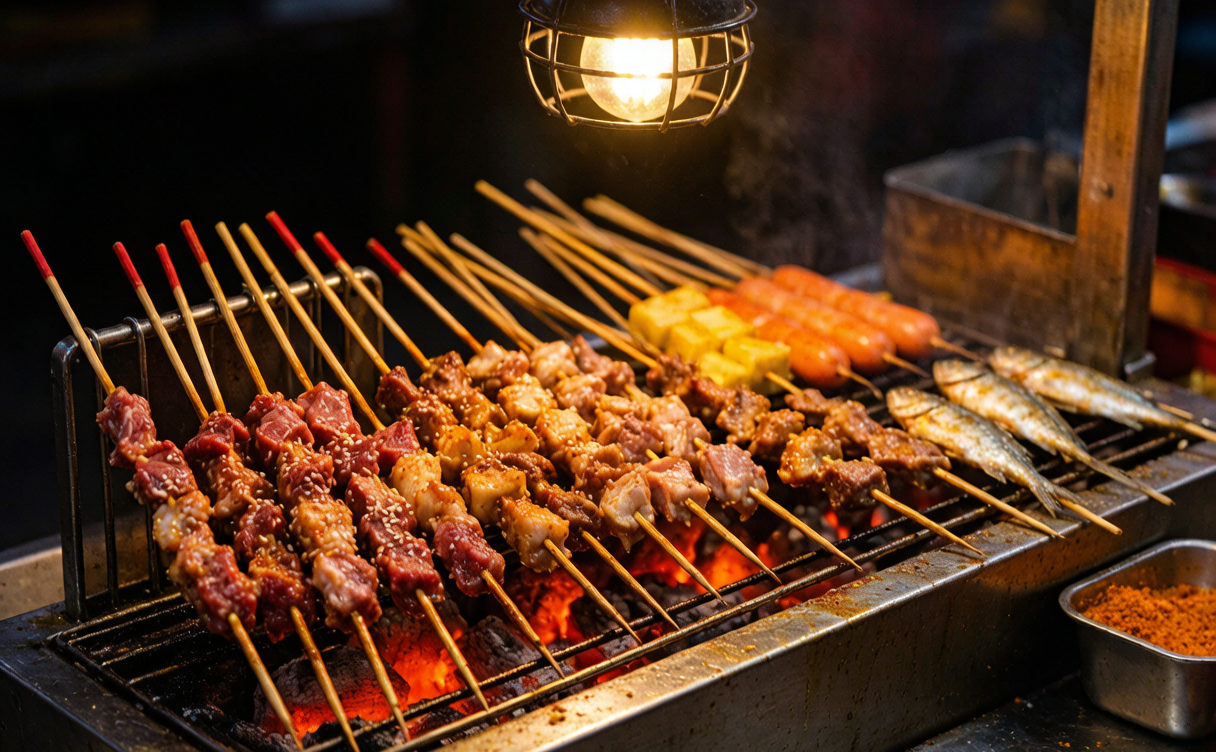
Knowing what to eat in China night markets is mostly about recognising the eight or nine things that appear almost everywhere, then hunting the local specialty.
- Chuan’r (串儿) skewers — cumin-and-chili lamb over charcoal, RMB 3–8 (US$0.40–1.10) a stick. The universal night market food.
- Roujiamo (肉夹馍) — chopped braised pork or lamb in a crisp flatbread; Xi’an’s version is the benchmark. RMB 8–15.
- Jianbing (煎饼) — a savoury crepe with egg, sauce and a crisp cracker inside. RMB 6–12.
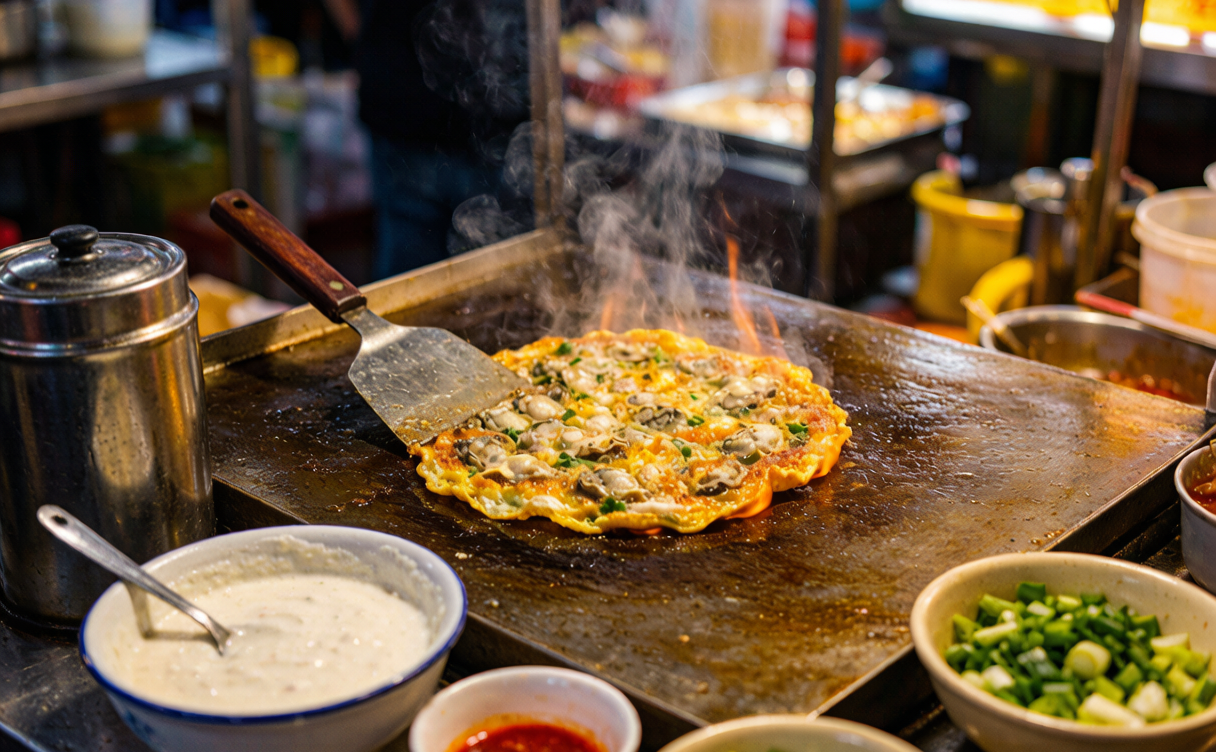
- Grilled squid and oysters — coastal markets in Xiamen and Qingdao; ask the price before they grill.
- Stinky tofu (臭豆腐) — deep-fried, served with chili and pickles. Smells far worse than it tastes.
- Liangpi (凉皮) — cold wheat noodles in vinegar, chili oil and sesame; the best hot-weather order.
- Rice noodles — Yunnan’s crossing-the-bridge style in Kunming, Guilin’s version further east.
- Baozi and guotie — steamed buns and pan-fried dumplings, sold by weight or by the basket.
- Sugar-coated haws (tanghulu) — skewered fruit in hard candy; the classic dessert photo.
The rule of thumb for choosing a stall: queue length beats appearance. A shabby cart with twelve locals waiting is a better bet than a clean, empty one with English signage.
Paying: Mobile Pay, Cash and the 2026 Reality
Almost every vendor takes Alipay or WeChat Pay via QR code. Both apps now accept foreign Visa and Mastercard, and this works at night market stalls in major cities. Two things still trip people up:
1. Small vendors sometimes fail on foreign-card payments for transactions under RMB 5, or in smaller cities. Carry RMB 200–300 in small notes (10s and 20s) as backup.
2. Nobody carries change for a RMB 100 note. Break large notes at a convenience store before you start eating.
Cash is still legally accepted everywhere and vendors will take it, though some hesitate simply because they have no float. A modest cash reserve removes 90% of night market friction.
Hygiene: Eating Street Food Without Regret
Chinese street food is generally safe, and the risk is manageable if you follow the basics: eat what is cooked hot and to order, avoid pre-cut fruit sitting in the open, be cautious with raw or lightly dressed shellfish, and skip stalls where cooked food sits under a heat lamp for hours. High turnover is your best safety signal. Bring your own tissues — most stalls don’t provide napkins — and hand sanitizer, since sinks are rare. For a fuller breakdown of what to avoid and how to handle a bad stomach on the road, see our street food safety guide for China.
Haggling, Prices and Tourist Markups
Food is not haggled. Prices at food stalls are fixed, usually displayed, and attempting to bargain over a RMB 5 skewer marks you out and irritates the vendor. Souvenirs and clothing in the same market are a different matter — there, opening prices in tourist zones often run two to three times the fair value, and a counteroffer of 40–50% is normal.
The one genuine food scam to watch is seafood sold by weight. In coastal markets, agree the price per jin (500g) and confirm the total before the vendor cooks. If a stall refuses to quote a total, walk.
Best Hours to Go
Most markets fill between 7:00pm and 9:30pm. Arrive at 6:30pm and you’ll see stalls setting up with the freshest stock and no queues; arrive at 9:00pm and you get maximum atmosphere but the popular items may be gone. In summer, southern cities (Chongqing, Guangzhou, Xiamen) run much later — 11pm is still busy. In winter, northern markets thin out by 9pm and some stalls simply don’t open.
Season matters as much as hour. Summer is peak night market season nationwide, which is also when northern cities are hottest and southern ones are humid. Our month-by-month guide to the best time to visit China helps you match the eating calendar to the weather.
A Sample Night-Market Crawl
Use this template in any city, adjusting the local specialty:
- 6:30pm — Arrive hungry but not starving. Walk the full length of the market once without buying. Note which stalls have queues.
- 6:50pm — Start with skewers and a drink. Two or three sticks, no more; you are pacing yourself.
- 7:15pm — Move to the local signature: roujiamo in Xi’an, chuan chuan in Chengdu, grilled clams in Qingdao, oyster omelet in Xiamen.
- 7:45pm — A noodle or soup dish, shared. This is your anchor course.
- 8:15pm — One thing you would normally refuse. Stinky tofu, duck blood soup, or a mystery skewer. This is the point of the exercise.
- 8:45pm — Sweet finish: tanghulu, black sesame soup, or fresh sugarcane juice.
- 9:00pm — Walk it off. Most markets sit near a river, lake or old-town wall that looks best lit up.
Budget RMB 80–150 (US$11–21) per person for a full crawl including drinks.
Practical Tips
- Go in pairs or more. Portions are snack-sized but still add up; sharing lets you taste twice as much.
- Carry small notes. RMB 10s and 20s solve the change problem instantly.
- Bring tissues and sanitizer. Assume neither will be provided.
- Point, don’t pronounce. Photo menus and pointing work fine; nobody expects tonal accuracy.
- Watch the wok, not the sign. Freshly cooked always beats pre-made, whatever the English board promises.
- Check the total before cooking for anything sold by weight.
- Skip peak-hour Wangfujing if you want food quality over convenience; the smaller lanes nearby are better value.
FAQ
Are Chinese night markets safe for foreigners?
Yes. Violent crime is rare and markets are heavily trafficked and well lit. The realistic risks are pickpocketing in dense crowds and overpaying for seafood by weight. Keep your phone in a front pocket and confirm prices.
Can I use a foreign credit card at night market stalls?
Not directly at the stall — vendors use QR codes, not card terminals. Link your Visa or Mastercard inside Alipay or WeChat Pay before you travel, and carry RMB 200–300 cash as a fallback for small or rural vendors.
What time do night markets open and close?
Most run 5:00pm to 11:00pm, peaking around 8pm. Southern cities like Chongqing and Guangzhou go past midnight in summer; northern markets close earlier in winter. Wuhan’s Hubu Alley is the exception — it’s strongest at breakfast.
Is night market food safe if I have a sensitive stomach?
Stick to freshly cooked, piping-hot items, avoid raw shellfish and pre-cut fruit, and ease in over your first two days rather than eating a full crawl on night one. Carry rehydration salts.
Which city has the best night market food in China?
Xi’an for a first-timer, Chongqing for heat and late hours, Xiamen for seafood, Chengdu for variety. Official city tourism portals such as Visit Beijing publish current night-market and food-street listings if you want to confirm opening hours before you go.
Written by Karl, last updated August 4, 2026.