

Most visitors arrive with a one-item Chengdu food guide in their head: hotpot. That is a shame, because hotpot is the loudest dish in the city, not the best one. Chengdu was named a UNESCO City of Gastronomy for a reason — the depth here is in the small stuff: a RMB 12 bowl of sweet water noodles, dumplings under chili oil, rabbit heads eaten with gloves, and teahouses where a single cup buys you an afternoon. This guide covers what to eat in Chengdu beyond the pot, where each dish is done properly, how to survive the spice, and how to structure one full day of eating without wrecking your stomach.
Understanding Mala: It Isn’t Just Heat
Sichuan food is built on mala (麻辣) — the numbing tingle of Sichuan peppercorn (má) plus the burn of chili (là). The peppercorn is the part foreigners don’t expect: a citrusy buzz that makes your lips vibrate. It isn’t painful, it’s anaesthetic, and it’s what separates real Sichuan cooking from generic spicy food.
Crucially, plenty of Chengdu dishes aren’t hot at all. Sichuan cuisine claims 23 distinct flavor profiles, including sweet-and-sour lychee flavor, garlic paste, and the pickled paocai sourness that anchors many home dishes. Our guide to China’s eight great cuisines puts Sichuan in national context — it is far broader than its reputation.
The Essential Chengdu Dishes
| Dish | What it is | Where to try | Approx. price |
|—|—|—|—|
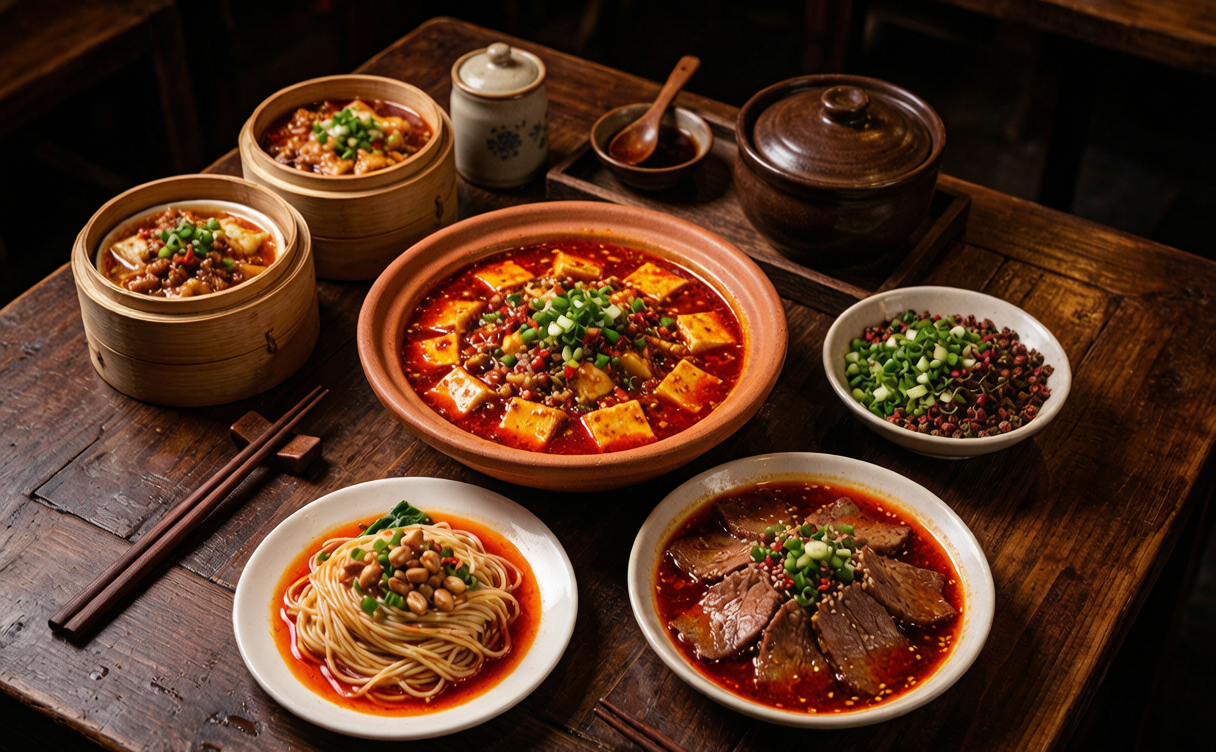
| Mapo tofu (麻婆豆腐) | Silken tofu in fermented bean and chili sauce with minced beef | Old-line Sichuan restaurants, Kuanzhai Alley area | RMB 28–48 / US$4–7 |
| Dan dan noodles (担担面) | Small bowl, sesame-chili sauce, minced pork, no broth | Noodle shops citywide, Yulin district | RMB 10–20 / US$1.40–2.80 |
| Sweet water noodles (甜水面) | Thick chewy noodles, sweet soy, garlic, chili oil | Jinli, Kuanzhai Alley snack counters | RMB 8–16 / US$1.10–2.30 |
| Zhong dumplings (钟水饺) | Pork dumplings in sweetened soy and red chili oil | Old-town snack shops, Jinli | RMB 12–22 / US$1.70–3.10 |
| Long chao shou (龙抄手) | Delicate wontons, clear or spicy broth | Chunxi Road area snack halls | RMB 15–28 / US$2.10–3.90 |
| Chuan chuan xiang (串串香) | Skewers cooked in a communal spiced broth, paid by the stick | Jianshe Road, Yulin | RMB 1–3 per skewer |
| Mala rabbit head (麻辣兔头) | Braised spiced rabbit head, eaten with gloves | Shuangliu-style stalls, night streets | RMB 12–22 each |
| Fuqi feipian (夫妻肺片) | Cold sliced beef and offal in chili oil and peanuts | Sit-down Sichuan restaurants | RMB 30–55 / US$4–8 |
| Kung pao chicken (宫保鸡丁) | Diced chicken, peanuts, dried chili, lychee flavor | Anywhere; better than the export version | RMB 35–55 / US$5–8 |
| Sichuan cold noodles (凉面) | Cold wheat noodles, sesame, garlic, chili | Morning stalls, snack streets | RMB 8–15 / US$1.10–2.10 |
Hotpot: The Short Version
Chengdu hotpot is a butter-and-chili cauldron you cook in yourself, ordering raw plates of beef, tripe, duck intestine, mushrooms and greens. It’s a two-hour social event, not a quick meal, and you’ll want the yuanyang (split) pot on your first attempt — mild broth on one side, mala on the other. Dip everything in the sesame-oil-and-garlic bowl, which cools the heat considerably.
Budget RMB 90–160 (US$13–23) per person. That’s all you need here — we cover hotpot houses, ordering scripts and etiquette in depth elsewhere, and it’s worth reading alongside our full Chengdu travel guide before you book a table.
Noodles, Wontons and Dumplings
This is the heart of Chengdu eating. Dan dan noodles in their home city come in a small bowl with no broth — you stir the sesame-chili paste up from the bottom. If you’re handed a soup bowl, it’s a tourist version. Sweet water noodles are the sleeper hit: fat, bouncy, hand-cut noodles in a sweet-garlicky-spicy dressing that tastes like nothing else in China.
Zhong dumplings are pork-filled, served under sweetened soy and fragrant red oil rather than vinegar. Long chao shou wontons have thin, almost translucent wrappers, served in clear chicken broth (mild) or red oil (not mild). All four are snack-sized, so you can eat the set in one sitting for under RMB 60 (US$8.50).
Chuan Chuan Xiang and Rabbit Heads
Chuan chuan xiang is hotpot’s cheaper, rowdier cousin: you pull skewers from a fridge, drop them in the shared broth, and pay by counting sticks at the end. Jianshe Road and the Yulin district are the classic zones, and it’s the most social way to eat in the city — expect plastic stools, beer, and a bill under RMB 70 per person.
Mala rabbit head is Chengdu’s most notorious snack. You get plastic gloves, you take it apart, and the meat around the cheeks and tongue is genuinely excellent. Two per person is plenty.
Teahouses: The Other Half of Chengdu Food Culture
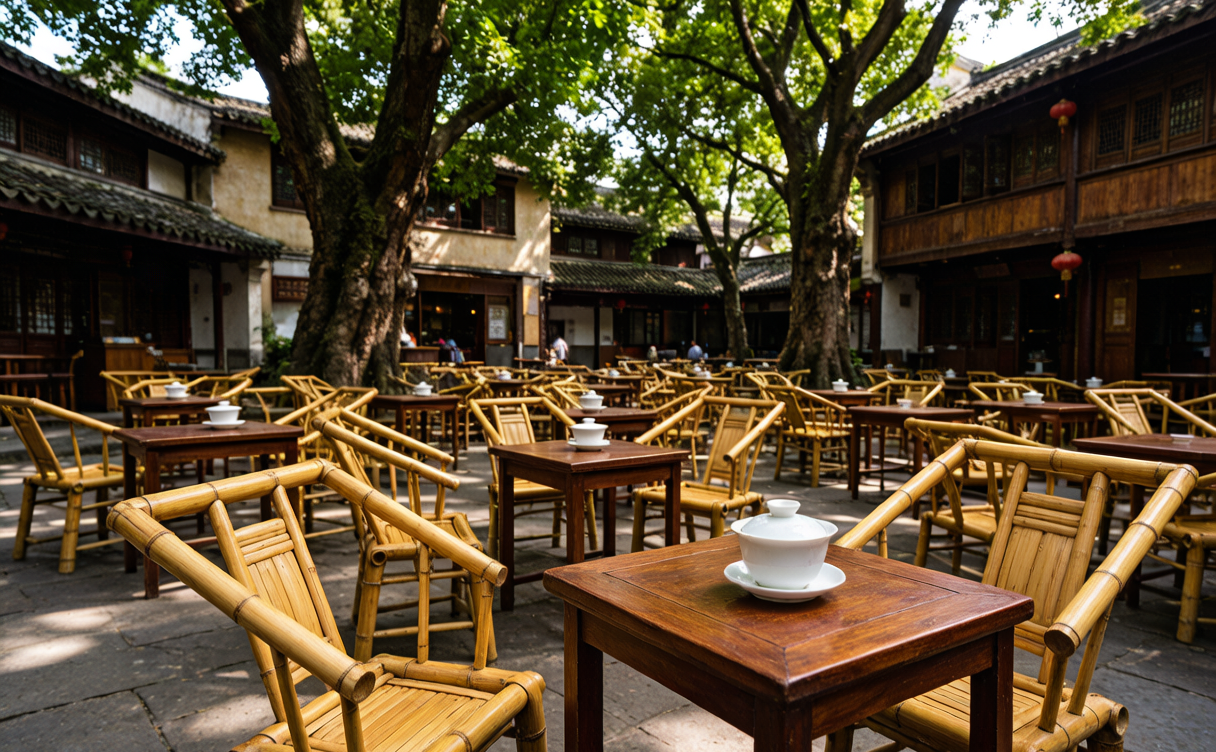
Chengdu’s teahouse habit is as important as its chili habit. The bamboo-chair teahouse in People’s Park (Heming Teahouse) is the famous one: RMB 20–50 (US$3–7) buys a covered cup of jasmine or bamboo-leaf green tea and unlimited refills for as long as you want to sit. Ear cleaners circulate with tuning forks, card games run at neighbouring tables, and nobody rushes you.
Other teahouses cluster at Wenshu Monastery, whose vegetarian restaurant is worth a meal, and around Qintai Road. Treat an afternoon here as a break between your two big meals.
Snack Streets and Where to Eat
- Jinli — reconstructed Qing-style lane beside Wuhou Shrine. Touristy, photogenic, good for a first sampler of small snacks.
- Kuanzhai Alley (宽窄巷子) — three restored lanes; the Narrow Alley has upmarket restaurants, the Wide Alley has snack stalls and courtyard tea.
- Yulin (玉林) — a real residential neighbourhood, best for chuan chuan, barbecue and late-night eating with locals rather than visitors.
- Jianshe Road (建设路) — student-driven food street near the university; cheap, chaotic, excellent.
- Chunxi Road — the downtown shopping core with old-name snack halls and department-store food floors.
Jinli and Kuanzhai are worth one visit for atmosphere; Yulin and Jianshe Road are where you’ll eat better and pay less.
Spice Levels: A Realistic Guide for Foreigners
Say “wei la” (微辣) for mild, “zhong la” (中辣) for medium. Even “mild” in Chengdu is roughly medium anywhere else, so start there.
What helps when it’s too hot: rice, sweet soy milk, room-temperature beer, or tofu-flower soup (doufu hua). Ice water makes the burn worse. Practical damage control: eat spice for two meals a day, not three. Chengdu has plenty of non-spicy dishes — steamed pork with rice flour, tea-smoked duck, garlic white pork, clear soups — and pacing yourself means you’ll still be enjoying day four.
Vegetarian and Ordering Tips
Vegetarians can eat well, but must be specific: mapo tofu contains minced beef by default (ask for it without), and many “vegetable” dishes are cooked with lard or pork stock. The phrase to use is “wo chi su” (我吃素) — I eat vegetarian. Wenshu Monastery’s Buddhist restaurant is the reliable option, and mushroom, eggplant, dry-fried green bean and cold-dressed vegetable dishes are widely available.
For ordering generally: photo menus are common, most snack shops have a counter where you pay first and take a ticket, and pointing works. Mobile payment via Alipay or WeChat Pay is universal; carry a little cash for the smallest stalls.
A One-Day Chengdu Eating Itinerary
- 8:00am — Breakfast near your hotel: a bowl of fen zheng rice noodles or a hot soy milk with fried dough sticks. Chengdu breakfast is mild — this is your rest meal.
- 10:00am — Snack crawl through Kuanzhai Alley: sweet water noodles, zhong dumplings, a sugar-painting for the photo.
- 12:30pm — Sit-down lunch: mapo tofu, fuqi feipian, a green vegetable and rice. This is the classic Sichuan trio.
- 2:30pm — People’s Park teahouse. Two hours minimum. Order jasmine tea and do nothing.
- 5:00pm — Early evening skewers on Jianshe Road, or a rabbit head if you’re game.
- 7:30pm — Hotpot or chuan chuan with beer, two hours, no rushing.
- 10:00pm — Late bowl of clear wonton soup to settle everything down.
Practical Tips
- Start mild. Order wei la on day one; you can escalate later.
- Eat small, eat often. Chengdu rewards six small meals over two big ones.
- Carry tissues. Chili oil, sweat, and stalls that don’t stock napkins.
- Avoid peak Jinli. Weekend evenings are shoulder-to-shoulder; go on a weekday morning.
- Book hotpot for Friday and Saturday nights, or expect a 40-minute wait.
- Pace the peppercorn. The numbing sensation builds across a meal — it’s cumulative, not per-bite.
FAQ
Is all Chengdu food spicy?
No. Roughly half of Sichuan’s classic dishes are mild — tea-smoked duck, steamed pork with rice flour, clear soups, sweet-flavored snacks. The spicy ones are simply the famous ones. Ask for wei la and you’ll be comfortable.
How much should I budget for food in Chengdu per day?
RMB 120–250 (US$17–35) per person covers a generous day: street snacks, a sit-down lunch, teahouse, and a hotpot dinner. You can eat very well on RMB 80 if you stick to noodle shops and skewers.
What’s the difference between Chengdu and Chongqing food?
Chongqing is hotter and heavier on beef tallow; Chengdu is more layered, sweeter in places, and more focused on small snacks and teahouse culture. Both are Sichuan-style, but Chengdu is the gentler entry point.
When is the best time to visit Chengdu for food?
Spring (March–May) and autumn (September–November) are most comfortable; summer is humid and winter is grey and damp, though hotpot season peaks in the cold. Check our best time to visit China guide for the wider seasonal picture.
Where can I find official information about Chengdu’s food scene?
The city government’s English portal at chengdu.gov.cn publishes current listings for food streets, festivals and the UNESCO gastronomy programme.
Written by Karl, last updated August 4, 2026.