

Most visitors to Guangzhou treat dim sum as a snack. Locals treat it as a weekend ritual called yum cha — literally “drink tea” — where families camp in a teahouse for two hours, push steamer baskets around the table, and refill pots of pu’er until noon. Guangzhou, the capital of Guangdong, China, is the birthplace of this Cantonese tradition, and the difference between a tourist’s rubbery dumpling and a local’s translucent har gow comes down to knowing which room, which hour, and which basket to grab. This Guangzhou dim sum guide is built to make you order like you grew up here: it names the dishes that matter, decodes the trolley-and-ticket system, lists the old-Xiguan institutions worth the queue, and slots the meal into a Guangzhou morning. For the wider picture, our guide to China’s eight great cuisines explains where Cantonese food sits among the regional styles.
What Yum Cha Actually Is
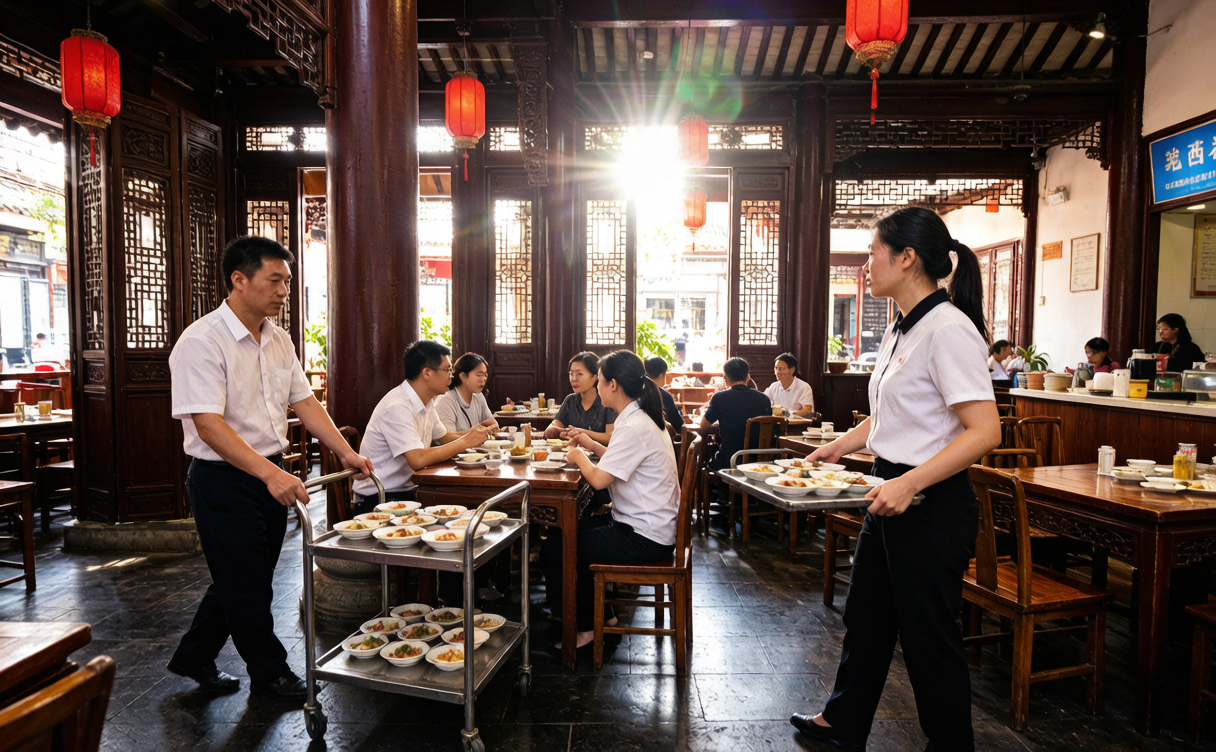
Yum cha is Cantonese brunch: small plates (dim sum) eaten with tea, traditionally from mid-morning to early afternoon. In old Guangzhou the food came on trolleys wheeled between tables; you grabbed what passed and the server stamped your ticket. Many modern teahouses now use QR-code ordering instead, but the Xiguan (old west) houses still run trolleys, and the theatrical part of the experience is worth seeking out. The unwritten rule: tea first, poured by the youngest for the eldest, and you return the favor by tapping two fingers on the table — a thank-you with a legend behind it.
The Dishes That Matter
A Guangzhou dim sum guide has to be specific, because “dumplings” is not a dish — it’s a category. The non-negotiables:
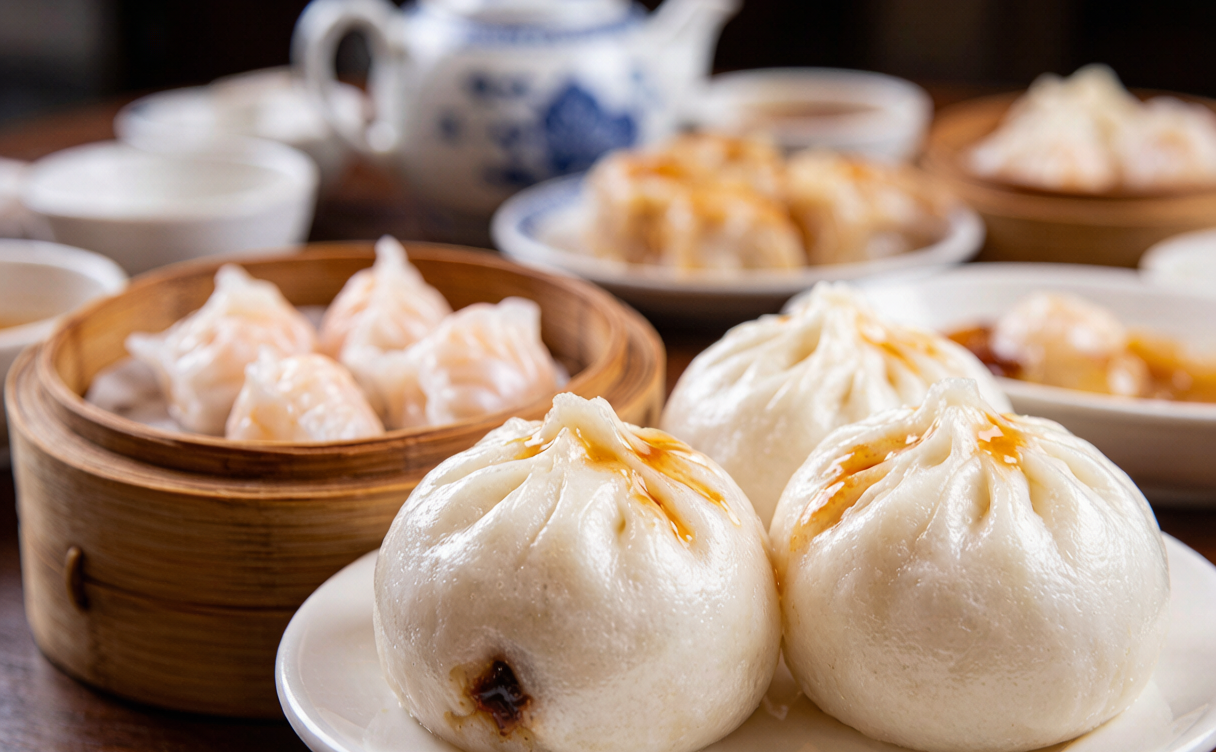
- Har gow (虾饺) — open shrimp dumplings in a pleated, translucent tapioca-skin wrapper; the benchmark of any kitchen. A great har gow shows whole shrimp through the skin.
- Siu mai (烧卖) — open-topped pork-and-shrimp baskets, often crowned with a dot of crab roe; savory, never sweet.
- Char siu bao (叉烧包) — steamed buns with sticky BBQ pork; the “pineapple-top” baked version is a different, sweeter treat.
- Cheung fun (肠粉) — silky rice-noodle rolls, plain or stuffed with shrimp/beef, doused in sweet soy; the Xiguan style is the silkiest.
- Dan tat (蛋挞) — Portuguese-influenced egg tarts, flaky or puff, best warm.
- Lo bak go (萝卜糕) — pan-fried radish cake with dried shrimp and pork; order it crisped.
- Zhaliang (炸两) — rice-noodle sheet wrapped around a fried dough stick; a textural oddity worth trying once.
Desserts lean tropical: mango pomelo sago (杨枝甘露) is the modern icon. Note xiaolongbao is Shanghainese, not Cantonese — don’t order it expecting local authenticity here.
Best Time to Visit Guangzhou
The best time to visit Guangzhou for comfortable yum cha runs with the city’s weather, not the food (dim sum is year-round):
- October to December is the sweet spot — cool, dry, 20–26°C, and the teahouses are pleasant rather than stuffy.
- March to May is spring and bearable, though humid patches appear.
- June to September is hot and wet (30°C+, monsoon humidity); teahouses crank the AC, but walking between them saps you.
- Chinese New Year (Jan/Feb, dates move) — many famous houses close for a week, then reopen slammed; book ahead if traveling then.
Dim sum is a late-morning affair; arrive before 11am on weekends or queue 30–60 minutes. Slot the city into a wider route using our month-by-month China timing guide.
How to Get to Guangzhou
Guangzhou is a southern hub with two airports serving and a high-speed web. The transport math for a food trip:
| Route | Option | Time | Approx. Cost |
|—|—|—|—|
| Hong Kong → Guangzhou South | High-speed train | ~1 hr | RMB 75–215 (US$11–31) |
| Beijing → Guangzhou South | High-speed train | ~8 hr | RMB 690–1,300 (US$99–187) |
| Shanghai → Guangzhou South | High-speed train | ~7 hr | RMB 590–1,100 (US$85–158) |
| Major city → Guangzhou Baiyun (CAN) | Flight | 2–4 hr | RMB 500–1,500 (US$72–215) |
| Guangzhou Baiyun → city center | Metro Line 3 / taxi | 40–60 min | RMB 10–120 |
The Hong Kong run is the classic dim-sum day-trip for visitors already in the SAR. Trains use the same passport-and-app system as anywhere in China for ticketing. Metro is the move in town; teahouses cluster near Yuexiu and Liwan stations.
Where to Stay
Pick your base by which teahouse you target. Liwan (Xiguan) is the old city and the dim-sum heartland — Panxi Restaurant, Guangzhou Restaurant and Tao Tao Ju all sit here, with hotels at RMB 250–600. Yuexiu puts you near the landmarks and mid-range chains (RMB 300–700). Tianhe is the modern CBD, sleek hotels (RMB 500–1,500) and mall-based dim sum for those who prefer QR ordering to trolleys. Staying in Liwan means you can walk to a famous house by 9am and beat the crowd.
What to Eat Beyond the Basket
Guangzhou’s Cantonese table doesn’t stop at dim sum. Around your yum cha you’ll find:
- Wonton noodles (云吞面) at tiny shops — thin noodles, shrimp-pork wontons, clear broth.
- Roast meats — siu mei counters selling char siu, roast goose and crispy pork belly by the half-jin.
- Double-skin milk (双皮奶) — a Shunde dessert found in sweet shops across the old city.
- Morning rice congee with fried dough for the truly local start.
Street versions are safe to try if you follow basic rules — our street-food safety guide for China covers what to eat from a cart and what to skip.
Sample Itinerary (A Guangzhou Morning)
8:30am — metro to Liwan, queue at a Xiguan house (Tao Tao Ju or Panxi) before opening.
9:00–11:00am — yum cha: har gow, siu mai, cheung fun, lo bak go, dan tat, plus a pot of pu’er. Watch the trolley for the fresh basket.
11:30am — walk off the meal along Shamian Island or the Beijing Road pedestrian street.
1:00pm — late roast-goose lunch or a wonton-noodle stop. This is one of the best things to do in Guangzhou for a first morning, and it doubles as a gentle intro to Cantonese pacing.
Practical Tips (Guangzhou Dim Sum Guide Tips)
- Arrive before 11am on weekends; famous houses queue hard after that.
- Tea etiquette: pour for others, tap two fingers to thank, and lift the lid off the pot if you want more water.
- Order in waves. Don’t fill the table at once — dim sum is best eaten as baskets arrive hot.
- Trolley vs QR: trolley houses stamp a ticket per basket; QR houses tally on screen. Either way, check the bill before leaving.
- Spice on the side. Cantonese food is mild; chili oil and vinegar are for dipping, not cooking.
- Share everything. Plates are small by design; order 2–3 baskets per person across rounds.
FAQ
Is dim sum only for breakfast?
Traditionally late morning to early afternoon, but many houses now serve it until 2–3pm and some all day. Go before 11am for the best selection and shortest queue.
How much does a yum cha meal cost?
Roughly RMB 60–120 per person (US$9–17) at a standard house, RMB 150–250 (US$22–36) at famed Xiguan institutions, with tea usually RMB 10–30 extra.
Trolley or QR ordering — which is better?
Trolleys (old Xiguan) are the authentic show and let you eyeball the basket; QR is faster and clearer on price. Try at least one trolley house.
Is dim sum safe for sensitive stomachs?
Yes — it’s steamed, not raw, and the street-food safety rules for China cover the wider eating rules. Avoid unlabeled chili if you’re unsure.
Can I do dim sum as a day-trip from Hong Kong?
Easily — the high-speed train is under an hour each way, so a morning yum cha and an afternoon return is common.
What tea should I order?
Pu’er (dark, digestive) or tieguanyin (lightly roasted oolong) are the classics; chrysanthemum is the mild, caffeine-light choice. For the dish list and history, the Wikipedia entry on dim sum is a solid reference.
Written by Karl Huang, updated August 2026.