

Travel through China during a holiday and you quickly notice that the calendar is built around the table. Every major festival arrives with its own obligatory dish, its own symbolism, and its own reason for gathering. This China festival foods guide is for visitors who want to eat with the country rather than watch it from the sidelines — to understand why a certain shape of noodle or a certain filling of pastry matters on a certain night.
Chinese holiday food is never only about taste. It is about luck, family, and the quiet reassurance of repeating what ancestors did. The dishes below are the ones you will actually meet on the street and in homes, and each carries a small story worth knowing before you take the first bite.
What to eat at Chinese New Year
The loudest, longest festival of the year is Spring Festival, and the kitchen is its center. What to eat at Chinese New Year starts with dumplings. Families gather on New Year’s Eve to fold jiaozi, often hiding a coin in one for the person who finds it — a small omen of wealth. The crescent shape echoes ancient gold ingots, and eating them at midnight is meant to usher in prosperity. Our China dumpling guide explains the regional folds and fillings you will encounter, from northern pork-and-cabbage to southern seafood versions.
New Year’s table also leans on dishes chosen for their names. Fish (yu) sounds like “surplus,” so a whole fish is served and deliberately left unfinished to promise abundance next year. Spring rolls echo bars of gold. Sticky rice cake, nian gao, puns on “higher year” and is offered as a wish for advancement. For travelers, the Chinese New Year China travel guide explains where the celebrations are biggest and how to join a local feast without intruding.
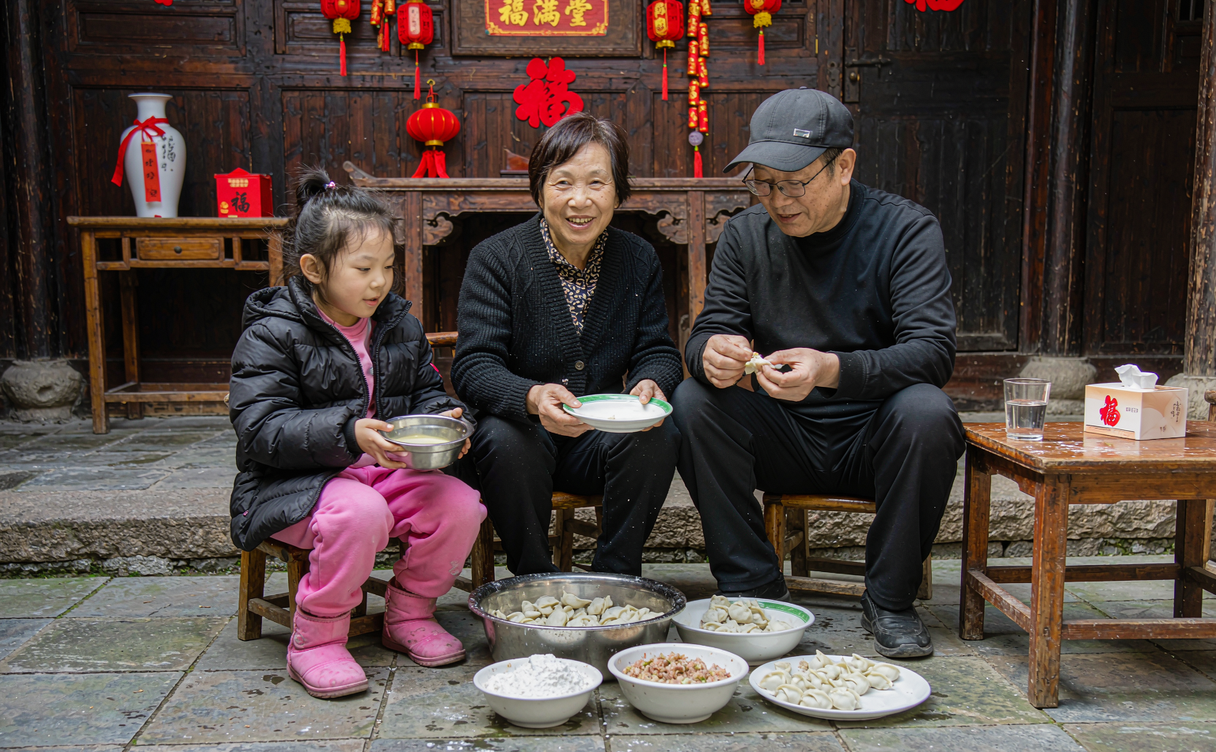
The Spring Festival was added to UNESCO’s intangible cultural heritage list, a recognition of how deeply these home rituals run — the official entry is at the UNESCO intangible heritage list. It is a useful reminder that the food you taste is part of a living tradition, not a staged show.
Mid-Autumn festival food: mooncakes and reunion
A few months later comes the Mid-Autumn festival food tradition, built around the mooncake. These dense pastries — flaky or chewy shells wrapped around lotus seed paste, red bean, or salted egg yolk — are exchanged between families, friends, and business partners as tokens of reunion. The round shape mirrors the full moon and the ideal of togetherness. In the evenings, people carry lanterns and walk outdoors to admire the brightest moon of the year.
Modern bakeries now sell snow-skin and fruit-filled versions that are far less sweet than the originals, which makes them more approachable for foreign palates. Our China lantern festival guide separates the Mid-Autumn lantern custom from the distinct Lantern Festival of the first lunar month, so you don’t confuse the two when planning.
Dragon Boat festival food: zongzi and the river race
Dragon Boat festival food centers on zongzi, sticky rice packets wrapped in bamboo or reed leaves and tied with string. Fillings vary by region: the south favors savory mixtures of pork belly, salted egg, and chestnut, while the north leans sweet with red bean or jujube. The packet is steamed or boiled until the leaf perfume sinks into the grain. The festival honors the poet Qu Yuan, and the racing boats you see on rivers are only half the story; the other half is the shared meal afterward.
How festival foods shape your travel
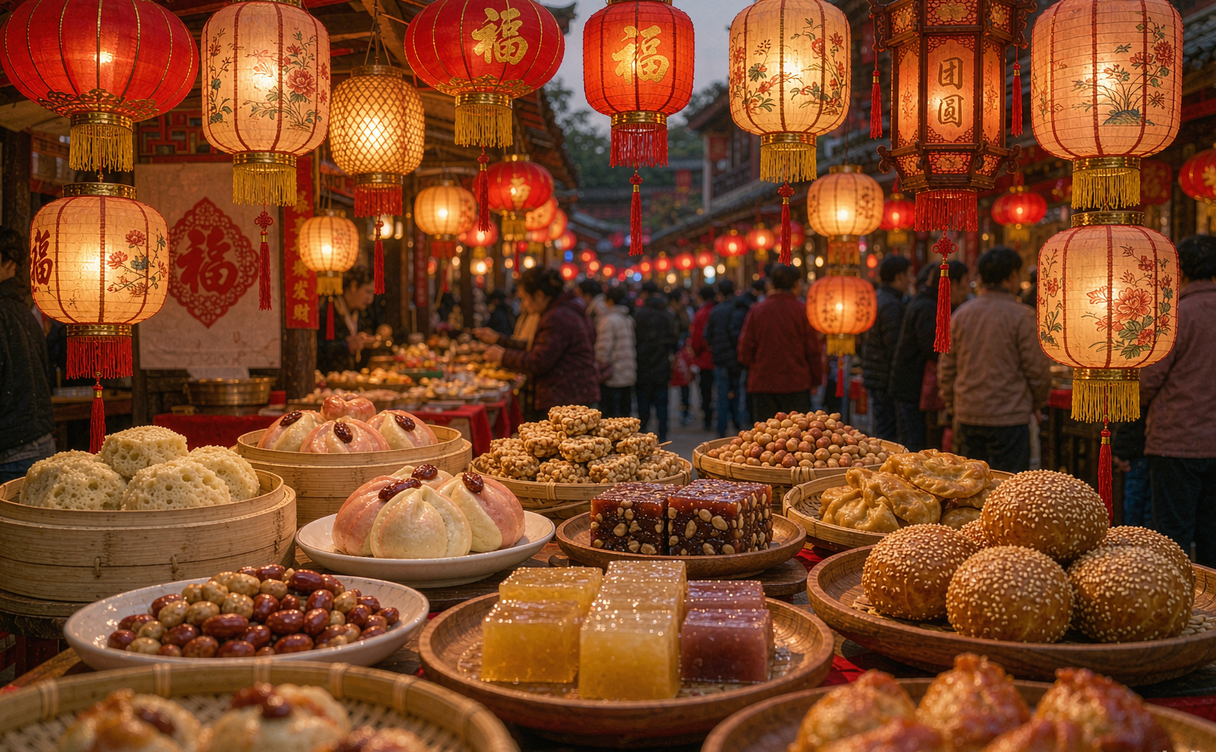
Understanding the calendar changes how you move through the country. Around the big holidays, trains and hotels sell out weeks ahead, and some smaller restaurants close for family reunions, so cities feel at once fuller and quieter. The compensation is access: temporary markets spring up selling the exact seasonal snack you came for, and bakeries display mooncakes months before Mid-Autumn. Planning a trip around a single festival is the simplest way to taste the right dish at the right time, and even a casual visit will collide with something edible if the lunar calendar is kind. Street vendors, in particular, lean into the season, frying sesame balls for the New Year and wrapping zongzi by the hundreds as summer arrives.
The symbolism behind the sweetness
What surprises many visitors is how literal the symbolism is. Round shapes stand for reunion, long noodles for longevity, and whole fish for surplus, so the menu reads almost like a set of wishes rather than a list of dishes. Children learn the associations young, and a grandmother’s instruction to eat one more dumpling is really a blessing in disguise. This is why refusing a festival dish can feel like refusing good fortune, and why hosts press food on guests with such warmth. Knowing the logic turns a confusing spread into a kind of conversation, and you start to see the same symbols repeat across regions, each with a local accent.
Tasting festival food outside the home
You do not have to be invited to a family banquet to join in. Many temples and community centers host open holiday meals, and city squares stage public dumpling-making or mooncake-giving events that welcome onlookers. Night markets, too, rotate their stalls with the season, so the same vendor who sells skewers in summer may press a warm zongzi into your hand by the river in June. The foods travel easily into public space, which is part of their genius: a festival that belonged to the household has, over centuries, spilled out into the street, and that is where most visitors will actually meet it. Carry a small appetite between meals during festival season, because offers of food come frequently and graciously. A few words of thanks in Mandarin go a long way, and a willingness to try everything marks you as a guest rather than a spectator.
Chinese festival dishes across the year
Beyond the big three, Chinese festival dishes appear at smaller moments too. The Lantern Festival closes the New Year period with tangyuan, glutinous balls in sweet soup that signal family unity. Qingming brings qingtuan, green rice cakes tinted with mugwort. Winter Solstice calls for dumplings in the north and tangyuan in the south. Our China festivals guide lays out the full annual rhythm so you can time a trip to land inside a celebration.
For a wider lens on the country’s eating culture, the China food tour guide connects festival dishes to everyday regional cooking. And if you want to taste these specialties outside the home, the China night markets guide points to the stalls that sell festival snacks year-round, often with a street-food twist.
A few practical tips make festival eating smoother. During the big holidays, restaurants and trains book out weeks ahead, so plan the food around your base city rather than trying to move between regions. Markets in the days before a festival are the best places to watch the foods being made — dumpling skins rolled by hand, mooncakes stamped in wooden molds, zongzi tied in bundles. Don’t refuse a offered festival dish; accepting it is a small gesture of respect, and most hosts are happy to explain the symbolism if you ask.
The pleasure of eating through China’s holidays is that you are never just a spectator. Someone will hand you a dumpling, press a mooncake into your bag, or point you toward the zongzi steaming at a riverside stall. Food is how the country welcomes strangers, and the calendar hands you a ready-made excuse to sit down with people you have only just met.
Wherever your trip lands on the lunar calendar, let the festivals set your table. From the coin-hiding dumplings of New Year to the round mooncakes of autumn and the leaf-wrapped zongzi of summer, Chinese holiday food turns a visit into something closer to a family occasion — one symbolic bite at a time.