

Most travelers flying into Guangdong head straight for the cities, but two hours north of Guangzhou a very different landscape waits. Danxia Mountain Shaoguan is the red-sandstone wonderland that gave its name to an entire geological category — “danxia landform” — now used by scientists worldwide to describe those blunt, crimson cliffs and rounded mesas carved by weather over millions of years. If you want dramatic scenery without the altitude or crowds of western China, this is one of the best day trips in the Pearl River region.
This guide explains what makes Danxiashan special, how to reach it from Guangzhou, which trails to walk, and where to catch the famous sunrise.
What Is Danxia Landform?
The term “danxia” (丹霞, “red cloud”) was coined right here in Shaoguan, Guangdong, after geologists studied these hills in the 1920s. The rock is a soft red sandstone and conglomerate laid down in lake beds, then uplifted and eroded into steep walls, isolated pillars, and cave-riddled cliffs. The result looks almost painted: deep rust-red faces against green subtropical forest, with a winding river threading the gaps.
Because the type example is here, visiting Danxiashan is a little like standing inside a textbook. You do not need to be a geologist to enjoy it — the shapes are simply beautiful, and the scale is intimate enough to explore on foot in a single day.
How to Get to Danxiashan from Guangzhou
For most foreign visitors, the question of how to get to Danxiashan from Guangzhou is the main planning hurdle, and the answer is pleasantly easy thanks to high-speed rail.
- High-speed train: trains run from Guangzhou South or Guangzhou Station to Shaoguan Station in roughly 1 to 1.5 hours. From Shaoguan Station, a taxi or local bus takes about 40 minutes to the Danxiashan scenic area entrance.
- From Shenzhen: direct high-speed trains to Shaoguan take around 2 hours, making a two-city trip straightforward.
- Local transport: once at the entrance, shuttle buses connect the ticket gate to the trailheads and the ferry pier. Taxis are scarce inside the park, so budget time for the shuttles.
- Tip: buy train tickets in advance on Trip.com or the 12306 app, especially on weekends. Show “丹霞山” (Dānxiá Shān) to any driver.
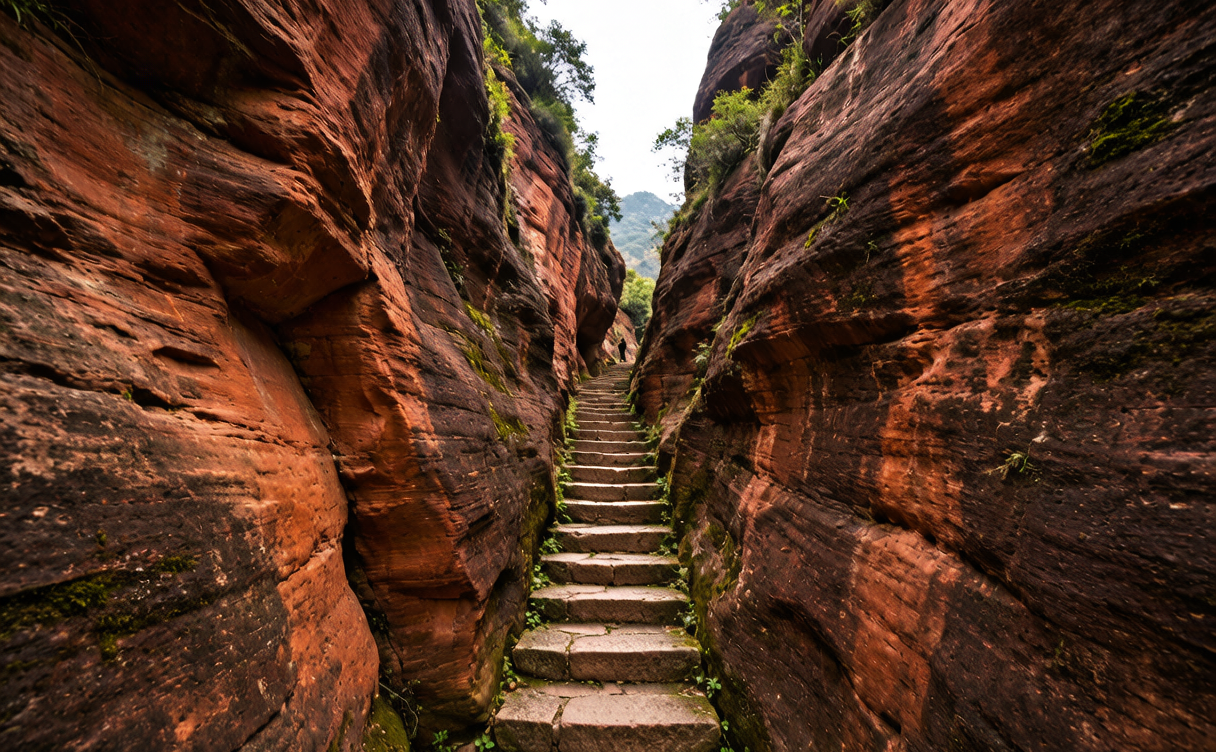
Danxiashan Hiking Trails
The park is large, and Danxiashan hiking trails split roughly into two areas: the Yangyuan (Male) Mountain side and the Yinyuan (Female) Mountain side, named for naturally phallic and cavernous rock formations that Chinese visitors treat with good-humored reverence.
- Yangyuan Scenic Area: the signature walk squeezes between two sheer red walls on the “one-line-sky” staircase, then climbs to viewpoints over the Jinjiang River. Allow 2–3 hours.
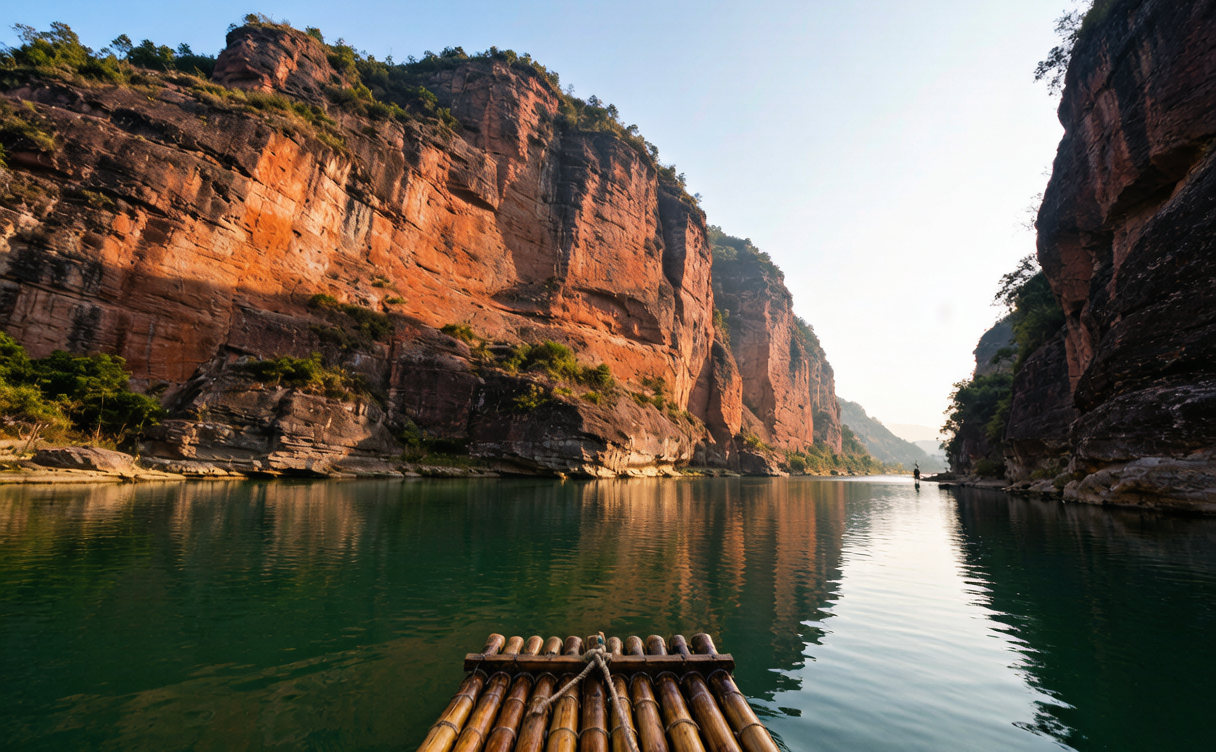
- Yinyuan Scenic Area: gentler, with the boat ride on the emerald Jinjiang and the chance to see the “sleeping beauty” cliff profile.
- Combined route: many visitors do Yangyuan in the morning, take the river boat at noon, and walk Yinyuan in the afternoon. Wear sturdy shoes — the stone steps are steep and polished in places.
The paths are well marked in Chinese and increasingly in English. Come early; by late morning the shuttle queues and the heat build up.
Danxia Mountain Sunrise Viewpoint
The Danxia Mountain sunrise viewpoint is the park’s most celebrated moment. The classic spot is Jinshi Rock (阳元石 / 观日亭) or the higher Zhantian Ridge, where the first light paints the red cliffs gold and a sea of mist sometimes fills the valleys below.
- Arrive at the viewpoint 30–45 minutes before sunrise; the park opens early for this.
- Bring a light, as the path is dark.
- Autumn and early winter give the clearest skies; summer mornings can be misty but atmospheric.
- If you are not a morning person, late afternoon light on the west-facing walls is nearly as good and far less crowded.
Danxiashan Tickets
For Danxiashan tickets, plan as follows:
- Day ticket: about ¥100 per adult, covering both scenic areas and the shuttle buses.
- Boat ride: the Jinjiang cruise is sometimes included, sometimes extra (around ¥50); check when you buy.
- Validity: the standard ticket is valid for one or two days depending on the season — confirm at the gate if you want to stay overnight in the nearby town.
- Payment: mobile pay is standard; carry cash as backup.
The village at the entrance has guesthouses, noodle shops, and a small night market, so an overnight stay is easy if you want to catch sunrise without a pre-dawn dash.
Best Time to Visit Danxia Mountain
The best time to visit Danxia Mountain is autumn (October–November) and spring (March–April). Skies are clear, the red rock glows, and the humidity is manageable. Summer is lush and green but hot, with sudden heavy rains; winter is cool and quiet, occasionally misty.
Avoid the first week of October (Golden Week) and the Spring Festival travel rush, when domestic crowds swell. On ordinary weekdays you may have whole viewpoints to yourself.
Food and Lodging at the Foot of the Cliffs
The village at the park entrance is small but enough for an overnight. Family guesthouses charge modest rates and often include a home-cooked dinner of Hakka-style braised pork, river fish from the Jinjiang, and stir-fried greens. A short strip of noodle shops and barbecue stalls opens after dark, busy with the domestic tourists who come for sunrise. Staying inside rather than commuting from Shaoguan city lets you reach the viewpoint before the light and skip the morning shuttle rush. Book ahead through your Guangzhou hotel or a Chinese platform, since the smallest places rarely appear on English booking sites.
Danxia Mountain Shaoguan Guide: Planning Your Day
A realistic rhythm: train from Guangzhou at 08:00, arrive Shaoguan before 10:00, shuttle to the park by 11:00, boat ride and Yinyuan side over lunch, Yangyuan climb in the afternoon, train back to the city by evening. If you stay overnight, swap the order and put sunrise first.
The scenery pairs well with nearby Guangdong cities. Our Guangzhou travel guide explains the rail hub you will likely start from, and the Foshan travel guide covers the temple-and-food city next door. For a bigger nature fix, the Shenzhen travel guide links you to coastal day trips.
How Danxiashan Compares to Other Red Mountains
Travelers often ask how this compares to the rainbow mountains of the northwest. The Zhangye Danxia rainbow mountains guide describes a drier, more colorful cousin in Gansu; Shaoguan’s version is greener, wetter, and easier to walk. Both belong to the global danxia family celebrated in our China national parks guide.
If hiking is your main goal, our China hiking treks guide lists Danxiashan among the low-altitude, beginner-friendly options — no permits, no altitude sickness, just red stone and river air.
Sources
Geological background: UNESCO World Heritage Centre – China Danxia (the Danxia landform is a UNESCO World Heritage property, China).