

This Yan’an travel guide is for travelers who want to trade China’s flashy eastern megacities for the carved loess hills of northern Shaanxi, where the Yan River bends past cave dwellings and a pagoda that has watched over the valley for a thousand years. If you are sketching out a trip through the heart of the Loess Plateau, the practical notes below — when to come, how to arrive, what to see, and how to pace yourself — will save you a lot of trial and error. For most foreign visitors, Yan’an works best as a two- to three-day stop between Xi’an and the smoother tourist rails of Shanxi, and it rewards travelers who enjoy history told through ordinary streets rather than through gates and ticket booths.
Best Time to Visit Yan’an
The single biggest factor in a good Yan’an trip is the season. Summers (June to August) are warm, green, and busy with domestic red-tour groups, but they are also the most comfortable for walking the open hill sites. Spring (April to May) brings dust-wind days that can coat the plateau in a fine yellow film, while autumn (September to October) is the sweet spot: cool, dry, and clear, with the loess slopes turning a deep amber under low sunlight. Winter is brutally cold and sparse, though the frozen river and quiet courtyards have a stark beauty that photographers love.
If you want to time your visit around atmosphere rather than weather, early October around National Day is lively but crowded, and the lantern-lit caves look their best in the calm weeks of late September. Avoid the dusty spring if you have respiratory sensitivity, and pack a scarf regardless of season — the plateau wind finds every gap. Most travelers combine their Yan’an stop with a longer northern loop, and our Xi’an travel guide is the usual starting point for that route.
How to Get to Yan’an
Yan’an is far better connected than its remote reputation suggests. The fastest way in is the high-speed train from Xi’an, which takes roughly two hours and drops you at Yan’an Station on the edge of the new city. Trains also run from Beijing, Taiyuan, and Zhengzhou, though those involve longer hauls. If you are coming from the southwest, a connection through Xi’an is almost always simplest.
Flights land at Yan’an Nanniwan Airport, with links to Xi’an, Beijing, and a handful of other hubs; the airport sits about 20 km from the center, and a taxi or arranged transfer covers that in 30–40 minutes. Within the city, the old and new districts are split by the Yan River, and a cheap bus or DiDi ride connects them. Many travelers also drive in on the highways that now lace the plateau, but the mountain roads demand confidence. For a wider regional picture that includes the ancient capital to the north, see our Xianyang travel guide.
Things to Do in Yan’an
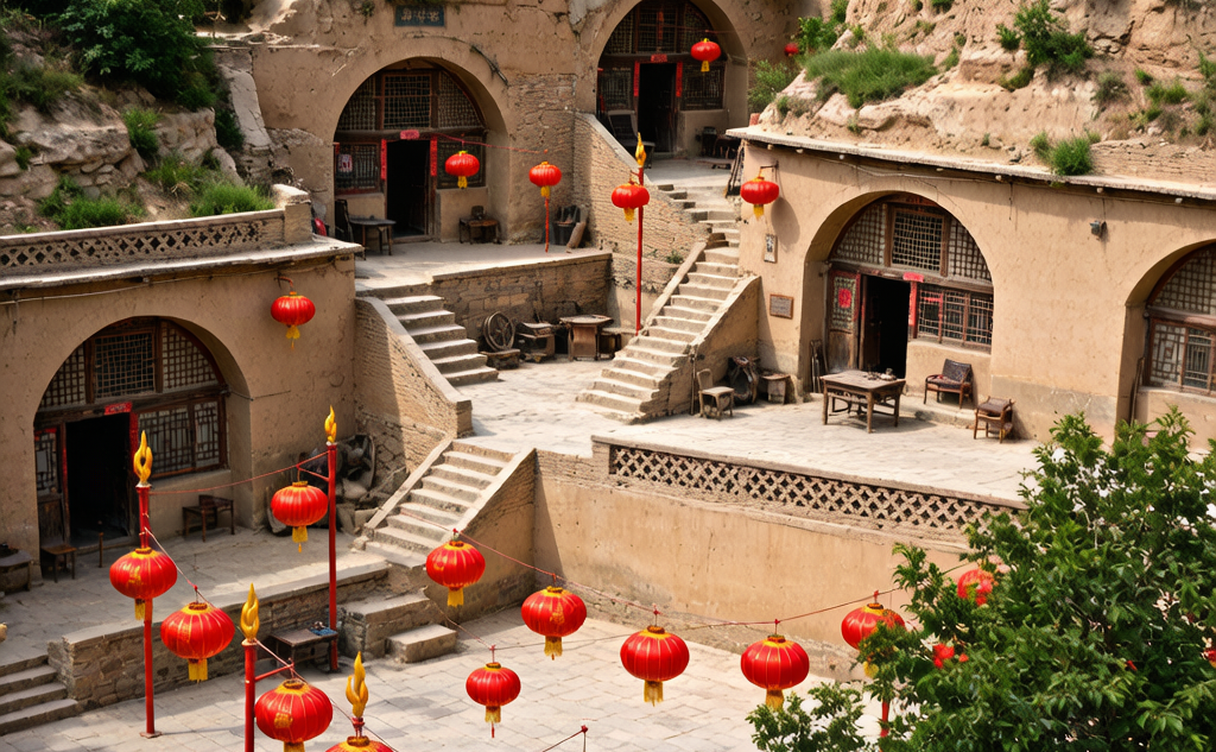
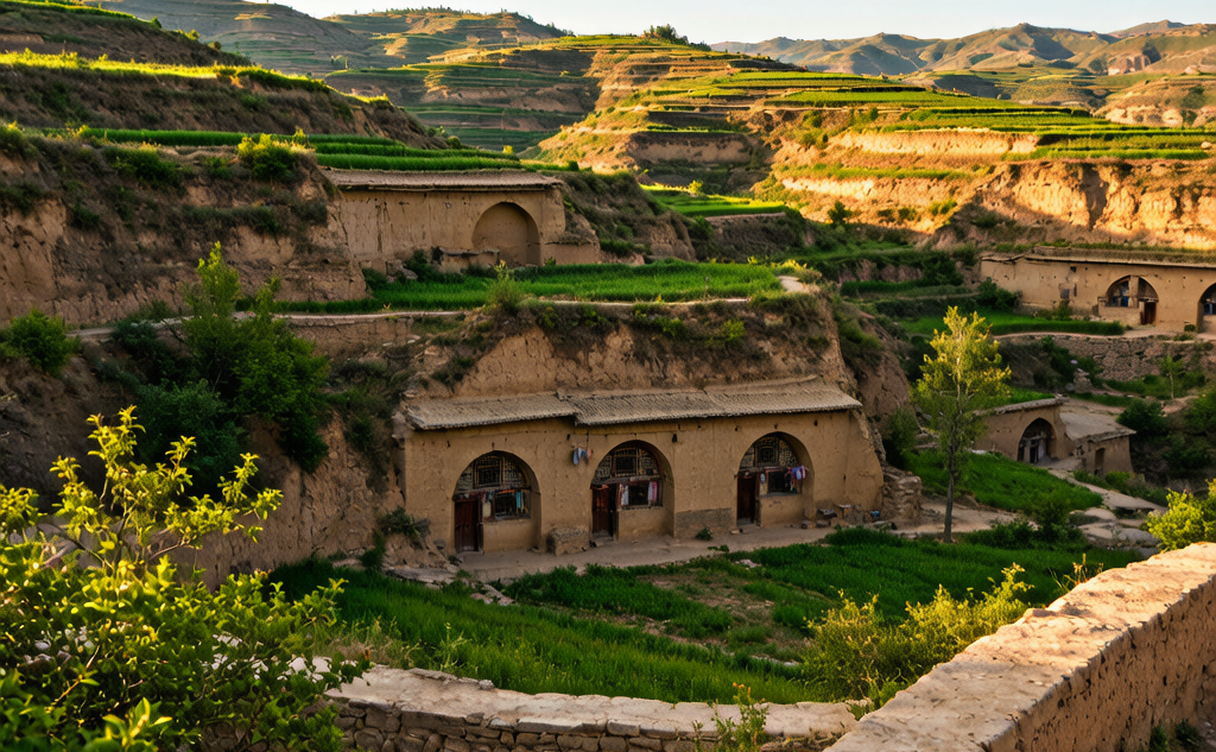
The anchor of any visit is Baota Shan, the Pagoda Hill, whose Ming-dynasty tower is the symbol printed on every postcard and is visible from most of the old town. Climb before midday to beat the groups, and you get a clean view down the river valley where the city first grew. A short walk downstream brings you to the Yan’an Revolutionary Sites — a cluster of cave courtyards where the Communist leadership lived and worked in the late 1930s and 1940s. The most visited are Yangjialing, Zaoyuan, and Wangjiaping, each a low courtyard of stone-faced caves opening onto dusty yards, with original furniture, mimeograph presses, and the simple meeting halls where policy was debated.
Less solemn but more atmospheric is the old town along the river, where restored arcades and night-food stalls sit below the lit pagoda. The Luochuan Loess National Geopark, about 90 minutes south by car, shows the plateau’s geology in exposed yellow cliffs and a museum of fossilized loess layers — worth it if you have a private driver. For those looping west toward Gansu, our Baoji travel guide covers the gateway to the northwestern Silk Road corridors.
A quieter half-day goes to the Hukou Waterfall on the Yellow River, shared with Shanxi and reachable as a long day trip; the roar of the river squeezing through a narrow gorge is the most dramatic natural sight in the region. Back in town, the Yan’an Literature and Art Museum explains how the cave years shaped Chinese culture, and the evening light show projected on Baota Shan is touristy but genuinely pretty. If your route continues east, our Luoyang travel guide pairs well as the next imperial stop.
A Practical Yan’an Itinerary
Two days is enough to see the core; three lets you add the geopark or Hukou. Day one: arrive by morning train, settle in the old district, climb Baota Shan in the afternoon, and eat along the riverfront at night. Day two: hit Yangjialing and Zaoyuan caves in the morning, the Literature and Art Museum after lunch, then the lit pagoda show in the evening. Day three (optional): a driver to the Loess Geopark or a long day to Hukou Waterfall.
Because the sites are spread out, hiring a local driver for a day costs little more than the hassle of cobbling together buses and frees you to actually look at the hills. Budget travelers can use the city bus loop, but expect signage in Chinese only. Travelers extending south into Sichuan can pivot via our Hanzhong travel guide for the Qinba mountain crossing.
Food and Local Flavors
Yan’an eats like the rest of northern Shaanxi: hearty, wheat-based, and unafraid of chili. Try the local 洋芋擦擦 (shredded potato bound with flour and stir-fried), hand-pulled 饸饹 noodles in a tart lamb broth, and 油糕 fried glutinous cakes sold from street carts. The cave restaurants near the river serve slower, family-style meals of 烩菜 stewed vegetables and pork, best shared.
Don’t expect fine dining; expect filling food after a day on the hills. Night markets run year-round and are the easiest place to sample several dishes cheaply. If you want a UNESCO-recognized companion to this region’s food culture, the wider Shaanxi culinary traditions are well documented on Wikipedia’s Yan’an page, which also maps the city’s historic districts.
Yan’an Travel Tips
A few practical notes make the trip smoother. Most revolutionary sites open around 8:00 and close by 17:30, with last entry an hour before; arrive early to photograph the caves without crowds. Wear solid shoes — the hill paths are loose loess that slides underfoot when dry and turns slick after rain. Carry cash for small cave-entrance fees and rural stalls, though Alipay and WeChat Pay work almost everywhere in the city.
English signage is minimal, so a translation app and your hotel’s written address in Chinese are essential. The plateau sun is stronger than it looks, so a hat and water matter even in October. For a charming old-town contrast after Yan’an, our Pingyao ancient town guide makes a natural eastward extension.
Getting the Most from the Loess Plateau
Yan’an is not a place you tick off in an afternoon; it is a landscape you read slowly. Give the caves their context by reading a little history before you go, slow down at Zaoyuan, and let the riverfront evenings do the rest. The city is safer and more tourist-friendly than its isolated image suggests, and the locals are used to curious foreigners asking about the hills.
Treat the plateau as a thread rather than a destination — it connects Xi’an’s walls, the Shanxi courtyards, and the Yellow River’s raw edges into one coherent journey. However you route it, Yan’an will likely be the stop you remember for its quiet over its spectacle.