

This China rainy season guide explains when the wet weather hits, where typhoons land, and how to keep a trip enjoyable even when the sky will not cooperate. Rain in China is regional and seasonal, not constant, so understanding the pattern lets you plan around it instead of fighting it. A little flexibility turns a washed-out afternoon into a museum day and a storm forecast into a reason to shift cities.
China weather by month for travellers
The country spans climates from tropical Hainan to cold Harbin, so a single rule does not fit. Our China weather by month for travellers overview breaks it down region by region, but the headline is this: the south is wet from April to September, central China has a sharp early-summer wet spell, and the north gets most of its rain in July and August as heavy bursts.
Spring, March to May, is mostly dry and mild in the east, which is why it is a favourite window. Autumn, September to November, is the other sweet spot, with clear skies after the summer storms fade. The challenge months are June and July in the centre and July through September on the coast, when both rain and typhoons peak.
Humidity rises with the rain, so even a short shower leaves you sticky. Light, quick-dry clothing works better than cotton, and a small umbrella is more useful than a rain jacket in crowded city lanes.
Plum rain season Jiangnan
The plum rain season in Jiangnan is the strangest weather event for visitors. Jiangnan means the region south of the Yangtze around Shanghai, Hangzhou, and Nanjing. Each early summer, from roughly mid-June to early July, a stationary front dumps weeks of on-and-off drizzle, the so-called meiyu, named for the plums ripening then. Wikipedia’s Meiyu article explains the meteorology if you want the detail.
For travel, the plum rain is grey and humid more than stormy. Sightseeing is still possible, but outdoor photos look flat and alleys get slippery. This is the time to lean on museums, canal towns under covered walkways, and afternoon teas. If you hate damp, avoid the lower Yangtze in late June and aim for the clearer weeks of May or September.
Our best time to visit Shanghai guide notes that the city is most pleasant in April, May, October, and November, and warns against the meiyu window for first-time visitors who want blue skies.
Monsoon months southern China
The monsoon months in southern China run April to September, with the heaviest rain in May, June, and August. Guangdong, Guangxi, and Fujian see frequent afternoon thunderstorms that build quickly and clear just as fast. Mornings are often fine, so schedule outdoor sights before noon and keep afternoons loose.
Flooding is localised and usually brief, but it can close low-lying metro exits and delay buses. Check the city weather app each morning; a red or orange rain warning means slow transport, not danger for a hotel-bound visitor. The mountains of Guilin and Zhangjiajie get slick in heavy rain, so trade a hike for a boat ride on those days.
Our China packing list for first-timers includes the rain gear, quick-dry shoes, and phone pouch that make the monsoon bearable. A packable daypack that resists water keeps your camera and documents safe on sudden downpours.
Typhoon season China travel
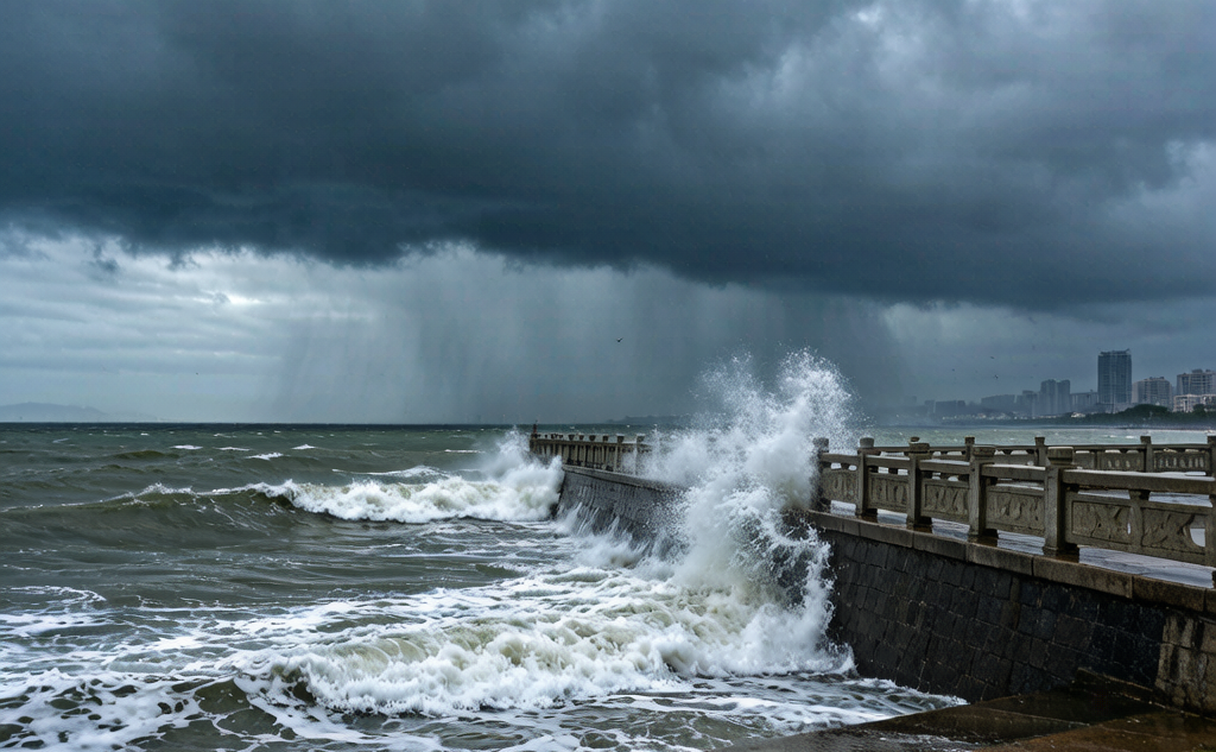
Typhoon season in China travel is July to September, peaking in August, and it hits the southeast coast: Hainan, Guangdong, Fujian, Zhejiang, and Shanghai. A typhoon brings a day or two of wind and heavy rain, then a clear, cool aftermath. Flights and ferries cancel, and coastal trains may slow or stop.
The practical move is to watch the forecast a week out and avoid committing to ferries or island stays during a named storm. If you are already there, treat the warning day as a rest day indoors and resume travel once the system passes, usually within 48 hours. Never try to outrun a typhoon by road along the coast.
Inland cities are unaffected, so a storm on the coast is a good reason to shift to Guilin, Xi’an, or Chengdu for two days. Our China travel insurance recommended page explains why a policy that covers weather disruption and rebooking is worth buying before a summer trip.
What to do in China when it rains
The best answer to what to do in China when it rains is to pre-book indoor sights. China’s museums are world class and mostly free with passport reservation. The big history and art museums in Beijing, Shanghai, and Xi’an can fill a full rainy day, and they have cafes and seating for a slow pace. Our China museum booking and reservation guide shows how to secure timed entries before you travel.
Covered markets and food streets work in light rain, and a hotpot or dim sum lunch is a classic wet-day pleasure. Canal towns like those near Suzhou and Hangzhou have roofed lanes where you can wander dry. A spa, a tea ceremony, or a cooking class fills an afternoon without stepping into the weather.
Train travel is rain-resistant; high-speed lines run through storms that close airports, so if you must move during wet weather, take the rail. Build one indoor backup into every rainy-season day so a forecast miss does not sink the plan.
Air quality and rainy overlaps
Rain actually clears the air, so pollution is lowest right after a storm. That said, winter in the north brings its own haze, which is a different issue from rain. Our China air quality and pollution guide helps you read the daily index and choose masks or indoor days when needed.
For most summer travellers, the bigger nuisance is humidity and mosquitoes after rain, not smog. A light repellent and a room with a dehumidifier make evenings comfortable. Keep electronics in a dry bag because the air itself feels wet.
Building a weather-proof plan
A good rainy-season plan keeps one city as a base and treats side trips as optional. If a typhoon is forecast, cancel the island or coastal leg and replace it with an inland stop rather than rebooking the whole trip. Flexibility is cheaper than fighting the weather.
Leave buffer days between major moves so a delayed train does not cascade. Book hotels with free cancellation for summer travel, and confirm the museum reservations the day before in case of closure. A loose plan survives weather far better than a tight one.
Packing for wet weather
Beyond the umbrella, pack a compact rain shell, waterproof shoe covers, and a few zip bags for passport and phone. Quick-dry trousers and merino or synthetic tops dry overnight in air-conditioned rooms. A small microfibre towel handles the drips.
Keep digital copies of every booking and your passport on your phone and in email, because you may need to rebook on the move during a storm. A power bank matters when you are refreshing the weather app and translation tools all day.

Final takeaway
Rain and typhoons in China are predictable enough to plan around. Know your region and month, pack for wet weather, and keep indoor options ready. With that mindset, a rainy-day China trip is still a great one, just a different shape from the postcard version.