

Worried about smog on your trip? Understanding air quality in China for travellers in 2026 is easier than the old reputation suggests. China has cut pollution sharply over the last decade, and most visitors breathe clean air for most of their stay. Still, winter haze happens, and knowing when and where it builds — plus what to pack — keeps you comfortable and your photos clear. This guide covers the apps to watch, the worst months, the cleanest regions, and practical health tips.
Reading the AQI
Air Quality Index (AQI) runs from 0 to 500. Below 50 is good, 51–100 is moderate, 101–150 is unhealthy for sensitive groups, 151–200 is unhealthy, and above 200 is very unhealthy. The number is the same scale used worldwide, so a reading of 60 in Beijing means the same thing as a 60 back home. What changed in China is the frequency of bad days: they are far rarer than a decade ago, but they still cluster in winter.
One wrinkle is worth knowing. China’s official index and the US EPA scale used by some international apps convert the same PM2.5 concentration slightly differently, so your phone might show 140 while a street-side display reads 115. The gap is widest in the 100–200 band and narrows at both ends. Do not agonise over it — both are telling you the same story. What matters more than the headline number is the PM2.5 figure in micrograms per cubic metre, which every app shows if you tap through. Under 35 µg/m³ is comfortable, around 75 gives you a visibly grey horizon, and above 150 you will see it, taste it faintly, and want a mask if you are outdoors for several hours.
China AQI apps for tourists
You do not need a Chinese SIM to stay informed. The World Air Quality Index project is the most tourist-friendly reference: it maps every major Chinese city in real time, works on any browser, and needs no account. On the ground, the apps “Air Matters” and “Plume Labs” pull the same data and add a hourly forecast, which is handy for planning a hiking day. Many Chinese phones also carry the official “Air Quality” widget, but the international apps are simpler for visitors.
Before you fly, check the seasonal pattern for your destinations through our best time to visit China overview, and for the capital specifically our best time to visit Beijing page explains how autumn gives the clearest skies of the year.
Worst months for smog in Beijing and the north
The worst months for smog in Beijing are late autumn and winter — roughly November through February. Cold air settles over the North China Plain, heating systems burn more coal, and wind dies down, so fine particles (PM2.5) build up for days at a time. A “haze event” might last two or three days, then a north wind clears it completely. Spring brings occasional sandstorms from the northwest, which raise coarse dust (PM10) rather than industrial smog.
To put rough figures on it, Beijing now averages somewhere near 30–35 µg/m³ of PM2.5 over a full year, less than half its mid-2010s level, and typically logs well over 250 days rated good or moderate. The bad ones concentrate hard: December and January carry the most, February eases as the heating season winds down, and by April the plain is usually clear. Autumn — late September through early November — is the reliably crisp season, which is exactly why it is also the busiest and most expensive time to visit. Summer looks hazy but that is largely humidity rather than particulates, so the readings stay decent even when your photos come out flat.
The south, including Guangzhou and the Yangshuo region, sees far less winter haze because of milder weather and more rain. Coastal cities such as Xiamen and Sanya are consistently clean. If your dates are fixed in winter, simply build flexibility: do outdoor sights on clear days and indoor sights — museums, galleries, cooking classes — when the index climbs.
Do I need a mask in China?
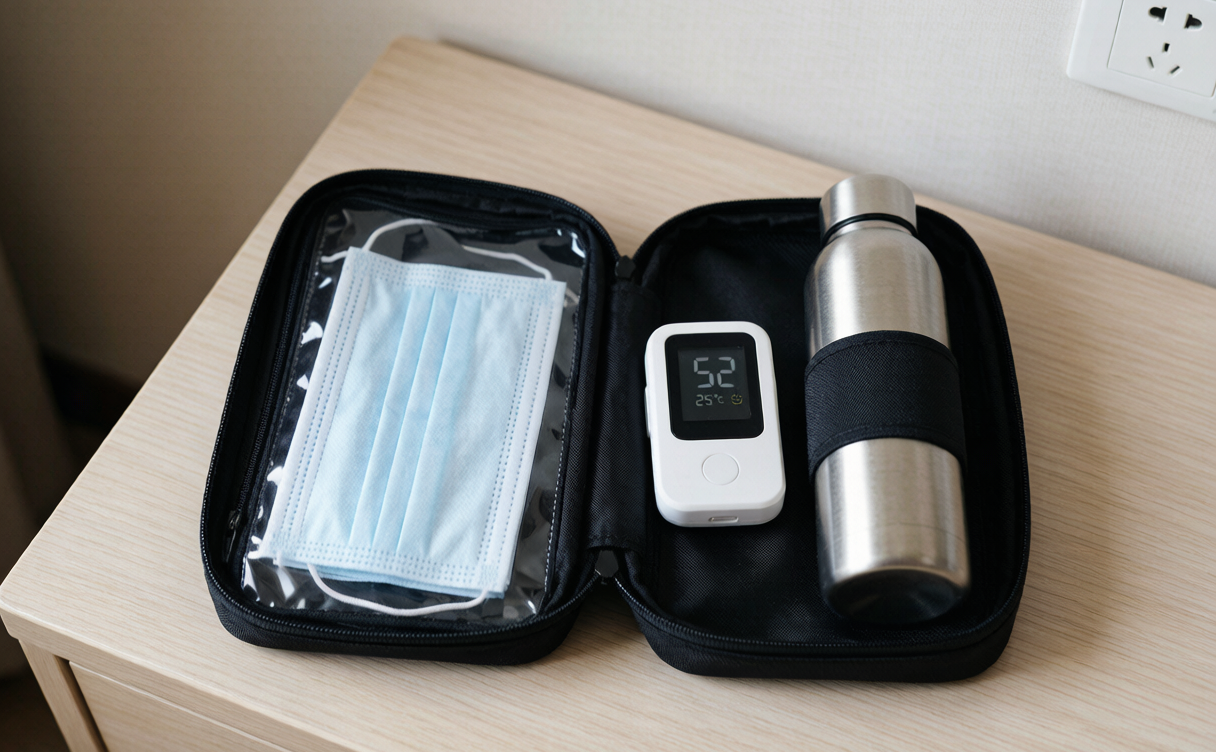
For most of the year, no. On a typical spring or autumn day with an AQI under 100 you need nothing special, and millions of locals walk, cycle and exercise without masks. The question “do I need a mask in China” only becomes yes when the AQI passes about 150, or if you have asthma, allergies, or a child in tow. In that case an N95 or KN95 respirator (the Chinese standard equivalent) filters the fine particles that irritate lungs. Surgical masks do little against PM2.5, so pack proper respirators if you are sensitive.
Buy a couple before you travel, because sizes and fit matter and the exact model you want may be harder to find mid-trip. Our packing list for first-timers includes masks alongside the other small items that make a China trip smoother.
Cleanest air cities in China
If clean air is a priority, aim south and high. The cleanest air cities in China are generally the plateau and coastal spots: Lhasa (Tibet, China) sits at high altitude with huge skies, while Sanya on Hainan island and Xiamen by the sea regularly post green readings. Forested mountain regions such as Zhangjiajie and Jiuzhaigou also stay fresh because of heavy vegetation and low industry. Even within the north, a bad Beijing day is often a good day in the surrounding hills once you leave the basin.

China air pollution travel health tips
A few habits keep you well:
- Plan outdoor exertion around the forecast. Run, cycle, or climb on low-AQI mornings; move workouts indoors when it is high.
- Keep windows closed on bad days and use your hotel’s air purifier if one is in the room; many mid-range and upscale hotels now provide them.
- Hydrate and rest. Dry, particle-heavy air is tiring; extra water helps.
- Wear glasses, not contacts, on dusty spring days to avoid irritation.
- Trust your body. A scratchy throat or mild cough during a haze spell is common and passes when the air clears.
These steps sit alongside the broader China travel safety tips you should review before departure, and they pair well with our photography tour guide if you want to time landscape shots for the clear windows.
When a haze day lands on your big day
It happens: you have one shot at the Great Wall and the forecast reads 180. There are three sensible responses.
Swap the day. If your itinerary has any slack at all, trade today’s outdoor plan for a later indoor one. Northern haze events usually break within 48 to 72 hours once a northerly wind arrives, and the apps forecast that shift reasonably well a day or two ahead.
Go anyway, but early and short. Air is often slightly better before 09:00, crowds are thinner, and two hours at AQI 170 is not a health event for a healthy adult. Wear a respirator, skip the most strenuous section, and accept softer photographs.
Trade the basin for altitude. Pollution pools at low elevation. Sights in the hills north and west of Beijing can read thirty to fifty points lower than the city centre on the same morning, so check the app’s station map rather than one citywide number.
Whatever you pick, a hazy day is not a lost day: teahouses, night markets, cooking classes and the country’s world-class museums are all indoors.
Questions travellers ask
Is the air worse than in other big Asian cities? Not by much any more, and frequently better. On an average 2026 day, Beijing and Shanghai read comparably to — or cleaner than — several other large regional capitals.
Do I need to bring an air purifier? No. Most three-star-and-above hotels in northern cities either keep one in the room or will send one up if you ask at reception. It costs nothing to request.
Will smog realistically affect a short trip? A week in spring or autumn will very likely pass without a single day above AQI 150. A week in January in the north might bring one or two, and they are usually forecast in advance.
Should older travellers or young children skip northern winter? Not skip, but plan: pack respirators and leave one flexible indoor day per week.
The bigger picture for 2026
China’s air has improved steadily, and 2026 continues that trend: coal is being replaced by gas and renewables, and city fleets are going electric. Bad days have not vanished, but they are shorter, less frequent, and well forecast. Treat air quality as a planning variable, not a reason to cancel. With an app, a flexible itinerary, and a mask for the rare rough day, the air will rarely shape your memories — the food, the scenery and the cities will.
Air quality in China for travellers is a manageable detail, not a deterrent. Watch the index, chase the clear days, and breathe easy for almost the whole journey.