

Seeing China’s headline sights need not drain your wallet, but the savings are not always obvious to foreigners. This guide to China attraction ticket discounts explains who gets in free, how student and senior rates really work for visitors, which museums cost nothing every day, and whether a city pass is worth buying. Use it alongside our broader money advice and you can shave a real chunk off the cost of a trip.
Start with the free museums
The easiest saving is the one nobody mentions: most of China’s national and provincial museums are free year-round. The National Museum by Tiananmen, the vast provincial museums in Xi’an, Nanjing and Chengdu, and countless city museums charge no entry fee at all. The catch is not price but a reservation — you book a timed slot online, often through the museum’s own mini-program or WeChat account, and show your passport at the door.
To picture the scale of it: the Shanghai Museum, the National Museum of China, Nanjing Museum, the Hunan Museum and the main galleries of the Shaanxi History Museum all charge nothing, yet each holds a collection that would cost the equivalent of ¥150–300 (US$21–42) to see in Europe or North America. Reservations usually open seven days ahead, at either midnight or 09:00 Beijing time, and the best slots disappear within minutes during school holidays. Temporary special exhibitions inside an otherwise free museum are the exception and typically run ¥60–120 (US$8–17).
That booking step is why our museum booking and reservation guide is essential reading: free does not mean walk-in, and the popular museums sell out days ahead. A handful of smaller or special-exhibit museums run genuine free museum days in China on anniversaries or cultural festivals, but for visitors the everyday free admission to state museums is the bigger win.
Do foreign students get discounts in China?
This is where tourists are often disappointed. Domestic student discounts at attractions usually require a Chinese university student ID (学生证) tied to a local enrolment. A foreign student studying at a Chinese university on an X visa generally qualifies with that ID. A tourist on a short-stay visa, even a student travelling abroad, usually does not — overseas student cards such as ISIC are accepted inconsistently, and many ticket counters will not honour them without the local card.
So the honest answer to “do foreign students get discounts in China” is: enrolled students with a Chinese student ID, yes; tourist visitors, rarely. Always carry your passport and ask, because some ticket offices extend a courtesy rate, but do not build your budget around it. If you are travelling as a family, the bigger saving is usually the child or senior rate rather than a student one.
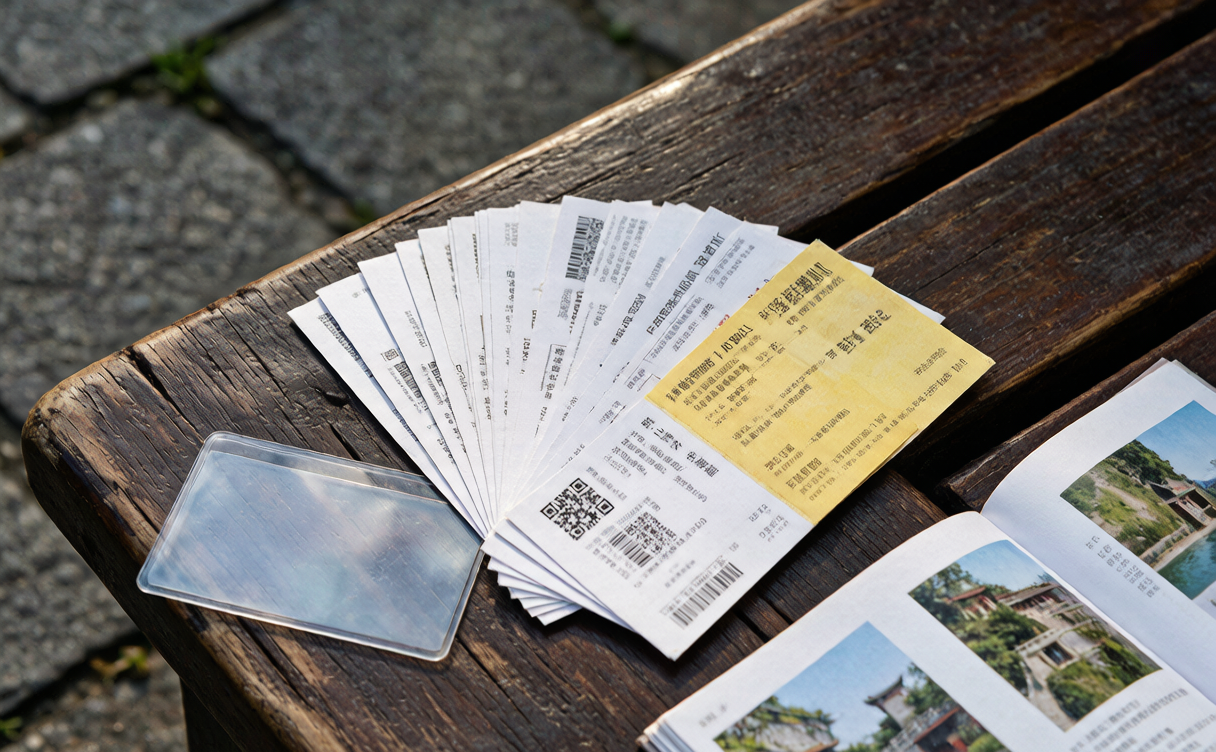
China senior citizen ticket free entry age
For older travellers the news is better. Many state-run parks, temples and museums grant free or half-price entry to seniors, commonly from age 60 or 65, sometimes with a companion free too. The China senior citizen ticket free entry age varies by province and by site, and importantly some counters ask for a Chinese ID card rather than a passport. Foreign seniors should bring the passport and simply ask; in practice many attendants wave through a clearly eligible visitor, but the formal rate is not guaranteed everywhere.
A concrete example helps. At many provincial parks and temple complexes the standard adult ticket is ¥40–80 (US$6–11); over-60s commonly pay half and over-65s often nothing, so across a fortnight of daily sightseeing the concession can be worth ¥400–600 (US$55–85) per person. Carry the passport rather than a driving licence, because the passport is the document counter staff are trained to read, and accept that the occasional site genuinely restricts the discount to holders of a Chinese ID card. Arguing rarely helps; asking politely at a second window sometimes does.
If a senior in your group is close to the threshold, carry proof of age and lead with a polite question rather than an assumption. The saving at a cluster of sites across a two-week trip can be meaningful.
China city attraction pass worth it?
Several cities sell tourist passes that bundle buses, a handful of attractions, and sometimes a river cruise. Whether a China city attraction pass is worth it depends entirely on your style. If you plan to hit five or six listed paid sights in two or three days, the pass often pays off. If you prefer free museums, wandering, and one or two headline tickets, you will likely spend less paying as you go.
Read the included list carefully: some passes cover minor sites you would skip anyway, while the must-see sights (the Forbidden City, for example) may sell out or require separate reservations regardless. Our Forbidden City ticket guide shows why that one marquee sight needs its own booking and is rarely part of a meaningful discount.
How to save money on China entrance fees
Beyond the categories above, a few habits cut costs everywhere:
- Visit on off-peak weekdays. Some sites drop prices outside holidays, and none are as crowded.
- Avoid the big holiday weeks. During the China public holidays of 2026 tickets sell out and surge pricing appears; travelling between holidays is cheaper and calmer.
- Buy direct, not through resellers. The official mini-program or window is the true price; third-party apps add fees.
- Stack free sights with paid ones. Pair a free museum morning with one paid highlight so the daily average stays low.
- Check combo tickets on site. Many scenic areas sell a single ticket covering several sub-attractions cheaper than buying each alone.
Children, height rules and other breaks
Many attractions in China price children by height rather than age: under roughly 1.2 metres often enters free, and 1.2 to 1.5 metres gets a child rate, with a passport used to confirm age when height is ambiguous. Military personnel, disabled visitors, and sometimes teachers get concession rates at state sites — bring the relevant document and ask. None of these are automatic for foreigners, but the counters are used to the question.
What the headline sights actually cost
Knowing the real numbers makes the maths on passes and concessions far easier. Approximate adult prices for 2026:
- Forbidden City, Beijing — about ¥60 (US$8) in peak season and ¥40 off-peak, with the Treasure Gallery charged separately.
- Badaling Great Wall — roughly ¥40 (US$6), plus the cable car if you want it.
- Terracotta Army, Xi’an — around ¥120 (US$17), the single priciest must-see on most itineraries.
- Summer Palace, Beijing — ¥30 (US$4) for the grounds, about ¥60 for the through ticket covering the inner halls.
- Zhangjiajie National Forest Park — roughly ¥225 (US$31) for a multi-day pass, good value given the scale of the place.
- West Lake in Hangzhou, the Bund in Shanghai, and most city parks — free.
Set against that list, a two-day city pass priced at ¥300–400 (US$42–56) only wins if you would genuinely have paid for four or five of its included sights. Most first-time visitors would not, because the biggest names on their list are either cheap or free.
Ticket questions travellers ask
Do I need my passport to buy tickets? Almost always. Chinese ticketing runs on real-name registration, so your passport number is entered at booking and the physical document is scanned at the gate. Bring the book, not a photocopy.
Can I just buy on the day? At quiet sites, yes. At the Forbidden City, the popular museums and major scenic areas during holidays, no — those sell out days ahead and there is no walk-up queue to join.
Are foreigners charged more? No. Dual pricing was abolished long ago, and any vendor quoting a special foreigner rate is not an official channel.
What about refunds? Official platforms generally refund in full if you cancel at least a day before your slot, and partially or not at all on the day itself. Third-party resellers set their own, usually worse, terms.
The official word on pricing
Attraction pricing and free-admission policy for state museums are set by the cultural authorities, and the Ministry of Culture and Tourism of China publishes the framework that local sites follow. Checking it gives you the official baseline before a vendor quotes something higher, and it confirms which national museums must stay free.
China attraction ticket discounts reward the prepared traveller. Free museums, senior and child breaks, careful pass maths, and off-peak timing together turn an expensive sightseeing list into an affordable one. Plan the concessions before you queue, and you will spend less and see more.