

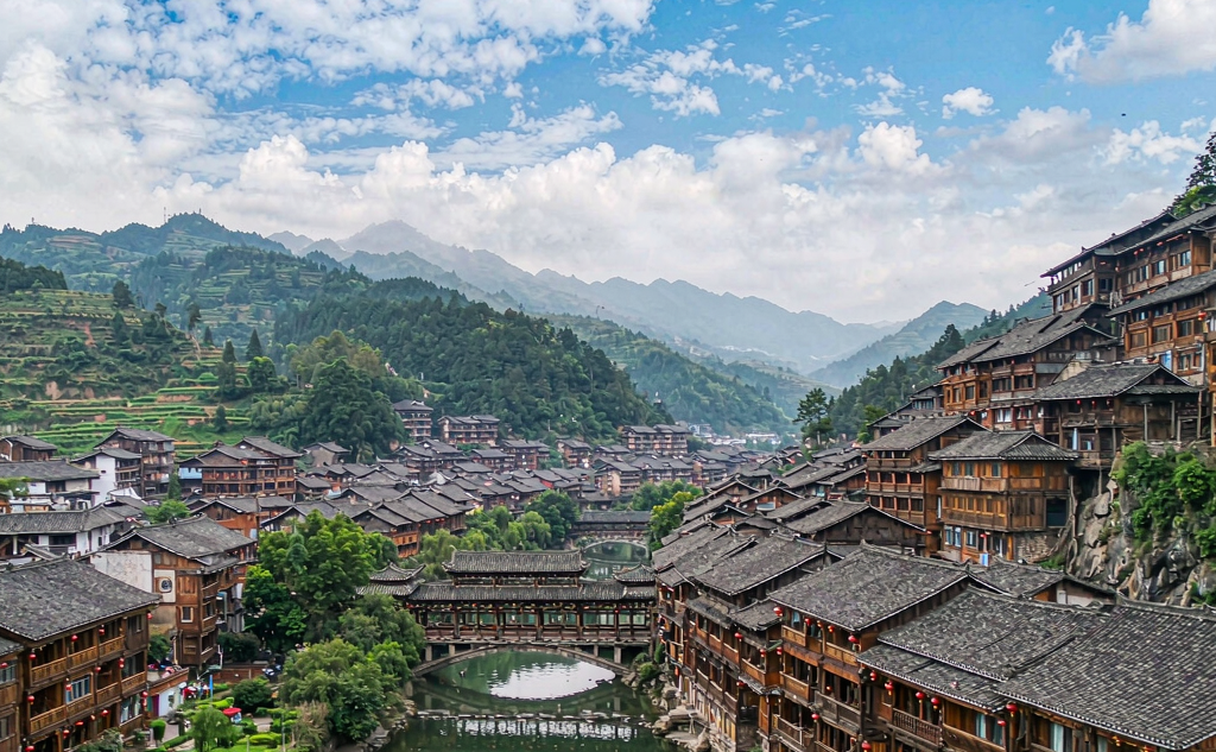
Perched in a steep river valley of southeastern Guizhou, Xijiang Miao Village is the single largest settlement of the Miao ethnic group on the planet. More than 1,200 wooden stilt houses, known as diaojiaolou, cascade down the hillsides in ten linked hamlets, home to roughly 6,000 residents from around 1,400 households. For travelers chasing an authentic look at rural China beyond the megacities, this is one of the most photogenic and culturally rich stops in the entire province.
This Xijiang Miao Village guide covers everything you need before you go: how to reach the village, when to visit, what to see, and practical Xijiang travel tips that will save you time and money.
Why Xijiang Miao Village Matters
The Miao are one of China’s 56 recognized ethnic groups, with a heritage stretching back thousands of years. In Xijiang you see that heritage alive in daily life: embroidery, silver jewelry, Lusheng reed-pipe music, and the famous long-table banquets. Because the village is compact yet sprawling, you can wander from a quiet riverside lane to a bustling performance square in minutes.
For context on the people themselves, see Miao people, a helpful overview of their history and subgroups across southwest China.

How to Get to Xijiang Miao Village
Most visitors approach from Guiyang, the provincial capital and the region’s main transport hub. The village sits about 200 km southeast of the city.
The simplest route is by high-speed train to Kaili, then a transfer by bus or private car for the final 35 km. Trains from Guiyang to Kaili take roughly 40 minutes, and direct buses from Kaili South Station reach the village in under an hour. Alternatively, private transfers and tour shuttles run door to door from Guiyang, which is the most comfortable option if you are carrying luggage or traveling with family.
A complete how to get to Xijiang Miao Village plan usually starts in Guiyang, so pair your trip with our Guiyang travel guide for hotels, transport, and day-by-day logistics. If you would rather let someone handle the transfers, Guiyang hotels often arrange private cars and can book village stays on your behalf.
Best Time to Visit Xijiang
The climate is mild and humid, with cool summers and chilly, damp winters. The best time to visit Xijiang is from April to October, when the rice terraces are green, festivals are frequent, and the weather is pleasant for walking the hillside lanes.
Spring brings fresh terraced fields and fewer crowds. Summer is lively but warmer and busier. Autumn, especially September and October, is spectacular: the terraces turn gold and the air is crisp. Try to avoid the week-long National Day holiday in early October if you want peaceful photos.
If you are building a wider route, our Guizhou 7-day itinerary slots Xijiang in alongside other highlights, and Guizhou Fanjingshan makes a great pairing for mountain scenery.
What to See and Do
The Viewing Platform and Night View
The signature experience is the panorama from the opposite hillside. Climb to the viewing platform just before dusk to watch the village light up. The Xijiang Miao Village night view is the postcard shot: thousands of warm lights outline every roof, reflected in the river below. Arrive 60 to 90 minutes before sunset to claim a good spot, and stay until full dark for the fullest glow.
Stilt Houses and the Riverside Walk
Wander the wooden lanes between the ten hamlets. The diaojiaolou architecture is built on stilts to handle the slope and humidity, and many now host guesthouses, cafes, and craft shops. The riverside promenade is the calmest place to stroll, with water wheels and small bridges.
Miao Culture and Silver Jewelry
Xijiang is famous for silverwork. Local silversmiths craft headdresses, neck rings, and ornaments using techniques passed down for generations. Visiting a workshop lets you watch the process and learn the symbolism behind the patterns.
Lusheng Square and Performances
Evenings often feature Lusheng music and dance in the central square. The long-table banquet, where villagers line up dozens of tables and serve sour fish, sticky rice, and rice wine, is a highlight you should book in advance.
Xijiang Travel Tips
A few practical Xijiang travel tips make the difference between a smooth visit and a frustrating one:
- Buy the combined ticket online or at the gate; it includes the shuttle bus from the parking area into the village.
- Wear good shoes. The lanes are cobbled and steep, and it rains often, so surfaces get slippery.
- Carry cash for small stalls; mobile payments work in most shops but not all.
- Stay overnight if you can. Day-trippers miss the best light and the quiet morning atmosphere.
- Respect photography etiquette around locals and ask before photographing people in traditional dress.
For food lovers, the surrounding region is a feast. Our Guizhou food guide explains the sour and spicy dishes you will meet here, and the Guiyang food guide is handy for your first and last meals in the capital.
Planning your base in the capital first makes the whole trip easier. Browse Guiyang hotels and lock in a room before you head to the village. A comfortable city base means you can explore Xijiang as a relaxed day or overnight trip.
Where to Stay
Options range from boutique guesthouses inside the village to larger hotels at the entrance. Staying inside puts you steps from the night view and the morning mist, but it means carrying bags up lanes the shuttle cannot reach. Entrance-area hotels are easier for late arrivals and early departures.
Book early during peak season, as the best rooftop viewpoints sell out first. Many village guesthouses include breakfast and can arrange cultural workshops for guests.
Guizhou Minority Villages Beyond Xijiang
Xijiang is the largest, but it is far from the only one. The broader region is dotted with Guizhou minority villages, each with its own dialect, costume, and craft. Nearby you can find Dong villages with towering wind-and-rain bridges, Buyi settlements along rivers, and smaller Miao hamlets known for embroidery or lusheng playing.
Linking several of these into one loop gives a far deeper picture of rural Guizhou than Xijiang alone. Our Guizhou 7-day itinerary is built exactly for this, weaving multiple ethnic villages into a single route.
Want a route that mixes Xijiang with mountains, food, and other ethnic villages? Use our Guizhou 7-day itinerary as your blueprint, then add Guizhou Fanjingshan for a dramatic sunrise above the clouds. It is the easiest way to see the region’s full range in one trip.
FAQ
Is Xijiang Miao Village worth visiting?
Yes. It is the largest Miao settlement in the world and offers a rare chance to see living ethnic culture, stunning architecture, and one of China’s best night views in one compact place.
How many days do I need?
One full day covers the highlights, but an overnight stay lets you enjoy both the evening lights and the peaceful morning. Two days is ideal if you want to join a workshop or a long-table banquet.
What should I eat in Xijiang?
Try sour fish soup, sticky rice, cured pork, and rice wine. The long-table banquet is the signature meal. Vegetarians should note that many dishes use fermented condiments, so ask about ingredients.
Is it crowded?
Weekends and holidays are busy. Visit midweek and arrive early to enjoy the lanes before tour groups. The evening light show draws the biggest crowds at the viewing platform.
Can I visit independently or do I need a tour?
You can easily visit independently using trains and buses from Guiyang. A tour or private transfer simply adds comfort and saves transfer time, which is useful if your schedule is tight.
Ready to turn this guide into a booking? Start with Guiyang hotels for your city base, then follow our Guiyang travel guide for step-by-step transport to the village. With the logistics settled, you can focus on enjoying the lights, the lanes, and the local culture.
Xijiang Miao Village rewards the curious traveler with layered culture, striking architecture, and unforgettable views. Whether you come for the night lights, the silverwork, or the chance to walk through a living heritage site, it deserves a firm place on any Guizhou itinerary.