

Guiyang is the capital of Guizhou, a province most foreign travelers have never considered, and that is the mistake. Guizhou cooking is one of the most distinct in China — sour where the rest of the country is salty, fiery where others are mild, built on fermentation and wild herbs you will not find on a Beijing menu. This Guiyang food guide is for the traveler who wants to eat somewhere the tour buses don’t stop, and who suspects the best meals are the ones nobody translated.
Read our Guiyang travel guide first if you need the lay of the land, because where you stay shapes which markets you can walk to at midnight. For official visitor information on the province and its minority cuisines, the Guizhou culture and tourism department publishes material at https://whhly.guizhou.gov.cn.
Why Guizhou food tastes different
The short answer is geography. Guizhou is mountainous, humid, and historically poor in salt, so locals learned to preserve food with sourness instead — lactic fermentation that both keeps vegetables edible through the wet season and builds a flavor no soy sauce can mimic. The Miao, Dong, and Buyi minority kitchens layer in their own pickles, sour broths, and foraged greens.
The result is a cuisine that hits you with acid first, then heat. If you grew up on Thai or Vietnamese food, the sour-savory balance will feel familiar; if your reference point is sweet-and-sour takeout, prepare to be corrected. Guizhou is also the home of the world’s best chili varieties, dried and ground into a crimson paste that smells like toasted fruit. Our Guizhou sour soup guide explains the fermentation science, but you only need to taste it once to get the idea. A Guiyang food guide that ignores the sour broth is not a guide at all.
Guizhou sour soup fish
The signature dish, and the one to order first, is suan tang yu — sour soup fish. A whole river fish or firm fillets simmer in a broth of fermented tomato and rice water, tinted red with chili and brightened with cilantro and wood-ear mushroom. The soup is thin, tingling, and addictive; you drink it after the fish is gone, then regret not ordering more.
In Guiyang the best versions use local carp or the river catfish, and the broth should taste alive — funky, not vinegary. A good restaurant keeps its mother sour liquid going for years, topping it up like a sourdough starter. Order it medium spicy unless you have a death wish, and eat it with a plate of blanched greens cooked in the same pot. This is the dish that defines a Guiyang food guide, and skipping it is the classic visitor error.
Rice noodles, the daily staple
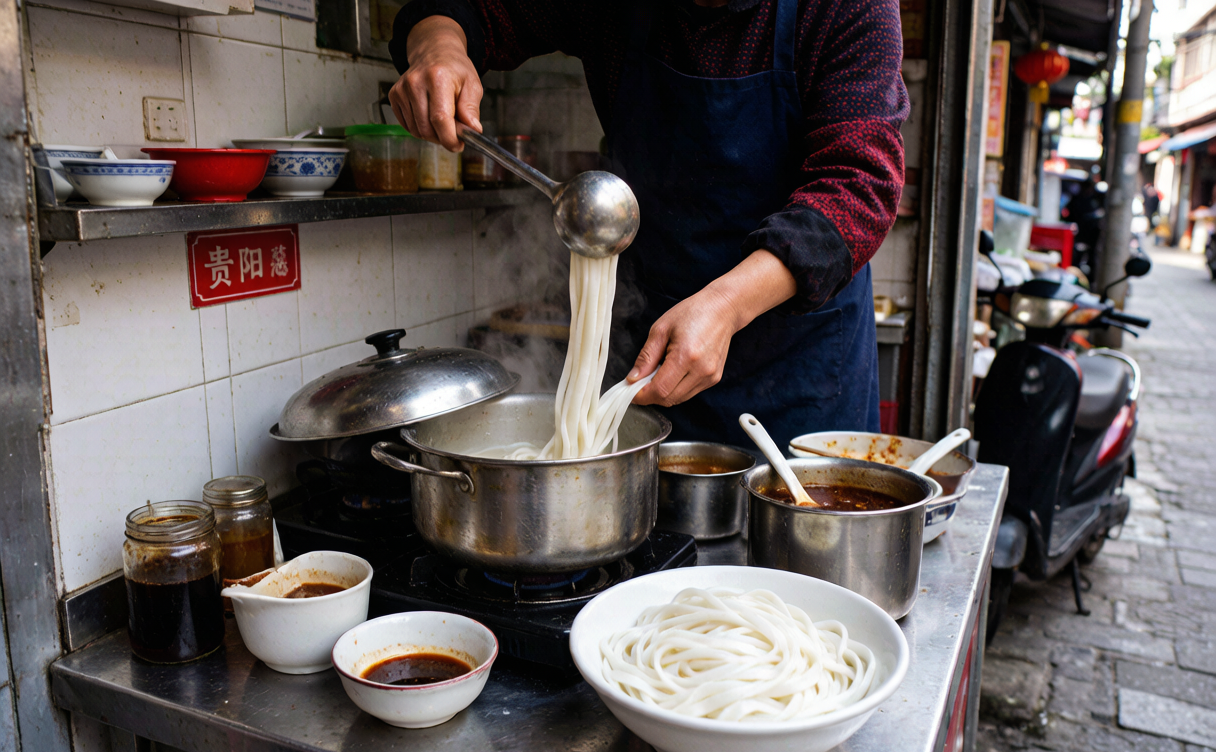
If sour soup is the headline, rice noodles are the heartbeat. Guiyang residents eat them for breakfast, lunch, and late-night recovery, and the variations are endless. Chang wang mian — “the noodles that always prosper” — is the local champion: a bowl of rice vermicelli in a broth made from pig blood, intestine, and a crisp fried dough stick, topped with peanuts and chili. It sounds brutal and tastes magnificent, but ask for a toned-down version if offal isn’t your thing.
Simpler bowls — clear beef broth with sliced meat, or sour soup noodles for the cautious — are everywhere and cheap. The etiquette is to add your own chili, pickled vegetable, and scallion from the condiment bar. For a traveler, a noodle breakfast is the fastest way into the local rhythm, and it costs less than a coffee back home.
Street food and snacks
Guiyang streets run on small eats. Look for si wawa — “baby dolls” — which are thin rice wrappers you fill yourself with shredded radish, cucumber, and a sweet-sour sauce, rolled like tiny tacos. It is the city’s answer to a handheld snack, fun to assemble and mild enough for delicate stomachs.
Then there is the roasted tofu, cubed and grilled over charcoal, served with a spoon of chili and a toothpick, eaten standing at the cart. And the sticky rice balls, the fried potatoes dusted with the local pepper, the egg-battered lotus root — the list is long and the prices are tiny. Our China food tour guide sets Guizhou against the neighboring Sichuan and Yunnan tables if you want to taste the differences side by side.
Night markets and where to go
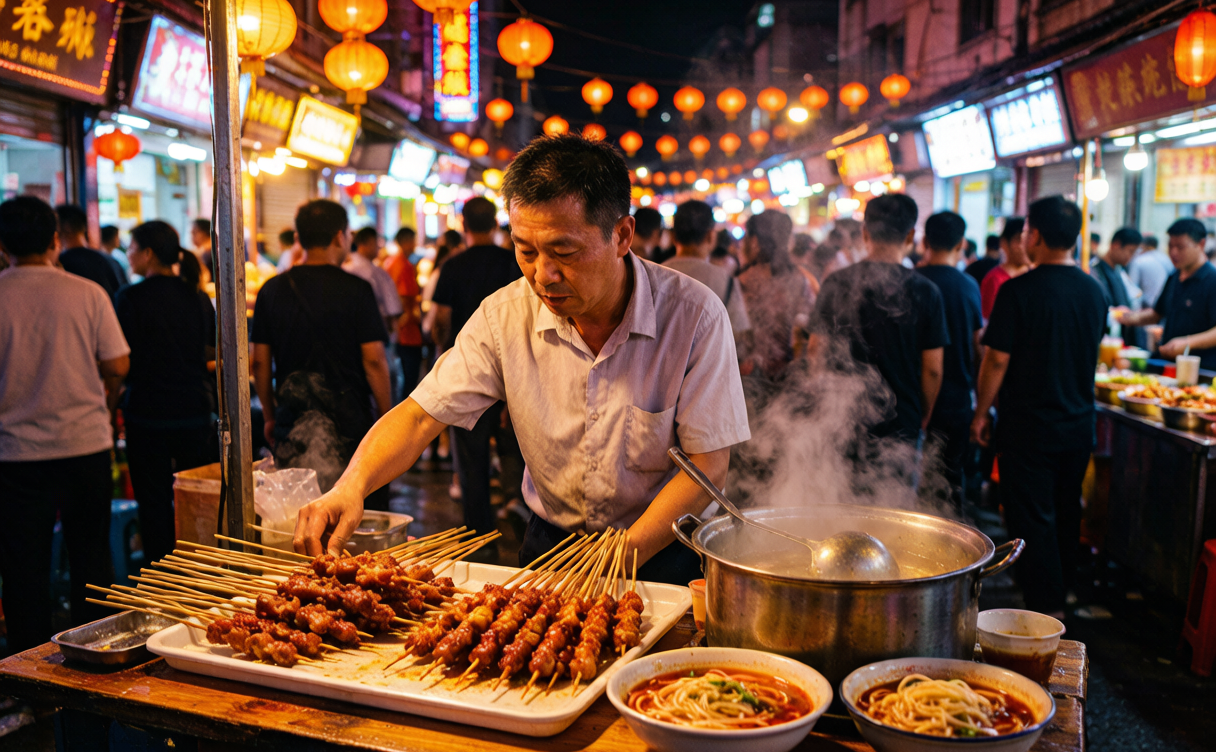
Guiyang’s night markets are the real draw, and they run late. The most famous is the riverside cluster near the Fountain Pavilion and the stretch at Qiling, but the honest advice is to follow the crowds to whichever block is busiest near your hotel. Stalls sell grilled everything — fish, mushrooms, tofu, chicken feet — lacquered in that toasted chili paste.
Our China night markets guide has the practical rules: bring small bills, point at what you want, and watch the local table next to you to calibrate spice. Guiyang’s markets are friendly and unselfconscious, which makes them a good first taste of southwest China’s street culture.
Beyond the city: minority county food
The cooking only gets more interesting as you leave Guiyang. A few hours east, the Miao villages around Kaili serve sour fish wrapped in banana leaf and sticky rice steamed in bamboo. South, the Dong villages of Zhaoxing trade in cured pork and a smoked sausage that travels badly but eats beautifully on the spot. These are day trips, but the food alone justifies the distance, and the train network out of Guiyang makes them painless.
If your schedule allows a single excursion, pick a village market day — they rotate by the lunar calendar — and eat what the farmers eat. It is the same sour-spicy logic you learned in the city, turned rural and unfiltered.
Drinks, sour and otherwise
Guizhou is China’s baijiu heartland — the province produces the famous Moutai just a few hours north — and a small glass of the local spirit is the traditional foil to a sour, spicy meal. For the less courageous, the city’s sour plum drinks and fresh soy milk are the everyday coolers. And the local tea, grown in the misty eastern hills, is a clean, cheap counterpoint to the food’s intensity.
Timing your visit
Guizhou weather is cool and damp for much of the year, which suits the cuisine. Spring and autumn are the comfortable seasons for market-wandering; summer is lush and green but rainy; winter is cold and the broths taste best. Our best time to visit China calendar covers the national picture, but for Guiyang, aim for September through November, when the chili harvest is in and the night markets are at their peak.
Practical tips
Spice here is a spectrum, not a switch. “Not spicy” in Guiyang still carries a whisper of heat; “local spicy” will end weaker travelers. Learn the characters for mild, medium, and hot, or just show the vendor your palm with fingers. Menus are Chinese-only in most spots, so a camera-translator app turns confusion into dinner. And hydrate — the sour-savory salt load is real, and the local beer is the easy fix.
The Guiyang food guide in one breath: order the sour soup fish, eat noodles before noon, graze the night market after dark, and let the chili paste ruin every other cuisine for you. It is one of the most exciting tables in China, and almost nobody outside the country knows it yet.