

Guiyang is the launchpad for some of China’s most spectacular minority-village and karst scenery, but the city itself is worth a night or two — and where you stay shapes the whole trip. As the hub for Huangguoshu Waterfall, the villages around Kaili, and the limestone wonders of Libo, Guiyang rewards travelers who pick a hotel that is walkable, transit-friendly, and close to good food. This is our field-tested take on the best hotels in Guiyang, written for people who actually plan to explore Guizhou, not just sleep and fly out.
The three neighborhoods that matter
We steer clients to three zones. The first is the city center around Jiaxiu Tower and Zhonghua Road — historic, walkable, full of night-market food, and close to the river. The second is the Guanshanhu new district near Guiyang North high-speed rail station — modern, with the best luxury towers, but twenty to thirty minutes from the old town. The third is around the convention center and Huaxi, quieter and greener but farther from everything.
Our blunt advice: if you are touring Guizhou, stay in the center. The rail-station hotels are convenient only if you arrive late and leave early. Most of your sightseeing and dining is downtown, and a central base means you can wander out for a midnight bowl of noodles without summoning a car.
Luxury towers with a view
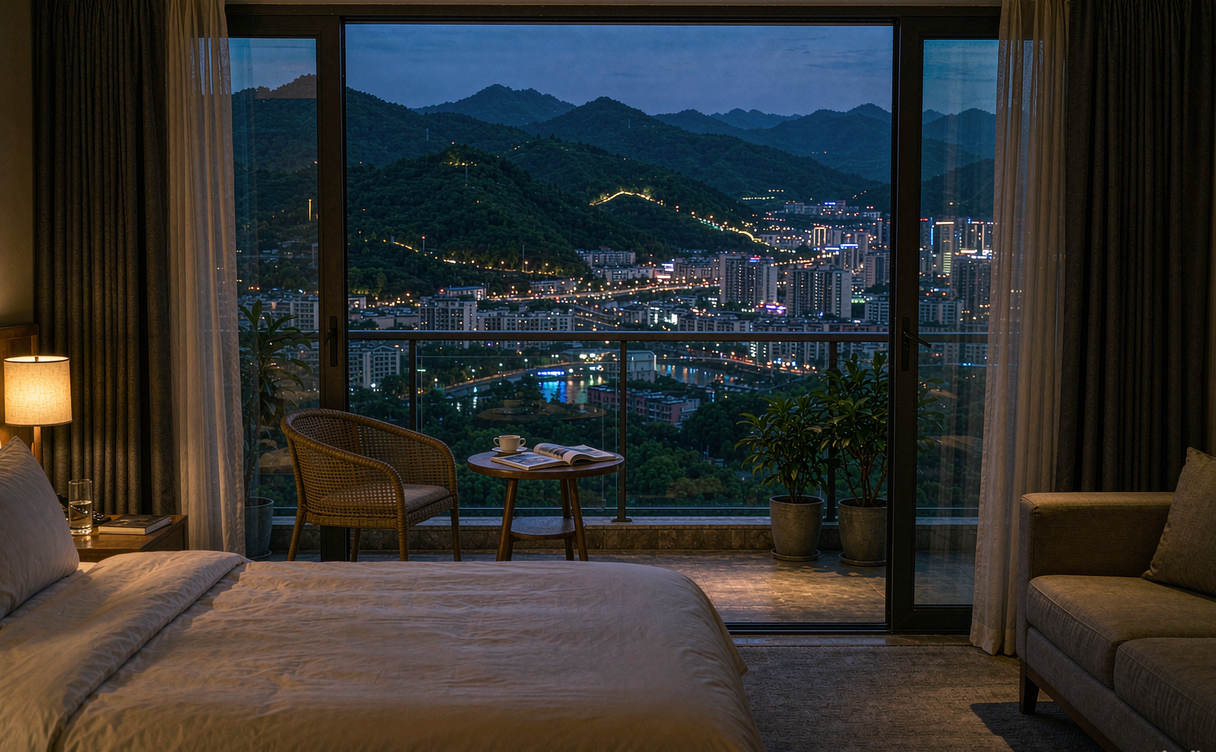
Guiyang’s top luxury address is the Waldorf Astoria (operated within the city’s tallest towers) and the nearby Sofitel, both in or near the center, with rooms from about RMB 900 to 1,600 (USD 125–225) a night. The draw is the view: green hills folding into the city, lit up at night. When we last visited, a client described their fortieth-floor balcony as “watching the fog pour between the buildings” — exactly the Guiyang mood, and worth the premium for a first night that resets your clock after a long flight.
For a slightly lower tariff with similar polish, the Marriott and Mercure central properties run RMB 600 to 1,000 (USD 85–140). Our China luxury travel guide covers the broader high-end landscape if you want to compare Guiyang against Chengdu and Kunming before you book.
Boutique and character options
Guiyang is not yet a boutique-hotel city in the way Chengdu or Kunming are, but a handful of design-led properties have opened near the riverside and the university district. Expect RMB 400 to 700 (USD 55–100) for a stylish room, good coffee in the lobby, and owners who actually know Guizhou. We like these for solo travelers and couples who want a local feel without sacrificing comfort, and they tend to sit within walking distance of the better street-food lanes.
If you are building a southwest China loop, our best hotels in Kunming and best hotels in Chengdu guides show the same “stay central, eat well” logic applied to Yunnan and Sichuan — useful if your route strings all three provinces together.
Mid-range and dependable chains
Atour, Vienna, and Orange dominate the RMB 250 to 450 (USD 35–65) bracket and are reliable, clean, and everywhere. We book the Atour near the city center repeatedly — it is new, quiet, and a short walk from the Jiaxiu night market. For transit convenience, the hotels at Guiyang North station (RMB 350–600) suit the one-night-in, one-night-out plan, especially if your next leg is a four-hour train to Guangzhou.
Getting to Guiyang and how many nights
Guiyang is a major high-speed rail hub. Trains from Kunming take about two to two and a half hours (RMB 210–290 / USD 30–40); from Chengdu about three to three and a half hours (RMB 270–360); from Guangzhou about four to five hours. Guiyang Longdongbao International Airport has domestic and some regional flights. A taxi from the airport to center runs RMB 80 to 120 (USD 11–17) and takes thirty to fifty minutes, longer in rush hour.
Plan two nights in the city: one to recover and eat, one to day-trip to Qianling Park or Huangguoshu. Our Guizhou 7-day itinerary shows exactly how to slot Guiyang into a full province loop, with the city as both the arrival point and the pivot to the villages.
Best seasons and food at your doorstep
Guiyang’s climate is mild and humid — spring and autumn are best (18–26°C), summer is lush and occasionally stormy, winter is chilly but rarely freezing. The night markets are the real attraction: try siwawa (wraps of shredded vegetables in thin pancakes), huaxi beef noodles, and the sour fish hotpot. A street dinner runs RMB 30 to 60 per person; a hotpot for two is RMB 120 to 200 (USD 17–28), and the sour broth is a Guizhou signature you will not find done this way anywhere else. Most central hotels sit within a ten-minute walk of at least one night market, so you never need a car to eat well at midnight.
Day trips that make the city worth a base
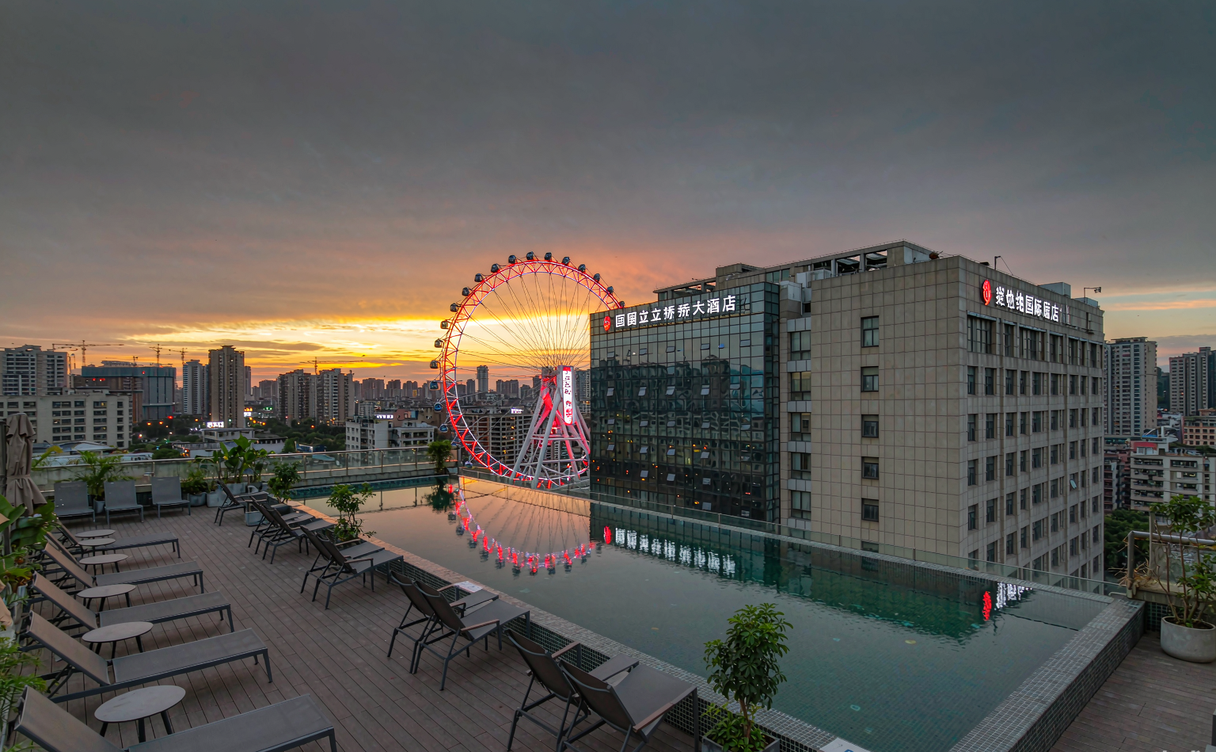
Guiyang’s real value is as a hub for day trips that would be painful from anywhere else. Huangguoshu Waterfall, the widest in Asia, is about two hours by bus or car and doable as a long day out. The karst forests of Libo, a UNESCO site, are three to four hours south and better as an overnight, but the trains make it straightforward. Closer in, the village clusters around Kaili and the terraced fields near Congjiang open a window onto Miao and Dong life that the city cannot show you. We almost always build the first and last nights in Guiyang, using the middle of the trip for the countryside, because flying in tired and immediately boarding a van is a recipe for a wasted first day. A central hotel with a pool and a good breakfast turns that recovery night into something you actually enjoy.
Booking tips for foreign travelers
This is where people get stuck, so read carefully. Many Chinese hotel booking apps do not accept foreign cards or passports cleanly, and a few small guesthouses still display “no foreign guests” because their license has not been updated for international check-ins. We always point clients to our China hotel booking foreigners guide before they book — it covers which platforms accept Visa and Mastercard, how to enter your passport number, and what to do if a hotel refuses you at the desk.
- Book refundable where possible; Guizhou weather shifts plans and floods close mountain roads.
- Keep a photo of your passport; front desks need it by law and a dead phone should not block you.
- Confirm the hotel takes foreigners before paying non-refundable rates, especially for guesthouses.
- Ask for a room above the fifth floor in the center to dodge street noise and the early market.
Building a Guizhou route? Our Guiyang travel guide maps the city’s neighborhoods, transport, and day trips in detail, so you book the right base the first time.
Why base in Guiyang at all
Some travelers skip the city for the villages. Do not. Guiyang is where you sort permits, SIM cards, and cash; it is where the best hospitals and the fastest trains are; and it is where you taste Guizhou’s food scene at its most concentrated. A good central hotel turns the city from a transfer point into a proper stop, and the difference shows in how relaxed you feel heading into the countryside. For background on the city itself, Wikipedia’s Guiyang entry gives the basic geography and population context we reference above.
Not sure how to book as a foreigner? Read our China hotel booking foreigners guide so your Guiyang reservation goes through on the first try, not the third.
Want the full province plan? Our Guizhou 7-day itinerary chains Guiyang with waterfalls, villages, and karst in one route you can actually drive.