

When most people dream about traveling in China, the Great Wall and Shanghai skyline come to mind first — but Chengdu quietly became my favorite base for a relaxed trip. After five visits, I’ve learned that choosing the right hotels in Chengdu is the single biggest factor in how much you enjoy the city. Get the location wrong and you’ll burn an hour each way to see the pandas; get it right and you can roll out of bed, hop on the metro, and be front-row at the Chengdu Research Base of Giant Panda Breeding before the crowds. This guide breaks down where to stay by budget, how close each area is to the pandas and the metro, and the booking tricks I wish I’d known on my first trip.
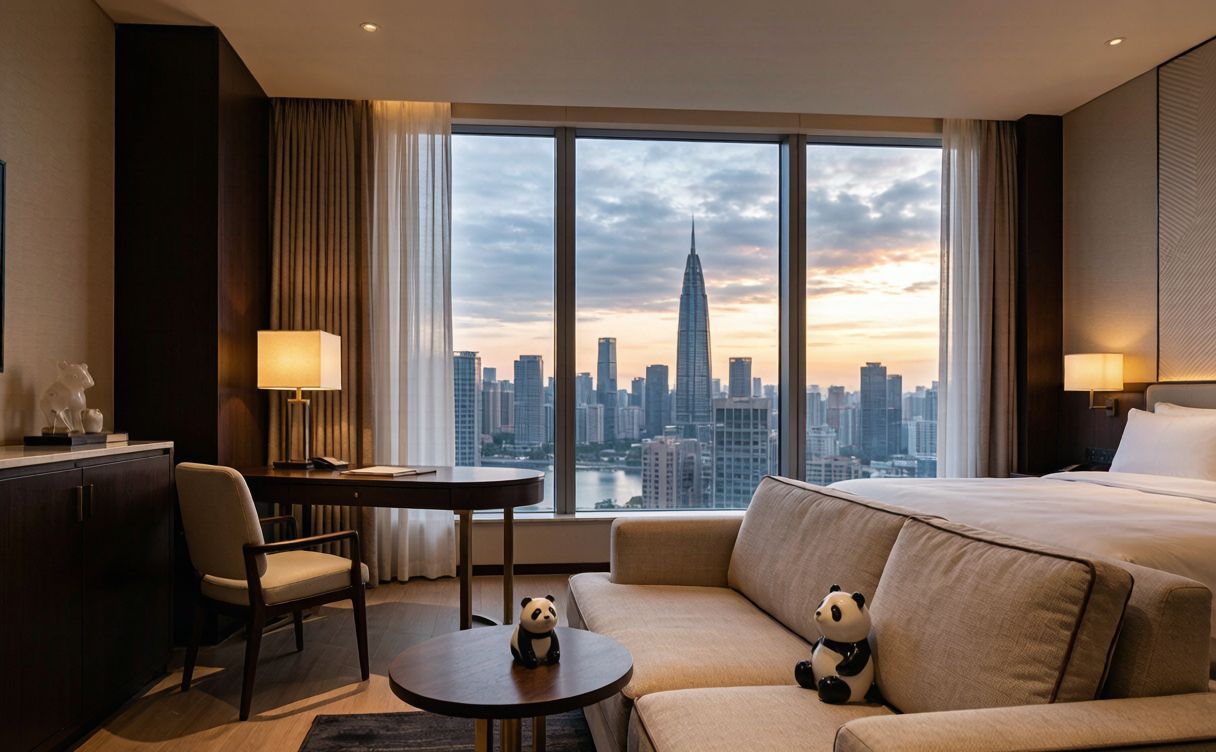
Why Location Matters in Chengdu
Chengdu is a sprawling, flat city, which makes it ideal for metro travel — but the distances between the panda base, the historic center, and the food streets are real. The Chengdu Metro now has more than a dozen lines, and Line 3 in particular is a gift to tourists: it runs from the city center straight up toward the Panda Base. Wherever you stay, prioritize being within a five-minute walk of a metro station. It will save you more time and money than any room upgrade.
I once booked a “great deal” hotel near the South Railway Station thinking it’d be convenient. It was clean and cheap, but every panda trip started with a 40-minute metro ride. On my next visit I paid $15 more per night to stay near Chunxi Road and reached the pandas in 25 minutes door-to-door. That’s the kind of trade-off this guide is built to help you avoid.
Luxury Hotels: Tianfu Square & Chunxi Road
If you want the classic Chengdu experience — grand lobbies, attentive service, and a walkable location in the heart of the action — base yourself around Tianfu Square and Chunxi Road. This is the city’s central business and shopping district, sitting directly on Metro Lines 1, 2, and 3.
The Ritz-Carlton, Chengdu sits a short stroll from Chunxi Road and offers some of the most polished service in the city. Niccolo Chengdu, on top floors of the Chengdu IFS tower, gives you sweeping city views and a direct link to the metro via the building’s underground passage. The St. Regis Chengdu near Tianfu Square blends Sichuan character with five-star comfort and is my pick when I want to walk to the Sichuan Opera and the food streets in the evening.
These luxury options put you roughly 25–35 minutes from the Panda Base by metro, with multiple lines to choose from. For a first-time visitor who wants zero logistics stress, this is the sweet spot.
Mid-Range Hotels: Comfort Without the Splurge
You don’t need a five-star budget to stay well in Chengdu. The mid-range tier — think $50–$110 per night — is where the city genuinely shines, with design-forward boutique hotels and reliable national chains.
Around Chunxi Road / Taisheng Road, you’ll find properties like Atour Hotel and Courtyard by Marriott that deliver clean, modern rooms and easy metro access. If you’d rather be near the panda base itself, the Panda Avenue area (Metro Line 3) has solid mid-range choices such as Hilton Garden Inn Chengdu Panda Avenue, letting you sleep close to the pandas and beat the morning rush.
A friend of mine, traveling on a tighter plan, used our China travel budget per day breakdown to cap lodging at $70 a night. She stayed near Taisheng Road, took Line 3 straight to the Panda Base, and told me the location felt “more local and more fun” than the luxury district.
One thing I tell every first-time visitor: the mid-range belt around Taisheng Road and the eastern end of Chunxi Road is also the best spot for casual food. Within a five-minute walk you’ll find hole-in-the-wall dan dan noodle shops, late-night hot pot joints, and teahouses where locals play mahjong until midnight. Staying here means your evening plans are right outside the lobby, no metro ride required. If you’re using the metro heavily, grab a Tianfu Tongka card or just tap your phone with a transit app — the stations are clean, well-signed in English, and far easier to navigate than most visitors expect.
Budget & Hostels: Social, Cheap, Well-Connected
Backpackers and solo travelers will feel right at home in Chengdu’s hostel scene, concentrated around Wuhou District and near the universities. Mix Hostel and The Loft are long-standing favorites with dorms from around $10–$15 and private rooms from $30. They tend to sit near Metro Lines 1 and 3, so the pandas are still an easy ride away.
Even on a budget, I recommend checking the China eSIM and SIM card guide for tourists before you fly — booking apps and metro maps work best with data the moment you land, and a hostel receptionist can only help so much if your phone is offline.
Proximity to the Pandas & Metro Lines
Here’s the practical cheat sheet I use:
- Closest to the Panda Base: Panda Avenue (Line 3). Best for early risers who want to be first in line.
- Best balance of pandas + city life: Chunxi Road / Tianfu Square (Lines 1, 2, 3).
- Best for budget + local vibe: Wuhou / university area (Lines 1, 3).
- Best for high-speed rail connections: North or East Railway Station hubs, if Chengdu is one stop on a bigger trip.
The official visitor resource for the base is worth a read before you go, and you can check opening hours and conservation info on the Chengdu Research Base of Giant Panda Breeding official site. Aim to arrive at the base before 8 a.m. — the pandas are most active then, and the light is gorgeous.
Booking Tips I Learned the Hard Way
- Book directly for long stays. For three nights or more, emailing the hotel often unlocks a better rate than the OTAs, especially at mid-range and luxury properties.
- Watch the “Chengdu” name game. There are suburbs far from the center also called Chengdu on booking sites. Always check the metro station listed — if it’s not on Lines 1, 2, or 3, you’re likely too far out.
- Use a VPN-friendly setup before arrival. Many international booking platforms work fine, but having data helps you confirm reservations on the go. See our guide to using the internet in China for the setup I use.
- Consider visa timing. If Chengdu is your first stop, sort your paperwork early using our China tourist visa application guide.
- Link it to a bigger trip. Chengdu is a natural anchor on a western-China loop. Our China 2-week itinerary shows how to fit it alongside Jiuzhaigou and Chongqing.
Whichever tier you choose, Chengdu rewards travelers who stay central and ride the metro. I’ve slept in $12 dorms and $400 suites in this city, and the truth is the magic isn’t in the thread count — it’s in stepping outside to the smell of chili oil, the buzz of the metro, and the knowledge that the pandas are only a few stops away. Pick the neighborhood that fits your budget, book early, and let the laid-back pace of Sichuan do the rest.