

I picked Guizhou because I wanted a China trip that was not the usual Beijing-Shanghai loop. What I found was a province of misty peaks, the widest waterfall in Asia, and villages where wooden drum towers still set the rhythm of the day. This Guizhou 7 day itinerary is the route I wish I had before my first visit: a Guiyang to Kaili village itinerary that then swings south to Libo and east to Fanjingshan, all doable by high-speed rail and local buses.
Why a Guizhou travel route one week makes sense
Guizhou is compact and the new rail lines make it easy. A Guizhou itinerary by high speed rail lets you sleep in a different town each night without long hauls. The best time for Guizhou 7 days is spring (April to May) and autumn (September to October), when rice terraces are green or golden and the Miao festivals peak. I went in late September and caught a village harvest festival by luck. Summer is lush but rainy; the Guizhou one week trip cost stays low because hotels outside Guiyang are cheap.
The province is also cooler than the cities of the east, which is why I recommend it for a hot-weather escape. Pack a light rain jacket regardless of season; the karst hills make their own weather.
Day 1: Arrive in Guiyang
Land at Guiyang Longdongbao Airport (KWE). The metro into town takes about 40 minutes. Stay near the Jiaxiu Tower or the riverside. Walk the Qianling Mountains if you have energy, where caged macaques and a hillside temple appear within the city. For neighborhood picks and the best noodle shops, see our Guiyang travel guide.
Day 2: Huangguoshu Waterfall
Take a bus or hired car from Guiyang to Huangguoshu (about 2 hours). The waterfall is 78 meters tall and 101 meters wide; you can walk behind it through the Water Curtain Cave. Peak-season entry is RMB 160 plus RMB 50 for the shuttle. Go early; tour buses arrive by 10 a.m. I spent five hours and still missed the Tianxingqiao lower trail. Our Huangguoshu Waterfall guide has the entry gate order that avoids the worst backtracking.
Day 3: Guiyang to Kaili and Xijiang Miao Village
Catch the high-speed train from Guiyang North to Kaili (about 40 minutes, RMB 40 to RMB 58). From Kaili, a bus or car reaches Xijiang Qianhu Miao Village in about 40 minutes. This is the largest Miao settlement in China, with hundreds of stilt houses climbing the hillside. Entry is RMB 90 including the shuttle. Stay inside the village to see the night lights and the morning mist. The Xijiang Miao village guide explains which guesthouses sit above the noise.
Day 4: Xijiang to Zhaoxing Dong Village
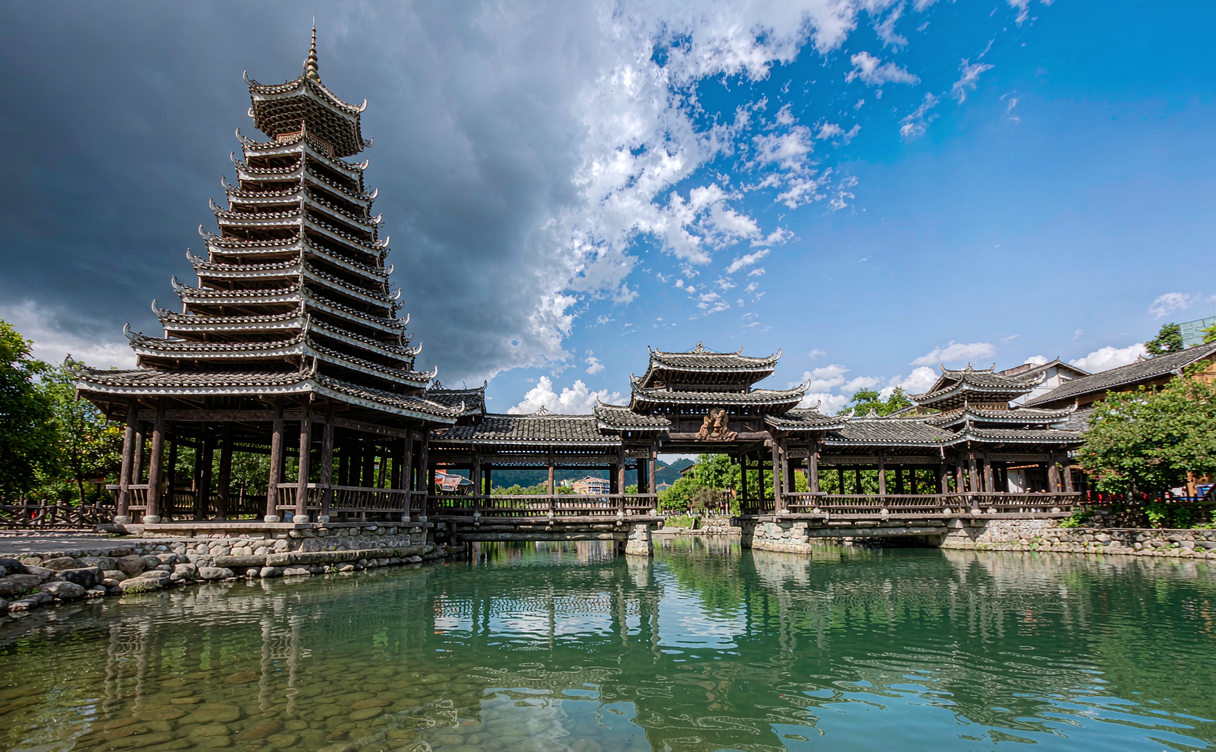
This is the longest transfer. From Kaili, return toward the rail line and head to Congjiang, then a short bus to Zhaoxing, one of the best-preserved Dong villages. The Dong are known for wind-and-rain bridges and multi-tier drum towers. Entry is RMB 80. I arrived at dusk and heard the grand song rehearsals echoing off the wooden rafters. The Zhaoxing Dong village guide covers the bus timing from Congjiang station, which is the part most travelers get wrong.
Day 5: Zhaoxing to Libo (Xiaoqikong)
Take the train or bus southwest to Libo. The Xiaoqikong scenic area is a string of waterfalls, a 68-level cascade, and an emerald river you can wade near. Entry is RMB 120 plus RMB 40 shuttle. It is quieter than Huangguoshu and better for swimming-style photos. Our Libo guide lists the less-crowded boardwalk direction. I spent the late afternoon in the water and wished I had booked two nights.
Day 6: Libo to Fanjingshan
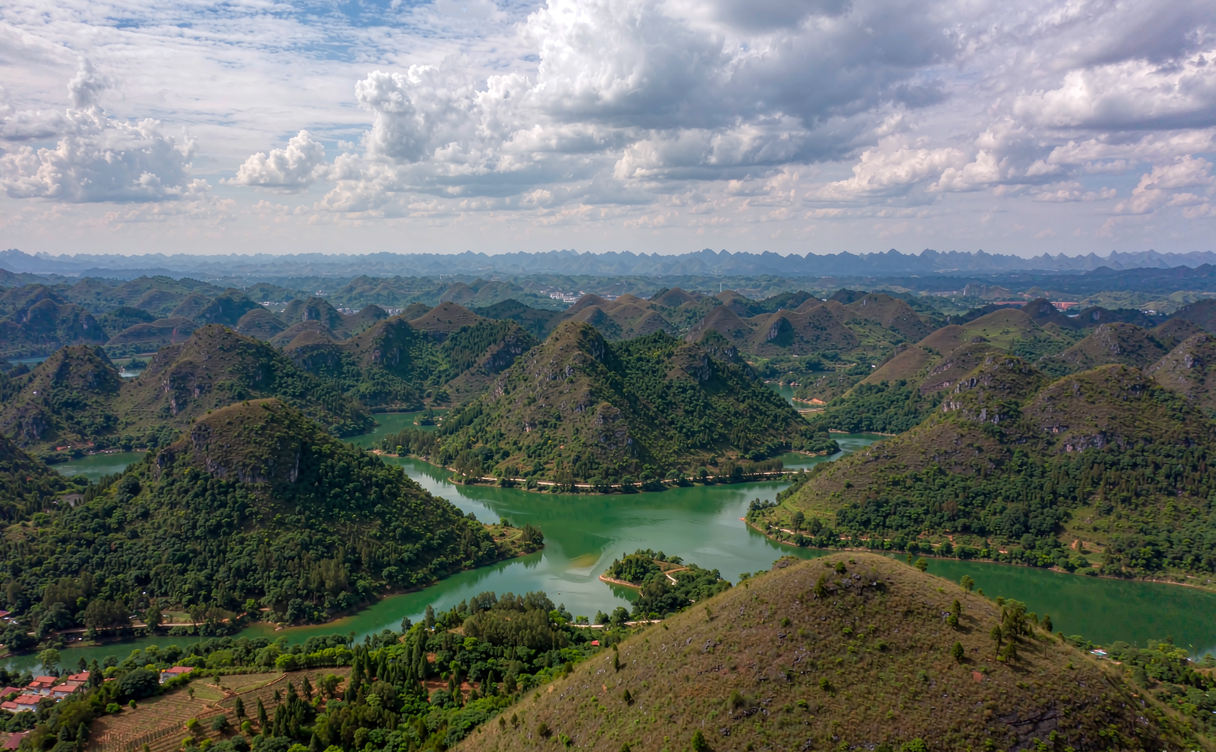
Travel north to Tongren, then a bus to the Fanjingshan base (about 1.5 hours). Fanjingshan is a UNESCO World Heritage Site, a Buddhist peak with a cable car to a razor-edge summit where two temples sit on separate rocks. Entry plus cable car runs RMB 180 to RMB 280 depending on the season and whether you add the sightseeing bus. The Fanjingshan guide explains the daily visitor cap and why you must book the slot online days ahead. You can read the official heritage details on the UNESCO Fanjingshan page.
Day 7: Fanjingshan summit and return to Guiyang
Rise before 6 a.m. to catch the first cable car; the summit cloud sea is best before 9 a.m. and the cap means late arrivals may be turned away. After descending, return to Tongren and the high-speed train to Guiyang for your flight. If your flight is the next day, sleep in Guiyang and eat one more bowl of huangjiao ba (sticky rice cake).
Guizhou one week trip cost
Per person in RMB: trains and buses RMB 600 to RMB 1,000; park tickets and shuttles RMB 700 to RMB 1,000; hotels RMB 200 to RMB 500 per night (six nights, RMB 1,200 to RMB 3,000); food RMB 80 to RMB 150 per day (RMB 560 to RMB 1,050); local transfers and guesthouse upgrades RMB 300 to RMB 600. Total: roughly RMB 3,400 to RMB 6,600 per person. A Guizhou 7 day itinerary is one of the better-value weeks in China because the villages are inexpensive and the rail keeps move-day costs low.
Getting around by high-speed rail
The Guiyang hub connects to Kaili, Tongren, and Congjiang with frequent trains. Book on 12306 up to 15 days ahead; the Kaili and Congjiang runs are short and sell out on weekends. For the last miles into villages, use a registered car through your guesthouse or a ride app. Roads are good but winding, so budget extra time.
Food I kept ordering
Guizhou food is sour and herbal, not just spicy. Try suan tang yu (sour fish soup), si wawa (rolled vegetable wraps), and the Miao cured pork. In Xijiang, a long-table banquet with rice wine runs RMB 80 to RMB 150 per person and includes folk performance. I found the village dinners more memorable than any city meal that week.
Packing for Guizhou’s microclimates
Guizhou’s weather shifts fast in the hills, so I packed a packable rain shell and one warm layer even in September. Village guesthouses often lack strong heating, so a light fleece helped at night. Footwear matters: the stilt-house lanes are wet stone, and Fanjingshan’s summit is cold and windy. I also carried a small daypack, a refillable bottle, and a power bank because rural signal dips. Book the Fanjingshan slot and the Guiyang hotels two weeks out in peak season; the villages fill on weekends but stay calm midweek. If you travel in June, you may catch the Miao dragon-boat festival, though dates follow the lunar calendar, so check locally before locking in trains.
What I would change
Next time I would drop one waterfall day and add a night in Libo, because the river there is the calmest spot in the whole route. I would also avoid the National Day week (early October), when Xijiang gets shoulder-to-shoulder. A Guizhou travel route one week with a village-heavy lean is the version I would repeat.
Sample day-by-day
Day 1 Guiyang. Day 2 Huangguoshu. Day 3 Kaili to Xijiang Miao. Day 4 Zhaoxing Dong. Day 5 Libo. Day 6 Fanjingshan base. Day 7 Fanjingshan and return. This Guiyang to Kaili village itinerary shape keeps move days short and leaves the mountains for the back half.
A Guizhou 7 day itinerary rewards travelers who like culture over checklist sights. The waterfalls are grand, but the villages are the reason I already want to go back. Build the week around the best time for Guizhou 7 days, book Fanjingshan early, and let the rail do the heavy lifting.