

When most people picture travel in China, they imagine crowded group tours, bus windows fogged with breath, and a guide’s flag waving above a sea of selfie sticks. I get it — that was my first impression too, on a backpacking trip in 2011. But after a dozen return visits, and after spending the last three years researching the high-end side of this country for chinatravelplaces.com, I can tell you the truth: China now does luxury as well as anywhere on earth, and often at a level of service that Europe and the States have quietly forgotten how to deliver.
This is not a sponsored roundup. These are places and experiences I have actually paid for and walked through — the good, the overpriced, and the genuinely worth-it. If you have the budget, here is how to see China in comfort without losing the sense of discovery that makes the country so addictive.
Why China is a Sleeper Luxury Destination
The infrastructure is the headline. China has built the world’s best high-speed rail network, a constellation of genuinely world-class hotels, and private travel logistics that can be arranged from your phone. What used to take a punishing internal flight now takes a smooth, quiet train ride in a seat wider than business class on most US carriers.
The second point is value. A five-star suite in Shanghai or Chengdu that would cost $900 a night in London often runs $350–500. A private English-speaking guide and driver for a full day in Xi’an might be less than a nice dinner back home. You can travel very, very well here for what a mid-tier trip costs elsewhere.
The Hotels: Where to Sleep Well
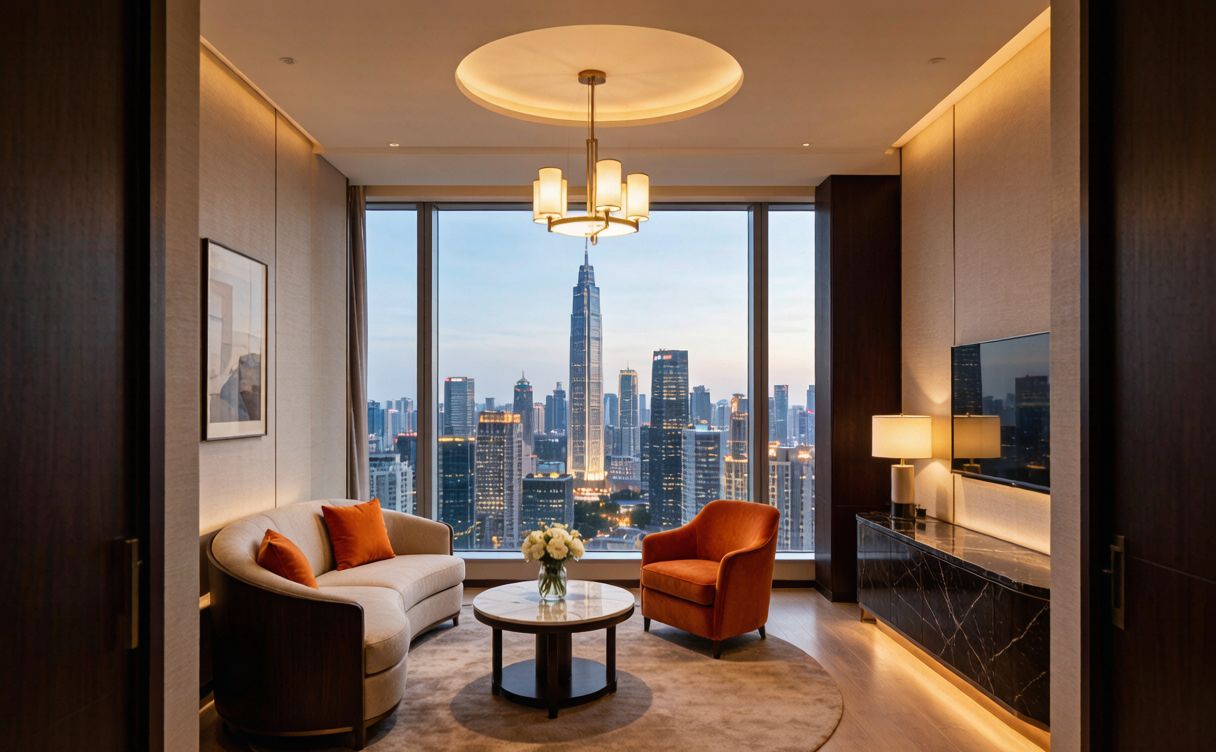
Start in the cities that have the deepest bench of luxury properties. In Shanghai, the Bund is the obvious address, and for good reason — you are steps from the river, the colonial architecture, and the best dining in the city. My consistent favorite stays are covered in detail in our where to stay in Shanghai guide, but the short version: book a river-view room, and book high. The light show across the water at 7 p.m. is free and spectacular.
In Chengdu, the standard is genuinely high. The properties we rate most highly are in our best hotels in Chengdu roundup — I have stayed at three of them, and the one with the courtyard tea lounge and a proper spa saved my legs after two days of walking. Chengdu is also the softest landing in China for first-timers: gentle pace, extraordinary food, and pandas.
A note on spas: do not skip them. The Chinese hotel spa culture, especially in the top-tier international brands, is a step above what you get in the West. A 90-minute tui na (therapeutic massage) after a long train day is, in my opinion, a non-negotiable part of a luxury trip here.
Getting Around: Private Drivers and Business-Class Trains
For city days, hire a private guide and driver. Through most hotels’ concierge you can arrange an English-speaking guide with a clean, late-model car for roughly $200–300 a day including the car. I did this in Xi’an and it transformed the trip: the guide handled ticket queues, knew which Terracotta Warrior pit to hit first to avoid the buses, and the driver was waiting with cold water every time we emerged.
For longer distances, take the train — but take it properly. China’s high-speed network is the glory of modern travel, and our high-speed train guide for foreigners walks you through booking and the class breakdown. Here is the luxury angle: the “Business Class” carriage (头等舱 / 商务座) has lie-flat seats, a private lounge at major stations, and complimentary snacks and hot towels. On the Beijing–Shanghai line, that is a four-and-a-half-hour glide in more comfort than a short-haul flight, and you arrive downtown, not at an airport an hour out.
I once took business class from Beijing to Xi’an, worked for two hours, ate a hot boxed meal, and stepped off fresh. Compare that to the psychic toll of a domestic flight anywhere and the train wins every time.
The Cruises: Yangtze and the Grand Canal
The Yangtze cruise is the classic luxury river journey, and it is worth the hype if you pick the right ship. The premium vessels (think Century Paragon-class or the Victoria Sabrina) have balcony suites, a western-Chinese fusion buffet that is genuinely good, and a crew that handles the three Gorges excursions so you just step off and look. The scenery between Chongqing and Yichang is the kind of thing that makes a jaded traveler put the phone down. I spent a morning on the top deck watching mist lift off the limestone peaks and genuinely lost track of time.
The sleeper alternative, and my personal recommendation for the culturally curious, is a private boat on the Grand Canal — the world’s longest artificial waterway, threading Hangzhou, Suzhou, and Wuzhen. You will not find mega-ships here; you find restored boutique boats, a private crew, and slow evenings watching lantern-lit towns slide past. It pairs beautifully with our Hangzhou guide if you want to extend with West Lake.
Premium Dining: From Peking Duck to Sichuan Heat
Food is where Chinese luxury shines brightest, and you do not need a Michelin star to eat superbly — though you can get those too. In Beijing, the ritual of a proper Peking duck dinner is a must, and our where to eat Peking duck guide separates the tourist traps from the institutions. I still think about the duck at a century-old roaster near Qianmen: the skin carved tableside, the first course served with a spoon of sugar to make the crispness sing. Book the private room — it is quieter and the staff will walk you through each course.
In Xi’an, build a day around the Muslim Quarter’s street food but end it at a refined restaurant that does the same dishes with a chef’s touch. Our Xi’an travel guide maps both the stalls and the sit-down spots. And in Chengdu, do not miss a proper Sichuan tasting menu — the numbing heat, done with precision, is a luxury in its own right.
Best Cities for a High-End Trip
If you have two weeks and want the greatest comfort-per-effort ratio, this is my routing: start in Beijing (Forbidden City private early-access tour, duck dinner, a great hotel), take business-class rail to Xi’an (warriors, Muslim Quarter, private guide), fly or train southwest to Chengdu (pandas, spa, Sichuan fine dining), then end in Shanghai (Bund suite, French Concession wandering, a final blowout dinner). It is cosmopolitan, it is efficient, and every leg is doable in real comfort.
The Shanghai Bund at night, by the way, is the single best free luxury moment in the country — dress up, take a riverside table, and watch the towers blink on. Details in our Bund night-view guide.
Practical Notes Before You Book
A few things I have learned the hard way. Alipay and WeChat Pay now work for foreign cards, but set them up before you land — our guides cover this. Visa-free transit has expanded dramatically, so check if you qualify before buying a visa. And tip lightly or not at all; service charges are usually included, and our tipping customs guide explains the etiquette so you do not awkwardly overpay.
For broader context on traveling well in the region, the China National Tourism Administration publishes official visitor information in multiple languages — a useful, authoritative companion to on-the-ground planning.
The bottom line: China rewards the traveler who spends a little more on logistics. Private guides, business-class trains, and well-chosen hotels do not just add comfort — they hand you the country on your own terms. I have done it broke and I have done it well, and I will take well, every single time.