

If you want one Chinese city that rewards slowing down, this Hangzhou travel guide is for you. Marco Polo called it “the City of Heaven,” and the nickname still fits. Hangzhou isn’t about ticking off landmarks; it’s about renting a bike, circling a misty lake at dawn, and drinking tea picked that morning on a nearby hill. Two hours by train from Shanghai, it makes an ideal first taste of China beyond the megacities — calmer, greener, and far easier to navigate than you’d expect.
At a glance
- Best for: Slow travel, tea lovers, photographers, anyone escaping Shanghai for a weekend.
- Nearest major hub: Shanghai (about 1.5–2 hours by high-speed train).
- Top sights: West Lake, Lingyin Temple, Longjing tea villages, the Grand Canal.
- Best seasons: March–May (spring blossoms) and September–November (cool, clear autumn).
- How long: 2 full days minimum; 3–4 days if you add a canal town.
- Getting around: Metro + bike + walking. The lake itself is car-light and best on foot.
Getting to Hangzhou from Shanghai
Most foreigners arrive from Shanghai, and it’s the easiest international gateway. High-speed trains run from Shanghai Hongqiao or Shanghai Station to Hangzhou East (Hangzhou Dong) roughly every 10–15 minutes throughout the day. The trip takes about 1 hour on the fastest G-trains, or up to 2 hours on slower ones. Buy tickets in advance through the official 12306 system or a reseller app — our guide to booking China train tickets on 12306 walks you through it step by step.
Hangzhou East is huge and a bit overwhelming, but follow the signs to the metro (Line 1 or Line 4) and you’ll reach the West Lake area in 20–30 minutes. Taxis and ride apps also queue outside, though the pickup area is congested at peak times. If you want the full picture on rail travel as a foreigner, our China high-speed train guide for foreigners covers etiquette, seat classes, and what to do if your plans change.
West Lake: the heart of the city
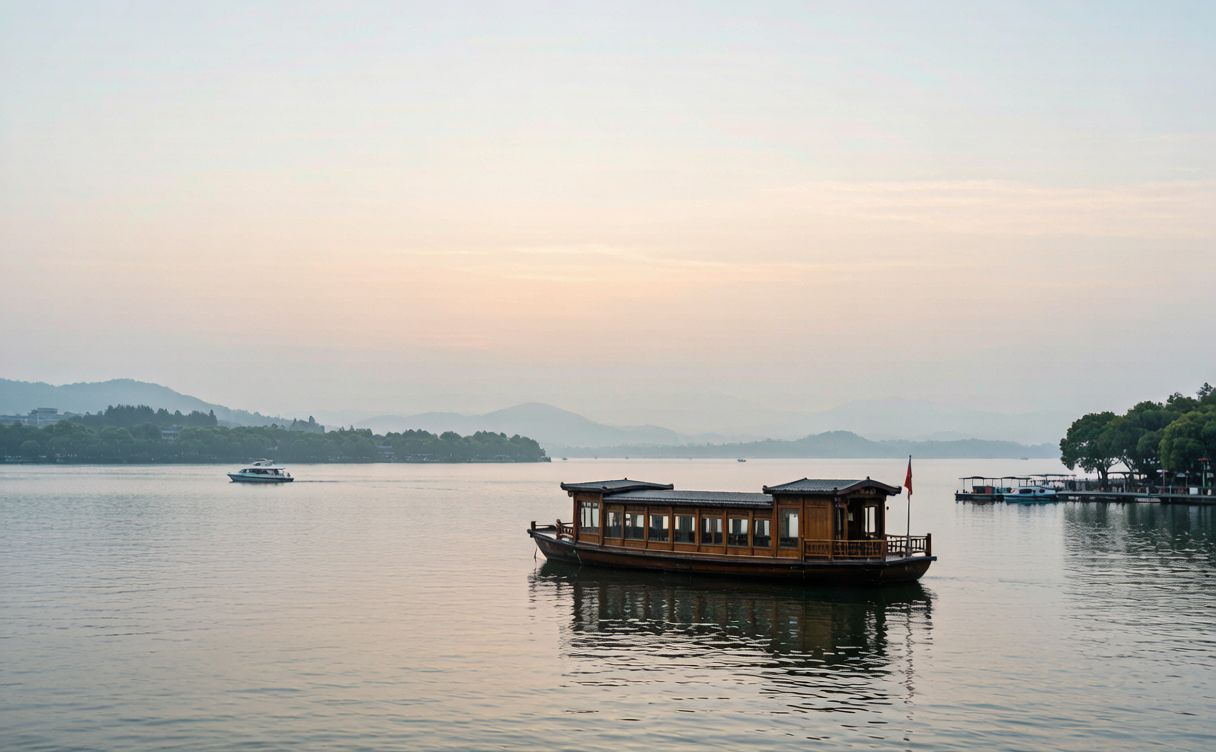
West Lake (Xihu) is the reason Hangzhou exists as a tourist destination, and it’s UNESCO-listed for good reason. The lake is free to walk around, and that’s the best way to experience it. A flat 15 km path circles the water, so you can do a full loop on a rented bike or a leisurely half-loop on foot. Come at 6–7 a.m. and you’ll share the misty boardwalks mostly with tai chi practitioners and egret fishermen.
Don’t try to “see everything” in one go. Pick a few highlights:
- Broken Bridge (Duanqiao): Famous in winter when light snow lingers. Packed on holidays, magical at dawn.
- Leifeng Pagoda: Climb for a panorama over the whole lake. The current structure is a 2002 rebuild with an elevator, sitting on the original Song-dynasty base.
- Three Pools Mirroring the Moon: The island you’ll recognize from the 1-yuan note. Reach it by a short ferry from the Hubin area.
- Su Causeway and Bai Causeway: The two long embankments are perfect for slow cycling, especially when the peach and willow trees bloom in April.
A pedal boat or the public electric ferries let you cross the water without walking the whole circuit. For a deeper dive into specific viewpoints, walking routes, and the best photo times, see our dedicated West Lake Hangzhou guide.
Lingyin Temple and the Peak Flown From Afar
A 15-minute taxi or bus ride west of the lake sits Lingyin Temple (Temple of the Soul’s Retreat), one of the most important Buddhist sites in southeast China. Arrive when it opens (around 7 a.m.) to hear the chanting and beat the tour buses. The main halls are impressive, but the quieter treasure is Feilai Feng (Peak Flown From Afar) just outside the temple gate — a wooded hillside honeycombed with hundreds of carved Buddhist grottoes, some over a thousand years old. A shaded stone path winds past them along a stream, and it’s the most peaceful 40 minutes in the city.
Budget half a day here. Wear decent shoes; there are steps. Note that you need two tickets: one for the Feilai Feng grottoes area and a separate one for the temple itself.
Longjing tea villages: drink where it’s grown
Hangzhou’s signature product is Longjing (Dragon Well) green tea, and the hills southwest of the lake are where the best of it grows. The village of Meijiawu and the smaller hamlets around Longjing village are terraced with tea bushes that turn brilliant green in early spring. March and April are harvest season, when you can watch farmers pan-firing leaves in woks over open flame — the smell alone is worth the trip.
You don’t need a tour. Take a taxi or a local bus up the winding road to Longjing village, then walk the tea trails between the terraces. Most family teahouses will brew you a pot of the real thing for a modest price, and unlike the tourist shops near the lake, the prices here are honest if you ask first. Buy loose leaves to take home, but check the harvest date — genuine pre-Qingming (before April 5) tea commands a premium and is worth it.
Canal towns, food & when to go
Hangzhou is the southern terminus of the Grand Canal, the world’s longest human-made waterway. The Canal Museum and the riverside district around Gongchen Bridge are a pleasant half-day, far less crowded than the lake and a real window into working-class city life.
For the classic “water town” experience, two easy day trips stand out:
- Wuzhen: About 1 hour by bus or car. The west section is a polished, lantern-lit heritage park; the east is more lived-in. Go late afternoon into evening when the crowds thin and the canals glow.
- Xitang or Nanxun: Slightly farther but quieter, with covered riverside walkways (langpeng) that shelter you from rain — handy given Hangzhou’s drizzly springs.
If your China trip is part of a longer route, Hangzhou pairs naturally with Shanghai. Our things to do in Shanghai guide helps you plan the big-city side of the pairing.
What to eat in Hangzhou
Hangzhou cuisine (Zhejiang style) is one of China’s eight great regional cuisines — lighter, sweeter, and more refined than the fiery food of the west. Staples to seek out:
- Dongpo pork (Dongpo rou): Braised belly pork, meltingly soft, named after the Song-dynasty poet Su Dongpo. Sweet, rich, unforgettable.
- West Lake Vinegar Fish (Xihu cu yu): Crucian carp in a sweet-tangy vinegar glaze. A love-it-or-hate-it local classic.
- Longjing shrimp: River shrimp quickly stir-fried with the namesake tea leaves. Delicate and faintly grassy.
- Beggar’s chicken: Clay-baked whole chicken, cracked open at the table.
For a low-stress meal, head to a branch of Lou Wai Lou by the lake for the classics, or wander the Hefang Street area for snacks — though the real street-food gems are in the residential alleys west of the lake. If you’re wary of street eating, our street food safety in China guide explains what’s safe and what to skip.
Best time to visit and what to pack
Spring (March–May) and autumn (September–November) are the sweet spots. April brings peach blossoms along the causeways and the first tender tea; October–November offers clear skies and comfortable temperatures. Summer is hot and humid, with the occasional typhoon, though the lotus blooms on the lake are spectacular. Winter is cold but quiet, and a light snow turns the lake into an ink-painting scene.
For a seasonal overview across the whole country, our best time to visit China guide helps you slot Hangzhou into a wider itinerary.
A few practical notes:
- Crowds: Avoid the first week of May (Labor Day) and the first week of October (National Day). The lake becomes a sea of people.
- Weather: Pack a light rain jacket in spring and summer; drizzle is common.
- Cashless: Alipay and WeChat Pay dominate. Small teahouses and temples sometimes prefer cash, so keep a little on hand.
West Lake’s cultural landscape and its management are documented by UNESCO, which inscribed it as a World Heritage Site in 2011: https://whc.unesco.org/en/list/1334/
A relaxed 3-day plan
- Day 1: Arrive from Shanghai, settle in, then walk the lakeside at sunset. Dinner of Dongpo pork and vinegar fish.
- Day 2: Dawn bike loop of West Lake, late morning at Lingyin Temple and Feilai Feng, afternoon tea in Longjing village.
- Day 3: Grand Canal museums in the morning, then a half-day trip to Wuzhen or back to Shanghai by train.
Hangzhou won’t shout at you. It unfolds slowly, over tea and long walks, and that’s exactly why it’s worth building your trip around. Give it two or three unhurried days and it may end up as the Chinese city you remember most fondly.
Written by Karl.