

Deciding where to stay in Shanghai is the single most important choice you’ll make before landing — and most first-timers get it backwards. I’m Karl, and after more than a dozen trips into this 24-million-strong metropolis, I’ve learned the hard way that your hotel’s neighborhood matters far more than its star rating. Pick the wrong district and you’ll burn an hour each morning just reaching the places you came to see. Pick the right one and the Bund, the soup dumplings, and the metro all fall into place.
This guide cuts through the generic “just stay central” advice. I’ll walk you through the five neighborhoods I actually send friends to, the real hotels in each price tier (with honest trade-offs), how close every area is to the metro, and exactly how to book from abroad without a Chinese bank card. If you’re plotting your first visit, our Shanghai first-time travel guide sets the wider scene — but your decision about where to stay in Shanghai really starts here.
Key Takeaways
– Base yourself in the Former French Concession or Jing’an for walkable charm and easy metro access; the Bund is stunning but overpriced for lodging.
– People’s Square is the most connected hub if you want one interchange to everywhere; Xintiandi suits diners and nightlife fans.
– Budget beds start around ¥85 ($12) in hostels; mid-range hotels run ¥700–1,400 ($100–200); luxury landmarks like the Peace Hotel start near ¥2,800 ($400).
– Book on Trip.com or Agoda, then pay with Alipay or WeChat Pay — set up mobile payment before you fly (our Alipay & WeChat Pay guide for foreigners walks you through it).
– Every major district sits on the metro, so where to stay in Shanghai matters less for transport than for the evening vibe you actually want.
The Best Areas to Stay in Shanghai
Shanghai isn’t one place; it’s a stack of very different districts sharing a name. When choosing your base, match the district to the trip you want, not to a ranking someone copied from a brochure. Here are the five I recommend, in roughly the order most travelers should consider them.
The Bund & Lujiazui — Views and Luxury
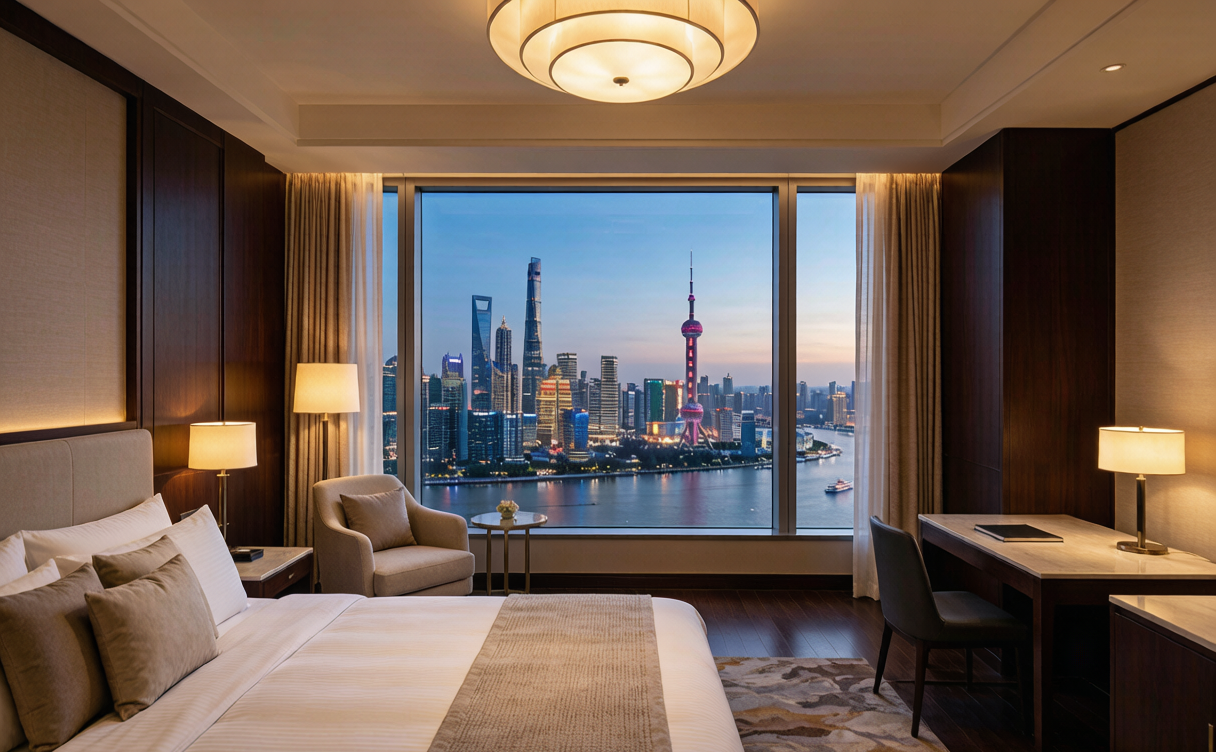
The Bund is the postcard: a row of 1920s stone buildings on the west bank, with the sci-fi Lujiazui towers rising across the Huangpu River. Staying here means waking up to that skyline. But be honest with yourself — at street level the Bund is a tourist corridor, not a living neighborhood, and you pay a serious premium for the address. Lujiazui, on the east bank, is all glass towers and malls; it’s thrilling for one night and sleepy for five.
Best for: honeymooners, splurgers, and anyone who wants the skyline from their window. Skip if: you’re on a budget or staying more than two nights.
People’s Square — Central and Connected
If “where to stay in Shanghai” means “I want to reach everywhere without changing trains,” People’s Square is the answer. It’s the city’s main metro interchange — Lines 1, 2, and 8 all cross here — and it sits between the Bund, the museum, and the French Concession. The trade-off: it’s a little characterless, all wide squares and big hotels rather than cozy lanes.
Best for: first-timers who hate transferring and want a safe, central base. Skip if: you crave atmosphere over convenience.
Jing’an — Shopping and Mid-Range Comfort
Jing’an is my default recommendation for a balanced trip. You get the gold-domed Jing’an Temple, massive malls, and a real mix of mid-range hotels, all on superb metro lines. It feels modern and international without the Bund’s markup. On my last trip I based myself here and walked to dinner every night without once touching a taxi.
Best for: shoppers, business-leaning travelers, and anyone wanting comfort at a fair price. Skip if: you want leafy, old-world charm.
Xintiandi — Polished Dining and Nightlife
Xintiandi is a restored shikumen (stone-gate) district turned into an upscale dining and bar quarter. It’s clean, pretty, and packed with restaurants — but it’s also one of the priciest and least “local” areas. Think of it as a polished stage set rather than the real city.
Best for: foodies and couples who want restaurants and bars at the door. Skip if: you’re watching your budget or want to feel the grit of the real Shanghai.
Former French Concession — Charming and Walkable
My personal favorite, and the one I point most friends to. The Former French Concession is a web of plane-tree-lined lanes (longtang), hidden cafés, and low-rise boutique hotels. It’s walkable to the Bund and Jing’an, and it’s where Shanghai feels most European and most livable. Yes, it’s touristy in spots like Tianzifang, but step two lanes over and you’ll have a whole street to yourself.
Best for: almost everyone — especially first-timers who want charm plus easy transport. Skip if: you need to be directly above a subway exit (it’s spread out, though still very walkable).
Which Neighborhood Should You Choose?
Quick rules of thumb:
- Solo traveler or first trip → Former French Concession or Jing’an.
- Tight budget → a hostel near People’s Square or the Bund.
- Luxury splurge → the Bund or Lujiazui for one unforgettable night.
- Food and nightlife focus → Xintiandi, with the Concession a close second.
- Maximum transit convenience → People’s Square.
For the full rundown of sights in each district, our things to do in Shanghai guide maps them out — but your hotel choice shapes the whole trip, so settle this first.
Hotels in Shanghai by Budget: Real Picks for 2026
The prices below are typical nightly rates I’ve seen in 2025–2026 and they will shift with season, so always confirm on the booking site. The point is the tier, not the exact number.
Budget (under ~¥400 / $55)
- Captain Hostel (老船长青年旅舍): A Bund-side backpacker icon on Fuzhou Road, a 10-minute walk from the waterfront. Dorms from about ¥90 ($13); private rooms from around ¥260 ($37). Social, basic, and unbeatable for location.
- Mingtown Hiker Youth Hostel (明堂): Near People’s Square, clean dorms from roughly ¥85 ($12). Ideal if you want the central metro hub without the central price.
Both put you on the metro within a few minutes’ walk — proof that good Shanghai accommodation on a budget doesn’t mean isolation.
Mid-Range (~¥700–1,400 / $100–200)
- Ruijin Hotel (瑞金宾馆): A historic garden hotel tucked into the French Concession on Maoming Road. Rooms around ¥900 ($130) get you leafy grounds and old-Shanghai character. This is my go-to for visitors who want atmosphere without luxury prices.
- Jade on the Bund: A calm boutique hotel a short walk from the river, rooms from about ¥1,100 ($155). You trade the Bund’s front-row view for a quieter, better-value stay.
Luxury (~¥2,000+ / $280+)
- Fairmont Peace Hotel: The Art Deco landmark on the Bund itself. Rooms from roughly ¥2,800 ($400) — you’re paying for history and the address, and for a one-time splurge it delivers.
- Park Hyatt Shanghai: Perched near the top of the Shanghai Tower in Lujiazui, with jaw-dropping skyline views from about ¥2,600 ($370). For pure “future Shanghai” drama, nothing beats it.
Wherever you base yourself, you’ll be on the metro within minutes — so let’s look at exactly how close each area is.
Metro Proximity: How Easy Is Each Area to Reach?
Here’s the reassuring part: every neighborhood above sits on the metro, so Shanghai accommodation near a station puts the whole city 20–30 minutes away. Quick reference:
- The Bund: East Nanjing Road (Lines 2, 10) and Yuyuan Garden stations; Lujiazui is one stop across the river on Line 2.
- People’s Square: Lines 1, 2, 8 — the city’s busiest interchange.
- Jing’an: Jing’an Temple (Lines 2, 7, 14) and Nanjing West Road (Lines 2, 12, 13).
- Xintiandi: Xintiandi station (Lines 10, 13).
- Former French Concession: spread across South Shanxi Road (Line 1), Changshu Road (Lines 1, 7), and more — walkable, if not always next to a single exit.
A single metro ride costs ¥3–10 ($0.40–1.40) and every sign is bilingual. I link a foreign card to Alipay and scan in and out — no paper tickets, no queues.
Booking Tips for Foreigners
This is where many visitors get stuck, so let me be concrete:
- Book on Trip.com or Agoda. Both show English, list real-time availability, and accept foreign cards. Trip.com is China-based and often has the widest local inventory; Agoda is reliable for hotels. Avoid unknown resellers.
- Pay with Alipay or WeChat Pay at the property. Most Chinese hotels and nearly all vendors are near-cashless. Set up mobile payment before you fly — our Alipay and WeChat Pay guide for foreigners gets a foreign card linked in about 15 minutes.
- Confirm the metro line, not just the district. “French Concession” covers a huge area; a hotel near South Shanxi Road station saves you ten minutes every morning versus one at the lanes’ edge.
- Check the official tourism site for context. The official Shanghai tourism site lists neighborhoods, events, and current attraction prices if you want to double-check before booking.
If you’re arriving by train from another city, our China high-speed train guide for foreigners shows how to book seats without a Chinese phone number — handy, since Hongqiao Station drops you right on the metro.
A Sample 2-Night Stay Plan
Here’s how I’d actually book it, basing in the Former French Concession:
- Afternoon, Day 0: Land at Pudong, take the Maglev + metro (or DiDi) to your Concession hotel. Drop your bags, then walk to the Bund for sunset — the 30-minute window around 6 p.m., when the towers light up, is the best free show in the city.
- Day 1: Morning at Yu Garden (arrive at opening, before the crowds). Late morning, wander the Concession’s Wukang Road. Afternoon coffee and boutiques. Evening in Xintiandi for dinner and a bar.
- Day 2: Morning at Jing’an Temple, then Line 2 to Lujiazui and up the Shanghai Tower. Afternoon back in the Concession to pack. Final soup-dumpling dinner nearby.
This loop hits the postcard, the lanes, a temple, and a supertall — and it pairs perfectly with our Shanghai 2-day itinerary if you want the hour-by-hour version. Timing your visit for spring or autumn makes all of it gentler; our best time to visit China guide explains the windows.
By Karl — an experienced China traveler who has based himself in Shanghai’s neighborhoods across many trips. This guide to where to stay in Shanghai was updated in July 2026; hotel prices and metro details shift, so confirm on the booking platform before you book.