

Here’s the single most useful thing to know before you land: tipping in China is not the norm. Unlike the United States or much of Europe, where leaving 15–20% is practically a tax, China runs on a no-tipping culture that surprises almost every first-time visitor. Walk into a noodle shop in Chengdu, pay the exact amount on the bill, and you’ll get a confused look if you try to leave loose change “for the server.” This isn’t stinginess — it’s a different social contract around service and wages. That said, the rules are quietly shifting in the places foreign travelers actually spend money: five-star hotels, guided tours, and a handful of expat-frequented venues. Get the nuances right and you’ll avoid awkward moments; get them wrong and you’ll either overpay or accidentally offend. Here’s the full picture.
Why China Doesn’t Tip
The no-tipping habit isn’t an accident of culture — it’s baked into how Chinese service wages work.
Service is included (even when it isn’t)
Most restaurants and hotels build staff compensation into the price you pay. There’s no unspoken expectation that the customer tops it up. In a country where face-to-face hospitality is the default, a server handing back your change correctly is a sign of honest service, not an invitation for a bonus.
History and policy
Tipping was effectively discouraged for decades and is still viewed with suspicion in many state-run and local establishments. Adding an unsolicited gratuity can read as confusing rather than kind — some staff worry a “tip” might be a mistake they’ll be held accountable for.
The digital payment effect
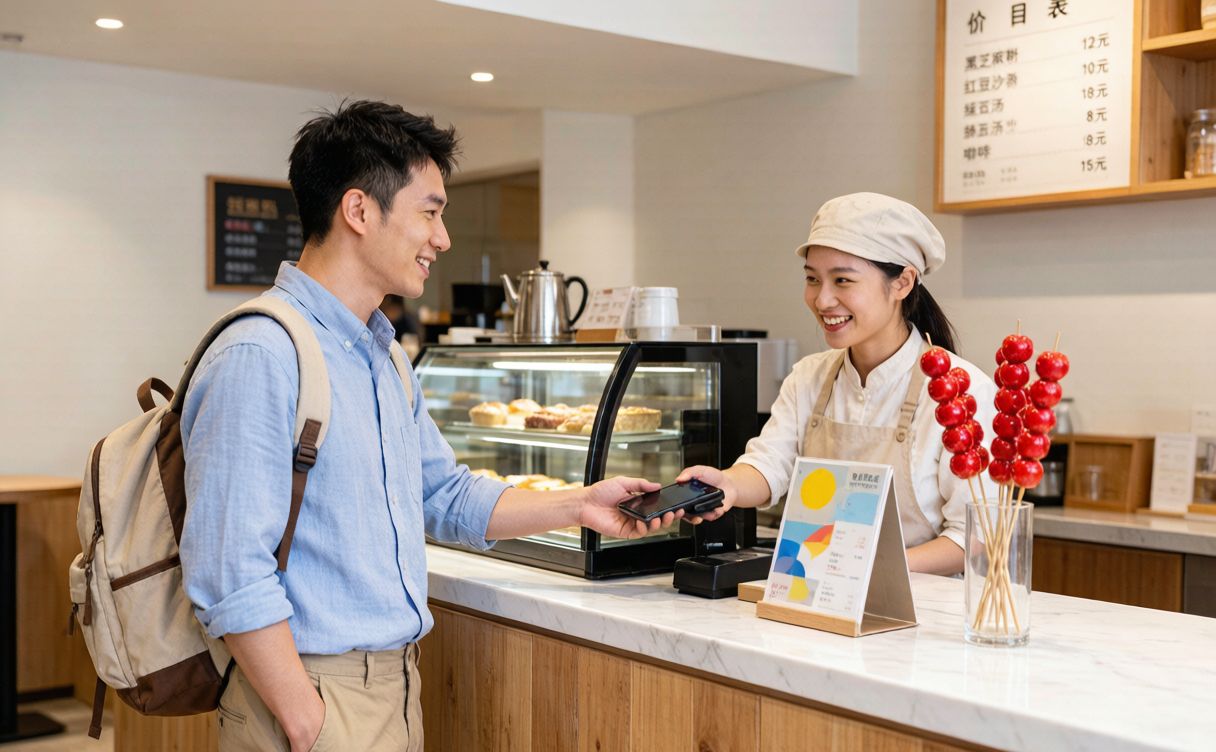
China’s near-cashless economy changed everything except the tipping habit. Because payments flow through Alipay and WeChat Pay, the old “leave cash on the table” gesture doesn’t translate. Rounding up happens in the app, not in the hand. If you’re still figuring out the payment apps, our guide to using Alipay and WeChat Pay as a foreigner in China is worth a read before you arrive.
When Tipping IS Appreciated
The general rule is “don’t.” But there are clear, growing exceptions where a tip is welcome — and sometimes expected by international standards.
High-end hotels
At five-star properties in Beijing, Shanghai, and elsewhere, bellhops, concierges, and housekeeping used to foreign guests often accept (and appreciate) a small gratuity. A tip of ¥10–¥20 per bag for the bellhop, or ¥20–¥50 left for housekeeping every few days, fits the international norm without feeling excessive. Budget and mid-range hotels? Skip it.
Tour guides and drivers
This is the big one. If you’ve booked a private or small-group tour — say, a first-timers’ China itinerary with a dedicated guide — a tip at the end is genuinely appreciated and common practice among overseas visitors. ¥50–¥100 per day for a guide, and ¥30–¥50 per day for a driver, is a reasonable range for good service. Group bus tours from overseas operators often build this into the briefing.
Upscale expat bars and restaurants
Western-style venues in expat clusters — Sanlitun in Beijing, the Bund area in Shanghai, bar streets in major cities — sometimes pool tips or add a service charge. A few welcome a cash tip; many now route it through the payment app. Read the menu or ask; don’t assume.
The new digital tip
A quiet trend: some high-end restaurants and hotels now let you add a gratuity through Alipay or WeChat at checkout. It’s optional, clearly labeled, and far more common in 2026 than five years ago. This is the rare case where “tipping in China” is becoming a tap-on-a-screen decision rather than a cultural faux pas.
When You Should NOT Tip
Just as important as when to tip is when not to.
- Local restaurants and street food stalls — pay the bill, take your change. A tip confuses the staff.
- Taxis and ride-hailing (Didi) — round to the nearest yuan if you like, but don’t add a gratuity.
- Massage and hair salons — standard neighborhood spots don’t expect tips; upscale hotel spas might.
- Train station and airport staff — helping with luggage isn’t a tipping situation.
- Small family guesthouses — owners see tipping as odd.
For a broader sense of daily costs so you can budget confidently, see our China travel budget per day breakdown.
At a Glance
Who to tip:
– Private tour guides: ¥50–¥100/day
– Drivers on tours: ¥30–¥50/day
– Hotel bellhops (luxury hotels): ¥10–¥20 per bag
– Housekeeping (luxury hotels): ¥20–¥50 every few days
– Some expat bars/restaurants with service-charge or digital-tip option
Who NOT to tip:
– Restaurants, street food, cafés
– Taxis / Didi drivers
– Salons, local massages
– Train/airport porters
– Family guesthouses, hostels
Typical amounts: Small and symbolic. Think ¥10–¥100, not 15–20% of the bill.
Practical Do’s and Don’ts
Do carry a little cash in small bills. Even though China is cashless, a few ¥10 and ¥20 notes make tipping at hotels painless if the app option isn’t there. Our guide on whether you need cash in China covers how much to bring.
Don’t tip in front of a crowd. Discreet handing over of an envelope or note respects the local preference for low-key transactions.
Do ask your guide or hotel concierge if unsure. They’ll tell you straight whether a tip is welcome — and that question alone signals you’re a considerate traveler.
Don’t treat tipping as a test of service quality the way you might at home. In China, no tip doesn’t mean bad service, and a tip won’t necessarily unlock perks.
For more on fitting in smoothly, our things to know before visiting China covers etiquette beyond gratuity.
Regional Notes: It’s Not One Country of Habits
Customs are broadly consistent, but a few regional wrinkles matter for travelers.
Hong Kong, China and Macau, China
These are the exceptions. Both retain a British-influenced tipping culture: a 10% service charge is common in restaurants (check whether it’s already added), and rounding up or leaving loose change is normal. Don’t apply mainland no-tipping rules here. If you’re planning that leg, our Victoria Harbour Hong Kong guide is a good start.
Tibet, China and Xinjiang, China
On the mainland, the same no-tipping norm applies in Lhasa and Ürümqi as in Shanghai. Tour guides on multi-day trips through these regions, however, fall under the “tour guide” exception above — a discretionary tip for a skilled guide is appropriate when you’ve booked a dedicated multi-day tour.
The Bottom Line for Visitors
Tipping in China is best understood as optional, targeted, and small. Default to not tipping. Add a modest gratuity only where international travelers are expected to — guided tours, luxury hotels, a few expat venues — and let the payment app handle the rest. You’ll spend less energy on gratuity math and more on the food, the walls, and the cities. And if you’re ever unsure, a quick word with your guide costs nothing and saves a dozen awkward moments.
For official, up-to-date travel practicalities, the UK government’s foreign travel advice for China is a reliable reference.
Written by Karl.