

If you are planning a trip and worrying about cash in China, here is the short answer from someone who has now made seven trips across the country: you can get through almost your entire visit without a single banknote. China travel has become one of the most cashless experiences on the planet, and traveling in China in 2025 means you will mostly pay by scanning a QR code with your phone. But “mostly” is not “always.” There are real, physical situations where paper money still saves the day, and a few payment traps that trip up first-timers every single week. This guide is the straight talk I wish I had before my first visit — what works, what fails, and exactly how much cash to carry.
How Cashless China Really Is
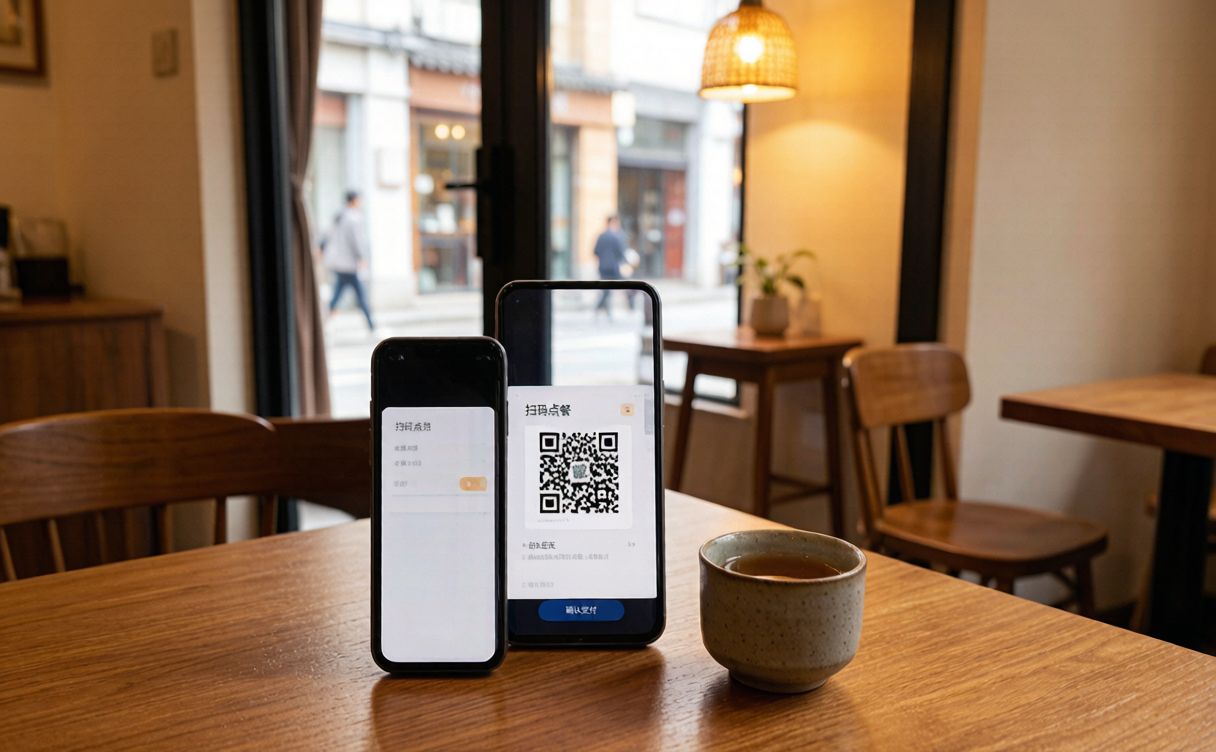
China did not slowly drift toward cards the way the West did. It leapfrogged straight to mobile payments. Today Alipay (Zhifubao) and WeChat Pay (Weixin Pay) sit at the center of almost every transaction, from a 50-yuan bowl of beef noodles to a high-speed train ticket. Walk into any shop in a major city — Shanghai, Beijing, Chengdu, Guangzhou — and you will see a printed QR code taped to the counter. The clerk often will not even reach for a card machine.
In 2025 the numbers are stark. Urban China runs on mobile wallets for something like 90% of everyday retail payments. Many younger shopkeepers under 30 have literally never processed a foreign credit card. I once watched a barista in Hangzhou stare blankly at my Visa card like it was a fossil. That moment taught me the core rule: plan around your phone, not your plastic.
This matters for your budget planning too. Before you leave, read up on our china-travel-budget-per-day guide so you know roughly how much you will be moving through these apps on a typical day.
Linking Your Foreign Card to Alipay and WeChat Pay
The good news: foreigners can now use Alipay and WeChat Pay with international cards. Setup takes about ten minutes and a working internet connection.
For Alipay, download the app, register with your phone number, then open the “Bank Cards” section and add a Visa, Mastercard, JCB, or Discover card. WeChat Pay is similar — go to Me > Services > Wallet > Cards and add your foreign card. Both apps now support a “TourPass” style top-up for some users, but the simplest path in 2025 is direct international-card binding. Your bank may charge a foreign-transaction fee, so check that before you rely on it.
A few gotchas I learned the hard way. Some smaller merchants’ QR codes only accept domestic cards, so your foreign-linked wallet might get rejected at a hole-in-the-wall stall. Big chains, hotels, and Didi (the Chinese Uber) almost always work. And keep your phone charged and your eSIM live — which is exactly why our china-esim-sim-card-tourists guide is required reading before you fly. You cannot scan to pay if you cannot get online.
Where Cash in China Is Still Genuinely Useful
Here is where the “you don’t need cash” advice breaks down. I still carry a small stack of 100-yuan notes, and I am glad I do.
Tiny vendors and markets. The grandmother selling roasted sweet potatoes on a winter corner, the farmer at a rural market, the guy with a folding table of oranges — many run on cash only. Their QR codes, if they have one, may reject foreign cards.
Rural and remote areas. Out in Xinjiang, Tibet, or small county towns, payment systems get patchy. Signal drops, and a vendor’s payment app may simply not verify your foreign card. Having notes smooths every interaction. If you are building a route through the west, our xinjiang-travel-guide covers exactly where connectivity thins out.
Tipping and small favors. China does not have a tipping culture, but cash helps with a bellhop, a helpful driver, or a temple donation box that only takes bills.
Emergency fallback. The night my phone died in Chongqing, I paid for a taxi and a late dinner entirely in cash. That one evening paid back the effort of carrying it.
ATMs and Withdrawing Local Currency
If you do need cash, getting it is easy. Major Chinese banks — Bank of China, ICBC, China Construction Bank — have ATMs in every city that accept foreign cards on the Plus or Cirrus networks. Look for the Visa or Mastercard sticker on the machine. Withdrawals come out in RMB (renminbi), also called CNY (Chinese yuan); 100 yuan is roughly 14 US dollars, though the rate moves.
A practical tip: withdraw a moderate lump sum on arrival — say 1,000 to 2,000 yuan — rather than hitting the ATM daily. Per-transaction fees make small top-ups expensive. Airport and bank-branch ATMs are the most reliable; sketchy standalone machines in tourist alleys are best avoided. You can locate the nearest accepting machine with the Visa ATM Locator, a handy tool before you wander off the main streets. Before you travel, confirm your card works abroad through your bank’s travel settings, and grab a china-packing-list-first-timers checklist so your cards and a backup phone charger are packed.
One warning: only use bank ATMs, never the “currency exchange” kiosks that flash generous rates at the airport — their fees are brutal.
Cards, Currency, and What to Actually Carry
Let me be concrete about what I carry now. I keep two international cards (a Visa and a Mastercard, in case one is declined), both set up on Alipay and WeChat Pay. I carry about 1,500 yuan in mixed notes — a few 100s, some 50s, and a handful of 10s and 20s for small purchases. That is plenty for a two-week trip, and I usually come home with most of it unspent.
The currency itself is simple once you know the names. The base unit is the yuan (元), often called “kuai” in casual speech. Paper notes come in 1, 5, 10, 20, 50, and 100; coins handle 1 yuan and the tiny jiao fractions. You will rarely need coins. If you want the broader picture on staying connected and paying smoothly, our how-to-use-internet-in-china guide walks through the apps and networks that keep your wallet working.
One more card note worth flagging: international credit cards do work at top-tier hotels, large department stores, and some airport duty-free counters, but the exchange rate and foreign fees make them poor value next to Alipay’s card binding. I use my physical card only as a backup, never my default. And keep your passport handy — many hotels and ticket offices still ask to see it when you pay, a quirk that surprises visitors who expected everything to be phone-based.
First-Hand Examples From the Road
A few stories to make this real:
The dumpling stall in Xi’an. Near the city wall, a tiny family stall had no card machine and a QR code that bounced my foreign Alipay. I paid 30 yuan in cash and got the best pork dumplings of the trip. Lesson: cash buys you into the most authentic food, and a quick read of our street-food-safety advice keeps those spontaneous meals worry-free.
The Tibet guesthouse. In a small town outside Lhasa, the guesthouse Wi-Fi was down and the owner’s payment app would not verify my card. Cash settled the room without a fuss. Tibet, like the rest of China, is mobile-first in the cities but cash-dependent in the countryside.
The Shanghai taxi. Most taxis and Didi take Alipay fine. But one rainy night the driver’s scanner failed, and he waved me toward the cash option. I had 100 yuan ready; the ride cost 42. No drama.
Do You Need Cash? The Verdict
So, do you need cash in China in 2025? Technically no — a well-prepared phone with Alipay and WeChat Pay will cover 95% of travelers in 95% of places. Practically, yes, you should carry some, because the 5% you cannot pay digitally is exactly the memorable stuff: the street snack, the remote village, the dead-battery evening. Think of cash as your safety net, not your primary tool.
If you are still sorting the paperwork side of the trip, our china-tourist-visa-application guide explains the visa steps, and pairing that with a mobile-payment setup checklist means you arrive ready to pay for anything from a metro ticket to a five-course hotpot.
One more practical note for nervous planners: the Chinese government has actively pushed merchants to accept foreign cards at major tourist sites, hotels, and airports since 2024, so the big-ticket moments — Forbidden City tickets, bullet trains, international hotels — are steadily getting easier. But the small, human moments of travel still reward a few folded bills in your pocket. Pack your phone, link your cards, and tuck in some cash. You will be ready for all of it.