

Before I ate in Guizhou I thought Sichuan owned Chinese spice. Then a bowl of sour soup in Kaili rewired my taste buds toward tart, funky, and fermented. This Guizhou food guide is a province-level overview from trips through Guiyang, Zunyi, Kaili, and Anshun. If you want the honest answer to what to eat in Guizhou, it is: sour more than spicy, fermented more than fried, and handfuls of wild herbs you will not find elsewhere.
The Flavor System: Sour, Zhala, and Ferment
Guizhou sits on humid karst, historically short on salt, so people preserved food with sourness. Three pillars define the table:
- Suan (酸, sour): From pickled tomatoes, rice water, and fermented vegetables. The backbone of the famous soup.
- Zhala (糟辣, fermented chili): Chilies mashed with salt and rice wine, then left to ferment into a tangy paste used in almost everything.
- Mountain herbs: Wild greens, sour bamboo shoots, and the divisive zhe er gen (折耳根, fish mint / Houttuynia).
Unlike the numbing mala of Sichuan, Guizhou Miao cuisine leans aromatic and acidic. The Sichuan snacks guide is a useful before-and-after read, since the two provinces sit side by side yet taste worlds apart. For the broader context of where these meals happen, the Wanfenglin Guizhou guide covers the rice-terrace landscape behind the food. The Guizhou cuisine page on Wikipedia places these habits in the wider map of Chinese regional cooking.
Dishes to Hunt Down
Si wa wa (丝娃娃, “silver-thread baby”): A DIY wrap — a thin rice crepe folded around shredded carrot, cucumber, bean sprout, and herbs, then doused in a sour-soy dressing. Cheap, fun, and the best first bite of Guiyang.
Chang wang mian (肠旺面): Guiyang’s blood-and-intestine noodle. Springy noodles in a chili-laced broth with pork intestine and blood tofu. Sounds bold, eats comforting.
Dou fu yuan zi (豆腐圆子): Fried tofu balls, crisp outside and hollow, split and stuffed with zhala chili and herbs. A classic Anshun and Guiyang street bite.
Lian ai dou fu guo (恋爱豆腐果, “romance tofu”): Small tofu slabs grilled over charcoal, split, and filled with a sour-chili sauce. The name nods to couples who share them at night stalls.
Zunyi yang rou fen (遵义羊肉粉): Zunyi’s proud mutton rice-noodle soup, clear and aromatic rather than fatty, eaten at breakfast. A bowl fixes any cool morning.
Anshun snacks: Beyond tofu balls, Anshun does ba wang fen (八碗粉, eight noodle styles) and sticky rice cakes wrapped in leaves.
The Meizhou Hakka food guide shares Guizhou’s love of preserved and fermented staples, a nice southern echo.
About Sour Soup Fish (One Note)
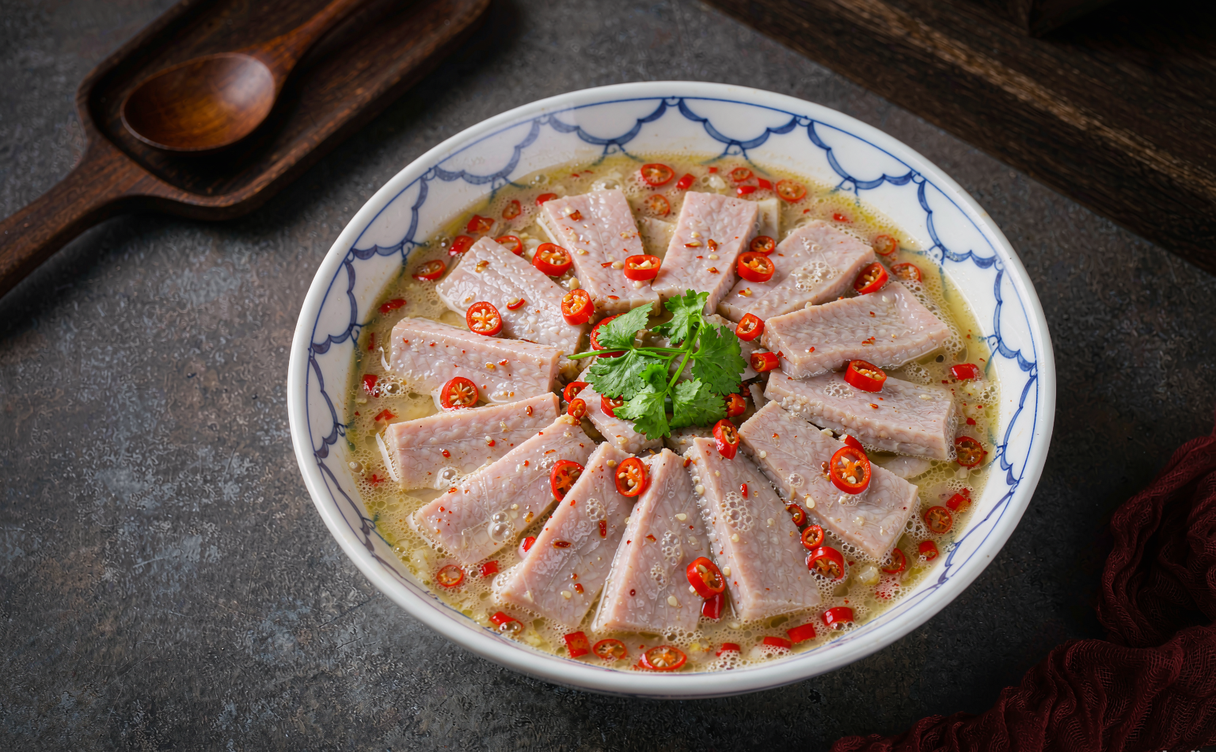
The headline dish, Guizhou sour soup fish (酸汤鱼), is river fish poached in a broth built from fermented tomato and rice — red, tangy, and only gently spicy. It deserves a full treatment of its own, and a dedicated deep-dive exists on this site for travelers who want broth ratios and the best Kaili kitchens. Here I will say only this: order it with a clear (non-spicy) base if you are unsure, add zhala chili to taste at the table, and eat the broth-soaked vegetables last. Kaili, in southeast Guizhou, is where the soup is purest.
Kaili, Miao and Dong Flavors
Southeast Guizhou, around Kaili and the Miao (Hmong) and Dong villages, is the soul of the cuisine. Expect:
- Sour fish and sour pork cooked in wooden tubs over open flame.
- Sticky rice as the daily carb, often wrapped and steamed in leaves.
- Pickled wild vegetables served alongside every meal to cut the richness.
- Dong hospitality: in Dong villages you may be offered a sour-rice wine (a sour soup cousin) as welcome.
This is mountain food — foraged, fermented, and deeply local. The Lijiang food guide and the Hangzhou food guide show how other regions treat herbs and broth, but none ferment with Guizhou’s single-mindedness.
Rice Wine and Village Hospitality
In Miao and Dong villages the meal is only half the story; the other half is the welcome drink. Sour rice wine (糟酒, zao jiu) is a gentle, faintly tart brew served warm in small bowls, and refusing the first bowl can read as cold. The polite move is to accept, sip, and let your host refill as a sign of friendship rather than obligation — you can pace yourself. At Dong drum-tower gatherings the wine flows alongside a shared sour-soup pot, and the rhythm of toasts is part of the flavor. In town, you will also meet ge jiu (葛根, kudzu root) drinks and herbal teas that locals swear settle the stomach after a heavy fermented meal. I once left a Kaili homestay pleasantly tipsy and full of pickled vegetables, convinced that Guizhou’s warmth lives as much in its hospitality as in its broth.
The Zhe Er Gen Warning
I have to be direct: zhe er gen (fish mint) tastes like nothing else — a soapy, medicinal punch that first-timers either love or flee. It appears raw in si wa wa, chopped into zhala chili, and sprinkled over noodles. My advice: try a tiny piece first. If it wins you over, you have unlocked Guizhou. If not, simply ask “bu yao zhe er gen” (no fish mint) and most vendors will leave it out.
What It Costs
Guizhou is among China’s better food values:
- Street snacks (si wa wa, tofu balls): ¥10–25 (CNY) for a filling graze.
- Noodle breakfast (chang wang mian, yang rou fen): ¥12–20 a bowl.
- Casual restaurant with shared plates: ¥40–70 per person.
- Sour soup fish hotpot for two: ¥120–200 total, sometimes more at tourist kitchens.
- Village meals (Miao/Dong homestays): ¥50–90 for a multi-dish spread with rice wine.
If you are hopping cities by rail, the China train dining food guide helps you plan meals between Guiyang, Kaili, and Zunyi.
Guizhou vs Yunnan
On the Guizhou vs Yunnan food question: Yunnan is broader and milder, built on mushrooms, ferns, and cross-border influences, while Guizhou is more sharply sour and fermented with a narrower herb palette. Both use rice and chili, but Yunnan tastes like a garden and Guizhou tastes like a cellar. Try both if you can; they are a two-hour high-speed ride apart.
Quick Tips Before You Go
A few habits from my Guizhou trips: eat at the busy morning noodle stalls rather than hotel buffets, where the yang rou fen and chang wang mian are made fresh and cheap. When a vendor offers you a taste of zhala chili before committing, take it — the fermented bite varies hugely by batch. In village homes, finish what is poured and set your bowl upright to signal you are done, since an empty tilted bowl invites another refill of rice wine. Carry small cash for street snacks; the best si wa wa carts often have no card reader. And build your days around one big meal plus grazing, because Guizhou portions are generous and the sour broth is filling.
Practical FAQ
Is Guizhou food very spicy? Less than Sichuan or Hunan. The dominant note is sour, with chili as a supporting actor you can dial down.
What is the best Guizhou restaurant? In Guiyang, mid-range local chains serving chang wang mian and si wa wa are reliable; for sour soup, go to Kaili where the broth is made daily.
Can I avoid fish mint? Yes, ask for no zhe er gen; many dishes are served without it by default.
Is it good for vegetarians? Partly. Tofu balls, si wa wa (hold the meat sauce), and pickled vegetables work; broths often use pork or fish stock.
When should I visit for food? Spring and autumn are comfortable for street eating; avoid the wettest July days when herbs wilt.