

Hangzhou sits at the southern end of the Grand Canal, and its cooking belongs to the gentle, sweet-and-sour style of the Jiangnan region. Any useful Hangzhou food guide should start with one fact: local food here is built around freshwater fish, young bamboo shoots, river shrimp, and tea leaves picked from the hillsides just west of the city. The dishes are not heavy or spicy. They are subtle, season-driven, and meant to be eaten slowly with rice and a pot of green tea.
The signature dish: West Lake Vinegar Fish
The dish that defines the city is West Lake Vinegar Fish, known in Chinese as Xihu Cu Yu. It is made from grass carp raised in the clear ponds of the West Lake area, simmered whole or cut into fillets, then dressed with a sweet rice-vinegar sauce that balances tang and sugar. The fish should be tender, almost flaky, with a clean taste that comes from live preparation and a quick cooking time. Lou Wai Lou, on the bank of the lake near Broken Bridge, has served this dish since 1848 and remains the most famous place to try it, though you will find local versions across the city. Order it with a pot of Longjing tea and watch the light change over the water.
A good Hangzhou food guide always warns about one thing: not every restaurant treats the fish well. Because the dish depends on freshness, a tired version tastes muddy. Go to a busy, well-reviewed spot and eat it the same day the fish was raised. The sauce should glisten, not pool, and the flesh should lift cleanly from the bone.
Longjing tea and the food around it
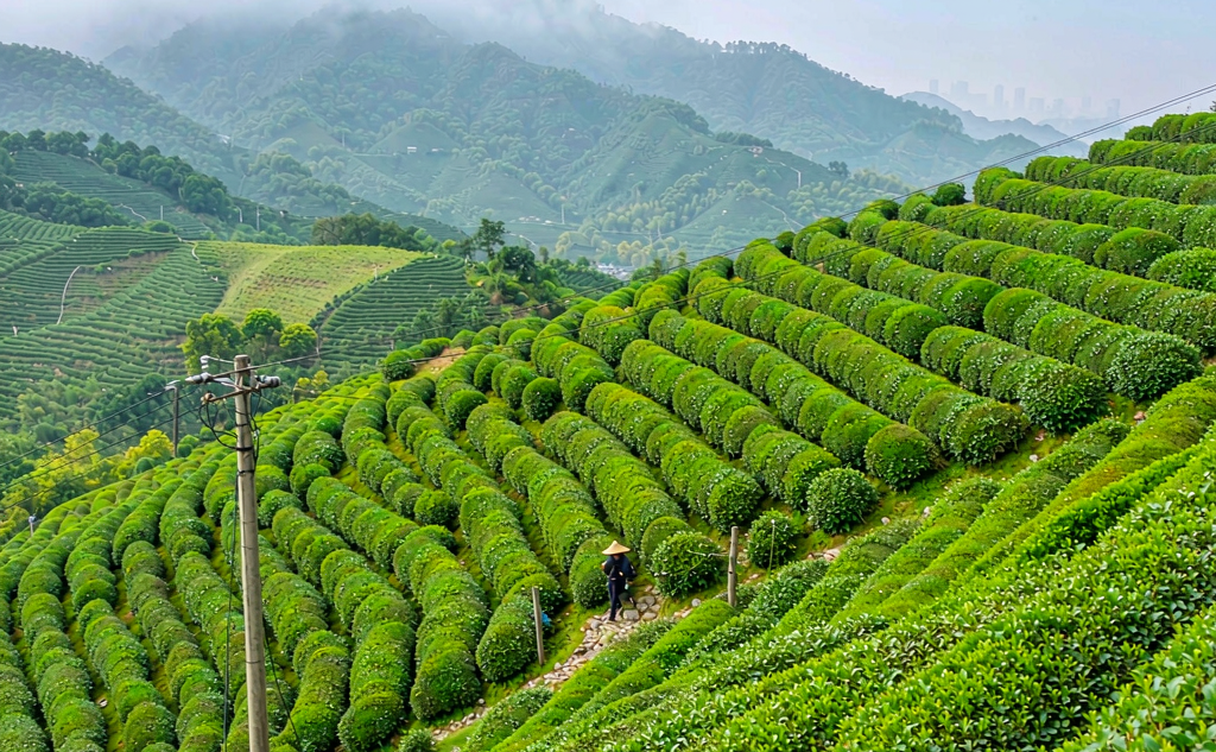
Longjing, or Dragon Well tea, is the green tea that gives Hangzhou much of its identity. The best leaves come from the Shifeng and Meijiawu hills, picked in early spring during the Mingqian period before the Qingming festival. You can visit a tea village, watch the hand pan-firing process in a wok over charcoal, and taste the difference between grades side by side. Locals pair the tea with light snacks such as tea-flavored shrimp, Longjing Xia Ren, where shelled river shrimp are quickly stir-fried and finished with a handful of young tea leaves. The result is fragrant and faintly bitter in a pleasing way.
Beyond tea, Hangzhou’s snack culture runs deep. Ding Sheng Gao is a sticky rice cake steamed with sweet red bean, sold in the old streets around Hefang. Cat’s Ear, Mao Er Duo, is a small hand-pinched noodle shape cooked in broth with mushroom and ham. Beggar’s Chicken, Jiaohua Ji, is a whole chicken wrapped in lotus leaves and clay and slow-baked until the crust is cracked open at the table. It is a dish worth ordering for two people at a proper restaurant.
Best restaurants in Hangzhou
For a structured sit-down meal, the names that come up again and again are Lou Wai Lou for lake classics, Zhi Wei Guan for refined Hangzhou banquet dishes, and Hu Bin 28 for a modern take on local flavors with lake views. If you want what locals actually eat, skip the tourist terraces and look for the noodle shops along Zhongshan Road and the small family restaurants near Wushan. A bowl of Pian Er Chuan noodles, with river fish, bamboo shoot, and vegetable in a clear broth, costs between 15 and 30 yuan and makes a perfect lunch.
Our list of what to eat in Hangzhou would be incomplete without lotus root stuffed with sticky rice, braised until sweet and soft, and the spring bamboo shoot dishes that appear from March onward. In autumn, the city’s restaurants lean on hairy crab from nearby Taihu, served steamed with ginger vinegar.
Street food and markets
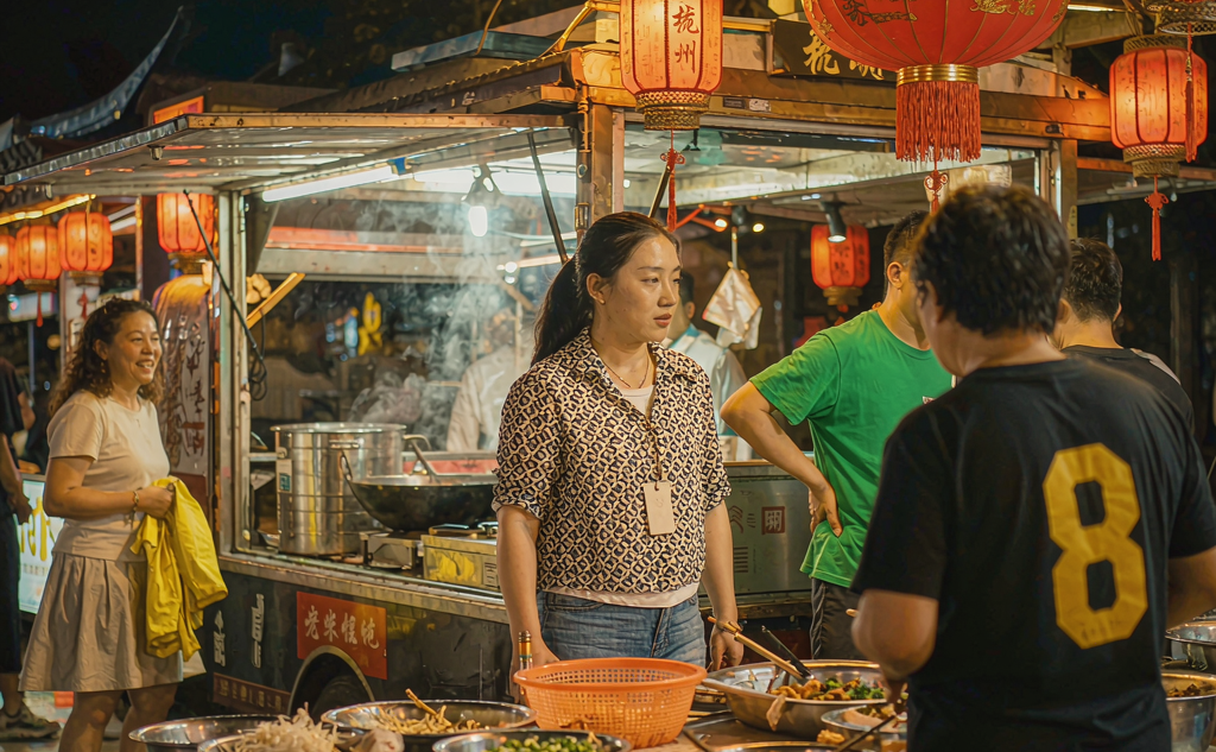
A Hangzhou food tour through the lanes of Hefang Street and the riverside restaurants of the lake gives you both snacks and sit-down meals. The night markets near Wulin Square and the canal-side areas of Gongchenqiao offer street food that ranges from grilled skewers to stinky tofu for the brave. Prices stay reasonable across the board: snacks run a few yuan each, while a full vinegar fish at a top restaurant costs roughly 120 to 180 yuan.
Seasonal eating calendar
Hangzhou eats by the calendar. Spring brings Longjing’s first flush and tender bamboo. Summer favors cold noodles and river shrimp. Autumn is crab season and the time for sweet osmanthus-flavored desserts across the city. Winter calls for hot pots of river fish and preserved vegetable. Timing your visit around a season tells you what will taste best.
Tea houses and vegetarian culture
The hills west of the lake are dotted with tea houses where a single pot can keep you seated for an afternoon. The Temple of the Soul’s Retreat area and the Lingyin surroundings have vegetarian restaurants tied to the monasteries, serving mock meats and fresh mountain vegetables. These quiet meals are a counterpoint to the rich banquet dishes downtown.
How to order and pay
Carry some cash for small street stalls, though Alipay and WeChat Pay now work for most foreigners with linked international cards. Lunch is the main meal; many restaurants close between 14:00 and 17:00, so time your vinegar fish for midday or evening. Spicy-food lovers should note that Hangzhou cooking is mild by design, so ask for chili on the side if you need heat. Menus often have photos, and pointing works fine when language is a barrier.
More local specialties worth seeking
Beyond the headline dishes, a serious Hangzhou food guide should name a few plates that regular travelers miss. Dongpo Pork, Dongpo Rou, is a square of belly braised in wine and soy until it turns glossy and melts on the tongue; it pairs with plain rice to cut the richness. Song Sao Fish Soup, a clear broth with river fish and bamboo shoot, is a light counterpoint. Wuxing Chicken, cold and drunken with wine lees, appears on many banquet menus. And the simple stir-fried river eel with ginger shows how the city treats its freshwater catch with restraint rather than heavy sauce.
Buying tea as a souvenir
Longjing is the souvenir most visitors want, but quality varies wildly and fake blends are common near the lake. Buy from a registered shop in Meijiawu or the official tea museums rather than street vendors offering “bargain” leaves. Ask for the harvest date and the hill of origin, and expect to pay more for pre-Qingming picks. A sealed 50-gram tin travels well and makes a better gift than the vacuum packs sold at tourist stalls.
Dining etiquette and pacing
Meals in Hangzhou are shared, served in the middle of the table, and eaten with your own bowl of rice. Wait for the eldest or host to begin, and use the serving spoon rather than your chopsticks to move food from the central plates. Tipping is not expected. Restaurants are loud and lively, which is normal, not a sign of poor service. If a dish arrives cold that should be hot, it is acceptable to ask for it to be reheated.
Budget versus luxury
A casual noodle lunch costs 15 to 30 yuan per person. A mid-range restaurant meal with several shared dishes runs 80 to 150 yuan per person. A lake-view banquet at Lou Wai Lou or a tea-pairing dinner can reach 300 to 500 yuan per person. The city rewards both styles, and you do not need the expensive tables to eat well.
A simple two-day food plan
Day one: breakfast of rice cakes near Hefang, lunch of Pian Er Chuan noodles, afternoon tea in Meijiawu, dinner of West Lake Vinegar Fish by the lake. Day two: a morning market walk, a vegetarian lunch near Lingyin, and an evening crab or beggar’s chicken feast before the train out.
West Lake is part of the UNESCO World Heritage list, recognized for a designed landscape that shaped Chinese garden art for more than a thousand years. You can read the official description on UNESCO’s West Lake page.
When you plan a longer trip, pairing food with sightseeing makes sense. Our Hangzhou travel guide walks through the main neighborhoods, and the West Lake guide explains where the best lake-view tables sit. If you are building a regional route, the Zhejiang cuisine guide covers the wider province, and many travelers combine Hangzhou with nearby Suzhou or a first stop in Shanghai for a fuller taste of eastern China.