

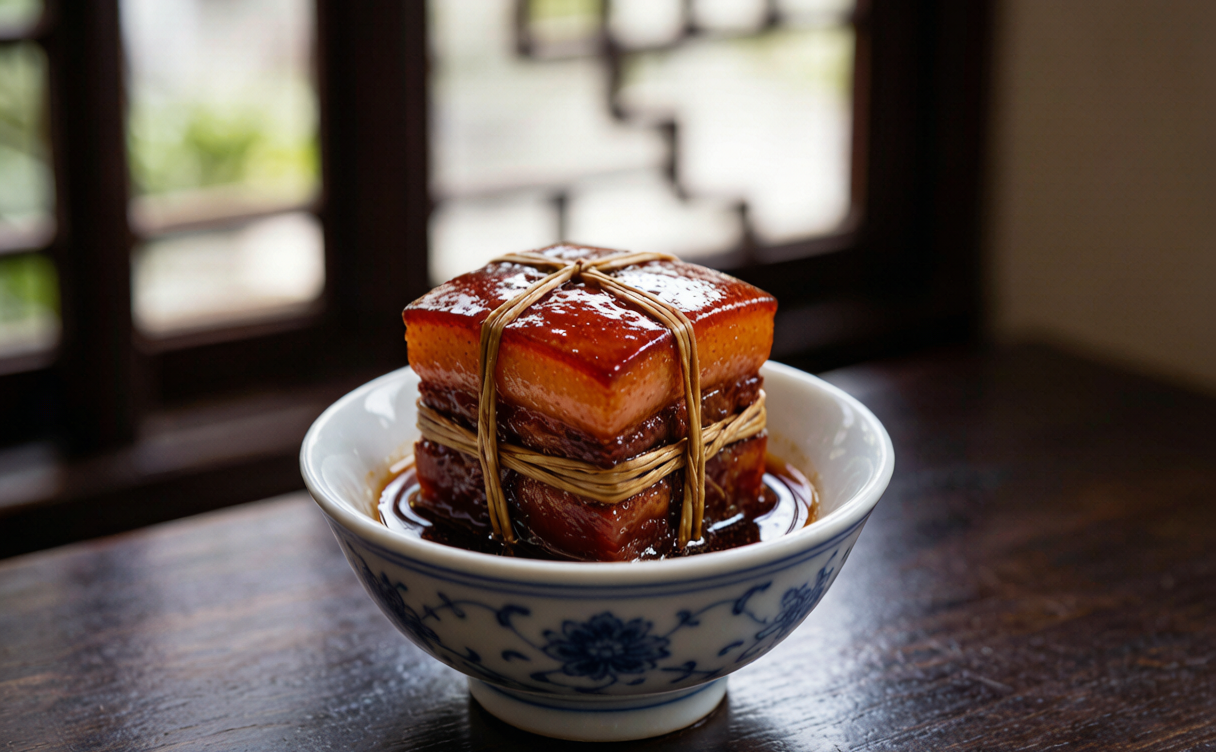
A cube of pork belly the size of a matchbox arrives in a small porcelain bowl, tied with a straw bow, so dark it looks lacquered. You press it with a spoon and it gives completely. That is Dongpo pork, and it tells you most of what you need to know about how they cook in Zhejiang: patient, wine-heavy, sweet at the edges, and far more delicate than the colour suggests. This Zhejiang cuisine guide covers the dishes worth ordering, where to eat them across Hangzhou, Ningbo and Shaoxing, and how to order without guesswork.
What Is Zhe Cuisine?
Zhejiang cuisine (浙菜, zhè cài) is one of China’s Eight Great Cuisines and the most immediately likeable of them for most first-time visitors. The guiding principle is 清鲜爽脆 — clear, fresh, crisp and tender. Cooks here work with very good raw materials and try not to get in their way: light braises, quick stir-fries, steaming, careful knife work and almost no chilli.
It is really four regional kitchens under one name. Hangzhou is the best known, built on West Lake fish, freshwater shrimp, bamboo shoots and gently sweet braises. Ningbo faces the sea and cooks salt-preserved and steamed seafood. Shaoxing is the fermenting, wine-making branch, all preserved greens and dark savoury depth. Wenzhou in the south is lighter again, with its own seafood tradition.
The connecting thread is Shaoxing rice wine (黄酒, huáng jiǔ), an amber grain wine that goes into nearly every braise in the province and into a warm cup beside it. If you want to see how this fits against the other regional kitchens, our guide to China’s eight great cuisines lays them out side by side.
Best Hangzhou Dishes to Try
Dongpo Pork (东坡肉, dōng pō ròu)
The province’s emblem. Pork belly is simmered slowly in Shaoxing wine, soy and rock sugar until the fat turns to jelly and the skin glosses over, then served in individual portions. Named for the Song poet-official Su Dongpo, who is credited with the recipe and with dredging West Lake. Rich, sweet-savoury, and best shared. ¥30–60 per portion.
West Lake Vinegar Fish (西湖醋鱼, xī hú cù yú)
A whole grass carp poached briefly and served under a translucent sweet-sour sauce. The most divisive dish in China: done well it is silky and clean, done badly it is muddy and bony. Order it at an established restaurant, not a cheap lakeside tourist place. ¥90–160.
Longjing Tea Shrimp (龙井虾仁, lóng jǐng xiā rén)
Small river shrimp flash-fried with fresh Longjing tea leaves and a little of the brewed tea. Barely seasoned, faintly grassy, and one of the most elegant dishes in Chinese cooking. At its peak in April when the new tea is picked in the hills above the lake. ¥80–140.
Beggar’s Chicken (叫化鸡, jiào huā jī)
A whole chicken stuffed with pork and mushrooms, wrapped in lotus leaves, sealed in clay and baked for hours. It comes to the table as a lump of earth and is cracked open in front of you. Order a day ahead at most restaurants. ¥180–260.
Sister Song’s Fish Broth (宋嫂鱼羹, sòng sǎo yú gēng)
A thick, faintly sour soup of shredded fish, bamboo shoot and egg, said to date from a twelfth-century street cook. Comforting and unusual. ¥40–70.
Pian’erchuan Noodles (片儿川, piàn ér chuān)
Hangzhou’s everyday lunch: wheat noodles in clear broth with sliced pork, bamboo shoots and pickled mustard greens. ¥18–35, and the best cheap meal in the city.
Shaoxing Preserved Greens with Pork (霉干菜扣肉, méi gān cài kòu ròu)
Steamed pork belly buried under dark, dried mustard greens that soak up the fat and turn intensely savoury. The signature Shaoxing dish and the one that converts people who think they dislike fatty pork. ¥50–80.
Ningbo Yellow Croaker with Snow Vegetable (雪菜大汤黄鱼, xuě cài dà tāng huáng yú)
Whole yellow croaker in a milky broth with salted snow vegetable — the definitive Ningbo dish, salty and clean, with the coast’s typical preserved-vegetable seasoning. ¥120–220 depending on whether the fish is wild.
Ningbo Tangyuan (宁波汤圆, níng bō tāng yuán)
Glutinous rice balls filled with black sesame and lard, floating in sweet soup. Eaten at breakfast or after dinner. ¥10–20 a bowl.
Where to Eat in Hangzhou, Ningbo and Shaoxing
Hangzhou. The classic address is Louwailou (楼外楼) on the lake at Gushan, open since 1848 and the reference point for vinegar fish and Dongpo pork — touristy, expensive, still worth one meal. Zhiweiguan (知味观) does the same repertoire cheaper, Kuiyuanguan (奎元馆) is the century-old noodle house for pian’erchuan, and the Grandma’s Home (外婆家) chain serves reliable Hangzhou food at low prices with long queues. For snacking, Hefang Street (河坊街) near Wushan Hill. The lake itself is the UNESCO-listed West Lake Cultural Landscape, so you can walk off lunch in a World Heritage site.
Shaoxing. An hour from Hangzhou by high-speed rail and the most atmospheric eating in the province. Cangqiao Straight Street (仓桥直街) is lined with canal-side kitchens, and the Xianheng Hotel (咸亨酒店) serves the classic pairing of warm rice wine and fennel-boiled broad beans made famous by the writer Lu Xun. Our Shaoxing travel guide covers the canal quarter.
Ningbo. A port city with a completely different palate — steamed seafood, salted crab, rice cakes. Head for Nantang Old Street (南塘老街) or the City God Temple food area; the specifics are in our Ningbo seafood guide and Ningbo travel guide.
Best Time to Eat: Seasonal Ingredients
Spring (March–May). The best season. New Longjing tea from late March, tea shrimp on every menu, spring bamboo shoots, and river fish at their sweetest.
Summer (June–August). Hot and very humid, with lotus root, water shield soup and cold dishes. Plum rain in June makes for grim sightseeing but excellent long lunches.
Autumn (September–November). Hairy crab from mid-October, osmanthus flowering across Hangzhou and turning up in sugared lotus root and sweet dumplings, plus the best weather of the year.
Winter (December–February). Soy-braised duck and cured meats hanging in shop windows, winter bamboo shoots, Ningbo rice cakes and hot rice wine. Damp and cold indoors — dress accordingly.
Shaoxing Rice Wine Tasting
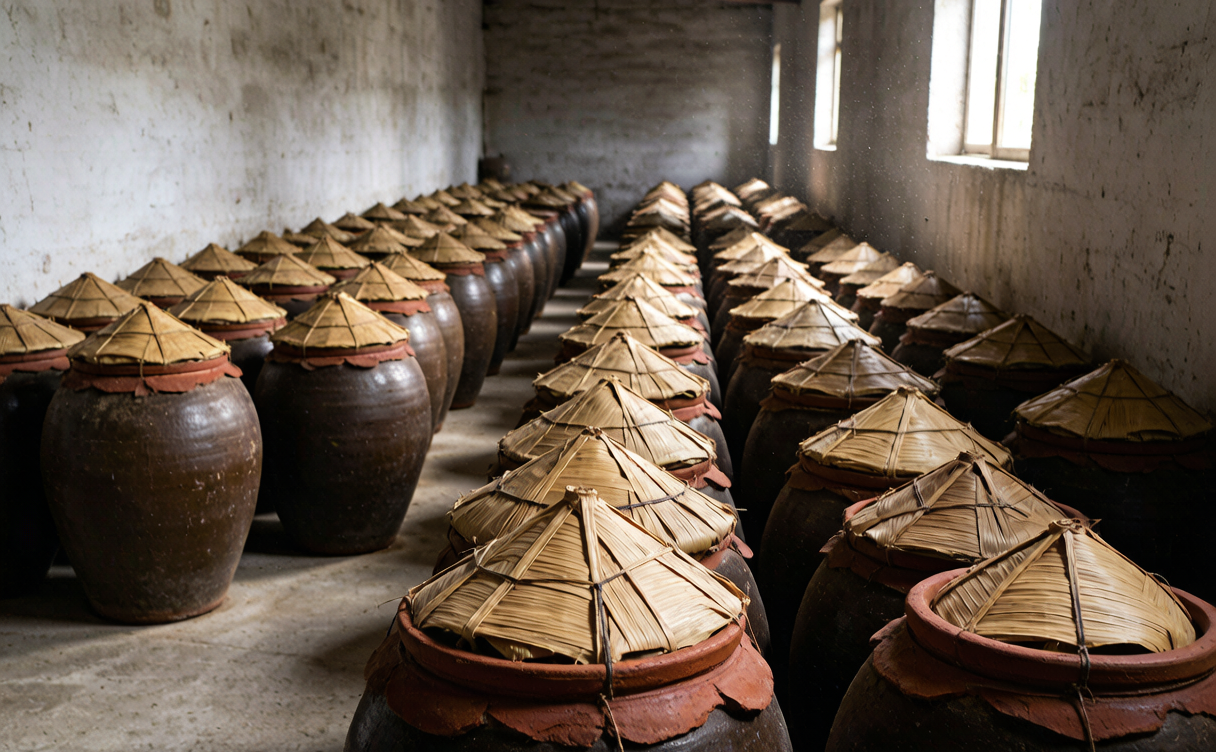
Huangjiu deserves a paragraph of its own. Brewed from glutinous rice and wheat starter, aged in sealed clay jars, it runs from dry to sweet and sits around 14–18% alcohol — closer to sherry than to spirits. Huadiao (花雕) is the standard aged style; Nü’erhong (女儿红) was traditionally buried at a daughter’s birth and dug up at her wedding.
Drink it warmed, often with a slice of ginger or a dried plum, in small cups alongside salty food. Shaoxing has a dedicated China Rice Wine Museum where tasting flights are the point of the visit, and the old distilleries around the city sell straight from the jar. A decent bottle costs ¥40–120 and travels well.
How to Order: Zhejiang Food for Foreigners
Order for the table: roughly one dish per person plus one, balanced across a braise, a fish or seafood, one or two vegetables, and a soup. Rice is separate. Portions in Hangzhou restaurants are smaller than in northern China, so err on the generous side.
Phrases worth saving on your phone:
- 少糖 (shǎo táng) — less sugar. Hangzhou braises are sweeter than most visitors expect.
- 不要香菜 (bú yào xiāng cài) — no coriander.
- 我不吃生的 (wǒ bù chī shēng de) — I don’t eat raw food. Important in Ningbo, where salted raw crab and drunken shrimp are local delicacies and appear unannounced.
- 我吃素 (wǒ chī sù) — I’m vegetarian. Add 全素 (quán sù) for no lard, ham or fish stock.
Two practical notes. Vinegar fish is worth ordering once, at a good restaurant, and skipping everywhere else. And if raw or lightly cured seafood worries you — it is common along this coast — say so at the start rather than pushing plates away later.
Menus in Hangzhou and Ningbo usually carry photographs and often English; in Shaoxing’s older places, expect Chinese only and point at what other tables are eating.
Food Etiquette Tips
- Dishes are shared. Take from the side of the plate closest to you, and leave the last piece unless offered.
- Use the serving chopsticks. 公筷 (gōng kuài) are standard in Zhejiang restaurants — a second pair, usually a different colour.
- Don’t stand chopsticks upright in rice. It resembles funerary incense. Rest them across the bowl.
- Tap for tea. Two fingers on the table when your cup is refilled. In tea-obsessed Hangzhou, that will be often.
- Don’t flip the fish. An old river and coastal superstition about capsizing boats; lift the bone out instead and eat the underside.
- Toasting. Warm rice wine is poured for the table. Small sips are fine, and refusing outright is not rude if you say 我不喝酒 (wǒ bù hē jiǔ).
- Paying. One person settles the bill for everyone. Alipay and WeChat Pay are accepted almost universally.
FAQ
What is Zhejiang cuisine best known for?
Dongpo pork, West Lake vinegar fish and Longjing tea shrimp from Hangzhou; preserved greens and rice wine from Shaoxing; steamed and salted seafood from Ningbo. Overall: fresh ingredients, light seasoning and slow wine-based braising.
Is Zhejiang food spicy?
Almost never. It is one of the mildest of the eight cuisines — sweet, savoury and salty rather than hot. Good news if you are travelling with children or a low spice tolerance.
Where should I eat Dongpo pork?
Hangzhou, and ideally at one of the long-established houses near West Lake such as Louwailou or Zhiweiguan. It is available across the province, but the Hangzhou versions are the benchmark.
Is Shaoxing rice wine strong?
Around 14–18%, so similar to a fortified wine and far weaker than baijiu. Served warm in small cups, it is easy to drink more than you intend.
What should cautious eaters avoid?
Raw salted crab and drunken shrimp in Ningbo, and stinky tofu in Shaoxing if strong ferments are not your thing. Everything else on a typical Zhejiang table is cooked, mild and very approachable.
Written by Karl, China Travel Places — updated August 2026.