

The first thing most visitors notice about food in southern Anhui is the smell. Walk down Tunxi Old Street in the evening and somewhere between the tea shops and the ink-stone sellers a wave of fermented fish hits you, followed by the sound of tofu frying. Both are local specialities, and both taste far better than they smell. This Anhui Hui cuisine guide explains what Hui food actually is, which dishes are worth ordering, where to eat them, and how to order without ending up with three plates of the same braised pork.
What Is Hui Cuisine?
Hui cuisine (徽菜, huī cài) is one of China’s Eight Great Cuisines, and probably the least understood by visitors. It takes its name not from the province as a whole but from Huizhou, the old prefecture in the mountains of southern Anhui around present-day Huangshan City, Shexian and Yixian — the same region that produced the whitewashed courtyard villages and the merchant families who paid for them.
Three things define it. The first is the mountains: bamboo shoots, wild ferns, rock fungus, mushrooms and river fish that appear for a few weeks and then vanish. The second is preservation — Huizhou merchants travelled for months, and the local kitchen built a whole vocabulary of salting, curing and controlled fermentation to send food with them. The third is fire: slow braising, steaming and clay-pot stewing rather than the fast wok work of neighbouring provinces. The traditional description is “heavy oil, deep colour, mastery of heat” — 重油、重色、重火功.
The result is dark, savoury and unhurried food, closer to a French country braise than to the sweet-sour brightness of Jiangsu or the chilli heat of Hunan. If you are placing it against the others, our guide to China’s eight great cuisines sets out the comparisons.
Best Anhui Dishes to Try
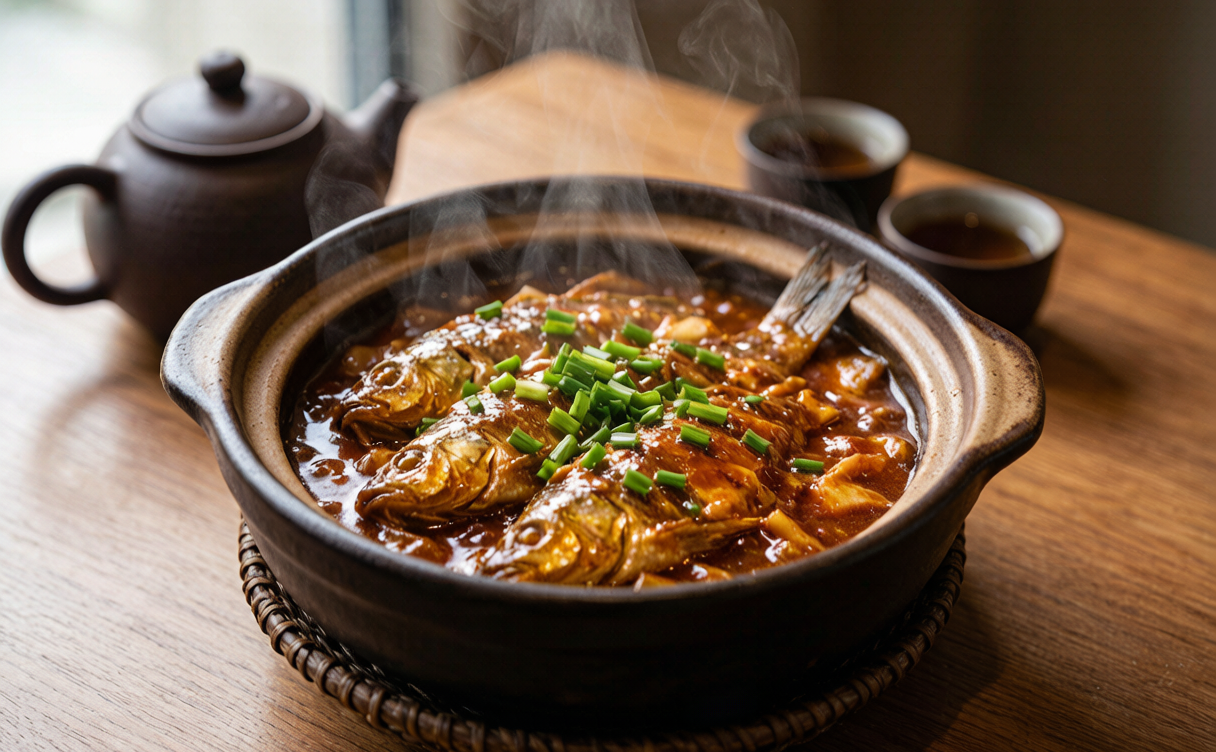
Stinky Mandarin Fish (臭鳜鱼, chòu guì yú)
The dish Anhui is known for, and the one to order first. Mandarin fish is layered with salt under a weighted lid for around a week, which firms the flesh and ferments the surface, then pan-fried and braised with pork, chilli and bamboo shoots. The aroma is genuinely pungent — think ripe cheese — but the flesh turns springy and flakes into petals, and the taste is nutty and savoury rather than rotten. A whole fish serves three to four and costs ¥100–180. Best in Huangshan City, Shexian and the villages around them.
Hairy Tofu (毛豆腐, máo dòufu)
Tofu left to grow a fine white coat of mould, then pan-fried in a flat iron pan until the fur collapses into a crisp golden skin. Served with a chilli-and-soy dip, it tastes creamy and faintly cheesy. It is the great street snack of Tunxi Old Street, cooked in front of you for ¥10–20 a plate.
Huizhou Chopping-Board Pork (刀板香, dāo bǎn xiāng)
Salt-cured pork belly steamed on a slab of aged fir with bamboo shoots beneath it, so the wood scents the meat. Sliced thin, intensely savoury, and made for rice. Around ¥60–90.
One-Pot Casserole (一品锅, yī pǐn guō)
A Jixi County speciality and the region’s great winter dish: layers of cabbage, tofu skin, egg dumplings, meatballs and pork stacked in a wide pot and simmered for hours, eaten downwards layer by layer. Traditionally a New Year dish, now served year-round in Jixi and Huangshan for ¥120–200 for a family-sized pot.
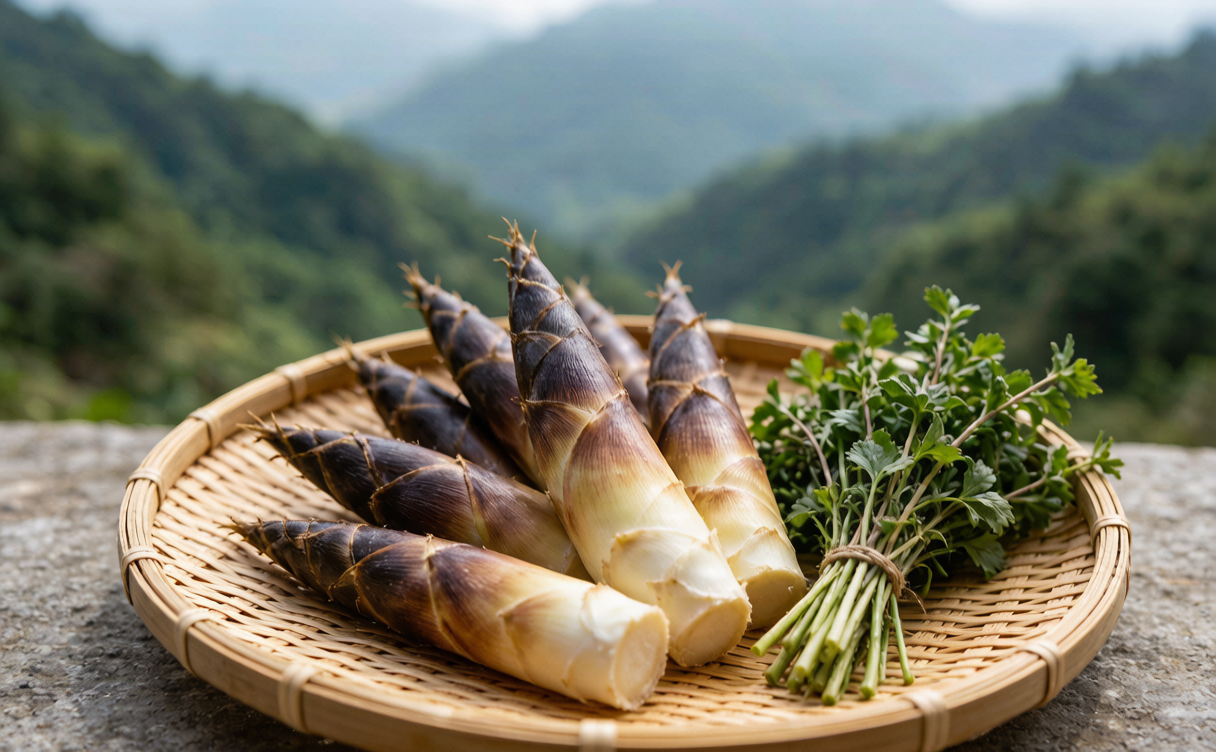
Wenzheng Mountain Bamboo Shoots (问政山笋, wèn zhèng shān sǔn)
Spring only, and worth planning a trip around. Thin shoots from the hills outside Shexian, braised with cured ham until the salt of the ham and the sweetness of the shoot meet in the middle. ¥50–80 in season, roughly late March to early May.
Stewed Pigeon with Rock Fungus (黄山炖鸽, huáng shān dùn gē)
A clear, restorative clay-pot soup of pigeon simmered with shi’er, the dark rock ear fungus that grows on cliffs around Mount Huangshan. Mild, clean and a good order if the table already has something strong on it. ¥80–120.
Huangshan Sesame Biscuit (黄山烧饼, huáng shān shāo bǐng)
The regional snack: a small, hard, sesame-crusted pastry filled with preserved mustard greens and pork fat, baked against the wall of a barrel oven until the layers shatter. ¥3–5 each, sold everywhere, and the best thing to carry up a mountain.
Anhui Mountain Vegetables Dishes (山野菜, shān yě cài)
Not one dish but a whole category, and the reason to eat in village guesthouses. Bracken fern tips, Indian aster, wild garlic, shepherd’s purse and pea shoots, usually flash-cooked with garlic or dressed cold. Ask what came in that morning — ¥25–45 a plate and often the best thing on the table.
Where to Eat Huizhou Food in Huangshan and Beyond
Tunxi Old Street, Huangshan City (屯溪老街). The obvious base, and the natural stop before or after climbing Mount Huangshan: a restored Ming and Qing street with restaurants at both ends and hairy tofu pans along the middle. Prices are inflated on the street itself; walk one block to Liyang In Xiang (Liyang In Lane) for the same dishes at local prices.
Hongcun and Xidi (宏村, 西递). The old villages, part of the UNESCO-listed ancient villages of southern Anhui, have dozens of guesthouse kitchens serving family-style Huizhou food to guests and walk-ins. This is where mountain vegetables and one-pot casseroles are at their best. Our Hongcun village guide covers where to stay.
Shexian (歙县). Thirty minutes from Huangshan City and the historic heart of Huizhou cooking. Fewer tourists, better bamboo shoots, and several old-established restaurants near Doushan Street.
Jixi (绩溪). The one-pot casserole’s home county, two hours east, reachable by high-speed rail on the Hangzhou–Huangshan line.
Hefei. The provincial capital has proper Hui restaurants without the trip south — look around Lei Street (罍街) and the Huaihe Road pedestrian area.
Mount Jiuhua. A different tradition entirely: temple vegetarian cooking, all mushroom, bamboo and tofu, covered in our Mount Jiuhua guide.
Best Time to Eat: Seasonal Ingredients
Hui cooking is more seasonal than most Chinese regional food, and the calendar genuinely changes the menu.
Spring (March–May). The peak. Bamboo shoots at their sweetest, wild greens everywhere, and the first Huangshan Maofeng green tea. If you care about food, come now.
Summer (June–August). Hot and humid, with river fish, freshwater shrimp and cold dishes. Green mountains, least interesting kitchen.
Autumn (September–November). Mushrooms, rock fungus, chestnuts, Qimen black tea and the chrysanthemum harvest. The second-best window, and the best weather.
Winter (December–February). Curing season: pork bellies and fish hang under every eave, the one-pot casserole appears, and stinky mandarin fish is at its best. There is no central heating this far south.
How to Order
Order for the table, not per person. A good rule is one dish per diner plus one, split across categories: one braise, one fish or meat, one or two vegetables, one soup, and rice for everyone. Rice is ordered separately and costs a few yuan a bowl.
Useful things to say, or to show on your phone:
- 少油 (shǎo yóu) — less oil. Genuinely worth asking. Hui braises are rich by design.
- 不要辣 (bú yào là) — no chilli. Most dishes are mild, but the stinky fish and hairy tofu usually arrive with some.
- 不要味精 (bú yào wèi jīng) — no MSG.
- 我吃素 (wǒ chī sù) — I’m vegetarian. Be specific: many “vegetable” dishes here are cooked with lard, ham or pork stock. Ask for 全素 (quán sù), fully vegetarian.
Two warnings. First, cured and salted dishes are seasoned to be eaten with plenty of rice, so a mouthful on its own will taste aggressively salty — that is intended. Second, order the stinky mandarin fish once, for the table, and let everyone try it before deciding; ordering two is a common and expensive mistake.
Menus in Huangshan City often have photographs and some English. In village guesthouses there is no menu at all — you look at what is in the kitchen and point, which is the better experience anyway.
Food Etiquette Tips
- Everything is shared. Take from the side nearest you, and don’t clear a dish you happen to like.
- Use serving chopsticks. Most restaurants set out 公筷 (gōng kuài), a second pair in a different colour, for the communal plates.
- Never plant chopsticks upright in rice — it echoes funerary incense. Lay them across your bowl.
- Tap for tea. When someone refills your cup, tap two fingers on the table.
- Toasting. Local rice spirit is strong; “随意” (suí yì, as you like) lets you sip, and tea is an accepted substitute.
- Paying. One person pays for the table. Alipay and WeChat Pay work everywhere, including village kitchens.
- Fish bones. River fish here are bony — rest bones on the small side dish, not the cloth.
FAQ
What is Hui cuisine best known for?
Stinky mandarin fish, hairy tofu and slow-braised mountain dishes cooked in clay pots. Broadly: preserved ingredients, wild mountain produce and long, low heat rather than fast wok cooking.
Does stinky mandarin fish actually taste bad?
No. The smell is strong and the flavour is not — the flesh is firm, savoury and slightly nutty, much closer to a well-aged cheese than to anything spoiled. It is the single dish most visitors end up recommending.
Is Hui food spicy?
Rarely. Chilli appears as a seasoning in a few dishes but Hui cuisine is built on salt, fermentation and braising, not heat. It is one of the easier Chinese regional cuisines for travellers who dislike spice.
Where is the best place to eat Huizhou food?
Huangshan City for range and convenience, Shexian for authenticity, and the guesthouse kitchens of Hongcun and Xidi for seasonal home cooking. Hefei is the fallback if you are not travelling south.
Is there much for vegetarians?
Yes, particularly in spring — the mountain vegetable dishes, bamboo shoots, tofu in many forms, and the temple vegetarian cooking at Mount Jiuhua. Always confirm no lard or ham stock, as both are standard.
Written by Karl, China Travel Places — updated August 2026.