

China’s northeast, known locally as Dongbei, is a vast region of snowy plains, dense forests, and long, brutal winters. The food that comes out of Heilongjiang, Jilin, and Liaoning provinces is built for exactly that climate: hearty, warming, and unapologetically generous. This Dongbei northeast Chinese cuisine guide is written for foreign travelers who want to understand what they are eating, where to find it, and how to order with confidence when the temperature drops below freezing.
Dongbei cooking is shaped by cold weather and a history of migration. Russian, Korean, and Manchu influences sit alongside classic Han Chinese techniques, producing dishes that are salty, sour, and built around starch, pork, and pickled vegetables. Portions are large, prices are low, and the atmosphere in a typical restaurant is loud, steamy, and welcoming. For visitors heading to Harbin, Shenyang, Changchun, or Dalian, learning the local menu is one of the best ways to connect with the region.
What Makes Dongbei Food Different
Unlike the delicate steaming of southern China or the fiery heat of Sichuan, northeastern food values substance over subtlety. The staple crops are corn, sorghum, and wheat, not rice, and you will see them in the form of mantou (steamed buns), noodles, and thick pancakes. Cabbage is everywhere, usually fermented into suan cai, a sour pickle that anchors countless stews.
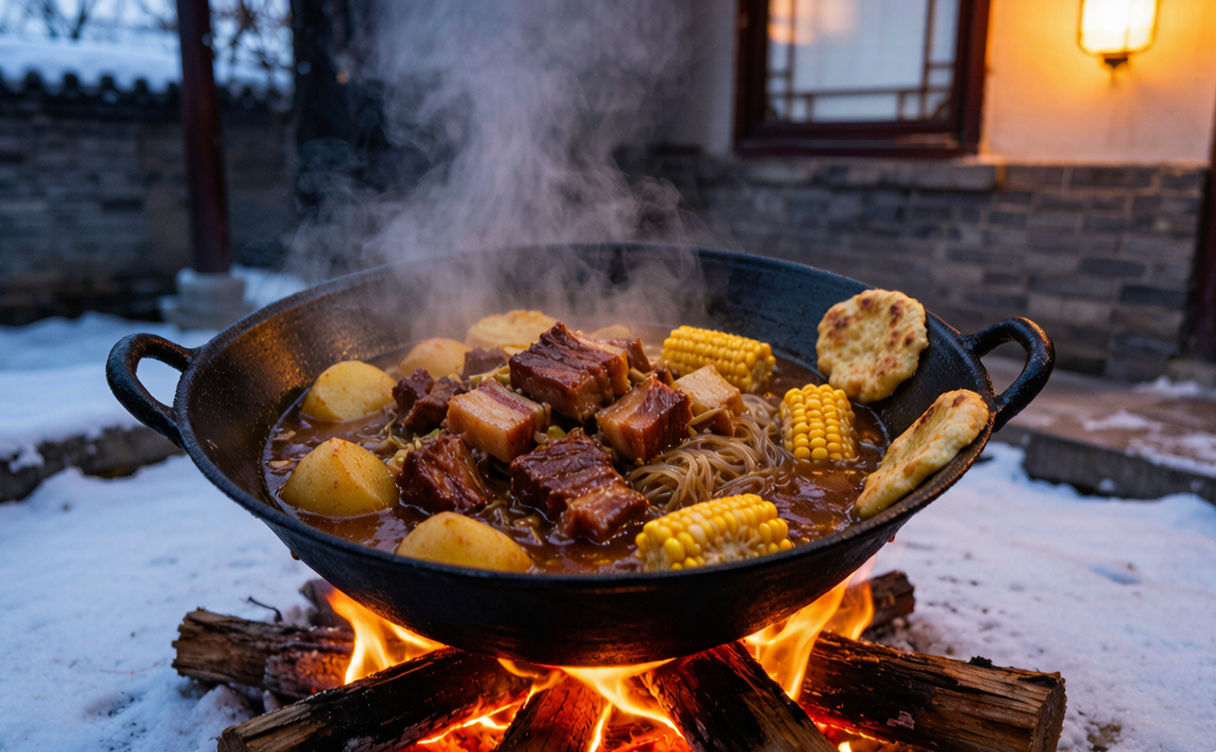
A defining feature is the use of communal cooking. The iron pot stew, or tie guo dun, is a meal cooked at your table in a heavy cast-iron vessel, with meat, potatoes, corn, and tofu simmering together. It is food meant to be shared slowly while the cold stays outside.
Signature Dishes You Should Order
Guobaorou: Sweet and Sour Pork with a Crunch
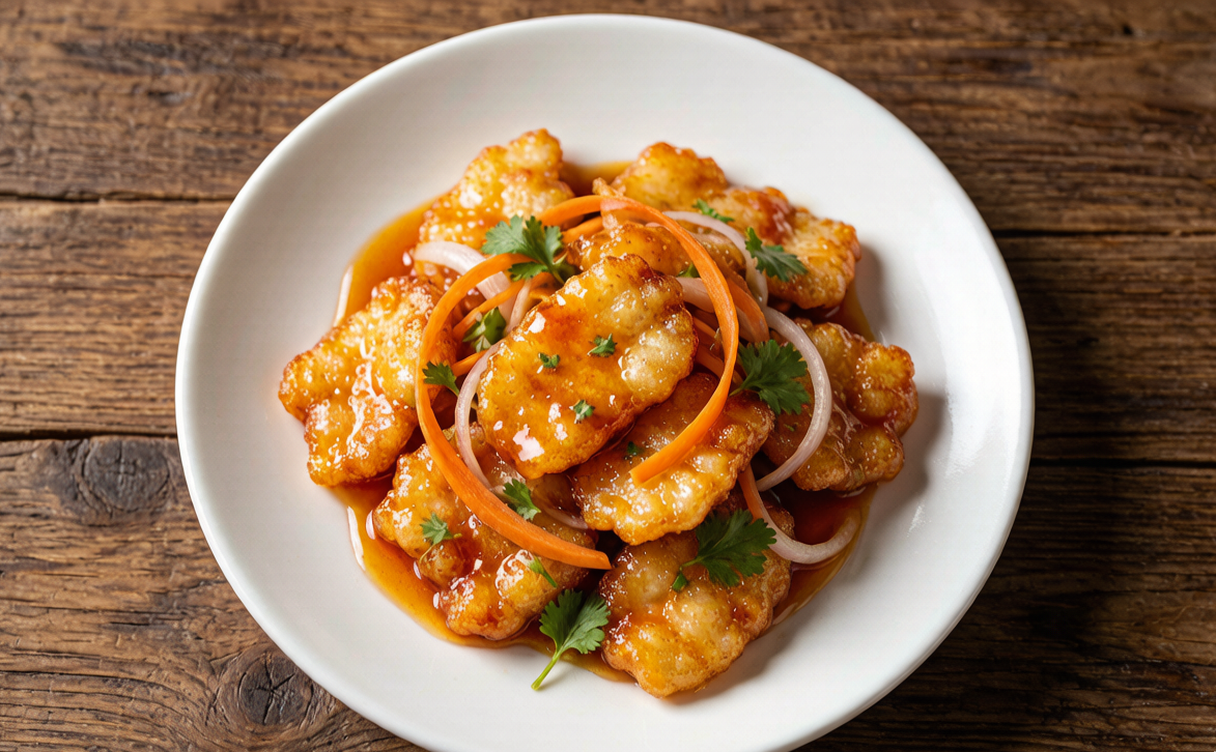
No Dongbei northeast Chinese cuisine guide would be complete without guobaorou (锅包肉). This is a plate of pork loin sliced thin, battered, deep-fried until shatteringly crisp, then tossed in a sweet-and-sour sauce that is tangy rather than heavy. The dish was invented in Harbin in the early 1900s by a chef adapting imperial fare for foreign guests, which explains its milder, brighter flavor compared with southern sweet-and-sour pork. Order it as a starter and eat it immediately while the crust is still loud.
Iron Pot Stew (Tie Guo Dun)
The iron pot stew northeast China travelers talk about most is the ultimate cold-weather comfort food. A whole chicken, spare ribs, or fish is braised with suan cai, wide noodles, and root vegetables in a round iron pot set over a burner. The rim of the pot often holds stuck-on corn cakes that steam as the stew bubbles. It is messy, social, and deeply satisfying after a day at a winter festival.
Di San Xian and Other Staples
Di san xian (地三鲜), “three earthly treasures,” is a vegetarian-friendly stir-fry of potato, eggplant, and green pepper in a glossy savory sauce. Pair it with jiaozi (dumplings) stuffed with pork and cabbage, or with zha jiang mian, noodles topped with a rich fermented bean paste. For something sour and refreshing, try suan cai bai rou, sliced pork belly simmered with pickled cabbage in a clear broth.
Where to Eat Dongbei Food in Harbin
Harbin is the natural gateway to the region and the best place to begin your Dongbei northeast Chinese cuisine guide adventure. The Central Street (Zhongyang Dajie) area is packed with restaurants serving guobaorou and stews, but the most authentic meals are found in the side streets of the Daowai district, where century-old Russian-influenced buildings hide family kitchens. For a deeper dive into street snacks, dumplings, and the city’s famous red sausage, see our Harbin food guide.
If you are visiting during the snow season, combine your meals with the carvings and ice lights. Our Harbin ice festival travel guide explains how to plan a winter trip around the festival without freezing.
Beyond Harbin: Shenyang, Changchun, and Dalian
Each city adds its own spin. Shenyang, the old Manchu capital, is famous for its barbecue and for the smoky lamb dishes of the northeast steppe. Our Shenyang travel guide maps the best old-city eats and the night markets where locals queue for grilled skewers. Changchun, once a railway hub, blends Korean and Japanese touches into its noodle culture; the Changchun travel guide covers where to find hand-pulled cold noodles and hotpot stations. Dalian, on the coast, tilts toward seafood, and the Dalian travel guide points you to the morning fish markets.
Practical Ordering Tips for Foreign Travelers
Menus are often in Chinese only, and translations can be loose. Learn a handful of characters: 锅 (pot), 肉 (meat), 酸菜 (pickled cabbage), and 饺 (dumpling). Many restaurants now accept Alipay and WeChat Pay, but carry some cash for smaller places. Beer is the default drink, often served in small glasses to rinse between bites of rich food.
Vegetarians can eat well by focusing on di san xian, stir-fried greens, and egg dishes, but confirm that broths are meat-free, since Dongbei cooking leans heavily on pork fat. If you have allergies, write them in Chinese on your phone and show the server before ordering.
Etiquette and Pace
Dongbei dining is communal and relaxed. Dishes arrive as they are ready rather than in courses, and the largest or most senior guest is often served first. Do not feel rushed; the iron pot stew is meant to bubble for a long time. Tipping is not expected, and refusing a second helping can be read as polite rather than rude.
A Simple One-Day Eating Plan
Start with jiaozi for breakfast near a morning market, move to a guobaorou lunch with rice, and book an iron pot stew dinner for the evening. In winter, this rhythm keeps you fueled through museum visits and frozen-river walks. The same pattern works in any of the four main cities, so you can repeat it as you travel the region by high-speed train.
The Dongbei northeast Chinese cuisine guide approach is simple: eat warm, eat shared, and eat big. The food is honest and the welcome is warm, even when the wind off the Siberian plain is not.
Seasonal Menus and Local Festivals
Dongbei eating changes with the calendar, and the timing of your visit shapes what lands on the table. In deep winter, restaurants lean into game, preserved vegetables, and the iron pot stew, because fresh produce is scarce and the cold demands calories. By late summer, farmers’ markets overflow with tender corn, ripe tomatoes, and wild mushrooms that appear only for a few short weeks. A traveler who returns in a different season is effectively eating a different cuisine, which is part of the region’s appeal for repeat visitors.
Festivals add their own dishes. Spring Festival brings dumplings folded with hidden coins for luck, while the Harbin winter season turns the city’s food stalls into a carnival of roasted seeds, candied hawthorn, and grilled squid. Smaller towns hold ice-fishing festivals where the catch is cooked on the frozen lake within the hour. Following these events is the most direct way to taste the northeast at its most expressive, and it pairs naturally with the city guides linked earlier in this article.
Northern Staples Worth Knowing
Beyond the headline dishes, the everyday starches deserve attention. Cornmeal is steamed into golden cakes, sorghum is fermented into a sour liquor, and wheat becomes the thick noodles that soak up stew broth. Wotou, conical steamed corn buns, were once peasant food and are now a nostalgic side ordered for texture. Learning to enjoy these humble staples is what separates a tourist who tried one famous plate from a traveler who actually ate like a local. Ask for a mixed starch plate if you want to sample several at once without ordering full portions of each.
Conclusion
Northeastern Chinese food is one of the most rewarding regional cuisines for visitors willing to step away from familiar hotel buffets. Its combination of Russian, Korean, and Manchu heritage makes the northeast a genuinely distinct stop on any China food journey. To plan a wider route through the region’s cities and winter festivals, consult the official travel information from the China National Tourism Administration before you book.