

Most visitors come to Harbin for the ice, but the food is the part you will remember longest. This Harbin food guide walks you through the smoked sausage, the dumplings, and the Russian sweets that define the city’s table. Harbin is the capital of Heilongjiang Province in northeast China, a place where Manchurian warmth meets a century of Russian and Jewish influence left over from the railway era. The result is a cuisine you will not find in Beijing or Shanghai. The Chinese Eastern Railway, built in the late 1800s, planted Russian bakeries and sausage factories here, and the local palate never let go. You taste that mix in every block of the city center, from the smoked meat counters to the frost-edged ice cream carts.
Best Time to Visit Harbin
The best time to visit Harbin splits into two clear seasons. Winter (December to February) is the headline: the Harbin International Ice and Snow Festival opens on January 5 and runs about two months, filling parks with carved light towers. Daytime temperatures sit well below zero, so you eat fast and drink hot kvass to keep moving. Summer (June to August) is short, green, and surprisingly cool, with daytime highs around 25°C — a good window if you dislike the cold but still want the food.
For cross-country timing, our best time to visit China page shows how Harbin’s winter fits a broader route. Spring and autumn are quiet but windy, and many outdoor food stalls close between seasons.
How to Get There
How to get to Harbin is easiest by air in winter or by high-speed rail year-round. Harbin Taiping International Airport (HRB) connects to Beijing (about 2 hours), Shanghai (about 3 hours), and most large cities. A taxi from the airport to Central Street takes 40–50 minutes and costs CNY 100–150.
By train, Harbin is the northern end of an expanding high-speed network. From Beijing, G-trains take 5 to 6 hours with second-class seats around CNY 550–700. From Shenyang it is 2 to 2.5 hours (CNY 160–220), and from Changchun about 1 hour. Harbin West (哈尔滨西) is the main high-speed station, a short metro ride from the center. Foreign riders should read our China high-speed train guide for foreigners before booking, since the apps and ID checks differ from home.
A Harbin Food Guide to Red Sausage and Dumplings
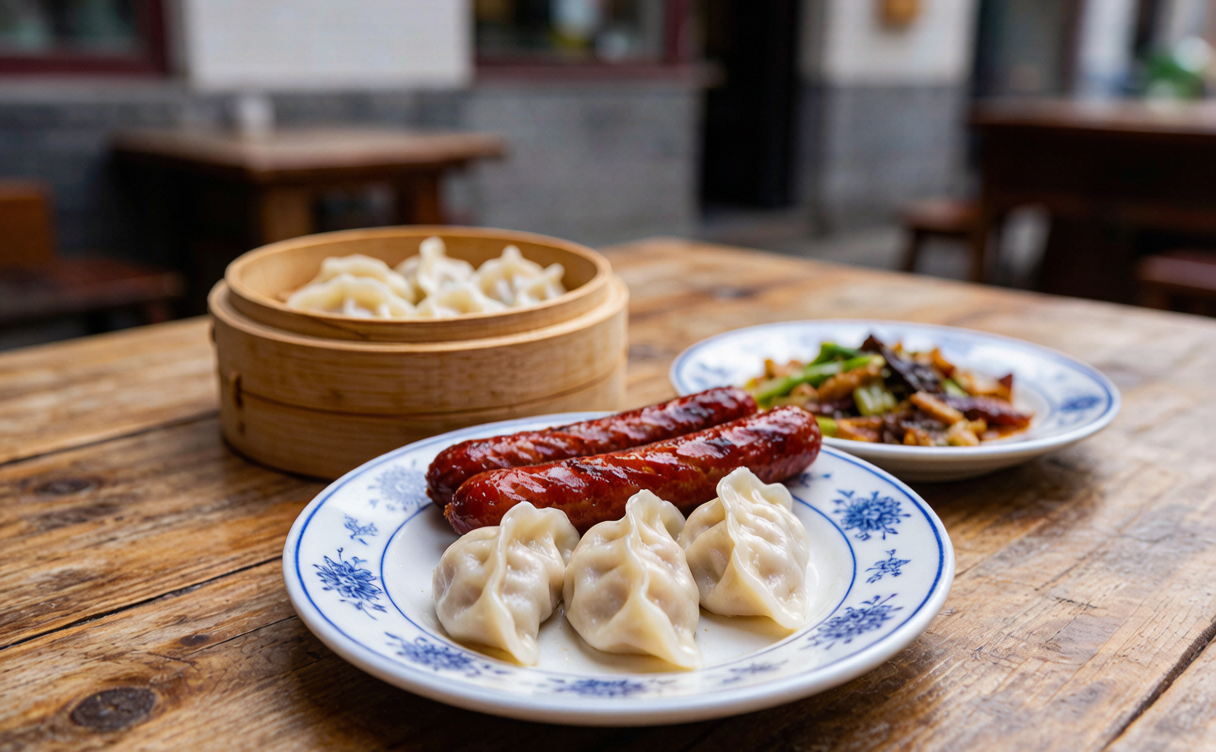
Start with Harbin red sausage (哈尔滨红肠, hā’ěrbīn hóngcháng), the city’s calling card. It is a smoked, garlic-forward sausage based on a Russian recipe brought in during the railway boom. The most trusted brands are Qiulin (秋林) and Shangwei (商委); a vacuum-packed stick runs CNY 30–60 per jin and travels home well in checked luggage. Eat it cold with bread, or fried with scallions at a noodle shop.
Dumplings (饺子, jiǎozi) here lean northeastern: pork with pickled cabbage (酸菜, suāncài) and pork with chive are the standards. A steamer of 15–20 pieces costs CNY 30–50. Order by the basket (“yī lóng”) or by weight (“liǎng”, a 50g unit). Another local invention you should not skip is guōbāoròu (锅包肉), crisp pork in a sweet-sour sauce — it was created in Harbin in the early 1900s and tastes nothing like the versions elsewhere. Expect CNY 38–58 per plate.
Streets, Sweets and Where to Eat
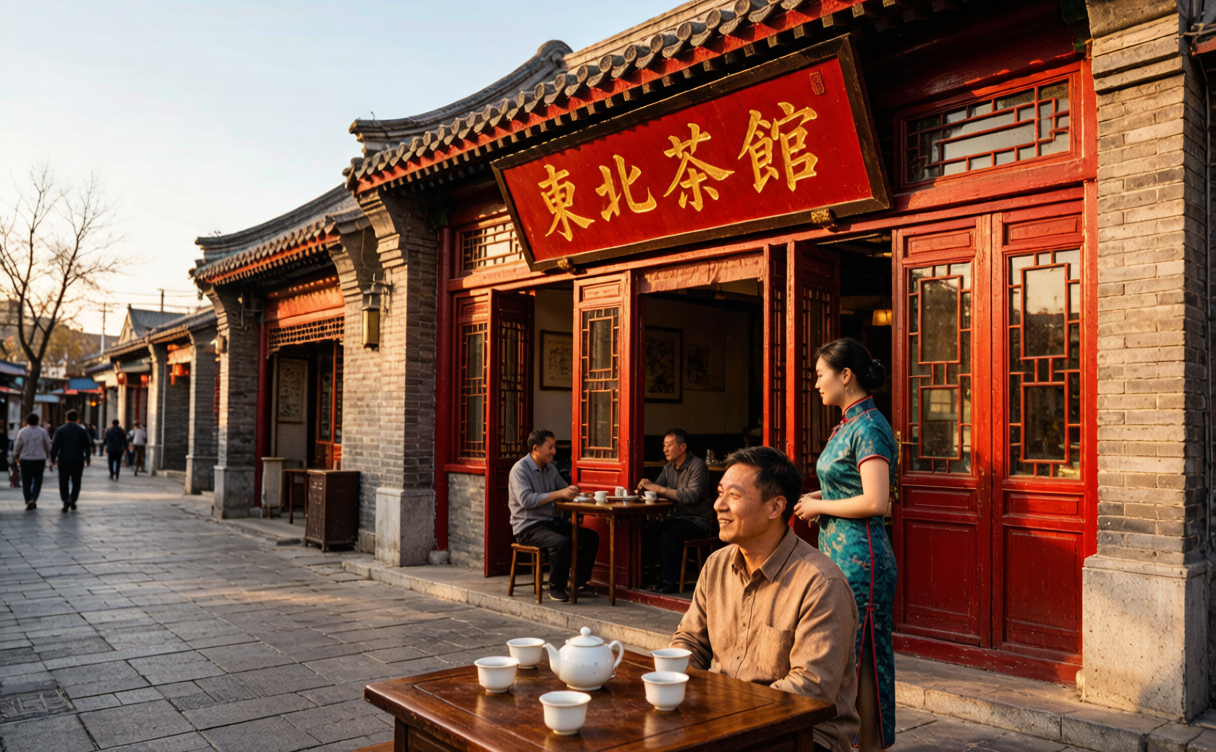
Central Street (中央大街, Zhōngyāng Dàjiē) is the main drag, a pedestrian boulevard of European stone buildings. Walk it for Modern ice cream (马迭尔冰棍, Mǎdié’ěr bīnggùn), a dense milk popsicle sold from silver carts for about CNY 5, eaten year-round in the snow. Side cafes serve Russian borscht, blini, and kvass (格瓦斯, a fermented bread drink). For the real local eats, cross the river to Daowai District (道外区), where the Chinese-baroque old blocks hold hole-in-the-wall dumpling houses such as Zhangbaopu (张包铺) and late-night BBQ skewers (烧烤, shāokǎo) at CNY 4–8 each. The Russian cafes along Central Street are worth a sit-down even if you are full: order borscht (罗宋汤, luósòngtāng) for CNY 25–40, pelmeni (dumplings in broth), or a slice of honey cake with a cup of black tea. These spots are where the city’s two food cultures meet on one table, and they make a warm break from the winter cold.
Ordering tips: at a Russian bakery, point at the round loaf (大列巴, dàliěba) you want cut; at dumpling shops, watch the steamer number on your ticket. Harbin menus often list portions for two, so a party of one can eat cheap by sticking to dumplings and a sausage.
Harbin Travel Tips and Daily Budget
A realistic Harbin travel tips note: carry small cash for street carts even though cards work in malls, and download a translation app for the Russian-linked dish names. Food per day runs CNY 120–200 if you mix carts and dumpling houses, or CNY 250–400 with a Russian sit-down dinner and ice cream habit. One more habit worth learning: locals eat hot food fast in winter and treat ice cream as a year-round snack, so do not be surprised to see a queue for Modern popsicles at –20°C. Tipping is not expected anywhere, and splitting a sausage or a dumpling order with a friend is normal, not rude.
Where to Stay
Stay in Daoli District (道里区), walking distance from Central Street. Mid-range hotels run CNY 300–600 per night; during the ice festival, prices climb and rooms near the festival parks book out, so reserve early. Staying central means you can step out for a midnight sausage without a long taxi.
Sample Food Itinerary
Day 1: Arrive, walk Central Street, eat a Modern ice cream, then a Russian dinner of borscht and blini.
Day 2: Morning at the Ice and Snow Festival, warming up with roasted sweet potatoes and kvass. Afternoon buying red sausage at Qiulin to take home. Dinner of guōbāoròu and dumplings.
Day 3: Cross to Daowai for a dumpling breakfast at Zhangbaopu, graze BBQ skewers at lunch, then a final sausage plate before your train. The Harbin ice festival travel guide covers the sculpture parks in detail if you add a fourth day.
FAQ
Is Harbin food very spicy? No. It is savory, smoky, and sour from pickled cabbage — not chili-hot like Sichuan or Hunan.
Can I find vegetarian options? Yes, at Russian cafes (blini, pierogi, bread) and with vegetable dumplings, though meat dominates the local diet.
What is kvass? A lightly fizzy, low-alcohol drink made from fermented black bread — sweet, malty, and served cold.
Is the ice festival worth the cold? For most visitors, yes. Dress in layers and plan food stops to stay warm; the sculptures are unlike anything else in China.
Can I take red sausage home? Yes. Buy vacuum-packed Qiulin or Shangwei sausage at the airport shops and keep it in checked luggage; it travels well for a week unrefrigerated.
Plan Your Trip
A Harbin itinerary rewards cold-weather travelers with a food scene you cannot repeat elsewhere in China. These Harbin travel tips should get you ordering sausage and dumplings with confidence on night one. For more things to do in Harbin beyond the table, pair this guide with the festival write-up linked above.
For station and airport details, TravelChinaGuide’s Harbin page (https://www.travelchinaguide.com/cityguides/harbin.htm) is a solid reference.