

Inner Mongolia, China is grassland country, and on the grassland the meal is built around one thing: lamb. This Inner Mongolia lamb guide shows you how to eat it the local way, from ribs you pull apart with your hands to thin slices bubbling in a copper pot. The region is an autonomous area in northern China, where Han, Mongol, and several other communities share a table, and the cooking is hearty enough to fuel a day on horseback. The lamb you eat here grazes on wild leeks and grasses that grow nowhere else, which is why the meat tastes different from farm-raised versions down south. A meal on the grassland is also a social event — you sit cross-legged, pass the salt, and stay until the tea runs out.
Best Time to Visit Inner Mongolia
The best time to visit Inner Mongolia is June through August, when the grasslands turn green and the weather sits at a pleasant 18–28°C. This is also festival season — Naadam, with horse racing, wrestling, and archery, falls in July or August depending on the league. September brings golden grasslands and fewer tourists. Winter is brutally cold, often –20°C or lower, and most yurt camps close.
For a country-wide view, our best time to visit China page helps you fit a grassland stop between other regions. Spring (April–May) is windy and dusty, so plan around it if you can.
How to Get There
How to get to Inner Mongolia usually means flying into Hohhot first. Most trips start in Hohhot (呼和浩特), the regional capital, served by Hohhot Baita International Airport (HET) with flights from Beijing (about 1 hour) and Shanghai (about 2.5 hours). By high-speed rail, Beijing to Hohhot (G-trains) takes 2.5 to 3 hours in second class for around CNY 200–300; Baotou is about 1 hour west, and Datong about 2 hours southeast.
The far northeast grasslands around Hulunbuir (呼伦贝尔) are a long way from Hohhot — fly from Hohhot (about 2.5 hours) or directly from Beijing. There is rail, but it is an overnight journey, so most visitors fly. Foreign riders should read our China high-speed train guide for foreigners before booking, since the apps and ID rules differ from home.
Inner Mongolia Lamb Guide: From Hand-Held Ribs to Hotpot
The signature dish is shǒubǎròu (手把肉), hand-held boiled lamb. A rack of lamb ribs is simmered in plain water with salt and a few aromatics, then brought to the table whole. You pick up a rib, bite off the meat, and dip it in salt or a sharp garlic-vinegar sauce. A jin (500g) runs CNY 80–120. It tastes clean and sweet because the sheep graze on wild grass, not grain.
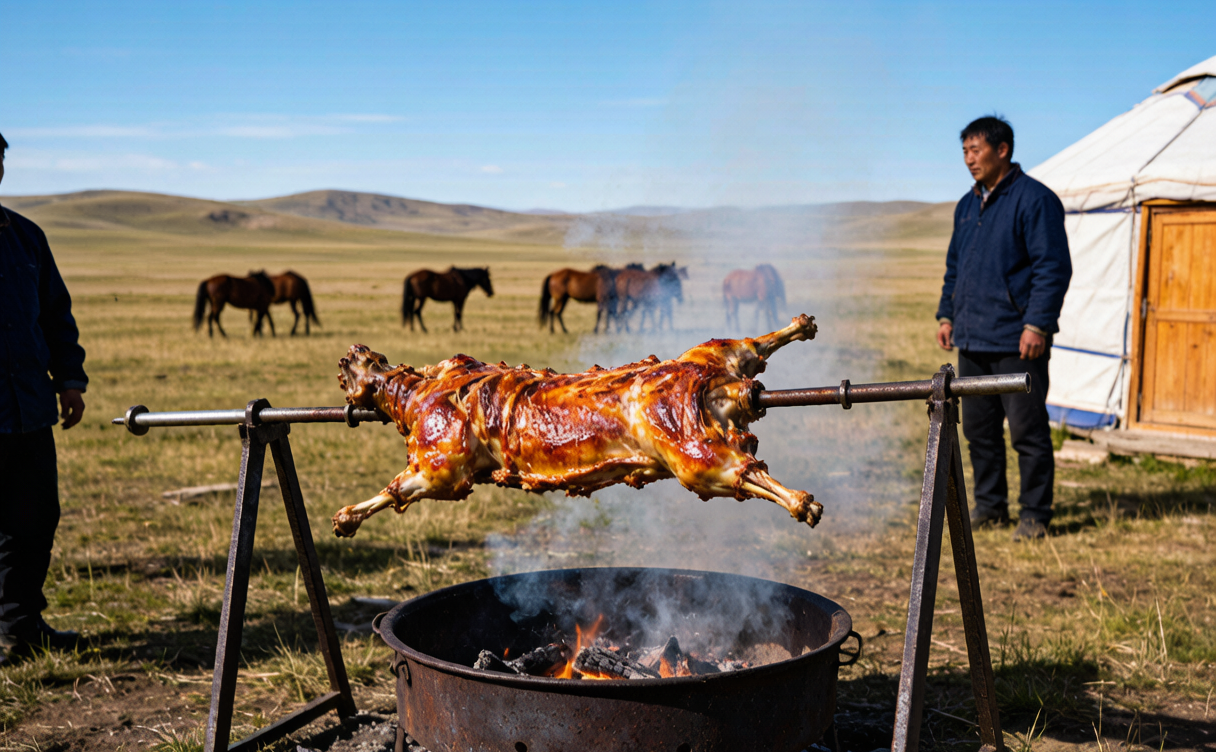
For a group, order kǎo quányáng (烤全羊), a whole lamb roasted over open flame, crisp-skinned and carved at the table. It must be ordered one day ahead and costs CNY 800–1,500, so it suits four or more people. Everyday, you will see yángròu chuàn (羊肉串), lamb skewers grilled over charcoal with cumin and chili, at CNY 5–8 each from street carts.
The other pillar is Mongolian hotpot (涮羊肉, shuàn yángròu). Unlike the spicy Sichuan version, the northern style uses a clear broth — sometimes just mutton fat and scallion — and paper-thin lamb rolled and swished for a few seconds. A meal runs CNY 80–150 per person with dipping sauce. Round it out with dairy: salty milk tea (奶茶, nǎichá), firm cheese (奶酪, nǎilào), and thick yogurt (酸奶, suānnǎi).
Where to Eat: Hohhot and the Grassland
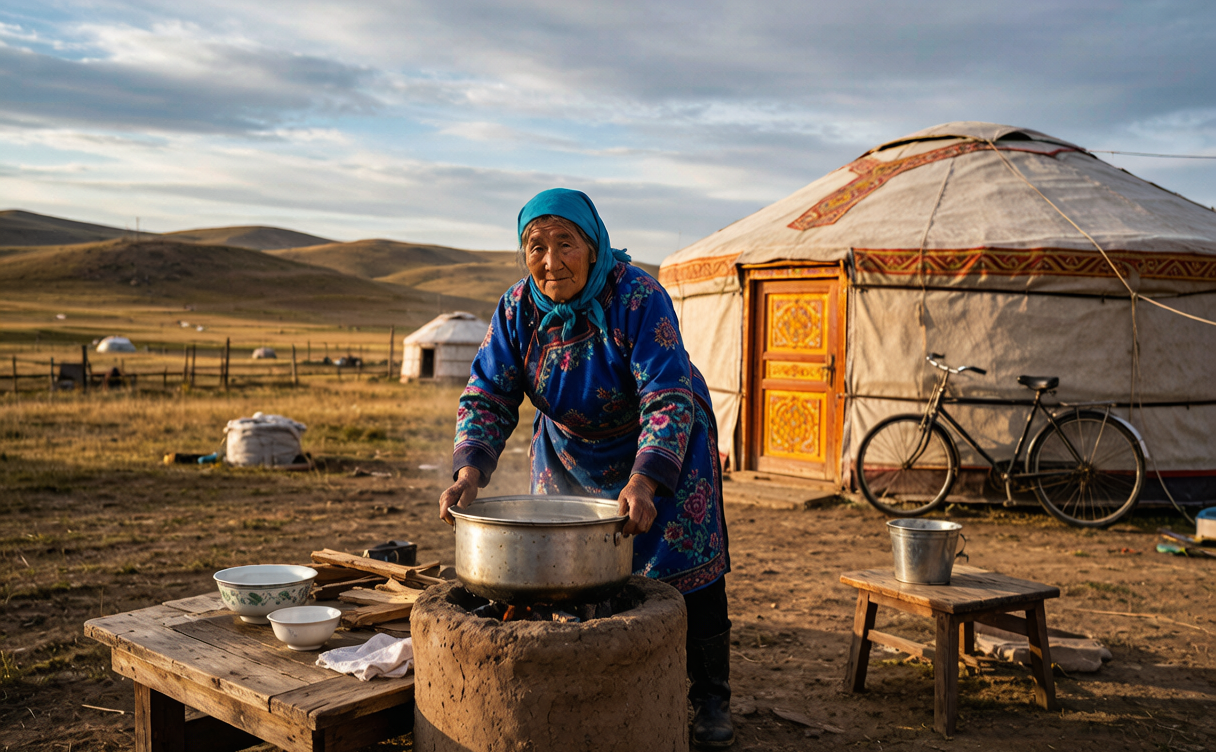
In Hohhot, chains like Gé rìlè ā mā (格日勒阿妈) serve a full Mongol set — hand-held lamb, milk tea, and fried millet — in a decorated yurt-style room, with mains around CNY 60–120. For hotpot, local spots near Zhongshan Road offer all-you-can-eat lamb for CNY 98–138 per person. On the grassland itself, guest yurts (蒙古包, ménggǔbāo) serve whatever the herder slaughtered that morning; you eat with the family and sleep in a felt tent afterward. Etiquette is relaxed but worth knowing: when a herder offers milk tea, accept the first bowl even if you only sip it, and do not point the sole of your boot at the stove or the door. If you are offered the sheep’s thigh bone as a guest of honor, it is a sign of respect — pass it to someone else rather than refusing outright.
Ordering tips: book the whole lamb a day ahead and confirm the headcount. At hotpot, build your sesame sauce with garlic, cilantro, and a spoon of the lamb broth. If you order milk tea, expect it salty unless you ask for the sweet version (tián nǎichá) — both are common, and the salty one is the traditional herder drink.
Inner Mongolia Travel Tips and Daily Budget
Useful Inner Mongolia travel tips: carry a jacket even in summer, since grassland nights drop fast, and bring cash for yurt camps where cards may not work. Food runs CNY 100–180 per day in the city, more if you order the whole lamb; a yurt stay with meals included is about CNY 200–400 per night. The altitude is modest but the sun is strong on open grassland, so bring sunscreen and a hat even in cool months. If you drink the salty milk tea, pace yourself — it is filling and meant to replace a meal, not just accompany one.
Where to Stay
In Hohhot, mid-range hotels cost CNY 250–500 per night near the city center. On the grassland, stay in a yurt camp (CNY 200–400 with meals) for the full experience, but expect basic showers and no heating outside summer. Book camps through your hotel or a trusted agent, as signage is minimal.
Sample Food Itinerary
Day 1: Land in Hohhot, lunch on Mongolian hotpot, then milk tea and cheese at a city Mongol restaurant.
Day 2: Drive to the grassland, eat hand-held lamb ribs with a herder family, overnight in a yurt.
Day 3: Morning horse ride, then lamb skewers by the fire before heading back. If you have more time, the Inner Mongolia Hulunbuir grassland in the far northeast is the most famous pasture of all and worth a flight.
FAQ
Is Inner Mongolia lamb gamey? Less than you might expect. Grass-fed sheep taste clean and slightly sweet; the plain boiling method keeps the flavor mild.
Do I need to book the whole roasted lamb? Yes, a day ahead, and for four or more people. Solo travelers should stick to ribs and skewers.
What is Mongolian hotpot broth made of? Usually just water, scallion, and a slice of mutton fat — the lamb flavors it as you cook. It is mild, not spicy.
Is the grassland safe for solo travelers? Yes, but distances are large and transport is thin, so join a small tour or base yourself in Hohhot first.
Plan Your Trip
An Inner Mongolia itinerary is a break from China’s big cities: open sky, lamb, and milk tea. These Inner Mongolia travel tips should get you to the ribs with confidence. For things to do in Inner Mongolia beyond eating, the grassland write-up linked above is the place to start.
For transport and regional background, TravelChinaGuide’s Inner Mongolia page (https://www.travelchinaguide.com/cityguides/hohhot.htm) is a reliable reference.