

Finding safe, certified meals abroad can be a source of anxiety for Muslim travelers, but China is genuinely friendly territory. This halal food in China guide explains how to spot legitimate halal restaurants, which regions serve the best Muslim-friendly meals, and what dishes to order with confidence. With a large Hui Muslim population and sizable communities in the northwest, halal dining is woven into the everyday food landscape rather than tucked into a corner.
Islam has been present in China for more than a thousand years, and the Hui, Uyghur, Kazakh, and Dongxiang peoples have shaped regional cooking from Gansu to Yunnan. For the foreign Muslim visitor, the practical result is a wide network of qingzhen (清真, “pure and clean”) eateries where meat is slaughtered according to Islamic law and pork is strictly excluded.
Understanding the Qingzhen Sign
The single most useful skill in this halal food in China guide is recognizing the qingzhen halal sign China uses. Look for the Arabic word for halal, a crescent moon, or the Chinese characters 清真 printed on the door, menu, or a green plaque. In Muslim-majority neighborhoods the signage is obvious, but in mixed cities a careful look at the storefront still matters.
A green color scheme is a common but not universal cue. The reliable test is the presence of 清真 characters or an Arabic inscription. Some larger chains and hotel restaurants also display certificates from local Islamic associations; do not hesitate to ask staff “qingzhen ma?” (Is this halal?). Most are used to the question and will answer directly.
How to Find Halal Restaurants in China
The fastest method for how to find halal restaurants in China is to search “清真” plus the city name in a map app such as Amap or Baidu Maps, both of which label qingzhen venues. In big cities you can also filter food-delivery apps, though ordering in person is easier for confirming standards. Muslim quarter areas, common in historic cities, concentrate dozens of halal stalls within a few streets.
Travelers who plan to visit northwestern regions should expect halal to be the default rather than the exception. In those areas, even small roadside noodle shops serve only halal meat. The challenge there is less about finding halal and more about managing spice levels and portion sizes.
Best Cities for Muslim-Friendly Food
Beijing and Shanghai
Halal food Beijing and Shanghai options are plentiful and easy to reach. In Beijing, the Niujie (Ox Street) district is the historic Hui heartland, full of lamb skewer shops, halal bakeries, and noodle houses. Shanghai’s Hongqiao and Yuyuan areas mix Hui and western Chinese Muslim cooking, and several upscale halal hotpot brands operate branches across both cities. For travelers connecting through the capital, our Beijing duck guide notes which roast-duck houses offer halal poultry.
Xi’an and the Muslim Quarter
No halal food in China guide is complete without Xi’an. The city’s Muslim Quarter is a night-market labyrinth of grilled lamb, hand-pulled noodles, and sesame sweets run by the local Hui community. Our Xi’an Muslim Quarter food guide walks you through the exact stalls worth queuing for and the dishes that define the area.
Lanzhou and Its Noodles
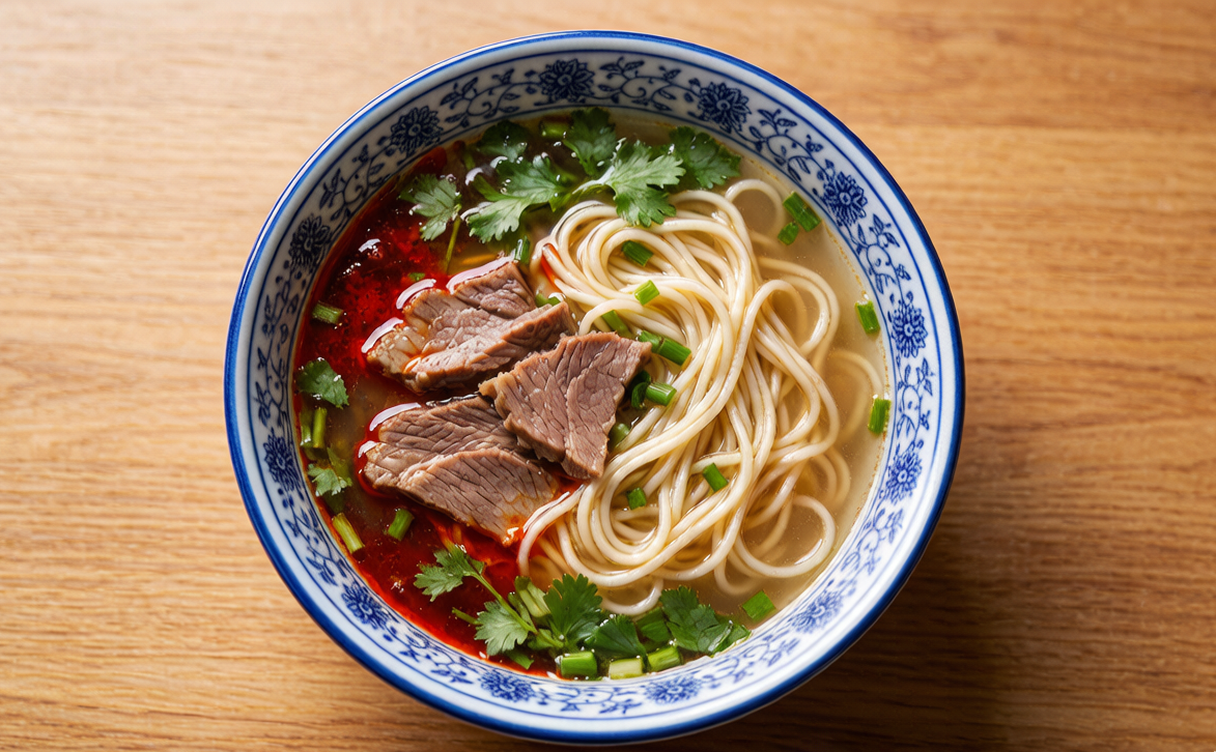
The Lanzhou beef noodle, or lamian, is China’s most famous halal dish, and the city of Lanzhou treats it as an art form. A proper bowl balances clear broth, tender beef, red chili oil, green scallion, and white radish, the “one clear, two white, three red, four green, five yellow” standard. Our Lanzhou beef noodle guide explains how to order by noodle width and broth richness.
Halal Chinese Dishes to Try
Beyond noodles, the range of halal Chinese dishes to try is broad. Start with yang rou chuan, cumin-spiced lamb skewers grilled over charcoal, available from Xinjiang, China stalls in nearly every major city. Hand-pie (xian bing) stuffed with spiced beef makes a great breakfast. Pilaf rice (zhua fan) from Xinjiang, China mixes lamb, carrot, and raisin for a fragrant one-pot meal. Cold noodle salads, stuffed buns (baozi) with halal beef, and sweet fried dough (yougao) round out a typical menu.
For travelers who also avoid meat entirely on some days, our China vegetarian and vegan food guide pairs well with this one, since many vegetable dishes in Muslim areas are cooked without pork fat.
Halal Food in Xinjiang, China
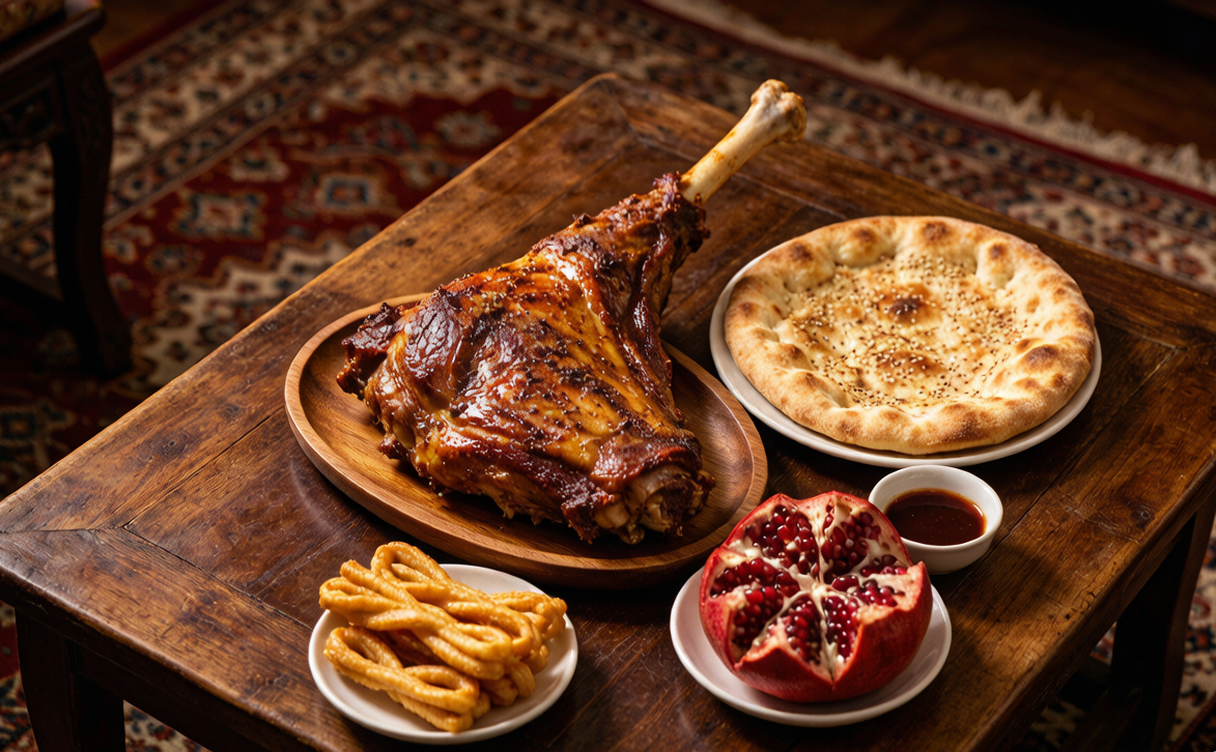
The far northwest is where halal dining reaches its peak variety. Our Xinjiang food guide covers the signature dishes of the region, from naan bread baked in communal tandoors to laghman hand-pulled noodles. The old city of Kashgar is a highlight, with rooftop teahouses and Uyghur family restaurants that have served the same recipes for generations. Our Kashgar travel guide details where to eat and how to time your visit around the Sunday livestock market.
Practical Tips for Muslim Travelers
Carry a short phrase card in Chinese stating your dietary requirement, since not every server speaks English and “no pork” alone can be misunderstood. At breakfast buffets in hotels, look for the same 清真 marking on individual dishes rather than assuming the whole spread is halal. Train stations and airports now offer halal certified options in major hubs, though the selection thins in smaller towns.
During Ramadan, Muslim areas keep late-night iftar gatherings, and many restaurants adjust hours; asking at your hotel front desk will point you to the nearest open kitchen. Bottled water and packaged snacks from convenience stores are universally safe when you are between meals.
What to Avoid and How to Stay Safe
The main pitfall is assuming “no pork on the menu” equals halal. Some Han Chinese restaurants simply omit pork but use the same woks and ladles for it at other times. The 清真 sign or an Arabic mark is your protection against this. Alcohol is served in many secular establishments, so if that matters to you, choose clearly marked qingzhen venues where it is absent.
Street food is generally safe when cooked hot in front of you, but watch for dumplings whose filling source is unclear. Stick to stalls with a visible 清真 plaque and a steady local crowd.
Reading Halal Certificates
Not every 清真 plaque means the same thing, and understanding the difference helps careful travelers. Some certificates are issued by provincial Islamic associations and list a valid period and a registration number you can verify. Others are simply a restaurant’s own claim displayed for customers. In practice, long-standing Hui neighborhoods and well-reviewed Uyghur restaurants in Xinjiang, China are safe, while a lone sign in a mixed commercial street deserves a quick question to staff. When in doubt, choose busy places with visible Arabic signage and a local crowd, since community scrutiny is the strongest everyday guarantee.
Halal on the Train and in Hotels
Long-distance travel is where planning pays off. On high-speed trains, the dining car sometimes offers a halal box clearly marked with the green label, but availability is inconsistent, so pack your own sealed halal snacks from a city supermarket before boarding. Major hotels in Muslim-friendly cities often keep a halal floor or a designated halal breakfast corner, and naming this need at booking avoids awkward surprises. In remote areas, a thermos of hot water and instant halal noodles from a convenience store is a reliable fallback that keeps you comfortable between proper meals.
Conclusion
Eating halal in China is far easier than first-time visitors expect, thanks to a deep-rooted Muslim culinary tradition and clear signage in most cities. With the qingzhen system as your guide, you can travel from the capitals to the remote northwest with confidence in every meal. For official background on China’s ethnic and religious communities, the China Islamic Association provides context on the institutions behind halal certification.